
Kirjahaku
Etsi kirjoja tekijän nimen, kirjan nimen tai ISBN:n perusteella.
1000 tulosta hakusanalla Randall Jessup




Maxwell's Demon and the Golden Apple
Randall L. Schweller
Johns Hopkins University Press
2014
sidottu
Just what exactly will follow the American century? This is the question Randall L. Schweller explores in his provocative assessment of international politics in the twenty-first century. Schweller considers the future of world politics, correlating our reliance on technology and our multitasking, distracted, disorganized lives with a fragmenting world order. He combines the Greek myth of the Golden Apple of Discord, which explains the start of the Trojan War, with a look at the second law of thermodynamics, or entropy. "In the coming age," Schweller writes, "disorder will reign supreme as the world succumbs to entropy, an irreversible process of disorganization that governs the direction of all physical changes taking place in the universe." Interweaving his theory of global disorder with issues on the world stage-coupled with a disquisition on board games and the cell phone app Angry Birds-Schweller's thesis yields astonishing insights. Maxwell's Demon and the Golden Apple will appeal to leaders of multinational corporations and government programs as well as instructors of undergraduate courses in international relations.

Over the past century, hundreds of billions of dollars have been invested in programs aimed at improving health on a global scale. Given the enormous scale and complexity of these lifesaving operations, why do millions of people in low-income countries continue to live without access to basic health services, sanitation, or clean water? And why are deadly diseases like Ebola able to spread so quickly among populations? In A History of Global Health, Randall M. Packard argues that global-health initiatives have saved millions of lives but have had limited impact on the overall health of people living in underdeveloped areas, where health-care workers are poorly paid, infrastructure and basic supplies such as disposable gloves, syringes, and bandages are lacking, and little effort has been made to address the underlying social and economic determinants of ill health. Global-health campaigns have relied on the application of biomedical technologies-vaccines, insecticide-treated nets, vitamin A capsules-to attack specific health problems but have failed to invest in building lasting infrastructure for managing the ongoing health problems of local populations. Designed to be read and taught, the book offers a critical historical view, providing historians, policy makers, researchers, program managers, and students with an essential new perspective on the formation and implementation of global-health policies and practices.

Over the past century, hundreds of billions of dollars have been invested in programs aimed at improving health on a global scale. Given the enormous scale and complexity of these lifesaving operations, why do millions of people in low-income countries continue to live without access to basic health services, sanitation, or clean water? And why are deadly diseases like Ebola able to spread so quickly among populations? In A History of Global Health, Randall M. Packard argues that global-health initiatives have saved millions of lives but have had limited impact on the overall health of people living in underdeveloped areas, where health-care workers are poorly paid, infrastructure and basic supplies such as disposable gloves, syringes, and bandages are lacking, and little effort has been made to address the underlying social and economic determinants of ill health. Global-health campaigns have relied on the application of biomedical technologies-vaccines, insecticide-treated nets, vitamin A capsules-to attack specific health problems but have failed to invest in building lasting infrastructure for managing the ongoing health problems of local populations. Designed to be read and taught, the book offers a critical historical view, providing historians, policy makers, researchers, program managers, and students with an essential new perspective on the formation and implementation of global-health policies and practices.
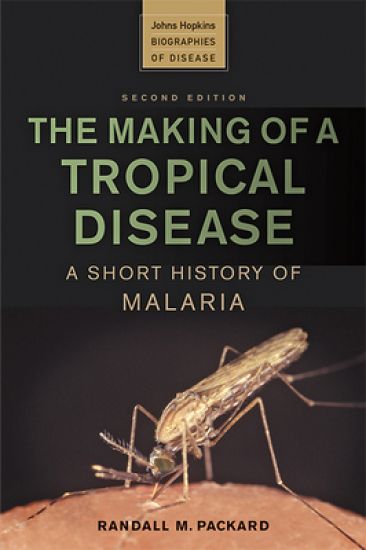
A global history of malaria that traces the natural and social forces that have shaped its spread and made it deadly, while limiting efforts to eliminate it.Malaria sickens hundreds of millions of people—and kills nearly a half a million—each year. Despite massive efforts to eradicate the disease, it remains a major public health problem in poorer tropical regions. But malaria has not always been concentrated in tropical areas. How did malaria disappear from other regions, and why does it persist in the tropics? From Russia to Bengal to Palm Beach, Randall M. Packard's far-ranging narrative shows how the history of malaria has been driven by the interplay of social, biological, economic, and environmental forces. The shifting alignment of these forces has largely determined the social and geographical distribution of the disease, including its initial global expansion, its subsequent retreat to the tropics, and its current persistence. Packard argues that efforts to control and eliminate malaria have often ignored this reality, relying on the use of biotechnologies to fight the disease. Failure to address the forces driving malaria transmission have undermined past control efforts.Describing major changes in both the epidemiology of malaria and efforts to control the disease, the revised edition of this acclaimed history, which was chosen as the 2008 End Malaria Awards Book of the Year in its original printing,• examines recent efforts to eradicate malaria following massive increases in funding and political commitment; • discusses the development of new malaria-fighting biotechnologies, including long-lasting insecticide-treated nets, rapid diagnostic tests, combination artemisinin therapies, and genetically modified mosquitoes; • explores the efficacy of newly developed vaccines; and • explains why eliminating malaria will also require addressing the social forces that drive the disease and building health infrastructures that can identify and treat the last cases of malaria.Authoritative, fascinating, and eye-opening, this short history of malaria concludes with policy recommendations for improving control strategies and saving lives.

A global history of dengue fever and humanity's ongoing struggle against this persistent disease.In Fevered Cities, Randall M. Packard explores the complex and evolving history of dengue fever, the world's most widespread mosquito-borne viral disease. From its early manifestations in the eighteenth century to its current prevalence across more than one hundred countries, this book traces how dengue emerged as a global health challenge shaped by ecological, social, and economic conditions.Packard examines the disease's spread through urban landscapes, focusing on specific cities like Philadelphia, Manila, Havana, and Rio de Janeiro to illustrate how local contexts have defined outbreaks and responses. He highlights the transformation of dengue from a poorly understood physiological ailment to a vector-borne disease tied to the Aedes aegypti mosquito, and later to more severe conditions like dengue hemorrhagic fever. As climate change expands the geographical range of mosquito habitats and global trade accelerates the movement of people and goods, this book explores the social inequities, unplanned urbanization, and environmental degradation that have made dengue increasingly difficult to control.From vector control campaigns to cutting-edge biotechnologies like genetically modified mosquitoes and vaccines, Packard charts humanity's attempts to combat this tenacious disease. Fevered Cities is an essential history for public health experts, historians, and anyone concerned with the intersection of disease, society, and the built environment.

Army Boys in the French Trenches
Randall Homer Randall
1st World Library - Literary Society
2007
pokkari


The Life of Archibald Campbell Tait
Randall Thomas Davidson; William Benham
Kessinger Pub
2006
pokkari

The Life of Archibald Campbell Tait
Randall Thomas Davidson; William Benham
Kessinger Pub
2006
pokkari