

Kirjahaku
Etsi kirjoja tekijän nimen, kirjan nimen tai ISBN:n perusteella.
1000 tulosta hakusanalla Ray Thompson
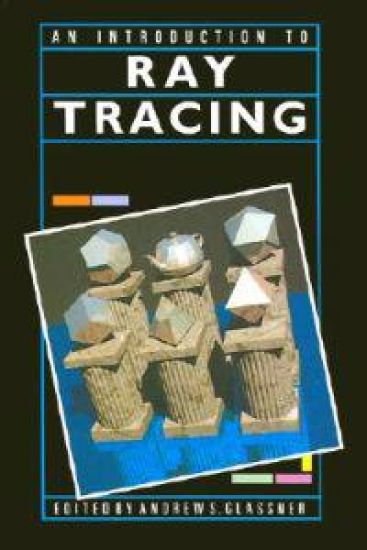
An Introduction to Ray Tracing
Morgan Kaufmann Publishers In
1989
sidottu
The creation of ever more realistic 3-D images is central to the development of computer graphics. The ray tracing technique has become one of the most popular and powerful means by which photo-realistic images can now be created. The simplicity, elegance and ease of implementation makes ray tracing an essential part of understanding and exploiting state-of-the-art computer graphics. An Introduction to Ray Tracing develops from fundamental principles to advanced applications, providing "how-to" procedures as well as a detailed understanding of the scientific foundations of ray tracing. It is also richly illustrated with four-color and black-and-white plates. This is a book which will be welcomed by all concerned with modern computer graphics, image processing, and computer-aided design.
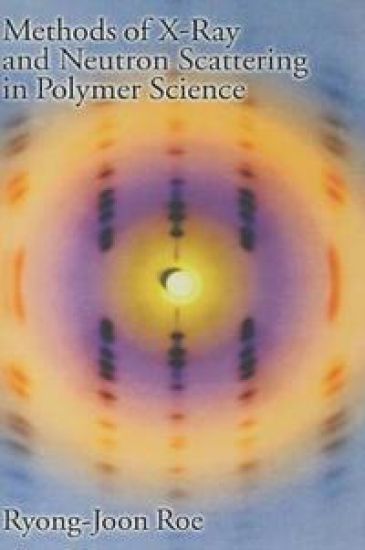
Methods of X-ray and Neutron Scattering in Polymer Science
Ryong-Joon Roe
Oxford University Press Inc
2000
sidottu
This book presents the basic theories underlying x-ray and neutron scattering, as well as the various techniques that have been developed for their application to the study of polymers. The two scattering methods are discussed together from the beginning, so as to allow readers to gain a unified view of the scattering phenomena. The book is introductory and may be used as a textbook in polumer science class or for self-study by polymer scientists new in scattering techniques.

The dynamical theory of diffraction has witnessed exciting developments since the advent of synchroton radiation. This book provides an up-to-date account of the theory of diffraction and its applications. The first part serves as an introduction to the subject, presenting early developments and the basic results. It is followed by a detailed development of the diffraction and propagation properties of x-rays in perfect crystals and by an extension of the theory to the case of slightly and highly deformed crystals. The last part gives three applications of the theory: X-ray optics for synchroton radiation, locations of atoms at surfaces, and X-ray diffraction topography. The book is richly illustrated and contains a wide range of references to the literature. It will be a most useful reference work for graduate students, lecturers and researchers.

The dynamical theory of diffraction has witnessed exciting developments since the advent of synchrotron radiation. The present book is an up-to-date account of the theory of diffraction and its applications. The first part serves as an introduction to the subject, presenting the early developments and the basic results. It is followed by a detailed development of the diffraction and propagation properties of x-rays in perfect crystals and by an extension of the theory to the case of slightly and highly deformed crystals. The last part gives three applications of the theory: X-ray optics for synchrotron radiation, locations of atoms at surfaces, and X-ray diffraction topography. The book is richly illustrated and contains a wide range of references to the literature. It will be a useful reference work for graduate students, lecturers, and researchers.

This book gives a thorough treatment of the rapidly-expanding field of coherent x-ray optics, which has recently experienced something of a renaissance with the availability of third-generation synchrotron sources. It is the first book of its kind. The author begins with a treatment of the fundamentals of x-ray diffraction for both coherent and partially coherent radiation, together with the interactions of x-rays with matter. X-ray sources, optics elements and detectors are then discussed, with an emphasis on their role in coherent x-ray optics. Various facets of coherent x-ray imaging are then discussed, including holography, interferometry, self imaging, phase contrast and phase retrieval. Lastly, the foundations of the new field of singular x-ray optics are examined. Most topics are developed from first principles, with numerous references given to the contemporary research literature. This book will be useful to x-ray physicists and students, together with optical physicists and engineers who wish to learn more about the fascinating subject of coherent x-ray optics.

X-ray scattering is a well-established technique in materials science. Several excellent textbooks exist in this field, but these texts are typically written by physicists who use mathematics to make things clear. Consequently these books appeal less to students and scientists in the field of soft matter (polymers, liquid crystals, colloids, self-assembled organic systems) who usually have a more chemical-oriented background with limited mathematics. Moreover, they need to know about the technique of x-ray scattering, but do not intend to become an expert. The aim of this book is to explain basic principles and applications of x-ray scattering in a simple way using many practical examples followed by more elaborate case studies. The book contains a separate chapter on the different types of order/disorder in soft matter that play such an important role in modern self-assembling systems. Finally the last chapter treats soft matter surfaces and thin film that are increasingly used in coatings and in many technological applications, such as liquid crystal displays and nanostructured block copolymer films. This book has been written for the large community of soft matter students and scientists.

X-ray scattering is a well-established technique in materials science. Several excellent textbooks exist in this field, but these texts are typically written by physicists who use mathematics to make things clear. Consequently these books appeal less to students and scientists in the field of soft matter (polymers, liquid crystals, colloids, self-assembled organic systems) who usually have a more chemical-oriented background with limited mathematics. Moreover, they need to know about the technique of x-ray scattering, but do not intend to become an expert. The aim of this book is to explain basic principles and applications of x-ray scattering in a simple way using many practical examples followed by more elaborate case studies. The book contains a separate chapter on the different types of order/disorder in soft matter that play such an important role in modern self-assembling systems. Finally the last chapter treats soft matter surfaces and thin film that are increasingly used in coatings and in many technological applications, such as liquid crystal displays and nanostructured block copolymer films. This book has been written for the large community of soft matter students and scientists.
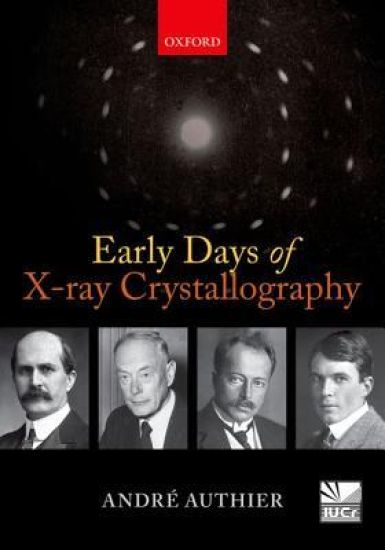
The year 2012 marked the centenary of one of the most significant discoveries of the early twentieth century, the discovery of X-ray diffraction (March 1912, by Laue, Friedrich and Knipping) and of Bragg's law (November 1912). The discovery of X-ray diffraction confirmed the wave nature of X-rays and the space-lattice hypothesis. It had two major consequences: the analysis of the structure of atoms, and the determination of the atomic structure of materials. This had a momentous impact in chemistry, physics, mineralogy, material science, biology and X-ray spectroscopy. The book relates the discovery itself, the early days of X-ray crystallography, and the way the news of the discovery spread round the world. It explains how the first crystal structures were determined by William Bragg and his son Lawrence, and recounts which were the early applications of X-ray crystallography in chemistry, mineralogy, materials science, physics, biological sciences and X-ray spectroscopy. It also tells how the concept of space lattice developed since ancient times up to the nineteenth century, and how our conception of the nature of light has changed over time. The contributions of the main actors of the story, prior to the discovery, at the time of the discovery and immediately afterwards, are described through their writings and are put into the context of the time, accompanied by brief biographical details. This thoroughly researched account on the multiple faces of a scientific specialty, X-ray crystallography, is aimed both at the scientists, who rarely subject the historical material of past discoveries in their field to particular scrutiny with regard to the historical details and at the historians of science who often lack the required expert knowledge to scrutinize the involved technical content in sufficient depth (M. Eckert - Metascience).

Small Angle X-Ray and Neutron Scattering from Solutions of Biological Macromolecules
Dmitri I. Svergun; Michel H. J. Koch; Peter A. Timmins; Roland P. May
Oxford University Press
2020
nidottu
Small-angle scattering of X-rays (SAXS) and neutrons (SANS) is an established method for the structural characterization of biological objects in a broad size range from individual macromolecules (proteins, nucleic acids, lipids) to large macromolecular complexes. SAXS/SANS is complementary to the high resolution methods of X-ray crystallography and nuclear magnetic resonance, allowing for hybrid modeling and also accounting for available biophysical and biochemical data. Quantitative characterization of flexible macromolecular systems and mixtures has recently become possible. SAXS/SANS measurements can be easily performed in different conditions by adding ligands or binding partners, and by changing physical and/or chemical characteristics of the solvent to provide information on the structural responses. The technique provides kinetic information about processes like folding and assembly and also allows one to analyze macromolecular interactions. The major factors promoting the increasingly active use of SAXS/SANS are modern high brilliance X-ray and neutron sources, novel data analysis methods, and automation of the experiment, data processing and interpretation. In this book, following the presentation of the basics of scattering from isotropic macromolecular solutions, modern instrumentation, experimental practice and advanced analysis techniques are explained. Advantages of X-rays (rapid data collection, small sample volumes) and of neutrons (contrast variation by hydrogen/deuterium exchange) are specifically highlighted. Examples of applications of the technique to different macromolecular systems are considered with specific emphasis on the synergistic use of SAXS/SANS with other structural, biophysical and computational techniques.
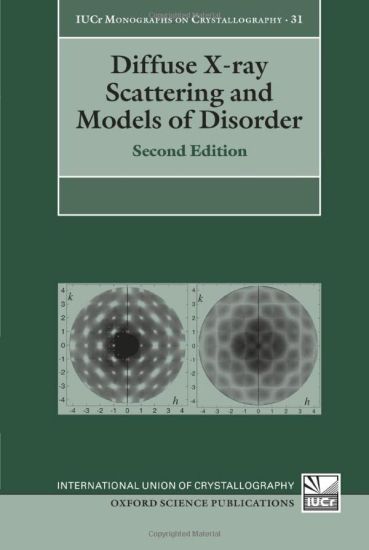
Diffuse X-ray scattering is a rich source of local structural information over and above that obtained by conventional crystal structure determination. The main aim of the book is to show how computer simulation of a model crystal provides a general method by which diffuse scattering of all kinds and from all types of materials can be interpreted and analysed. Since the first edition was published in 2004 there have been major improvements both in the experimental methods for recording diffuse scattering and in our ability to analyse it. The advent of new and better detectors means that fully 3-dimensional diffuse scattering data can be collected routinely for even quite small samples and computational power that is now available has continued its upward trend, meaning modelling calculations inconceivable in 2004 are now routine. The final part of the book traces these recent developments and outlines their future potential in the field.

Small Angle X-Ray and Neutron Scattering from Solutions of Biological Macromolecules
Dmitri I. Svergun; Michel H. J. Koch; Peter A. Timmins; Roland P. May
Oxford University Press
2013
sidottu
Small-angle scattering of X-rays (SAXS) and neutrons (SANS) is an established method for the structural characterization of biological objects in a broad size range from individual macromolecules (proteins, nucleic acids, lipids) to large macromolecular complexes. SAXS/SANS is complementary to the high resolution methods of X-ray crystallography and nuclear magnetic resonance, allowing for hybrid modeling and also accounting for available biophysical and biochemical data. Quantitative characterization of flexible macromolecular systems and mixtures has recently become possible. SAXS/SANS measurements can be easily performed in different conditions by adding ligands or binding partners, and by changing physical and/or chemical characteristics of the solvent to provide information on the structural responses. The technique provides kinetic information about processes like folding and assembly and also allows one to analyze macromolecular interactions. The major factors promoting the increasingly active use of SAXS/SANS are modern high brilliance X-ray and neutron sources, novel data analysis methods, and automation of the experiment, data processing and interpretation. In this book, following the presentation of the basics of scattering from isotropic macromolecular solutions, modern instrumentation, experimental practice and advanced analysis techniques are explained. Advantages of X-rays (rapid data collection, small sample volumes) and of neutrons (contrast variation by hydrogen/deuterium exchange) are specifically highlighted. Examples of applications of the technique to different macromolecular systems are considered with specific emphasis on the synergistic use of SAXS/SANS with other structural, biophysical and computational techniques.
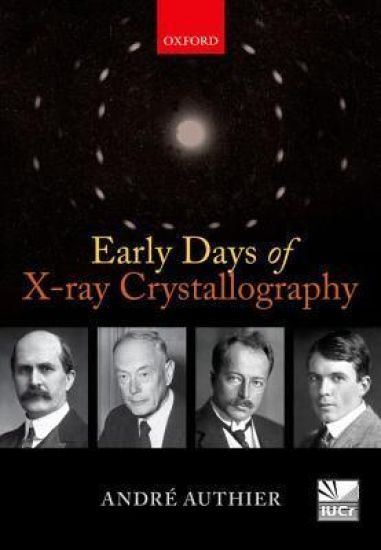
2012 marked the centenary of one of the most significant discoveries of the early twentieth century, the discovery of X-ray diffraction (March 1912, by Laue, Friedrich, and Knipping) and of Bragg's law (November 1912). The discovery of X-ray diffraction confirmed the wave nature of X-rays and the space-lattice hypothesis. It had two major consequences: the analysis of the structure of atoms, and the determination of the atomic structure of materials. The momentous impact of the discovery in the fields of chemistry, physics, mineralogy, material science, biochemistry and biotechnology has been recognized by the General Assembly of the United Nations by establishing 2014 as the International Year of Crystallography. This book relates the discovery itself, the early days of X-ray crystallography, and the way the news of the discovery spread round the world. It explains how the first crystal structures were determined, and recounts which were the early applications of X-ray crystallography. It also tells how the concept of space lattice has developed since ancient times, and how our understanding of the nature of light has changed over time. The contributions of the main actors of the story, prior to the discovery, at the time of the discovery and immediately afterwards, are described through their writings and are put into the context of the time, accompanied by brief biographical details.

This book gives a thorough treatment of the rapidly-expanding field of coherent X-ray optics, which has recently experienced something of a renaissance with the availability of third-generation synchrotron sources. It is the first book of its kind. The author begins with a treatment of the fundamentals of X-ray diffraction for both coherent and partially coherent radiation, together with the interactions of X-rays with matter. X-ray sources, optical elements and detectors are then discussed, with an emphasis on their role in coherent X-ray optics. Various facets of coherent X-ray imaging are then discussed, including holography, interferometry, self imaging, phase contrast and phase retrieval. Lastly, the foundations of the new field of singular X-ray optics are examined. Most topics are developed from first principles, with numerous references given to the contemporary research literature. This book will be useful to X-ray physicists and students, together with optical physicists and engineers who wish to learn more about the fascinating subject of coherent X-ray optics.

How the Ray Gun Got Its Zap is a collection of essays that discusses odd and unusual topics in optics. Though optics is a fairly specialized branch of physics, this book extracts from the discipline topics that are particularly interesting, mysterious, culturally relevant, or accessible. The essays all first appeared, in abbreviated form, in Optics and Photonics News and in The Spectrograph; the author has updated and expanded upon each of them for this book. The book is divided into three thematic sections: History, Weird Science, and Pop Culture. Chapters will discuss surprising uses of optics in classics and early astronomy; explain why we think of the sun as yellow when it is actually white; present how the laser is used in popular film; and profile the eccentric scientists who contributed to optics. The essays are short and entertaining, and can be read in any order. The book should appeal to general audiences interested in optics or physics more generally, as well as members of the scientific community who are curious about optics phenomena.
Designed for Junior/Senior undergraduate courses. This revision of a classical text is intended to acquaint the reader, who has no prior knowledge of the subject, with the theory of x-ray diffraction, the experimental methods involved, and the main applications. The text is a collection of principles and methods designed directly for the student and not a reference tool for the advanced reader.

Bee Neilsen: she's sugar and spice and a little bit morbid. Drawing inspiration from the work of Tim Burton, Edgar Allan Poe, and her experience working in a funeral home, Bee Neilsen is a self-described scribbler, coffee-lover, and connoisseur of all things spooky. When she isn't working or writing, Bee enjoys relaxing with her dog, cooking, and eating her weight in hummus.A Little Ray of Obsidian Black is Bee's debut collection of dark poetry and flash fiction

The first full-career survey of the idiosyncratic life and work of Ray Johnson, a collagist, performance artist, and pioneer of mail art.Ray Johnson (1927-1995), a.k.a. “New York’s most famous unknown artist,” was notorious for the elaborate games he played with the institutions of the art world, soliciting their attention even as he rejected their invitations. In A Book about Ray, Ellen Levy offers a comprehensive study of the artist who turned the business of career-making into a tongue-in-cheek performance, tracing his artistic development from his arrival at Black Mountain College in 1945 to his death in 1995. Levy describes Johnson’s practice as one that was constantly shifting—whether in tone, in its address to potential audiences, or among three primary artistic modes: collage, performance, and correspondence art. A Book about Ray takes an elliptical path, circling around rather than trying to arrest in flight the elusive artist and his purposefully ephemeral art. By crafting the book in this way, Levy evokes Ray Johnson’s art in the moment of its making and draws readers into the artist’s world, while making them feel, from the beginning, that they somehow already know their way around that world. In exploring Johnson’s scene, readers will also encounter the artists who influenced him, like Joseph Cornell and Marcel Duchamp, and his friends and peers like Jasper Johns, Allan Kaprow, Robert Rauschenberg, and Andy Warhol. The work of such figures will look forever different in light of Johnson’s subversive take on their shared aesthetic.Suitable for readers both new to Ray Johnson and those already familiar with his work, A Book about Ray is a complete and vital portrait of an American original.

Introduction to X-Ray Spectrometric Analysis
Eugene P. Bertin
Kluwer Academic/Plenum Publishers
1978
nidottu
X-ray fluorescence spectrometry has been an established, widely practiced method of instrumental chemical analysis for about 30 years. However, although many colleges and universities offer full-semester courses in optical spectrometric methods of instrumental analysis and in x-ray dif fraction, very few offer full courses in x-ray spectrometric analysis. Those courses that are given are at the graduate level. Consequently, proficiency in this method must still be acquired by: self-instruction; on-the-job training and experience; "workshops" held by the x-ray instrument manu facturers; the one- or two-week summer courses offered by a few uni versities; and certain university courses in analytical and clinical chemistry, metallurgy, mineralogy. geology, ceramics. etc. that devote a small portion of their time to applications of x-ray spectrometry to those respective disciplines. Moreover, with all due respect to the books on x-ray spectrometric analysis now in print, in my opinion none is really suitable as a text or manual for beginners in the discipline. In 1968, when I undertook the writing of the first edition of my previous book, Principles and Practice of X-Ray Spectrometric Analysis,* my objective was to provide a student text. However, when all the material was compiled, I decided to provide a more comprehensive book, which was also lacking at that time. Although that book explains principles, instrumentation, and methods at the begin ner's level, this material is distributed throughout a mass of detail and more advanced material.
Advances in X-Ray Analysis
Kluwer Academic/Plenum Publishers
1986
sidottu
The 37th Annual Denver Conference on Applications of X-Ray Analysis was held August 1-5, 1988, at the Sheraton Steamboat Resort and Conference Center, Steamboat Springs, Colorado. As usual, alternating with x-ray diffraction, the emphasis this year was x-ray fluorescence, but as has been the pattern for several occasions over the last few years, the Plenary Session did not deal with that subject, specifically. In an attempt to introduce the audience to one of the new developments in x-ray analysis, the title of the session was "High Brilliance Sources/Applications," and dealt exclusively with synchrotron radiation, a topic which has made a very large impact on the x-ray community over the last decade. As the organizer and co-chairman of the Plenary Session (with Paul Predecki), it is my responsibility to report on that session here. The Conference had the privilege of obtaining the services of some of the preeminent practitioners of research using this remarkable x-ray source; they presented the audience with unusually lucid descriptions of the work which has been accomplished in the development and application of the continuous, high intensity, tunable, polarized and collimated x-rays available from no facility other than these specialized storage rings. The opening lecture (and I use that term intentionally) was an enthusiastic description of "What is Synchrotron Radiation?" by Professor Boris Batterman of Cornell University and the Cornell High Energy Synchrotron Sourc(! (CHESS).