Kirjojen hintavertailu. Mukana 11 717 486 kirjaa ja 12 kauppaa.

Kirjahaku

Etsi kirjoja tekijän nimen, kirjan nimen tai ISBN:n perusteella.

1000 tulosta hakusanalla Raymond Bellock

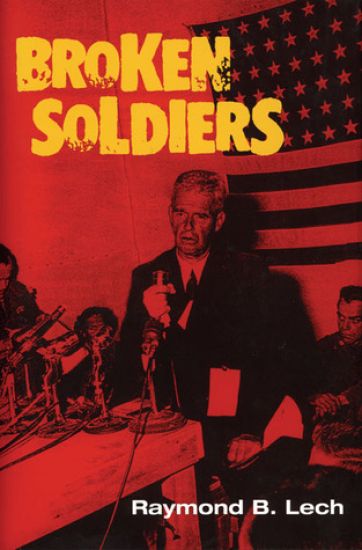
Broken Soldiers

Broken Soldiers

Raymond B. Lech

University of Illinois Press
2000
sidottu
Traversing the no-man's-land of political loyalty and betrayal, Broken Soldiers documents the fierce battle for the minds and hearts of American prisoners during the Korean War. In scorching detail, Raymond Lech describes the soldiers' day-to-day experiences in prisoner-of-war camps and the shocking treatment some of them received at the hands of their own countrymen after the war. Why, he asks, were only fourteen American soldiers tried as collaborators when thousands of others who admitted to some of the same offenses were not? Drawing on some 60,000 pages of court-martial transcripts Lech secured through the Freedom of Information Act, Broken Soldiers documents the appalling treatment and the sophisticated propagandizing to which American POWs fell victim during the Korean conflict. Three thousand American soldiers perished in North Korean camps over the winter of 1950-51, most from starvation. Through the unsentimental testimony of survivors, Lech describes how these young men, filthy and lice-infested, lost an average of 40 percent of their body weight. Many also lost their powers of resistance and their grip on soldierly conduct. After six months of starvation, the emaciated, disoriented prisoners were subjected to a relentless campaign to educate them to the virtues of communism. Bombarded with propaganda, the Americans were organized into study groups and forced to discuss and write about communism and Marxism, even to broadcast harangues against capitalist aggression and appeals for an end to the war. Lech traces the spiral of debilitation and compromise, showing how parroting certain phrases came to seem a small price to pay for physical safety. Threatened with starvation and indefinite confinement in Korea, many POWs succumbed to pressure to mouth communist slogans and provide information far in excess of the regulation "name, rank, and service number." Of the thousands of American soldiers who, while prisoners in North Korea, spoke and wrote favorably of communism and disparaged their country, a handful were charged with collaborating with the enemy. Why were so few singled out? Why did each branch of the armed services judge parallel circumstances differently, and why were American soldiers not realistically prepared for capture? A powerful indictment of justice miscarried, Broken Soldiers raises troubling questions that remain unanswered decades after the events.
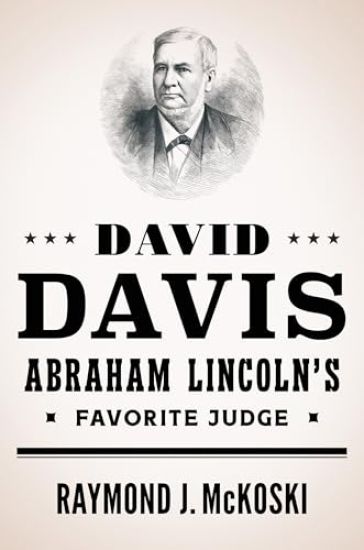
David Davis, Abraham Lincoln's Favorite Judge

David Davis, Abraham Lincoln's Favorite Judge

Raymond J. McKoski

UNIVERSITY OF ILLINOIS PRESS
2025
sidottu
One of Abraham Lincoln’s staunchest and most effective allies, Judge David Davis masterminded the floor fight that gave Lincoln the presidential nomination at the 1860 Republican National Convention. This history-changing event emerged from a long friendship between the two men. It also altered the course of Davis’s career, as Lincoln named him to the U.S. Supreme Court in 1862. Raymond J. McKoski offers a biography of Davis’s public life, his impact on the presidency and judiciary, and his personal, professional, and political relationships with Lincoln. Davis lent his vast network of connections, organizational and leadership abilities, and personal persuasiveness to help Lincoln’s political rise. When Davis became a judge, he honed an ability to hear each case with complete impartiality, a practice that endeared him to Lincoln but one day put him at odds with the president over important Civil War–era rulings. McKoski details these cases while providing an in-depth account of Davis’s role in Lincoln’s two unsuccessful campaigns for U.S. Senate and the fateful run for the presidency.
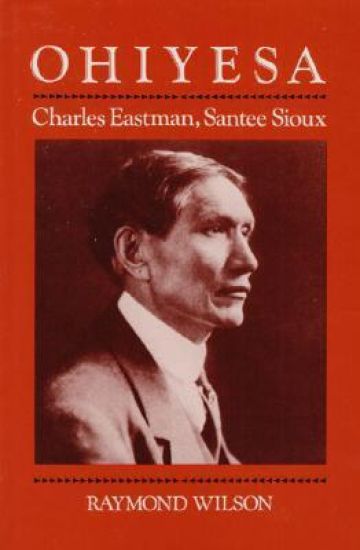
Ohiyesa

Ohiyesa

Raymond Wilson

University of Illinois Press
1999
nidottu
The far-ranging life and work of the popular Native American author Charles Eastman, called Ohiyesa in Santee, came of age amidst increasing tensions and violence between Native and European colonizers. Though raised to be a hunter-warrior, Eastman was persuaded by his Christian father to enter white society. Eastman graduated from Dartmouth and the Boston University School of Medicine. His career included service as the government physician at the Pine Ridge Agency, where he tended casualties at Wounded Knee; as an Inspector for the Bureau of Indian Affairs; as Indian secretary for the YMCA; and as one of the cofounders of the Boy Scouts of America. Raymond Wilson examines these accomplishments while also delving into the writings that expressed Eastman’s determination to hold onto his Santee roots. Popular works like Indian Boyhood, The Soul of the Indian, and Indian Heroes and Chieftains reconfirmed his heritage and aimed at making white society aware of Indigenous peoples’ contribution to American civilization.
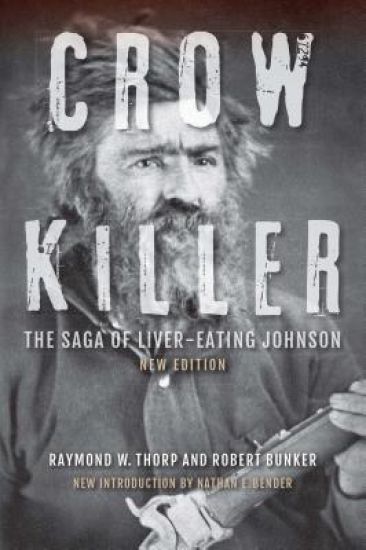
Crow Killer, New Edition

Crow Killer, New Edition

Raymond W. Thorp; Robert Bunker

Indiana University Press
2016
pokkari
The movie Jeremiah Johnson introduced millions to the legendary mountain man, John Johnson. The real Johnson was a far cry from the Redford version. Standing 6'2" in his stocking feet and weighing nearly 250 pounds, he was a mountain man among mountain men, one of the toughest customers on the western frontier. As the story goes, one morning in 1847 Johnson returned to his Rocky Mountain trapper's cabin to find the remains of his murdered Indian wife and her unborn child. He vowed vengeance against an entire Indian tribe. Crow Killer tells of that one-man, decades-long war to avenge his beloved. Whether seen as a realistic glimpse of a long ago, fierce frontier world, or as a mythic retelling of the many tales spun around and by Johnson, Crow Killer is unforgettable. This new edition, redesigned for the first time, features an introduction by western frontier expert Nathan E. Bender and a glossary of Indian tribes.
And the Cow Burned

And the Cow Burned

Raymond Scott De Luca

INDIANA UNIVERSITY PRESS
2026
sidottu
In the films of legendary Soviet director Andrei Tarkovsky, images of visually striking and mysterious animals serve as powerful symbols, marvels, and metaphors, from nomadic dogs to rolling horses and soaring birds. Yet Tarkovsky's hauntingly beautiful depictions of animals exist in suspended tension with his often grisly portrayals of animal cruelty—exemplified by the cow he set on fire while making his second feature film Andrei Rublev. These disturbing moments challenge viewers' perceptions of Tarkovsky's morality and complicate his films' refined artistry. And the Cow Burned is a dynamic interdisciplinary study of Tarkovsky's filmography that draws on insights from animal studies, ethical philosophy, and film theory. Through focused case studies centered on different animals, De Luca posits that Tarkovsky's body of work serves as a canvas for animal philosophy, exposing contradictions inherent in human-animal relationships while raising questions about agency, ethics, and power. Readers are invited to engage with the ethical ramifications of Tarkovsky's depictions and understand these animals as real beings whose experiences are fundamentally woven into his moral and aesthetic considerations. And the Cow Burned challenges us to rethink the connections between animals and humans, encouraging a fresh perspective on the paradoxical exchanges that shape our interactions and paving the way for new interpretations in the future.
And the Cow Burned

And the Cow Burned

Raymond Scott De Luca

INDIANA UNIVERSITY PRESS
2026
pokkari
In the films of legendary Soviet director Andrei Tarkovsky, images of visually striking and mysterious animals serve as powerful symbols, marvels, and metaphors, from nomadic dogs to rolling horses and soaring birds. Yet Tarkovsky's hauntingly beautiful depictions of animals exist in suspended tension with his often grisly portrayals of animal cruelty—exemplified by the cow he set on fire while making his second feature film Andrei Rublev. These disturbing moments challenge viewers' perceptions of Tarkovsky's morality and complicate his films' refined artistry. And the Cow Burned is a dynamic interdisciplinary study of Tarkovsky's filmography that draws on insights from animal studies, ethical philosophy, and film theory. Through focused case studies centered on different animals, De Luca posits that Tarkovsky's body of work serves as a canvas for animal philosophy, exposing contradictions inherent in human-animal relationships while raising questions about agency, ethics, and power. Readers are invited to engage with the ethical ramifications of Tarkovsky's depictions and understand these animals as real beings whose experiences are fundamentally woven into his moral and aesthetic considerations. And the Cow Burned challenges us to rethink the connections between animals and humans, encouraging a fresh perspective on the paradoxical exchanges that shape our interactions and paving the way for new interpretations in the future.
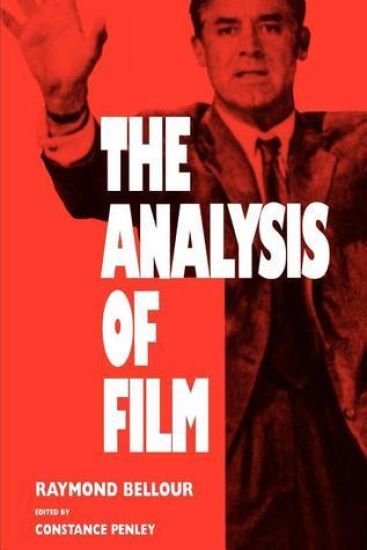
The Analysis of Film

The Analysis of Film

Raymond Bellour

Indiana University Press
2001
pokkari
"No serious student of film should miss the great work collected in this volume."—W. A. Vincent, Choice "When so much writing about film is based on overall impressions or shadowy memories, on notes scribbled in the dark or published shot breakdowns that are often overgeneralized or even inaccurate, it is refreshing to be confronted with such scholarly work, characterized by a genuinely attentive eye and a punctilious observation of detail. This long-awaited collection, gathering Bellour's ground breaking studies into one volume, will surely be a crucial source of inspiration for future generations of film scholars." —Peter Wollen, Bookforum The Analysis of Film brings together Raymonds Bellour's now classic studies of classic Hollywood film. It is at once a book about the methods of close film analysis, the narrative structure of Hollywood film, Hitchcock's work—The Birds, Marnie, Psycho, North by Northwest—and the role of the woman in western representation. But, finally, it is a book about cinema itself and the love for cinema that drives the passion for analyzing the supreme art form of the twentieth century. Bellour creatively reworks the ideas and methods of structuralism, semiology, and psychoanalysis to unravel the knot of significations that is the filmic text. The introductory chapter sketches out a history of the way the close analysis of film developed. And then, beginning with a study of the Bodega Bay sequence of The Birds, the book goes on to examine every aspect of that singular critical practice, "the analysis of film." The book is also a model of how to write about the intricacies of film narrative, shot by shot, sequence by sequence, while addressing larger contextual issues of subjectivity, desire, and identification in Western cultural forms. A new, final chapter on D. W. Griffith's The Lonedale Operator brilliantly demonstrates that the dynamics of repetition and alternation that Bellour discovered to be the heartbeat of Hollywood narrative film were already there in nascent form at the beginnings of cinema.
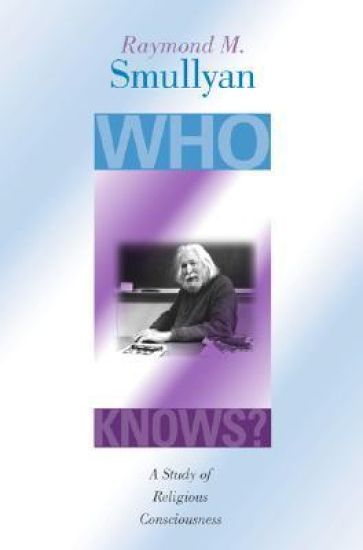
Who Knows?

Who Knows?

Raymond M. Smullyan

Indiana University Press
2003
pokkari
Is there really a God, and if so, what is God actually like? Is there an afterlife, and if so, is there such a thing as eternal punishment for unrepentant sinners, as many orthodox Christians and Muslims believe? And is it really true that our unconscious minds are connected to a higher spiritual reality, and if so, could this higher spiritual reality be the very same thing that religionists call "God"? In his latest book, Raymond M. Smullyan invites the reader to explore some beautiful and some horrible ideas related to religious and mystical thought. In Part One, Smullyan uses the writings on religion by fellow polymath Martin Gardner as the starting point for some inspired ideas about religion and belief. Part Two focuses on the doctrine of Hell and its justification, with Smullyan presenting powerful arguments on both sides of the controversy. "If God asked you to vote on the retention or abolition of Hell," he asks, "how would you vote?" Smullyan has posed this question to many believers and received some surprising answers. In the last part of his treasurable triptych, Smullyan takes up the "beautiful and inspiring" ideas of Richard Bucke and Edward Carpenter on Cosmic Consciousness. Readers will delight in Smullyan's observations on religion and in his clear-eyed presentation of many new and startling ideas about this most wonderful product of human consciousness.
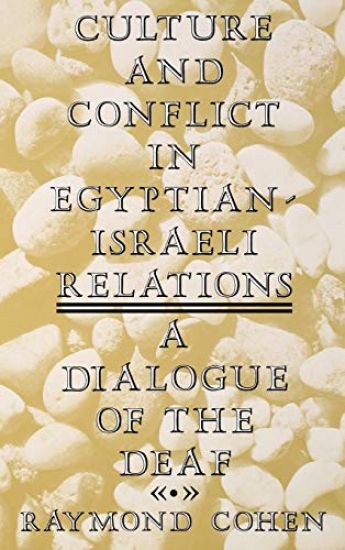
Culture and Conflict in Egyptian-Israeli Relations

Culture and Conflict in Egyptian-Israeli Relations

Raymond Cohen

Indiana University Press
1990
sidottu
"[Cohen] discusses in lucid detail the manner by which policymakers in Israel and Egypt were caught in difficulties of intercultural communication. . . . a most interesting and persuasive argument." —Middle East Journal "Culture and Confict is a tour de force, and this reviewer's candidate for 1990 book-of-the-year on the Middle East. Cohen's wide reading and analytic brilliance enable him to offer stunning insights and build a persuasive argument about the importance of culture in relations between states." —Orbis " . . . Raymond Cohen's dazzling interpretation of political culture in diplomacy and the relations between states." —Daniel Pipes, The American Spectator "Like tourists caught on different sides of the Niagara Falls, Egyptians and Israelis could only gesticulate at each other across the roaring, spray-filled divide in grotesque and mutual incoherence." —from the Introduction Proceeding from markedly different religious, linguistic, and historical traditions, Egyptian and Israeli cultures have found great difficulty in communicating with each other, even when objective grounds for accommodation have existed. Extensively illustrated from the historical record, this book demonstrates that Egyptian-Israeli relations before and after Camp David have been and still are dogged by problems of intercultural communication.
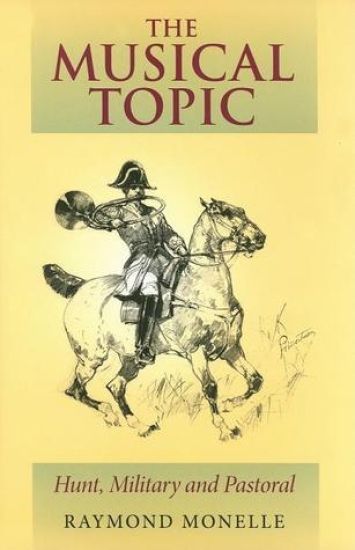
The Musical Topic

The Musical Topic

Raymond Monelle

Indiana University Press
2006
sidottu
The Musical Topic discusses three tropes prominently featured in Western European music: the hunt, the military, and the pastoral. Raymond Monelle provides an in-depth cultural and historical study of musical topics—short melodic figures, harmonic or rhythmic formulae carrying literal or lexical meaning—through consideration of their origin, thematization, manifestation, and meaning. The Musical Topic shows the connections of musical meaning to literature, social history, and the fine arts.
Knowledge in Action

Knowledge in Action

Raymond Reiter

MIT Press
2001
pokkari
Specifying and implementing dynamical systems with the situation calculus.Modeling and implementing dynamical systems is a central problem in artificial intelligence, robotics, software agents, simulation, decision and control theory, and many other disciplines. In recent years, a new approach to representing such systems, grounded in mathematical logic, has been developed within the AI knowledge-representation community.This book presents a comprehensive treatment of these ideas, basing its theoretical and implementation foundations on the situation calculus, a dialect of first-order logic. Within this framework, it develops many features of dynamical systems modeling, including time, processes, concurrency, exogenous events, reactivity, sensing and knowledge, probabilistic uncertainty, and decision theory. It also describes and implements a new family of high-level programming languages suitable for writing control programs for dynamical systems. Finally, it includes situation calculus specifications for a wide range of examples drawn from cognitive robotics, planning, simulation, databases, and decision theory, together with all the implementation code for these examples. This code is available on the book's Web site.
Strange Case Of Alfred Hitchcock

Strange Case Of Alfred Hitchcock

Raymond Durgnat

MIT Press
1978
pokkari
Reviewed in this book are all of Alfred Hitchcock's films, from The Pleasure Garden (1925) to Frenzy (1972).Raymond Durgnat delineates the many facets of Alfred Hitchcock's prolific career and the controversies that these have aroused among the critics-critics who have seen Hitchcock as master of the aesthetic "touch" and who prefer his English to his American period, or those for whom Hitchcock is a dark Roman Catholic moralist.Durgnat's Hitchcock is a fascinating mixture of contrarieties. He tends to admire Hitchcock for his ability to tell a story and to control and manipulate order so that he can play his audience with suspence, for his "rare sense of how far dramatic conflicts can be complicated and in which ways," and for the conjuction or layering of elements in films like "Rear Window", "Vertigo", and "Psycho", which constitutes the real Hitchcock "touch."Durgnat reminds us that Hitchcock's ability to capture a feeling of everyday realism, particularly in the background and details of his early films, is something of a feat-"realism in the '30s was a rarer and more difficult achievement... the director couldn't just point a TV camera in the street, but first had to notice [these details], then to love them enough to remember and to re-create them and lastly to slide them deftly into a thriller context."
Using Computers

Using Computers

Raymond S. Nickerson

Bradford Books
1987
pokkari
Industry veteran Raymond Nickerson provides an extensive introduction to the information technology revolution that is transforming industrial society. He focuses particularly on the study of person-computer interaction, noting how computers are affecting their users and society as a whole, and describes a variety of ways in which information technology is expected to develop in the forseeable future.Nickerson summarizes the development of information technology and discusses many of its applications - in farming, research, education and training, manufacturing, general management, retailing, defense, and elsewhere - that have already had a substantial impact on society. He reviews the human-factors research that has been done and is underway, with special attention to the physical and cognitive interface, including languages, conversational interactions, and the concepts of friendliness and usability.Raymond S. Nickerson is Senior Vice President of BBN Laboratories, a subsidiary of Bolt Beranek and Newman Inc. A Bradford Book.
The Lord of the Absurd

The Lord of the Absurd

Raymond J. Nogar

University of Notre Dame Press
1998
nidottu
This is a remarkable account of a personal journey exploring the evidence for, and far-reaching implications of, human evolution. It is also a powerful inside look at the experience of lecturing on controversial matters at the academic meccas of America. In 1964, Raymond Nogar, a Dominican Scholar Priest and author of the highly regarded book, The Wisdom of Evolution, set out on a ten campus tour that took him to the Universities of Illinois, California, Stanford, North Carolina, Harvard, Michigan and Notre Dame, among others. The Lord of the Absurd is not a collection of Nogar's Lectures, but rather a series of reflections about interaction with audiences, challenging modes of thinking, understanding the risk of unsettling ideas, and the deepening of the author's own convictions in the very presentation of his lectures. He came to realize that the "transforming effect of speaking, in its most creative phases, calls forth much more interpersonal existence, one in which the speaker, the listener and the word are caught up in a drama of human experience which reinterprets the world and gives directions to an existence which otherwise would remain utterly senseless." One sees in Nogar's reflections on his lecture experiences a progressive deepening of his own thought and spirituality. The same evidence for human evolution that has led some to atheism and a view of existence itself as Absurd, the result of nothing more than chance, circumstance and complexity, leads Nogar to a deeper appreciation of the mystery of creation. He acknowledges that the human situation is filled with frivolity and fate, wonders and strangeness and happenings whose apparent meaninglessness pose a dilemma. But, for Nogar, it was exactly in that human situation that Christ presented himself. His life, death and resurrection show him not as the Lord of cosmic order but as Lord of the Absurd. This book can be read with profit by anyone who wishes to probe the truly profound questions of life.
Antoine Frédéric Ozanam

Antoine Frédéric Ozanam

Raymond L. Sickinger

University of Notre Dame Press
2017
sidottu
Raymond Sickinger's biography of Antoine Frédéric Ozanam is more than a chronological account of Ozanam's relatively brief but extraordinary life. It is also a comprehensive study of a man who touched many lives as a teacher, writer, and principal founder of the Society of St. Vincent de Paul. Ozanam's life encompassed a particularly turbulent time in French history, and he was a witness to two major political upheavals—the overthrow of the Bourbon dynasty that brought Louis Philippe to power in 1830, and the end of Louis Philippe's "Bourgeois Monarchy" as a result of the 1848 Revolutions. This book examines Ozanam's life in a number of ways. First, it explores the various roles he played throughout his life—son, sibling, student, member of and an inspiration for the Society of St. Vincent de Paul, spouse and father, scholar, and spokesperson for the common people. Second, it examines the lessons he learned in his life, including the importance of friendship, the meaning of solidarity, and the role and purpose of suffering, among many others that he shares with those who study his thought and work. It concludes with an account of Ozanam's enduring legacy. Antoine Frédéric Ozanam feared that he would not have a fruitful career, but his legacy remains a powerful testimony to his greatness. This book will interest scholars wishing to know more about Ozanam and the period in which he lived, as well as a wider audience, including those who are aware of or are members of the Society of St. Vincent de Paul.
Antoine Frédéric Ozanam

Antoine Frédéric Ozanam

Raymond L. Sickinger

University of Notre Dame Press
2020
nidottu
Raymond Sickinger's biography of Antoine Frédéric Ozanam is more than a chronological account of Ozanam's relatively brief but extraordinary life. It is also a comprehensive study of a man who touched many lives as a teacher, writer, and principal founder of the Society of St. Vincent de Paul. Ozanam's life encompassed a particularly turbulent time in French history, and he was a witness to two major political upheavals—the overthrow of the Bourbon dynasty that brought Louis Philippe to power in 1830, and the end of Louis Philippe's "Bourgeois Monarchy" as a result of the 1848 Revolutions. This book examines Ozanam's life in a number of ways. First, it explores the various roles he played throughout his life—son, sibling, student, member of and an inspiration for the Society of St. Vincent de Paul, spouse and father, scholar, and spokesperson for the common people. Second, it examines the lessons he learned in his life, including the importance of friendship, the meaning of solidarity, and the role and purpose of suffering, among many others that he shares with those who study his thought and work. It concludes with an account of Ozanam's enduring legacy. Antoine Frédéric Ozanam feared that he would not have a fruitful career, but his legacy remains a powerful testimony to his greatness. This book will interest scholars wishing to know more about Ozanam and the period in which he lived, as well as a wider audience, including those who are aware of or are members of the Society of St. Vincent de Paul.
The Rainbow Bridge

The Rainbow Bridge

Raymond L. Lee Jr.; Alistair B. Fraser

Pennsylvania State University Press
2001
sidottu
Venerated as god and goddess, feared as demon and pestilence, trusted as battle omen, and used as a proving ground for optical theories, the rainbow's image is woven into the fabric of our past and present. From antiquity to the nineteenth century, the rainbow has played a vital role in both inspiring and testing new ideas about the physical world. Although scientists today understand the rainbow's underlying optics fairly well, its subtle variability in nature has yet to be fully explained.Throughout history the rainbow has been seen primarily as a symbol—of peace, covenant, or divine sanction—rather than as a natural phenomenon. Lee and Fraser discuss the role the rainbow has played in societies throughout the ages, contrasting its guises as a sign of optimism, bearer of Greek gods' messages of war and retribution, and a symbol of the Judeo-Christian bridge to the divine.The authors traverse the bridges between the rainbow's various roles as they explore its scientific, artistic, and folkloric visions. This unique book, exploring the rainbow from the perspectives of atmospheric optics, art history, color theory, and mythology, will inspire readers to gaze at the rainbow anew.For more information on The Rainbow Bridge, visit:
Closing the Door to Destitution

Closing the Door to Destitution

Raymond Richards

Pennsylvania State University Press
1994
pokkari
During the depression of the 1930s, both the United States and New Zealand passed a Social Security Act. Both countries were developed nations of the "new world," and each statute was an omnibus measure aimed at protecting citizens from the poverty so visible at the time. The two acts, however, were very different. The New Zealand measure was absolute, promising everyone medical care and a reasonable income in every circumstance. It redistributed income downward. The U.S. act addressed only a handful of risks, and each of its two main programs covered less than half of the population. Its benefits were funded by regressive taxes, and the main programs promised more help, not to persons in greater need, but to those from higher-paying jobs. Scholars of comparative public policy have tried to account for such differences among welfare states. Their explanations have commonly stressed economic, cultural, bureaucratic, or political differences among countries. The character of life in these two countries makes it possible to conclude simply that the United States and New Zealand passed contrasting acts because their histories were different. Richards argues that this conclusion is too vague. After all, the Social Security Acts did not materialize from national ambiance. He shows that the contrasts between the two systems stemmed from national differences that were inveterate, with the differences between their political systems being the most direct influence. By closely examining the two systems of government, Richards reveals that the U.S. Social Security Act reinforced the country's inequalities while New Zealand's act reflected that nation's legislative and electoral arrangements, which allowed bold policy-making by politicians who knew the pain of poverty.
The New Economics of Health Care

The New Economics of Health Care

Raymond Arons

Praeger Publishers Inc
1984
sidottu
The purpose of this tudy was to measure how well diagnostic related groupings (DRGs) perform as length of stay predictors. This study performed a length of stay analysis on the 44,546 patient discharge abstracts from the Presbyterian Hospital in the City of New York in 1980. This study affirms the appropriateness of DRGs as the foundation of the national hospital reimbursement model, as well as the importance of the use of computer technology in the exploration of this research question and in all areas of inquiry.
Beyondism

Beyondism

Raymond B. Cattell

Praeger Publishers Inc
1987
sidottu
Expanding on his earlier work, Cattell applies the Beyondist viewpoint to major ethical questions. Starting from the premise that evolution is the fundamental process present in the universe, he explains that human evolution is governed by natural selection among groups, which in turn, is based upon genetic and cultural selection among individuals. Since natural selection of individuals is directed toward forming a viable group, the genetic and cultural shaping of individuals must fit the survival conditions of the group. The goal of Beyondism is to find these ethical and cultural conditions that are necessary for successful evolutionary adaptation and advancement.