Kirjojen hintavertailu. Mukana 11 244 527 kirjaa ja 12 kauppaa.

Kirjahaku

Etsi kirjoja tekijän nimen, kirjan nimen tai ISBN:n perusteella.

1000 tulosta hakusanalla Raymond Calcraft; Elizabeth Matthews

Mario Vargas Llosa

Mario Vargas Llosa

Raymond Leslie Williams

University of Texas Press
2014
sidottu
Awarded the Nobel Prize in 2010 at the age of seventy-four, Peruvian writer Mario Vargas Llosa has held pivotal roles in the evolution and revolutions of modern Latin American literature. Perhaps surprisingly, no complete history of Vargas Llosa’s works, placed in biographical and historical context, has been published-until now. A masterwork from one of America’s most revered scholars of Latin American fiction, Mario Vargas Llosa: A Life of Writing provides a critical overview of Vargas Llosa’s numerous novels while reinvigorating debates regarding conventional interpretations of the work.Weaving analysis with discussions of the writer’s political commentary, Raymond Leslie Williams traces the author’s youthful identity as a leftist student of the 1960s to a repudiation of some of his earlier ideas beginning in the 1980s. Providing a unique perspective on the complexity, nuance, and scope of Vargas Llosa’s lauded early novels and on his passionate support of indigenous populations in his homeland, Williams then turns his eye to the recent works, which serve as a bridge between the legacies of the Boom and the diverse array of contemporary Latin American fiction writers at work today. In addition, Williams provides a detailed description of Vargas Llosa’s traumatic childhood and its impact on him-seen particularly in his lifelong disdain for authority figures-as well as of the authors who influenced his approach, from Faulkner to Flaubert. Culminating in reflections drawn from Williams’s formal interviews and casual conversations with the author at key phases of both men’s careers, this is a landmark publication that will spark new lines of inquiry into an intricate body of work.
Guillermo Cabrera Infante

Guillermo Cabrera Infante

Raymond D. Souza

University of Texas Press
1996
pokkari
A native Cuban who has lived in London since 1966, Guillermo Cabrera Infante is, in every sense, a multilingual and multicultural author. Equally at ease in both Spanish and English, he has distinguished himself with daring and innovative novels, essays, short stories, and film scripts written in both languages. His work has won major literary awards in France, Italy, and Spain, as well as a Guggenheim fellowship in the United States.This biography is the first comprehensive exploration of the life and works of Guillermo Cabrera Infante. Drawing on wide-ranging interviews with the author and his family and friends, as well as extensive study of both published and unpublished works, Raymond D. Souza creates an intimate portrait of Cabrera Infante and the cultural and political milieus that shaped his writing, including Three Trapped Tigers (Tres tristes tigres), View of Dawn in the Tropics (Vista del amanecer en el trópico), Infante's Inferno (La Habana para un Infante difunto), Holy Smoke, A Twentieth Century Job (Un oficio del siglo XX), Writes of Passage (Así en la paz como en la guerra), and Mea Cuba.
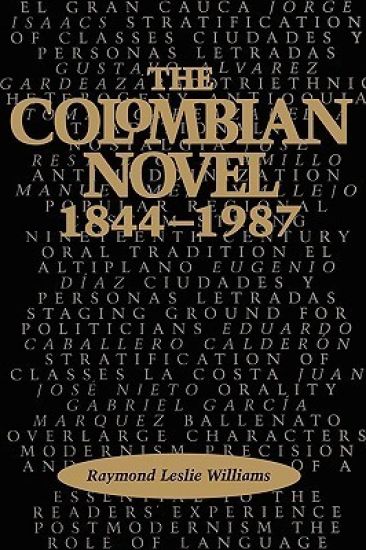
The Colombian Novel, 1844-1987

The Colombian Novel, 1844-1987

Raymond Leslie Williams

University of Texas Press
2009
pokkari
Novels such as One Hundred Years of Solitude have awakened English-language readers to the existence of Colombian literature in recent years, but Colombia has a well-established literary tradition that far predates the Latin American "boom." In this pathfinding study, Raymond Leslie Williams provides an overview of seventeen major authors and more than one hundred works spanning the years 1844 to 1987. After an introductory discussion of Colombian regionalism and novelistic development, Williams considers the novels produced in Colombia's four semi-autonomous regions. The Interior Highland Region is represented by novels ranging from Eugenio Díaz' Manuela to Eduardo Caballero Calderón's El buen salvaje. The Costa Region is represented by Juan José Nieto's Ingermina to Alvaro Cepeda Samudio's La casa grande and Gabriel García Márquez' Cien años de soledad; the Greater Antioquian Region by Tomás Carrasquilla's Frutos de mi tierra to Manuel Mejía Vallejo's El día señalado; and the Greater Cauca Region by Jorge Isaacs' Maria to Gustavo Alvarez Gardeazábal's El bazar de los idiotas. A discussion of the modern and postmodern novel concludes the study, with special consideration given to the works of García Márquez and Moreno-Durán. Written in a style accessible to a wide audience, The Colombian Novel will be a foundational work for all students of Colombian culture and Latin American literature.
King of the Cowboys, Queen of the West

King of the Cowboys, Queen of the West

Raymond E. White

University of Wisconsin Press
2006
nidottu
For more than sixty years, Roy Rogers and Dale Evans personified the romantic, mythic West that Americans cherished. Blazing a trail through every branch of the entertainment industry - radio, film, recordings, television, and even comic books - the couple capitalized on their attractive personas and appealed to the nation's belief in family values, an independent spirit, and community. Raymond E. White presents these two celebrities in the most comprehensive and inclusive account to date. Part narrative, part reference, this impeccably researched, highly accessible survey spans the entire scope of Rogers's and Evans's careers and highlights their place in twentieth-century American popular culture. In a dual biography, he shows how Rogers and Evans carefully husbanded their public image and - of particular note - incorporated their Christian faith into their performances. Testifying to both the breadth and the longevity of their careers, the book includes radio logs, discographies, filmographies, and comicographies that will delight historians and collectors alike.
Who Votes?

Who Votes?

Raymond E. Wolfinger; Steven J. Rosenstone

Yale University Press
1980
pokkari
Elections are at the heart of the American political system, but in 1976 only 54 percent of the voting age population went to the polls. The question of who votes matters greatly to everyone involved in politics and to all those concerned about the current and future state of American democracy. Based on data from the 1972 and 1974 Census Bureau surveys, Wolfinger and Rosenstone are able to identify for the first time those social and economic groups that are most likely to vote and to explain sensibly and convincingly those factors that influence voter turnout.
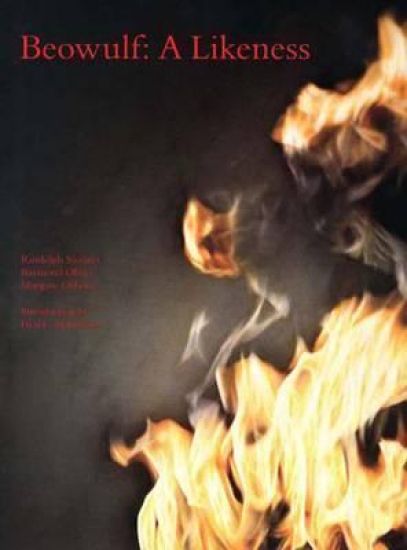
Beowulf

Beowulf

Raymond Oler; Marijane Osborn; Randolph Swearer

Yale University Press
1990
sidottu
Beowulf, the primary epic of the English language, is a powerful heroic poem eloquently expressive of the Anglo-Saxon culture that produced it. In this beautiful book a designer, a poet, and a specialist in Anglo-Saxon literature recreate Beowulf for a modern audience. Interweaving evocative images, a new interpretation in verse, and a running commentary that helps clarify the action and setting of the poem as well as the imagery, the book brings new life to this ancient masterpiece. Randolph Swearer’s oblique and allusive images create an archaic, mysterious atmosphere by depicting in forms and shadows the world of Germanic antiquity—Scandinavian and Anglo-Saxon art, artifacts, and scenery. At the same time, Raymond Oliver gives Beowulf a world in which to live, filling in the cultural gaps not with a thick matrix of footnotes but with poetry itself. Unlike many translations of Beowulf in existence, Oliver’s retelling of the epic uses modern verse forms for poetic effect and includes a wealth of historically authentic descriptions, characterizations, and explanations necessary for modern readers. Marijane Osborn completes the process of restoring context to the poem by supplying a commentary to clarify the historical and geographical dimensions of the story as well as the imagery that accompanies it. All three work together to bring a likeness of an old and elusive tale to today’s reader.“The book’s design and the commentary on it provide a unique visual complement to Oliver’s poem… A strange and moving story, compellingly told and seriously interesting to any serious reader of books.”—Fred C. Robinson, from the Introduction
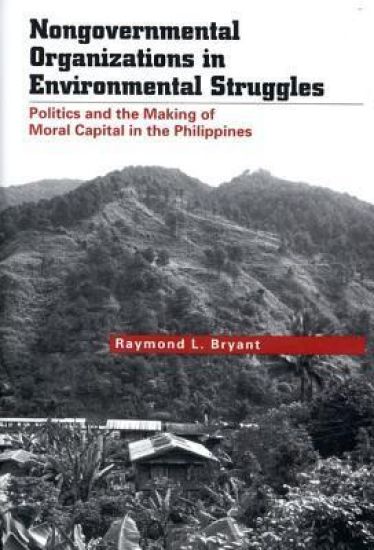
Nongovernmental Organizations in Environmental Struggles

Nongovernmental Organizations in Environmental Struggles

Raymond L. Bryant

Yale University Press
2005
sidottu
Why are nongovernmental organizations (NGOs) so successful in today’s world? How do they empower themselves? This insightful book provides important new perspectives on the strategic thinking of NGOs, the way they identify themselves, and how they behave. Raymond L. Bryant develops a novel theoretical perspective around the concept of moral capital and assesses that concept through in-depth case studies of NGOs in the Philippines.The book’s focus is on perceptions of NGOs as moral and altruistic and how such perceptions can translate into social power. Bryant examines the ambiguous qualities of NGO strategizing, the ways in which the quest for moral capital is bedeviled by the need to compromise with political and economic elites, and the possibilities for NGOs to achieve political goals as moral leaders.
Richard Strauss

Richard Strauss

Raymond Holden

Yale University Press
2011
sidottu
Renowned today as the gifted composer of a string of masterworks, Richard Strauss (1864-1949) is less often remembered for his achievement as a major conductor. Yet he held important conducting posts in Munich, Berlin, and Vienna and influenced generations of younger conductors. This important book is the first to consider Strauss's career as a conductor and place it in relation to his life as a composer. With unique access to extensive materials in the Strauss family's private archives, Raymond Holden corrects misconceptions about Strauss and discusses the musician's understanding of composing and conducting as intertwined processes. Holden throws new light on Strauss's relationships, on his disputed role during the Third Reich, and particularly on his performance practices and principles.
The Death of the Messiah, From Gethsemane to the Grave, Volume 1
Over his illustrious career, Raymond E. Brown, S.S., Ph.D., was internationally regarded as a dean of New Testament scholars. He was Auburn Distinguished Professor Emeritus of Biblical Studies at Union Theological Seminary in New York City. He received over thirty honorary degrees from Catholic and Protestant universities worldwide, and was elected a (Corresponding) Fellow of the British Academy and a member of the American Academy of Arts and Sciences.In addition to serving as president of the Society of Biblical Literature, the Catholic Biblical Association, and the Society of New Testament Studies, two popes appointed Father Brown as the sole American on the Pontifical Biblical Commission. Some of the best known of his more than thirty-five books on the Bible are three volumes in the "Anchor Bible" series on the Gospel and Epistles of John, as well as the Anchor Bible Reference Library volumes "The Birth of the Messiah", "The Death of the Messiah", and "An Introduction to the New Testament", winner of the 1998 Catholic Press Association Award for Biblical Studies. Father Brown's untimely death on August 8, 1998, saddened all who knew him.
The Death of the Messiah, From Gethsemane to the Grave, Volume 2
Over his illustrious career, Raymond E. Brown, S.S., Ph.D., was internationally regarded as a dean of New Testament scholars. He was Auburn Distinguished Professor Emeritus of Biblical Studies at Union Theological Seminary in New York City. He received over thirty honorary degrees from Catholic and Protestant universities worldwide, and was elected a (Corresponding) Fellow of the British Academy and a member of the American Academy of Arts and Sciences.In addition to serving as president of the Society of Biblical Literature, the Catholic Biblical Association, and the Society of New Testament Studies, two popes appointed Father Brown as the sole American on the Pontifical Biblical Commission. Some of the best known of his more than thirty-five books on the Bible are three volumes in the "Anchor Bible" series on the Gospel and Epistles of John, as well as the Anchor Bible Reference Library volumes "The Birth of the Messiah", "The Death of the Messiah", and "An Introduction to the New Testament", winner of the 1998 Catholic Press Association Award for Biblical Studies. Father Brown's untimely death on August 8, 1998, saddened all who knew him.
An Introduction to the Gospel of John

An Introduction to the Gospel of John

Raymond E. Brown; Francis J. Moloney

Yale University Press
2003
sidottu
When Raymond E. Brown died in 1998, less than a year after the publication of his masterpiece, An Introduction to the New Testament, he left behind a nearly completed revision of his acclaimed two-volume commentary on the Gospel of John. The manuscript, skillfully edited by Francis J. Moloney, displays the rare combination of meticulous scholarship and clear, engaging writing that made Father Brown’s books consistently outsell other works of biblical scholarship. An Introduction to the Gospel of John represents the culmination of Brown’s long and intense examination of part of the New Testament. One of the most important aspects of this new book, particularly to the scholarly community, is how it differs from the original commentary in several important ways. It presents, for example, a new perspective on the historical development of the Gospels, and shows how Brown decided to open his work to literary readings of the text, rather than relying primarily on the historical, which informed the original volumes. In addition, there is an entire section devoted to Christology, absent in the original, as well as a magisterial new section on the representation of Jews in the Gospel of John.
An Introduction to the New Testament

An Introduction to the New Testament

Raymond E. Brown

Yale University Press
1997
sidottu
A primer to the New Testament for those new to the material or those seeking deeper insights, from a master biblical scholar “A truly magnificent book, composed by our Catholic national treasure.”—Commonweal “This judicious and reassuring approach may comfort many.”—Anthony J. Saldarini, New York Times Book Review “A tour de force.”—America From the experience of a lifetime of scholarship, preaching, teaching, and writing, Raymond E. Brown covers the entire scope of the New Testament with ease and clarity. He walks readers book by book through the basic content and issues of the New Testament. While a wealth of information is contained in these pages, the work’s most impressive features are the basic summaries of each book, a historical overview of the ancient Greco-Roman world, discussions of key theological issues, and the rich supplementary materials, such as illustrative tables, maps, bibliographies, and appendixes. Using this basic data, Brown answers questions raised by today’s readers, relates the New Testament to our modern world, and responds to controversial issues, such as those raised by the Jesus Seminar. Every generation needs a comprehensive, reliable introduction to the New Testament that opens the biblical text to the novice. Raymond E. Brown’s An Introduction to the New Testament is the most trustworthy and authoritative guidebook for a generation seeking to understand the Christian Bible. Universally acknowledged as the dean of New Testament scholarship, Father Brown is a master of his discipline at the pinnacle of his career. Who else could cover the entire scope of the New Testament with such ease and clarity? This gifted communicator conveys the heartfelt concern of a beloved teacher for his students, as he walks the reader through the basic content and issues of the New Testament. Those opening to the New Testament for the first time and those seeking deeper insights could not ask for more in a primer to the Christian Bible.
The Epistles of John

The Epistles of John

Raymond E. Brown

Yale University Press
1995
pokkari
With this study—companion to the masterful two-volume The Gospel According to John—Raymond E. Brown completed his trilogy on the Johannine corpus. Meticulous in detail, exhaustive in analysis, persuasive in argument, it examines controversies that have long troubled both biblical scholars and lay readers. Questions of authorship, composition, and dating, as well as the debate over source theories, are discussed at length; but these are kept subordinate to the overall question of meaning.What gives this commentary special interest and excitement is the bold, imaginative reconstruction of the setting of the Johannine work—in particular of the “opposition figures,” who are only dimly sketched in the Epistles—so that we see clearly that the author is writing to his flock both about the dangers and difficulties confronting them, and about the eternal life that is theirs by the gift of God. In this way, the Epistles of John become intelligible as broadsides in a critical engagement between the forces of light and darkness.In addition to his superb textual analysis of the letters, Raymond Brown has brought to life the community in which these works were formed and shaped. We are forcefully reminded that the Gospel and the Epistles were addressed to very real people living in the first century a.d., people with religious problems not unlike our own. In all respects, The Epistles of John stands out as a model of biblical scholarship and study.
The Gospel According to John (I-XII)

The Gospel According to John (I-XII)

Raymond E. Brown

Yale University Press
1995
pokkari
In the first volume of Raymond E. Brown’s magisterial three-volume commentary on the Gospel According to John, all of the major Johannine questions—of authorship, composition, dating, the relationship of John to the Synoptics (Mark, Matthew, and Luke)—are discussed. The important theories of modern biblical scholarship concerning John are weighed against the evidence given in the text and against prevailing biblical research. In sum, what is attempted is a synthesis of the major scholarly insights that bear on the Fourth Gospel. The translation—as Father Brown states at the outset—strives not for any formal beauty but rather for an accurate and contemporary version: “the simple, everyday Greek of the Gospel has been rendered into the ordinary American English of today.” The result is a translation that will strike the reader with uncommon immediacy.Father Brown also analyzes, in the appendixes, the meaning, use, and frequency of certain key words and phrases that occur in John, and examines the differences between the Johannine and Synoptic treatments of the miracle stories.The chapters of the Gospel translated here in Volume 29 (1–12) comprise the Prologue, which opens with the famous “In the beginning was the Word,” and the Book of Signs, an account of the miracles of Jesus and of his ministry.
The Gospel According to John, XIII-XXI

The Gospel According to John, XIII-XXI

Raymond E. Brown

Yale University Press
1970
sidottu
This volume concludes Raymond E. Brown's commentary on the Gospel of John. Continuing his study begun in Anchor Bible Volume 29, the author translates the original Greek text into today's English. which allows all readers to make sense of the Gospel. Father Brown's notes and comments sort out the major issues surrounding the writings of John -- questions of authorship, composition, date, and John's relation to the Synoptic Gospels (Matthew, Mark, and Luke). He analyzes and presents the scholarly debates in a form the interested layperson can appreciate. John chapters 13-21 comprise the Book of Glory (describing the Last Supper, the Passion, and the appearances of the Risen Jesus) and the epilogue to the Gospel. This commentary includes a special appendix on the Paraclete, in which Brown examines in detail the role of the Holy Spirit. Whether discussing John's version of miracle stories found in the other Gospels, explaining the meaning of obscure Greek words, or showing the relevance of Jesus' words and deeds, Father Brown speaks to scholars and laypeople alike.
An Introduction to the New Testament

An Introduction to the New Testament

Raymond E. Brown

Yale University Press
2016
pokkari
A long-awaited abridgement of Raymond Brown’s classic and best-selling introduction to the New Testament Since its publication in 1997, Raymond Brown’s Introduction to the New Testament has been widely embraced by modern readers seeking to understand the Christian Bible. Acknowledged as a paragon of New Testament studies in his lifetime, Brown was a gifted communicator who wrote with ease and clarity. Abridged by Marion Soards, who worked with Brown on the original text, this new, concise version maintains the essence and centrist interpretation of the original without tampering with Brown’s perspective, insights, or conclusions. The biblical writings themselves remain the focus, but there are also chapters dealing with the nature, origin, and interpretation of the New Testament texts, as well as chapters concerning the political, social, religious, and philosophical world of antiquity. Furthermore, augmenting Brown’s commentary on the New Testament itself are topics such as the Gospels’ relationship to one another; the form and function of ancient letters; Paul’s thought and life, along with his motivation, legacy, and theology; a reflection on the historical Jesus; and a survey of relevant Jewish and Christian writings. This comprehensive, reliable, and authoritative guidebook is now more accessible for novices, general readers, Bible study groups, ministers, scholars, and students alike.
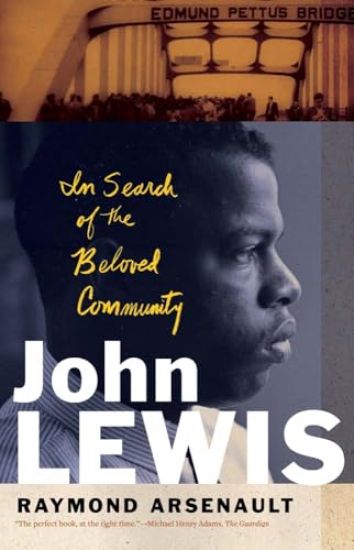
John Lewis

John Lewis

Raymond Arsenault

YALE UNIVERSITY PRESS
2024
sidottu
The first full-length biography of civil rights hero and congressman John Lewis A New Yorker “Best Book of 2024” Selection “The perfect book, at the right time.”—Michael Henry Adams, The Guardian For six decades John Robert Lewis (1940–2020) was a towering figure in the U.S. struggle for civil rights. As an activist and progressive congressman, he was renowned for his unshakable integrity, indomitable courage, and determination to get into “good trouble.” In this first book-length biography of Lewis, Raymond Arsenault traces Lewis’s upbringing in rural Alabama, his activism as a Freedom Rider and leader of the Student Nonviolent Coordinating Committee, his championing of voting rights and anti-poverty initiatives, and his decades of service as the “conscience of Congress.” Both in the streets and in Congress, Lewis promoted a philosophy of nonviolence to bring about change. He helped the Reverend Martin Luther King Jr. and other civil rights leaders plan the 1963 March on Washington, where he spoke at the Lincoln Memorial. Lewis’s activism led to repeated arrests and beatings, most notably when he suffered a skull fracture in Selma, Alabama, during the 1965 police attack later known as Bloody Sunday. He was instrumental in the passage of the Voting Rights Act of 1965, and in Congress he advocated for racial and economic justice, immigration reform, LGBTQ rights, and national health care. Arsenault recounts Lewis’s lifetime of work toward one overarching goal: realizing the “beloved community,” an ideal society based in equity and inclusion. Lewis never wavered in this pursuit, and even in death his influence endures, inspiring mobilization and resistance in the fight for social justice.
John Lewis

John Lewis

Raymond Arsenault

YALE UNIVERSITY PRESS
2025
pokkari
The first full-length biography of civil rights hero and congressman John Lewis A New Yorker “Best Book of 2024” Selection “The perfect book, at the right time.”—Michael Henry Adams, The Guardian For six decades John Robert Lewis (1940–2020) was a towering figure in the U.S. struggle for civil rights. As an activist and progressive congressman, he was renowned for his unshakable integrity, indomitable courage, and determination to get into “good trouble.” In this first book-length biography of Lewis, Raymond Arsenault traces Lewis’s upbringing in rural Alabama, his activism as a Freedom Rider and leader of the Student Nonviolent Coordinating Committee, his championing of voting rights and anti-poverty initiatives, and his decades of service as the “conscience of Congress.” Both in the streets and in Congress, Lewis promoted a philosophy of nonviolence to bring about change. He helped the Reverend Martin Luther King Jr. and other civil rights leaders plan the 1963 March on Washington, where he spoke at the Lincoln Memorial. Lewis’s activism led to repeated arrests and beatings, most notably when he suffered a skull fracture in Selma, Alabama, during the 1965 police attack later known as Bloody Sunday. He was instrumental in the passage of the Voting Rights Act of 1965, and in Congress he advocated for racial and economic justice, immigration reform, LGBTQ rights, and national health care. Arsenault recounts Lewis’s lifetime of work toward one overarching goal: realizing the “beloved community,” an ideal society based in equity and inclusion. Lewis never wavered in this pursuit, and even in death his influence endures, inspiring mobilization and resistance in the fight for social justice.
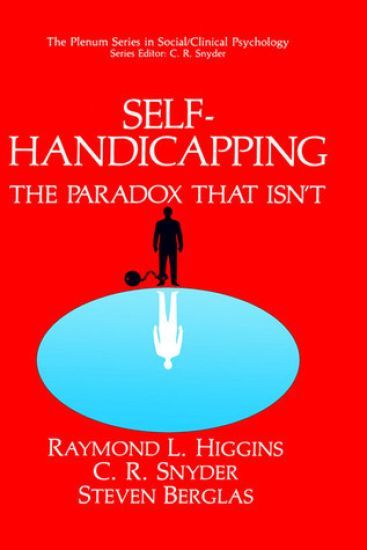
Self-Handicapping

Self-Handicapping

Raymond L. Higgins; C.R. Snyder; Steven Berglas

Kluwer Academic/Plenum Publishers
1990
sidottu
The concept of self-handicapping can be legitimately anchored in a vari­ ety of intellectual contexts, some old and some newer. As this volume reminds us, Alfred Adler was perhaps the first to articulate the signifi­ cance of various self-defeating claims and gestures for protecting the self­ concept. Thus the apparent paradox of "defeat" in the interests of "pro­ tection. " More recently (but still more than 30 years ago), Heider's "naive psychology" added attributional rhetoric to the description of self-defeat­ ing strategies. While predominantly cognitive in its thrust, the attribu­ tional approach incorporated several motivational influences-especially those involving egocentric concerns. Heider hardly violated our common sense when he suggested that people are inclined to attribute their performances in a self-serving manner: the good things I caused; the bad things were forced upon me. The notion of self-handicapping strategies, proposed by Berglas and myself a little more than a decade ago, capitalized on these homely truths while adding a particular proactive twist. We not only make ex­ cuses for our blunders; we plan our engagements and our situational choices so that self-protective excuses are unnecessary. In doing so, we use our attributional understanding to arrange things so that flawed and failing performances will not be interpreted in ways that threaten our self-esteem.