Kirjojen hintavertailu. Mukana 11 378 579 kirjaa ja 12 kauppaa.

Kirjahaku

Etsi kirjoja tekijän nimen, kirjan nimen tai ISBN:n perusteella.

1000 tulosta hakusanalla Raymond Faure

Drugs into Bodies

Drugs into Bodies

Raymond A. Smith; Patricia D. Siplon

Praeger Publishers Inc
2006
sidottu
Drugs into Bodies recounts the emergence and development of a globally oriented AIDS treatment activist movement that refused to accept that more than 40 million people with HIV in the developing world should simply be left to die. Rooted in earlier AIDS activist efforts, this new movement has forged a global network dedicated to providing universal access to life-saving medications.More than 40 million people are living with HIV/AIDS worldwide, yet only a small fraction have access to life-saving treatments. For many years, governments, pharmaceutical companies, and even some international relief agencies have called this a tragic but unavoidable situation, given the high cost of the medications used to fight HIV. A small but growing group of activists, however, have banded together to prove that the obstacles to universal HIV treatments are mostly human-made, and thus can be overcome by human actions.Drugs into Bodies chronicles the birth and expansion of the global AIDS treatment activist movement, focusing in particular on the U.S.-based organization Health GAP. Drawing on the legacy of the protest group ACT UP and other earlier AIDS activism, Health GAP and like-minded allies have forged a global network to combat the AIDS crisis in Africa and throughout the developing world. From the White House to the United Nations, from plush corporate offices to South African shantytowns, AIDS treatment activists have defied the dictates of globalization, altered government policies, shamed multinational corporations, secured funding for treatment, and brought hope to millions of people with HIV.
Sexual Liberation

Sexual Liberation

Raymond J. Lawrence

Praeger Publishers Inc
2007
sidottu
Sex sells, they say, but even today, it is considered forbidden, wrong, or sinful by many in the Western world. This book is an account of the strange ways sexual pleasure has been devalued, even demonized, in the West by the forces of Christendom and its legacy in the modern world. It tells the story of how sex came to be regarded by societies throughout the ages as perverse, sinful, and wrong, and how the motivations of a few have lasted centuries and colored our view of sex and sexuality even today.Sex sells, they say, but even today it is considered forbidden or sinful by many in the Western world. This book is an account of the ways in which sexual pleasure has been devalued and demonized in the West by the historical forces of Christendom. It tells the story of how sex came to be regarded by societies throughout the ages as perverse, sinful, and wrong, and how the centuries-old motivations of a few have persisted into modern times, coloring our view of sex and sexuality to this day.For good or ill, Christianity has been, since before the ebbing of the Roman Empire, the principal bearer of public values in the western world. This book traces the changes that have shaped and reshaped what is considered moral sexual behavior (and immoral sexual behavior) by Christians and non-Christians alike. Lawrence's account of the perversion of sexual values begins with the intersection of the early Jesus movement and the morality of the Greco-Roman culture and empire. He goes on to point out the ways Christianity and its moral code were reshaped under the impact of Constantine's adoption of Christianity as the imperial religion, and how key figures of the Middle Ages generally succeeded in promoting a religion whose chief goal was the obliteration of sexual pleasure. The story continues on through the ages until now. This controversial look at sex and Christianity sheds new light on our views of pornography, homosexuality, adultery, and other issues of sex and sexuality.
Round Up the Usual Suspects

Round Up the Usual Suspects

Raymond Ruble

Praeger Publishers Inc
2008
sidottu
TV shows that retain their popularity over the years do so for obvious reasons: good production values, good acting, and compelling storylines. But detective stories in particular also endure because they appeal to the gumshoe in all of us. America is obsessed with crime solving. Nancy Grace on CNN Headline News, Greta Van Susteren on Fox, and the seemingly annual recurrence of the courtroom sensation all testify to this fact. And these people and cases are able to reach their phenomenal status not simply because of the media-the media only demonstrates the enormous national appetite for this material. Rather, Cold Case, CSI, and Law & Order have achieved their current popularity because they all respond to the same national craving for crime, and do so with great skill and creativity. Round Up the Usual Suspects provides a comparison of the crime fighting models and justice proceedings of each of these TV series.Each series has its own special crime-fighting niche, and each approaches its job with a different set of values and different paradigms of discovery and proof. Their separate approaches are each firmly grounded in different components of human nature — analytical reasoning, for instance, in CSI, memory in Cold Case, and teamwork in Law & Order. After examining each of the individual series in depth, Ruble goes on to investigate some of the historical antecedents in classical TV detective series such as The FBI and Dragnet. It is interesting to note that these crime fighting methodologies are extensions of the way we all process information about the world. Ray Ruble here aims to increase our appreciation for the ingenious manner in which fictional cases are broken and convictions convincingly secured, and also illuminates the deeper human elements that lie under a more implicit spotlight in these runaway hits.
The Twentieth-Century Spanish American Novel

The Twentieth-Century Spanish American Novel

Raymond Leslie Williams

University of Texas Press
2004
pokkari
A Choice Magazine Outstanding Academic BookSpanish American novels of the Boom period (1962-1967) attracted a world readership to Latin American literature, but Latin American writers had already been engaging in the modernist experiments of their North American and European counterparts since the turn of the twentieth century. Indeed, the desire to be "modern" is a constant preoccupation in twentieth-century Spanish American literature and thus a very useful lens through which to view the century's novels.In this pathfinding study, Raymond L. Williams offers the first complete analytical and critical overview of the Spanish American novel throughout the entire twentieth century. Using the desire to be modern as his organizing principle, he divides the century's novels into five periods and discusses the differing forms that "the modern" took in each era. For each period, Williams begins with a broad overview of many novels, literary contexts, and some cultural debates, followed by new readings of both canonical and significant non-canonical novels. A special feature of this book is its emphasis on women writers and other previously ignored and/or marginalized authors, including experimental and gay writers. Williams also clarifies the legacy of the Boom, the Postboom, and the Postmodern as he introduces new writers and new novelistic trends of the 1990s.
The Writings of Carlos Fuentes

The Writings of Carlos Fuentes

Raymond Leslie Williams

University of Texas Press
1996
pokkari
Smitten by the modernity of Cervantes and Borges at an early age, Carlos Fuentes has written extensively on the cultures of the Americas and elsewhere. His work includes over a dozen novels, among them The Death of Artemio Cruz, Christopher Unborn, The Old Gringo, and Terra Nostra, several volumes of short stories, numerous essays on literary, cultural, and political topics, and some theater.In this book, Raymond Leslie Williams traces the themes of history, culture, and identity in Fuentes' work, particularly in his complex, major novel Terra Nostra. He opens with a biography of Fuentes that links his works to his intellectual life. The heart of the study is Williams' extensive reading of the novel Terra Nostra, in which Fuentes explores the presence of Spanish culture and history in Latin America. Williams concludes with a look at how Fuentes' other fiction relates to Terra Nostra, including Fuentes' own division of his work into fourteen cycles that he calls "La Edad del Tiempo," and with an interview in which Fuentes discusses his concept of this cyclical division.
Mario Vargas Llosa

Mario Vargas Llosa

Raymond Leslie Williams

University of Texas Press
2014
sidottu
Awarded the Nobel Prize in 2010 at the age of seventy-four, Peruvian writer Mario Vargas Llosa has held pivotal roles in the evolution and revolutions of modern Latin American literature. Perhaps surprisingly, no complete history of Vargas Llosa’s works, placed in biographical and historical context, has been published-until now. A masterwork from one of America’s most revered scholars of Latin American fiction, Mario Vargas Llosa: A Life of Writing provides a critical overview of Vargas Llosa’s numerous novels while reinvigorating debates regarding conventional interpretations of the work.Weaving analysis with discussions of the writer’s political commentary, Raymond Leslie Williams traces the author’s youthful identity as a leftist student of the 1960s to a repudiation of some of his earlier ideas beginning in the 1980s. Providing a unique perspective on the complexity, nuance, and scope of Vargas Llosa’s lauded early novels and on his passionate support of indigenous populations in his homeland, Williams then turns his eye to the recent works, which serve as a bridge between the legacies of the Boom and the diverse array of contemporary Latin American fiction writers at work today. In addition, Williams provides a detailed description of Vargas Llosa’s traumatic childhood and its impact on him-seen particularly in his lifelong disdain for authority figures-as well as of the authors who influenced his approach, from Faulkner to Flaubert. Culminating in reflections drawn from Williams’s formal interviews and casual conversations with the author at key phases of both men’s careers, this is a landmark publication that will spark new lines of inquiry into an intricate body of work.
Guillermo Cabrera Infante

Guillermo Cabrera Infante

Raymond D. Souza

University of Texas Press
1996
pokkari
A native Cuban who has lived in London since 1966, Guillermo Cabrera Infante is, in every sense, a multilingual and multicultural author. Equally at ease in both Spanish and English, he has distinguished himself with daring and innovative novels, essays, short stories, and film scripts written in both languages. His work has won major literary awards in France, Italy, and Spain, as well as a Guggenheim fellowship in the United States.This biography is the first comprehensive exploration of the life and works of Guillermo Cabrera Infante. Drawing on wide-ranging interviews with the author and his family and friends, as well as extensive study of both published and unpublished works, Raymond D. Souza creates an intimate portrait of Cabrera Infante and the cultural and political milieus that shaped his writing, including Three Trapped Tigers (Tres tristes tigres), View of Dawn in the Tropics (Vista del amanecer en el trópico), Infante's Inferno (La Habana para un Infante difunto), Holy Smoke, A Twentieth Century Job (Un oficio del siglo XX), Writes of Passage (Así en la paz como en la guerra), and Mea Cuba.
The Colombian Novel, 1844-1987

The Colombian Novel, 1844-1987

Raymond Leslie Williams

University of Texas Press
2009
pokkari
Novels such as One Hundred Years of Solitude have awakened English-language readers to the existence of Colombian literature in recent years, but Colombia has a well-established literary tradition that far predates the Latin American "boom." In this pathfinding study, Raymond Leslie Williams provides an overview of seventeen major authors and more than one hundred works spanning the years 1844 to 1987. After an introductory discussion of Colombian regionalism and novelistic development, Williams considers the novels produced in Colombia's four semi-autonomous regions. The Interior Highland Region is represented by novels ranging from Eugenio Díaz' Manuela to Eduardo Caballero Calderón's El buen salvaje. The Costa Region is represented by Juan José Nieto's Ingermina to Alvaro Cepeda Samudio's La casa grande and Gabriel García Márquez' Cien años de soledad; the Greater Antioquian Region by Tomás Carrasquilla's Frutos de mi tierra to Manuel Mejía Vallejo's El día señalado; and the Greater Cauca Region by Jorge Isaacs' Maria to Gustavo Alvarez Gardeazábal's El bazar de los idiotas. A discussion of the modern and postmodern novel concludes the study, with special consideration given to the works of García Márquez and Moreno-Durán. Written in a style accessible to a wide audience, The Colombian Novel will be a foundational work for all students of Colombian culture and Latin American literature.
King of the Cowboys, Queen of the West

King of the Cowboys, Queen of the West

Raymond E. White

University of Wisconsin Press
2006
nidottu
For more than sixty years, Roy Rogers and Dale Evans personified the romantic, mythic West that Americans cherished. Blazing a trail through every branch of the entertainment industry - radio, film, recordings, television, and even comic books - the couple capitalized on their attractive personas and appealed to the nation's belief in family values, an independent spirit, and community. Raymond E. White presents these two celebrities in the most comprehensive and inclusive account to date. Part narrative, part reference, this impeccably researched, highly accessible survey spans the entire scope of Rogers's and Evans's careers and highlights their place in twentieth-century American popular culture. In a dual biography, he shows how Rogers and Evans carefully husbanded their public image and - of particular note - incorporated their Christian faith into their performances. Testifying to both the breadth and the longevity of their careers, the book includes radio logs, discographies, filmographies, and comicographies that will delight historians and collectors alike.
Who Votes?

Who Votes?

Raymond E. Wolfinger; Steven J. Rosenstone

Yale University Press
1980
pokkari
Elections are at the heart of the American political system, but in 1976 only 54 percent of the voting age population went to the polls. The question of who votes matters greatly to everyone involved in politics and to all those concerned about the current and future state of American democracy. Based on data from the 1972 and 1974 Census Bureau surveys, Wolfinger and Rosenstone are able to identify for the first time those social and economic groups that are most likely to vote and to explain sensibly and convincingly those factors that influence voter turnout.
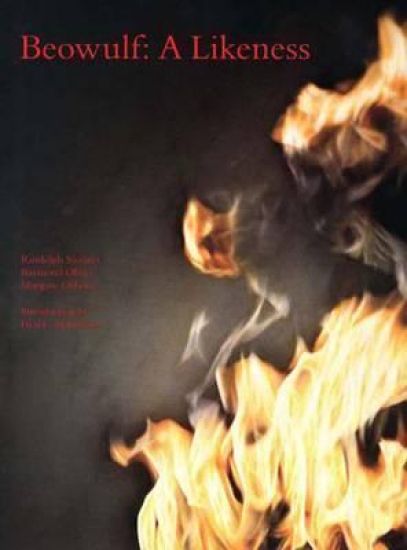
Beowulf

Beowulf

Raymond Oler; Marijane Osborn; Randolph Swearer

Yale University Press
1990
sidottu
Beowulf, the primary epic of the English language, is a powerful heroic poem eloquently expressive of the Anglo-Saxon culture that produced it. In this beautiful book a designer, a poet, and a specialist in Anglo-Saxon literature recreate Beowulf for a modern audience. Interweaving evocative images, a new interpretation in verse, and a running commentary that helps clarify the action and setting of the poem as well as the imagery, the book brings new life to this ancient masterpiece. Randolph Swearer’s oblique and allusive images create an archaic, mysterious atmosphere by depicting in forms and shadows the world of Germanic antiquity—Scandinavian and Anglo-Saxon art, artifacts, and scenery. At the same time, Raymond Oliver gives Beowulf a world in which to live, filling in the cultural gaps not with a thick matrix of footnotes but with poetry itself. Unlike many translations of Beowulf in existence, Oliver’s retelling of the epic uses modern verse forms for poetic effect and includes a wealth of historically authentic descriptions, characterizations, and explanations necessary for modern readers. Marijane Osborn completes the process of restoring context to the poem by supplying a commentary to clarify the historical and geographical dimensions of the story as well as the imagery that accompanies it. All three work together to bring a likeness of an old and elusive tale to today’s reader.“The book’s design and the commentary on it provide a unique visual complement to Oliver’s poem… A strange and moving story, compellingly told and seriously interesting to any serious reader of books.”—Fred C. Robinson, from the Introduction
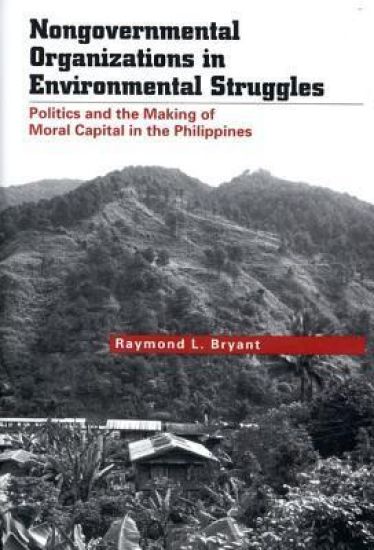
Nongovernmental Organizations in Environmental Struggles

Nongovernmental Organizations in Environmental Struggles

Raymond L. Bryant

Yale University Press
2005
sidottu
Why are nongovernmental organizations (NGOs) so successful in today’s world? How do they empower themselves? This insightful book provides important new perspectives on the strategic thinking of NGOs, the way they identify themselves, and how they behave. Raymond L. Bryant develops a novel theoretical perspective around the concept of moral capital and assesses that concept through in-depth case studies of NGOs in the Philippines.The book’s focus is on perceptions of NGOs as moral and altruistic and how such perceptions can translate into social power. Bryant examines the ambiguous qualities of NGO strategizing, the ways in which the quest for moral capital is bedeviled by the need to compromise with political and economic elites, and the possibilities for NGOs to achieve political goals as moral leaders.
Richard Strauss

Richard Strauss

Raymond Holden

Yale University Press
2011
sidottu
Renowned today as the gifted composer of a string of masterworks, Richard Strauss (1864-1949) is less often remembered for his achievement as a major conductor. Yet he held important conducting posts in Munich, Berlin, and Vienna and influenced generations of younger conductors. This important book is the first to consider Strauss's career as a conductor and place it in relation to his life as a composer. With unique access to extensive materials in the Strauss family's private archives, Raymond Holden corrects misconceptions about Strauss and discusses the musician's understanding of composing and conducting as intertwined processes. Holden throws new light on Strauss's relationships, on his disputed role during the Third Reich, and particularly on his performance practices and principles.
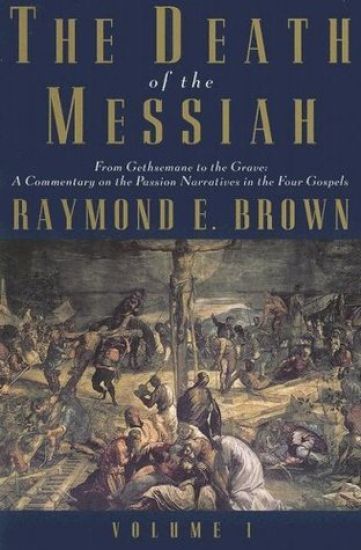
The Death of the Messiah, From Gethsemane to the Grave, Volume 1
Over his illustrious career, Raymond E. Brown, S.S., Ph.D., was internationally regarded as a dean of New Testament scholars. He was Auburn Distinguished Professor Emeritus of Biblical Studies at Union Theological Seminary in New York City. He received over thirty honorary degrees from Catholic and Protestant universities worldwide, and was elected a (Corresponding) Fellow of the British Academy and a member of the American Academy of Arts and Sciences.In addition to serving as president of the Society of Biblical Literature, the Catholic Biblical Association, and the Society of New Testament Studies, two popes appointed Father Brown as the sole American on the Pontifical Biblical Commission. Some of the best known of his more than thirty-five books on the Bible are three volumes in the "Anchor Bible" series on the Gospel and Epistles of John, as well as the Anchor Bible Reference Library volumes "The Birth of the Messiah", "The Death of the Messiah", and "An Introduction to the New Testament", winner of the 1998 Catholic Press Association Award for Biblical Studies. Father Brown's untimely death on August 8, 1998, saddened all who knew him.
The Death of the Messiah, From Gethsemane to the Grave, Volume 2
Over his illustrious career, Raymond E. Brown, S.S., Ph.D., was internationally regarded as a dean of New Testament scholars. He was Auburn Distinguished Professor Emeritus of Biblical Studies at Union Theological Seminary in New York City. He received over thirty honorary degrees from Catholic and Protestant universities worldwide, and was elected a (Corresponding) Fellow of the British Academy and a member of the American Academy of Arts and Sciences.In addition to serving as president of the Society of Biblical Literature, the Catholic Biblical Association, and the Society of New Testament Studies, two popes appointed Father Brown as the sole American on the Pontifical Biblical Commission. Some of the best known of his more than thirty-five books on the Bible are three volumes in the "Anchor Bible" series on the Gospel and Epistles of John, as well as the Anchor Bible Reference Library volumes "The Birth of the Messiah", "The Death of the Messiah", and "An Introduction to the New Testament", winner of the 1998 Catholic Press Association Award for Biblical Studies. Father Brown's untimely death on August 8, 1998, saddened all who knew him.
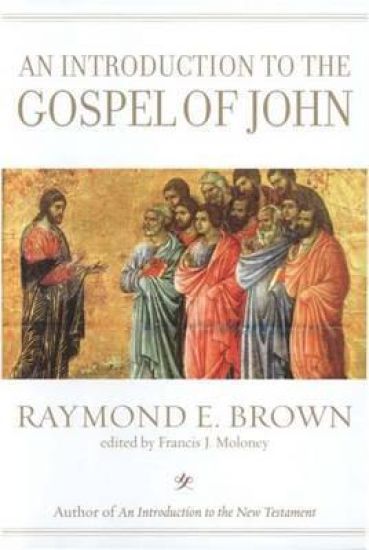
An Introduction to the Gospel of John

An Introduction to the Gospel of John

Raymond E. Brown; Francis J. Moloney

Yale University Press
2003
sidottu
When Raymond E. Brown died in 1998, less than a year after the publication of his masterpiece, An Introduction to the New Testament, he left behind a nearly completed revision of his acclaimed two-volume commentary on the Gospel of John. The manuscript, skillfully edited by Francis J. Moloney, displays the rare combination of meticulous scholarship and clear, engaging writing that made Father Brown’s books consistently outsell other works of biblical scholarship. An Introduction to the Gospel of John represents the culmination of Brown’s long and intense examination of part of the New Testament. One of the most important aspects of this new book, particularly to the scholarly community, is how it differs from the original commentary in several important ways. It presents, for example, a new perspective on the historical development of the Gospels, and shows how Brown decided to open his work to literary readings of the text, rather than relying primarily on the historical, which informed the original volumes. In addition, there is an entire section devoted to Christology, absent in the original, as well as a magisterial new section on the representation of Jews in the Gospel of John.
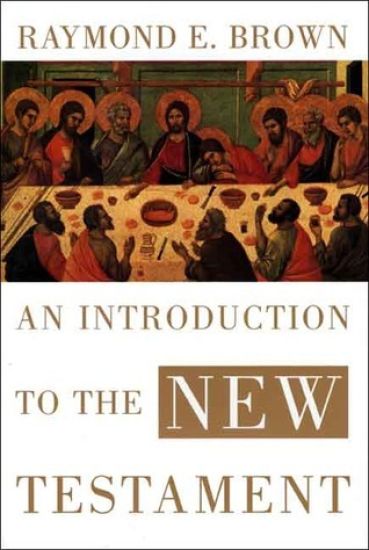
An Introduction to the New Testament

An Introduction to the New Testament

Raymond E. Brown

Yale University Press
1997
sidottu
A primer to the New Testament for those new to the material or those seeking deeper insights, from a master biblical scholar “A truly magnificent book, composed by our Catholic national treasure.”—Commonweal “This judicious and reassuring approach may comfort many.”—Anthony J. Saldarini, New York Times Book Review “A tour de force.”—America From the experience of a lifetime of scholarship, preaching, teaching, and writing, Raymond E. Brown covers the entire scope of the New Testament with ease and clarity. He walks readers book by book through the basic content and issues of the New Testament. While a wealth of information is contained in these pages, the work’s most impressive features are the basic summaries of each book, a historical overview of the ancient Greco-Roman world, discussions of key theological issues, and the rich supplementary materials, such as illustrative tables, maps, bibliographies, and appendixes. Using this basic data, Brown answers questions raised by today’s readers, relates the New Testament to our modern world, and responds to controversial issues, such as those raised by the Jesus Seminar. Every generation needs a comprehensive, reliable introduction to the New Testament that opens the biblical text to the novice. Raymond E. Brown’s An Introduction to the New Testament is the most trustworthy and authoritative guidebook for a generation seeking to understand the Christian Bible. Universally acknowledged as the dean of New Testament scholarship, Father Brown is a master of his discipline at the pinnacle of his career. Who else could cover the entire scope of the New Testament with such ease and clarity? This gifted communicator conveys the heartfelt concern of a beloved teacher for his students, as he walks the reader through the basic content and issues of the New Testament. Those opening to the New Testament for the first time and those seeking deeper insights could not ask for more in a primer to the Christian Bible.
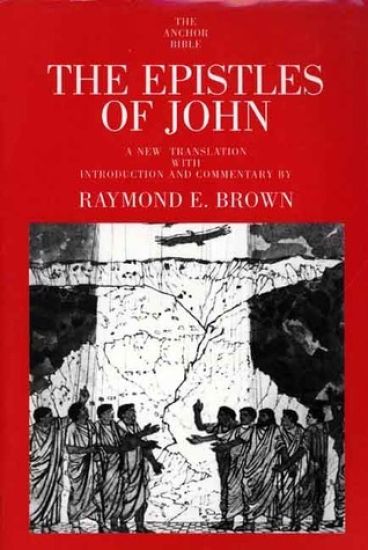
The Epistles of John

The Epistles of John

Raymond E. Brown

Yale University Press
1995
pokkari
With this study—companion to the masterful two-volume The Gospel According to John—Raymond E. Brown completed his trilogy on the Johannine corpus. Meticulous in detail, exhaustive in analysis, persuasive in argument, it examines controversies that have long troubled both biblical scholars and lay readers. Questions of authorship, composition, and dating, as well as the debate over source theories, are discussed at length; but these are kept subordinate to the overall question of meaning.What gives this commentary special interest and excitement is the bold, imaginative reconstruction of the setting of the Johannine work—in particular of the “opposition figures,” who are only dimly sketched in the Epistles—so that we see clearly that the author is writing to his flock both about the dangers and difficulties confronting them, and about the eternal life that is theirs by the gift of God. In this way, the Epistles of John become intelligible as broadsides in a critical engagement between the forces of light and darkness.In addition to his superb textual analysis of the letters, Raymond Brown has brought to life the community in which these works were formed and shaped. We are forcefully reminded that the Gospel and the Epistles were addressed to very real people living in the first century a.d., people with religious problems not unlike our own. In all respects, The Epistles of John stands out as a model of biblical scholarship and study.
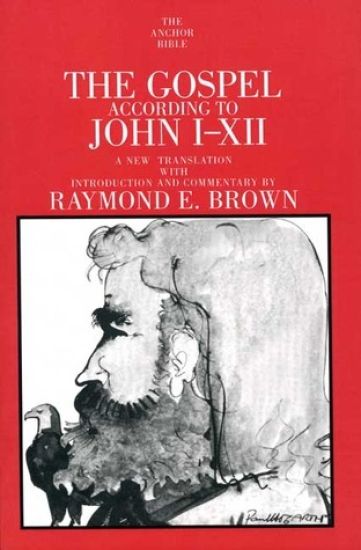
The Gospel According to John (I-XII)

The Gospel According to John (I-XII)

Raymond E. Brown

Yale University Press
1995
pokkari
In the first volume of Raymond E. Brown’s magisterial three-volume commentary on the Gospel According to John, all of the major Johannine questions—of authorship, composition, dating, the relationship of John to the Synoptics (Mark, Matthew, and Luke)—are discussed. The important theories of modern biblical scholarship concerning John are weighed against the evidence given in the text and against prevailing biblical research. In sum, what is attempted is a synthesis of the major scholarly insights that bear on the Fourth Gospel. The translation—as Father Brown states at the outset—strives not for any formal beauty but rather for an accurate and contemporary version: “the simple, everyday Greek of the Gospel has been rendered into the ordinary American English of today.” The result is a translation that will strike the reader with uncommon immediacy.Father Brown also analyzes, in the appendixes, the meaning, use, and frequency of certain key words and phrases that occur in John, and examines the differences between the Johannine and Synoptic treatments of the miracle stories.The chapters of the Gospel translated here in Volume 29 (1–12) comprise the Prologue, which opens with the famous “In the beginning was the Word,” and the Book of Signs, an account of the miracles of Jesus and of his ministry.