Kirjojen hintavertailu. Mukana 11 627 378 kirjaa ja 12 kauppaa.

Kirjahaku

Etsi kirjoja tekijän nimen, kirjan nimen tai ISBN:n perusteella.

1000 tulosta hakusanalla Robert E. Speer

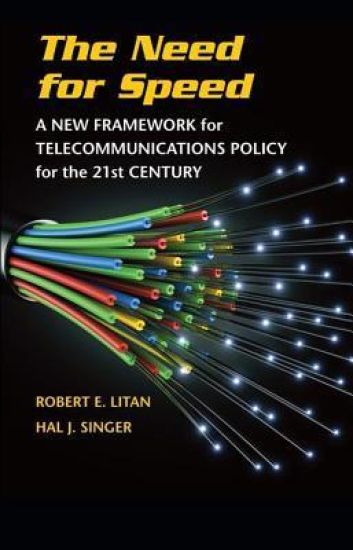
The Need for Speed

The Need for Speed

Robert E. Litan; Hal J. Singer

Brookings Institution
2013
nidottu
"The twenty-first-century telecommunications landscape is radically different from the one that prevailed as recently as the last decade of the twentieth century. Robert Litan and Hal Singer argue that given the speed of innovation in this sector, the Federal Communications Commission's outdated policies and rules are inhibiting investment in the telecom industry, specifically in fast broadband networks. This pithy handbook presents the kind of fundamental rethinking needed to bring communications policy in line with technological advances.Fast broadband has huge societal benefits, enabling all kinds of applications in telemedicine, entertainment, retailing, education, and energy that would have been unthinkable a few years ago. Those benefits would be even greater if the FCC adopted policies that encouraged more broadband providers, especially wireless providers, to make their services available in the roughly half of the country where consumers currently have no choice in wireline providers offering download speeds that satisfy the FCC's current standards.The authors' recommendations include allowing broadband providers to charge for premium delivery services; embracing a rule-of-reason approach to all matters involving vertical arrangements; stripping the FCC of its merger review authority because both the Federal Trade Commission and the Justice Department have the authority to stop anticompetitive mergers; eliminating the FCC's ability to condition spectrum purchases on the identity, business plans, or spectrum holdings of a bidder; and freeing telephone companies from outdated regulations that require them to maintain both a legacy copper network and a modem IP network.These changes and others advanced in this book would greatly enhance consumer welfare with respect to telecommunications services and the applications built around them."
Beyond the Dot.coms

Beyond the Dot.coms

Robert E. Litan; Alice M. Rivlin

Brookings Institution
2001
nidottu
In just a few years, the Internet has had a visible impact on the daily lives of many Americans. But the recent demise of many of the ""dot coms"" that symbolized the Internet revolution has raised warning flags about its future. Until now, discussion of the impact of the Internet on the economy has been mostly speculation. In Beyond the Dot.coms, two of the nation's most respected economists articulate the anticipated economic impact of the Internet over the next five years. Drawing from detailed research conducted by the Brookings Task Force on the Internet and the Berkeley Roundtable on the International Economy (BRIE) Internet Task Force (see page 10), Robert Litan and Alice Rivlin address the Internet's potential impacts on productivity, prices, and market structure. The research suggests that the most significant economic impact of the Internet will be its potential to increase productivity growth in the existing economy?with cheaper transactions, greater management efficiency, increased competition and broadened markets, more effective marketing and pricing, and increased consumer choice, convenience, and satisfaction. The greatest impact may not be felt in e-commerce, but rather in a wide range of ""old economy"" arenas, including health care and government.
What Should Banks Do?

What Should Banks Do?

Robert E. Litan

Brookings Institution
1987
nidottu
The financial services industries are undergoing revolutionary change. Continuing technological advances, coupled with the removal of controls on deposit interest rates and barriers to interstate bank expansion, have ushered in a new age of competition among banks themselves and between banks and other types of financial institutions. What Should Banks Do? offers a new and controversial proposal for carefully circumscribed diversification. Robert Litan first examines what role banks should play in this altered environment: Should banks and their holding companies be confined to the "business of banking: and related activities? Or should banking organizations be permitted to engage in much wider set of businesses? He answers these questions by thoroughly reviewing the available evidence on the benefits and risk of expanding bank powers. He finds that the largest benefits would come from the reduced risk that most bank holding companies would face if they were permitted to diversify their service offering. He sees risks to the safety and soundness of the banking system from financial product diversification, but proposes ways to minimize them. In the final chapter, Litan outlines two basic policy frameworks form minimizing the risks while preserving the social benefits that increased competition will eventually produce, He concludes that the challenge for policy-makers is to act decisively to maximize the benefits of financial product diversification, while limiting its risks, before the rapid changes in the financial services industries make it too late to do so.
Verdict

Verdict

Robert E. Litan

Brookings Institution
1993
nidottu
"The right to a jury trial is a fundamental feature of the American justice system. In recent years, however, aspects of the civil jury system have increasingly come under attack. Many question the ability of lay jurors to decide complex scientific and technical questions that often arise in civil suits. Others debate the high and rising costs of litigation, the staggering delay in resolving disputes, and the quality of justice. Federal and state courts, crowded with growing numbers of criminal cases, complain about handling difficult civil matters. As a result, the jury trial is effectively being challenged as a means for resolving disputes in America. Juries have been reduced in size, their selection procedures altered, and the unanimity requirement suspended. For many this development is viewed as necessary. For others, it arouses deep concern.In this book, a distinguished group of scholars, attorneys, and judges examine the civil jury system and discuss whether certain features should be modified or reformed. The book features papers presented at a conference cosponsored by the Brookings Institution and the Litigation Section of the American Bar Association, together with an introductory chapter by Robert E. Litan. While the authors present competing views of the objectives of the civil jury system, all agree that the jury still has and will continue to have an important role in the American system of civil justice.The book begins with a brief history of the jury system and explains how juries have become increasingly responsible for decisions of great difficulty. Contributors then provide an overview of the system's objectives and discuss whether, and to what extent, actual practice meets those objectives. They summarize how juries function and what attitudes lawyers, judges, litigants, former jurors, and the public at large hold about the current system.The second half of the book is devoted to a wide range of recommendations that will both improve citizens' access to jury determinations and help resolve disputes in a more effective and efficient manner. Among their many suggestions, the authors call for changes in trial procedures and techniques that would improve the ability of jurors to understand the lay and evidence, a reduction in administrative costs and delays, and a change in they way juries are chosen. The authors also recommend shorter hours and more pay for jurors, greater flexibility in court schedules, and elimination of alternate jurors. In the final chapter the civil jury is considered in the broader context of how society resolves or manages civil disputes."
Going Digital!

Going Digital!

Robert E. Litan; William A. Niskanen

Brookings Institution
1998
nidottu
The information age technology revolution promises enormous benefits to the U.S. and global economies. Yet if those benefits are to be fully realized, policymakers in the U.S. and abroad must rethink some fundamental premises about how economic activity has traditionally been governed. Should we continue to regulate industries the way we have in the past? Does the digital age require a new approach to antitrust enforcement? To best facilitate global electronic commerce, what changes are needed in intellectual property law, professional licensing requirements, laws governing privacy and content, and policies relating to standards? And what steps, if any, are required to best ensure that all citizens have access to the new technologies? This book examines these and other policy issues. It draws on a spring 1997 conference sponsored by the Brookings Institution and the Cato Institute where leading experts in various fields related to information technology presented their views. Copublished with the Cato Institute
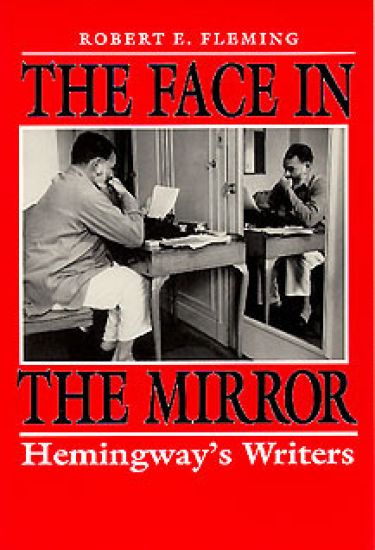
The Face in the Mirror

The Face in the Mirror

Robert E. Fleming

The University of Alabama Press
1996
nidottu
This text develops a largely overlooked theme in Hemingway's writing - his depiction of writers and the special problems they face, professionally and personally. It explores his concern with writers and writing from the 1920s through the early 1960s.
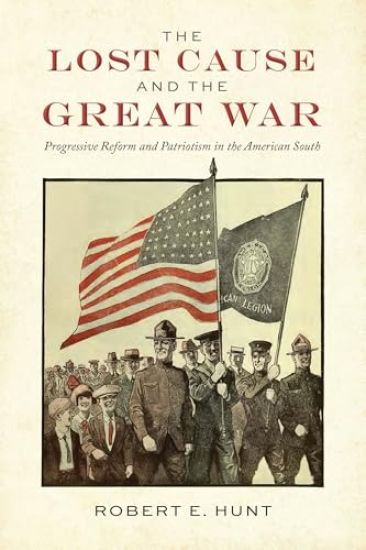
The Lost Cause and the Great War

The Lost Cause and the Great War

Robert E. Hunt

THE UNIVERSITY OF ALABAMA PRESS
2025
sidottu
How Tennessee reformers reconciled Southern heritage with rising nationalism, weaving the Lost Cause into the fabric of American progress and identityThe Lost Cause and the Great War tells the stories of central Tennessee Progressive-era reformers to illustrate the fascinating broader issue of how Southerners steeped in Lost Cause Civil War mythologies simultaneously developed patriotic American fervor. Focusing on Luke Lea, a prominent politician and American army officer who attempted to capture Kaiser Wilhelm II during World War I, the book reveals the intricate interplay between three competing ideas: attachment to the memory of the Confederacy, intense American nationalism, and advocacy for progressive reforms. Hunt shows that Lea and his contemporaries sought either to harmonize these competing loyalties or to compartmentalize them to use when needed. Through insightful accounts of Tennessee’s 1928 presidential campaign, the American Legion’s response to cuts to veteran benefits in 1933, and the redefinition of America’s global role post–World War II, Hunt shows how these reformers achieved a balance that held until the Civil Rights movement disrupted this delicate consensus. Hunt’s rich account reveals how Lea and others like him wove national patriotism and Southern collective memory into a cohesive narrative that supported their broader Progressive goals. The book offers much to readers interested in Southern history, the Gilded Age, Prohibition, World War I, World War II, and the beginnings of the Civil Rights movement. It provides vivid examples of how collective memory and narratives shape social and political movements. General readers will discover how white Southerners who remained devoted to vindicating the Confederacy nonetheless became fervent supporters of America's growing nationalism in the early twentieth century.
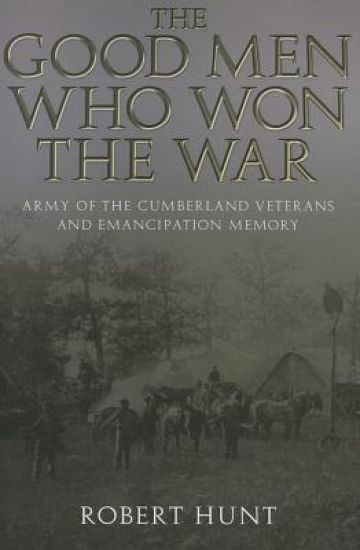
The Good Men Who Won the War

The Good Men Who Won the War

Robert E. Hunt

The University of Alabama Press
2014
nidottu
Robert Hunt examines how Union veterans of the Army of the Cumberland employed the extinction of slavery in the transAppalachian South in their memory of the Civil War. Hunt argues that rather than ignoring or belittling emancipation, it became central to veterans’ retrospective understanding of what the war, and their service in it, was all about. The Army of the Cumberland is particularly useful as a subject for this examination because it invaded the South deeply, encountering numerous exslaves as fugitives, refugees, laborers on military projects, and new recruits. At the same time, the Cumberlanders were mostly Illinoisans, Ohioans, Indianans, and, significantly, Kentucky Unionists, all from areas suspicious of abolition before the war.Hunt argues that the collapse of slavery in the transAppalachian theatre of the Civil War can be usefully understood by exploring the postwar memories of this group of Union veterans. He contends that rather than remembering the war as a crusade against the evils of slavery, the veterans of the Army of the Cumberland saw the end of slavery as a byproduct of the necessary defeat of the planter aristocracy that had sundered the Union; a good and necessary outcome, but not necessarily an assertion of equality between the races.Some of the most provocative discussions about the Civil War in current scholarship are concerned with how memory of the war was used by both the North and the South in Reconstruction, redeemer politics, the imposition of segregation, and the SpanishAmerican War. This work demonstrates that both the collapse of slavery and the economic and social postWar experience convinced these veterans that they had participated in the construction of the United States as a world power, built on the victory won against corrupt Southern plutocrats who had impeded the rightful development of the country.
The Geometry of Complex Domains

The Geometry of Complex Domains

Robert E. Greene; Kang-Tae Kim; Steven G. Krantz

Birkhauser Boston Inc
2011
sidottu
This work examines a rich tapestry of themes and concepts and provides a comprehensive treatment of an important area of mathematics, while simultaneously covering a broader area of the geometry of domains in complex space. At once authoritative and accessible, this text touches upon many important parts of modern mathematics: complex geometry, equivalent embeddings, Bergman and Kahler geometry, curvatures, differential invariants, boundary asymptotics of geometries, group actions, and moduli spaces.The Geometry of Complex Domains can serve as a “coming of age” book for a graduate student who has completed at least one semester or more of complex analysis, and will be most welcomed by analysts and geometers engaged in current research.
Theological Transition in American Methodism

Theological Transition in American Methodism

Robert E. Chiles

University Press of America
1983
nidottu
Reprinted from the 1965 Abingdon Press edition, this historical study traces the changes that have taken place in Wesleyan theology in America. Focuses on three representative theologians: Richard Watson, John Miley and Albert Knudson; and three central themes of revelation, sin, and grace. Of interest to ministers, theologians and seminary students.
Evangelicals on the Canterbury Trail

Evangelicals on the Canterbury Trail

Robert E. Webber; Lester Ruth

Morehouse Publishing
2013
pokkari
Why do so many evangelicals flock to liturgical traditions today? Robert Webber first explored the question in this thoughtful and engaging classic in 1989; now evangelical scholar and pastor Lester Ruth updates the conversation. Much remains of Webber s beloved original text, including his discussion of Anglicanism s six great gifts: mystery and awe, Christ-centered worship, sacramental reality, historical identity, participation in catholic traditions and holistic spirituality. Ruth adds fresh stories from evangelicals who have followed Webber s footsteps on the Canterbury trail, along with new essays that highlight the diversity of Anglican expressions today."
Optical System Design

Optical System Design

Robert E. Fischer; Biljana Tadic-Galeb; Paul R. Yoder

SPIE Press
2008
sidottu
An update to the classic 2000 text, this book is written to teach optical design and engineering in a fully unintimidating way using clear and easy-to-understand graphics and explanations. This book is for everyone from program managers to seasoned optical designers and engineers, mechanical engineers, and electrical engineers.
I Am a Fugitive from a Georgia Chain Gang!

I Am a Fugitive from a Georgia Chain Gang!

Robert E. Burns; Matthew Mancini

University of Georgia Press
1997
pokkari
I Am a Fugitive from a Georgia Chain Gang! is the amazing true story of one man's search for meaning, fall from grace, and eventual victory over injustice.In 1921, Robert E. Burns was a shell-shocked and penniless veteran who found himself at the mercy of Georgia's barbaric penal system when he fell in with a gang of petty thieves. Sentenced to six to ten years' hard labor for his part in a robbery that netted less than $6.00, Burns was shackled to a county chain gang. After four months of backbreaking work, he made a daring escape, dodging shotgun blasts, racing through swamps, and eluding bloodhounds on his way north.For seven years Burns lived as a free man. He married and became a prosperous Chicago businessman and publisher. When he fell in love with another woman, however, his jealous wife turned him in to the police, who arrested him as a fugitive from justice. Although he was promised lenient treatment and a quick pardon, he was back on a chain gang within a month. Undaunted, Burns did the impossible and escaped a second time, this time to New Jersey. He was still a hunted man living in hiding when this book was first published in 1932.The book and its movie version, nominated for a Best Picture Oscar in 1933, shocked the world by exposing Georgia's brutal treatment of prisoners. I Am a Fugitive from a Georgia Chain Gang! is a daring and heartbreaking book, an odyssey of misfortune, love, betrayal, adventure, and, above all, the unshakable courage and inner strength of the fugitive himself.
I Am a Fugitive from a Georgia Chain Gang!

I Am a Fugitive from a Georgia Chain Gang!

Robert E. Burns; Matthew Mancini

University of Georgia Press
2017
sidottu
I Am a Fugitive from a Georgia Chain Gang! is the amazing true story of one man's search for meaning, fall from grace, and eventual victory over injustice.In 1921, Robert E. Burns was a shell-shocked and penniless veteran who found himself at the mercy of Georgia's barbaric penal system when he fell in with a gang of petty thieves. Sentenced to six to ten years' hard labor for his part in a robbery that netted less than $6.00, Burns was shackled to a county chain gang. After four months of backbreaking work, he made a daring escape, dodging shotgun blasts, racing through swamps, and eluding bloodhounds on his way north.For seven years Burns lived as a free man. He married and became a prosperous Chicago businessman and publisher. When he fell in love with another woman, however, his jealous wife turned him in to the police, who arrested him as a fugitive from justice. Although he was promised lenient treatment and a quick pardon, he was back on a chain gang within a month. Undaunted, Burns did the impossible and escaped a second time, this time to New Jersey. He was still a hunted man living in hiding when this book was first published in 1932.The book and its movie version, nominated for a Best Picture Oscar in 1933, shocked the world by exposing Georgia's brutal treatment of prisoners. I Am a Fugitive from a Georgia Chain Gang! is a daring and heartbreaking book, an odyssey of misfortune, love, betrayal, adventure, and, above all, the unshakable courage and inner strength of the fugitive himself.
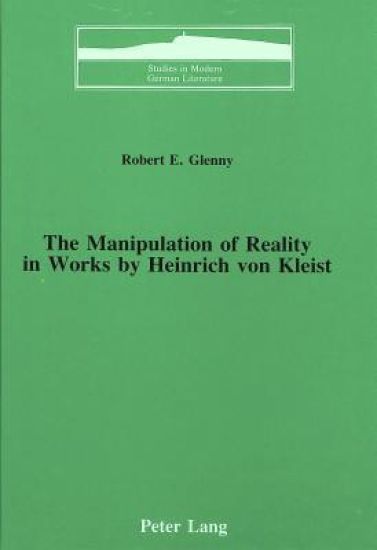
The Manipulation of Reality in Works by Heinrich Von Kleist

The Manipulation of Reality in Works by Heinrich Von Kleist

Robert E Glenny

Peter Lang Publishing Inc
1987
sidottu
Disguising and unveiling, only to disguise again, Heinrich von Kleist creates characters whose definition of self and of others depends on their own ability to generate, present, and regenerate convincing masks of personal and interpersonal realities. This study focuses on the network of private and public identities in Kleist's works, how those identities function on and between transformative levels of human interaction (role-playing, creative naming, word-dreams, and manipulative games of illusion and delusion), and how those identities in the imaginative consciousness fabricate new universes which become part of and, at the same time, are separated from the temporal and spatial norms we assign to external realities.
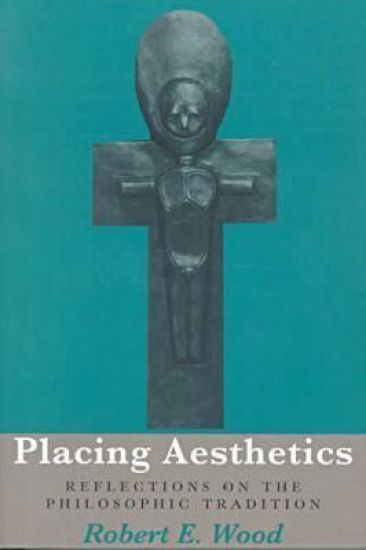
Placing Aesthetics

Placing Aesthetics

Robert E. Wood

Ohio University Press
2000
pokkari
Examining select high points in the speculative tradition from Plato and Aristotle through the Middle Ages and German tradition to Dewey and Heidegger, Placing Aesthetics seeks to locate the aesthetic concern within the larger framework of each thinker's philosophy. In Professor Robert Wood's study, aesthetics is not peripheral but rather central to the speculative tradition and to human existence as such. In Dewey's terms, aesthetics is "experience in its integrity." Its personal ground is in "the heart," which is the dispositional ground formed by genetic, cultural , and personal historical factors by which we are spontaneously moved and, in turn, are inclined to move, both practically and theoretically, in certain directions. Prepared for use by the student as well as the philosopher, Placing Aesthetics aims to recover the fullness of humanness within a sense of the fullness of encompassing Being. It attempts to overcome the splitting of thought, even in philosophy, into exclusive specializations and the fracturing of life itself into theoretical, practical, and emotive dimensions.