

Kirjahaku
Etsi kirjoja tekijän nimen, kirjan nimen tai ISBN:n perusteella.
1000 tulosta hakusanalla Robert Follet
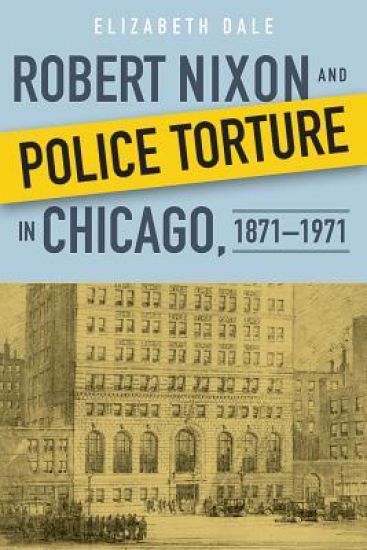
Robert Nixon and Police Torture in Chicago, 1871–1971
Elizabeth Dale
Northern Illinois University Press
2016
sidottu
In 2015, Chicago became the first city in the United States to create a reparations fund for victims of police torture, after investigations revealed that former Chicago police commander Jon Burge tortured numerous suspects in the 1970s, '80s, and '90s. But claims of police torture have even deeper roots in Chicago. In the late 19th century, suspects maintained that Chicago police officers put them in sweatboxes or held them incommunicado until they confessed to crimes they had not committed. In the first decades of the 20th century, suspects and witnesses stated that they admitted guilt only because Chicago officers beat them, threatened them, and subjected them to "sweatbox methods." Those claims continued into the 1960s. In Robert Nixon and Police Torture in Chicago, 1871–1971, Elizabeth Dale uncovers the lost history of police torture in Chicago between the Chicago Fire and 1971, tracing the types of torture claims made in cases across that period. To show why the criminal justice system failed to adequately deal with many of those allegations of police torture, Dale examines one case in particular, the 1938 trial of Robert Nixon for murder. Nixon's case is famous for being the basis for the novel Native Son, by Richard Wright. Dale considers the part of Nixon's account that Wright left out of his story: Nixon's claims that he confessed after being strung up by his wrists and beaten and the legal system's treatment of those claims. This original study will appeal to scholars and students interested in the history of criminal justice, and general readers interested in Midwest history, criminal cases, and the topic of police torture.
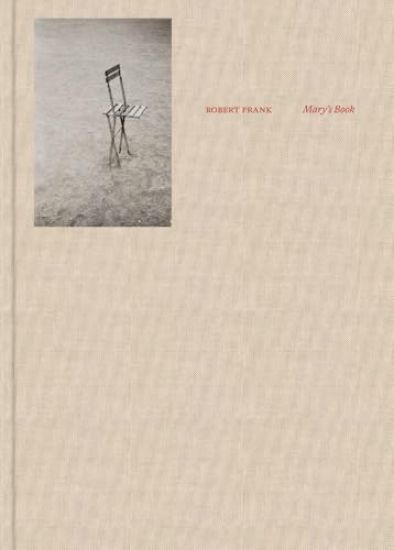
Robert Frank: Mary’s Book
MUSEUM OF FINE ARTS,BOSTON
2025
sidottu
Frank’s artist’s book and love letter for his first wife exemplifies the poetic, virtuosic approach to photobooks that would come to define his storied career Called "a poet with a camera" by Edward Steichen, Robert Frank (1924–2019) was one of many artists who searched for creative freedom in postwar Paris. It was while he was living in the city in 1949 that Frank produced a seminal volume in his oeuvre: a rare, personal photobook made for his then-girlfriend, artist Mary Frank (née Lockspeiser). In Mary’s Book, the photographer chronicled his time in the city with his poetic, insightful and inquisitive eye, and experimented for the first time with combining text and image. This singular object proved an important bookmaking exercise for Frank, and remains as evidence of his maturing artistic vision, which led to one of the most influential photobooks of the 20th century, The Americans (1958). Mary’s Book reproduces this love letter in full for the first time, accompanied by insightful essays from leading scholars. This facsimile clothbound volume, inscribed "this is for you" in Frank’s handwriting, re-creates the series of unbound pages nestled within one another, filled with handwritten notes and hand-cut prints. Readers can experience the Paris of the late 1940s through the visual harmonies of Robert Frank.
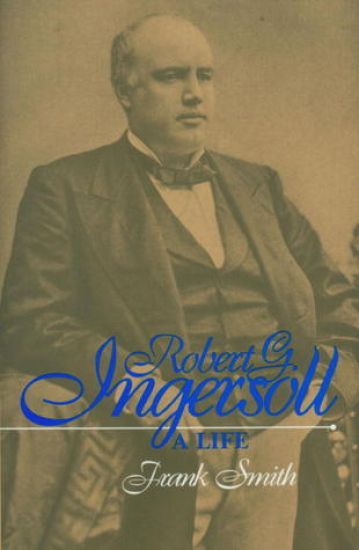
Robert G Ingersoll (1833-1899) was a complex figure - a brilliant lawyer and orator who courageously advanced the concept of free-thought; a magnetic extrovert whose public esteem, eagerly sought, never earned him the private favours he so generously bestowed on others. Ingersoll was a staunch republican in the great tradition of Abraham Lincoln, and he vigorously championed such progressive causes as equal rights for blacks, women, and children; liberal divorce laws; and better wages and conditions for workers. Perhaps Ingersoll's greatest legacy derives from his daring rejection of religious superstition (during an era which saw a tremendous revival of spiritualism and religious fundamentalism) and his ardent belief in humanity.Ingersoll is considered one of the most prominent figures of the 19th century. From about 1880 to his death in 1899, he probably spoke to more Americans in person than anyone before or since; he had daily audiences of as many as three thousand people while he was on tour, several months a year for many years. Despite this, Ingersoll's career has not yet received the attention it clearly merits. In this comprehensive work, Frank Smith explores the life and thought of this charismatic figure, using newspaper accounts of the time and extensive quotations from Ingersoll's correspondence. Ingersoll's words provide a vivid portrait of 19th-century America from the stormy antebellum period to the beginnings of modern industrialism. His life reflects the great current of his age and speaks forcefully to the problems of our own.
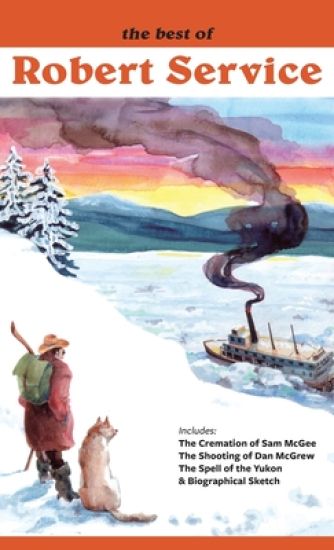
The Best of Robert Service
Robert Service; Mariken Van Nimwegen
Hancock House Publishers
2021
sidottu
The Best of Robert Service
Robert Service; Mariken Van Nimwegen
Hancock House Publishers Ltd ,Canada
2017
pokkari
This new and revised edition of poems about the men and women of the North features the most loved ballads by Robert Service. This new and revised edition of poems about the men and women of the North features the most loved ballads by Robert Service, and is illustrated with lively art by Marilen Van Nimwegen. While living in Whitehorse, Robert Service wrote The Cremation of Sam McGee, and other well-known poems. He wrote and published into his mid-eighties. He was quoted as saying, I just go for a walk and come back with a poem in my pocket.
Robert Thorne Coryndon
WILFRID LAURIER UNIVERSITY PRESS
1986
sidottu
Robert Thorne Coryndon, born in South Africa in 1870, served twenty-eight years as the top-ranking administrator of African dependencies, a career unmatched by any other British colonial governor. "Governors were expected, through a combination of good sense and good character, to exercise rule over dependent peoples in an honest and impartial manner--an amalgam of liberal values and autocratic methods which lent a certain ambiguity to British imperial rule in Africa and elsewhere." During his rule in Barotseland (1897-1907) under Cecil Rhodes' British South Africa Company, Coryndon confronted the problems of establishing a colonial regime; in 1914-1915, during the last seven years of his Swaziland appointment, he served as Chairman of the land commission that delineated the boundaries of African reserves in Southern Rhodesia; as governor of Uganda during a time of rapid economic expansion (1917-1922), he set up legislative and executive councils; and as governor of Kenya (1922-1925) he formed local native councils as an experiment in indigenous administration. This first full-length study of Coryndon is neither a traditional gubernatorial biography of a favoured son of the imperial school nor an ideological history of colonial oppression. Instead Youé sets out to analyze Coryndon's relationships with African rulers, white settlers, Indian traders, and metropolitan officials in order to assess the impact of his administrations on the territories he governed and to delineate the constraints on proconsular rule.
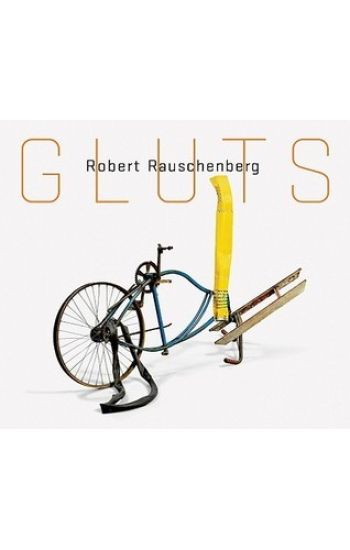
Robert Rauschenberg: Gluts
Guggenheim Museum Publications,U.S.
2009
pokkari
In the mid-1980s, Robert Rauschenberg's creative attentions turned toward the visual and plastic properties of junk metal when he began to assemble found metal objects and screenprint his photographic images onto aluminum, bronze, brass and copper. His first body of work in this vein was Gluts, a series begun in 1986 and continued intermittently until 1995, in which ornate metalwork seemingly derived from a bedpost might attach to a slice of mesh wire, or twisted petals of yellow metal might sprout from the remains of an eviscerated toaster. Asked to comment on his novel use of the word "gluts," Rauschenberg said, "It's a time of glut. Greed is rampant... I simply want to present people with their ruins... I think of the Gluts as souvenirs without nostalgia." Published to accompany the Peggy Guggenheim Collection's exhibition Robert Rauschenberg: Gluts (the first show to focus on Rauschenberg's sculpture since 1995), this fully illustrated catalogue features a selection of approximately 40 sculptures drawn from the holdings of institutions and private collections in the United States and abroad. It includes a reassessment of Rauschenberg's work as a sculptor by author and painter Mimi Thompson, an essay by Trisha Brown, an illustrated exhibition history, a preface by Philip Rylands and introduction by Susan Davidson that focuses on Rauschenberg's relationship to the Guggenheim and the artist's engagement with Venice in particular.
Robert Louis Stevenson and Joseph Conrad
Texas Tech Press,U.S.
2009
sidottu
The first book-length study to specifically examine the many intersections in the works of Robert Louis Stevenson and Joseph Conrad, this volume extends the focus of current debate beyond the writers' South Seas literature. Considering Stevenson and Conrad's shared literary history and experience of Victorian London, it examines their convergence of styles in the emergent modernism of the fin de siecle, their romance and adventure modes, their fictions of duality, and their exploration of the human psyche. Moreover, the book recuperates Stevenson's reputation as a serious writer, not only as Conrad's antecedent and influence but as a writer equally worthy of study in these shared modes.
W/Cdr Robert Stanford Tuck Facsimile Flying Log Book
Robert R.Stanford Tuck
After The Battle
1996
sidottu
Wing Commander Stanford Tuck was one of the RAF's top-scoring aces until taken prisoner in 1942. This work offers an extract facsimile of his flying log book covering his flying career. Readers also have the opportunity to own a Battle of Britain pilot's log book, each with a numbered certificate.
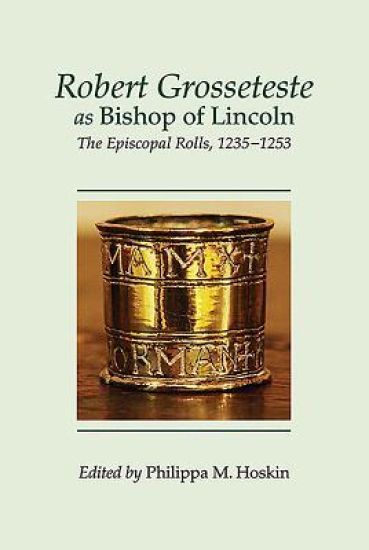
Robert Grosseteste as Bishop of Lincoln
Lincoln Record Society
2015
sidottu
First modern edition of medieval ecclesiastical documents illuminates the career of a senior prelate. Robert Grosseteste, teacher, scholar and pastor, remains one of the dominant figures of the medieval English church. A major influence on the early history of Oxford University, his writings on a wide range of theological and scientific subjects have been widely studied. His concern for pastoral care is also well attested; as bishop of Lincoln from 1235 until his death in 1253, he had the opportunity to exercise the pastoral office in the largest diocesein western Europe. But how did Grosseteste's theories of pastoral care work out in practice? The study of Grosseteste's career as a diocesan bishop has been hampered by the relative inaccessibility of the records of his episcopate, published in an unsatisfactory edition in 1911 and long out of print. This completely new edition of Grosseteste's episcopal rolls makes it possible to take a fresh look at how he tackled the vexed issues of clerical ignorance, pluralism and non-residence in the aftermath of the reforms of the Lateran Council of 1215. They are presented here with an introductory study and elucidatory notes. Dr Philippa M. Hoskin is Reader in medieval history at the University of Lincoln


Robert Fludd
PHANES PRESS,U.S.
2004
nidottu
Robert Fludd was one of the last of the true Renaissance men who tool all learning as their preserve and tried to encompass the whole of human knowledge. Born in Elizabethan England, he became a convinced occultist while traveling on the Continent. His voluminous writings were devoted to defending the philosophy of the alchemists and Rosicrucians and applying their doctrines to a vast description of man and the universe. All of Fludd's important plates are collected here for the first time, annotated and explained together with an introduction to his life and thought.

Continuing Alex Katz's practice of collaborations with poets, Edges features reproductions of 13 etchings by Katz alongside the poem “Edges” by the great American poet Robert Creeley. In addition, the volume includes a tipped-in color plate, two full-color spreads, a black-and-white photograph of the artist and poet and an essay by the artist and author Merlin James.
In the fall of 1999, Dutch painter Robert Zandvliet produced, along with master printer Maurice Sanchez, a monotype project entitled The Varick Series. Zandvliet, one of the most talented and innovative painters of his generation, specializes in landscape painting.