Kirjojen hintavertailu. Mukana 12 390 323 kirjaa ja 12 kauppaa.

Kirjahaku

Etsi kirjoja tekijän nimen, kirjan nimen tai ISBN:n perusteella.

1000 tulosta hakusanalla Robert Gildea

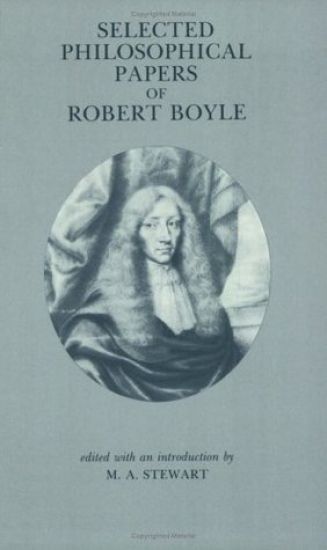
Selected Philosophical Papers of Robert Boyle

Selected Philosophical Papers of Robert Boyle

Robert Boyle

Hackett Publishing Co, Inc
1991
nidottu
"The availability of a paperback version of Boyle's philosophical writings selected by M. A. Stewart will be a real service to teachers, students, and scholars with seventeenth-century interests. The editor has shown excellent judgment in bringing together many of the most important works and printing them, for the most part, in unabridged form. The texts have been edited responsibly with emphasis on readability. . . . Of special interest in connection with Locke and with the reception of Descarte's Corpuscularianism, to students of the Scientific Revolution and of the history of mechanical philosophy, and to those interested in the relations among science, philosophy, and religion. In fact, given the imperfections in and unavailability of the eighteenth-century editions of Boyle’s works, this collection will benefit a wide variety of seventeenth-century scholars." --Gary Hatfield, University of Pennsylvania
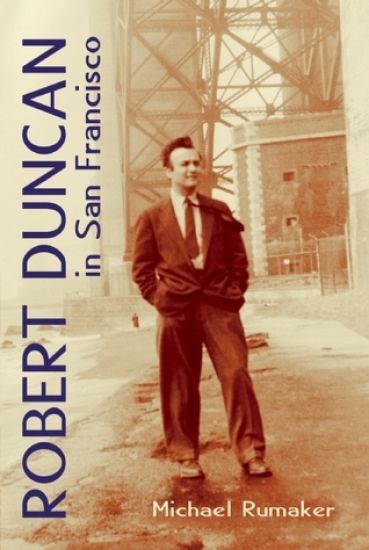
Robert Duncan in San Francisco

Robert Duncan in San Francisco

Michael Rumaker

City Lights Books
2013
pokkari
After his graduation from Black Mountain College, Michael Rumaker made his way to the post-Howl, pre-Stonewall gay literary milieu of San Francisco, where he entered the circle of Robert Duncan. Contrasting Duncan's daringly frank homosexuality with Rumaker's own then-closeted life, Robert Duncan in San Francisco conjures up with harrowing detail an era of police prosecution of a clandestine gay community struggling to survive in the otherwise "open city" of San Francisco. This expanded edition includes a selection of previously unpublished letters between Rumaker and Duncan, and an interview conducted for this edition, in which Rumaker provides further reflections on the poet and the period. "This is a wonderfully revealing account of a series of lifechanging collisions between a young writer (Rumaker), an older writer (Duncan), a still older mentor for both (Charles Olson), a city (San Francisco), and an important era in American literature (the 1950s), when it was being turned upside down by these individuals and their friends. It's also a tender and intelligent account of a young man's coming to grips with being gay in the midst of this upheaval. Much more than memoir; it's history." --Russell Banks, author of Cloudsplitter Robert Duncan in San Francisco offers a surprising portrait of a mentor in all his witty, wicked, luminous, and vulnerable complexity. Straddling the lines of memoir and cultural history, Michael Rumaker gives a rare and delightful view of Duncan at home in the gay community while also documenting the struggles of that community in 1950s America." --Lisa Jarnot, author of Robert Duncan, The Ambassador from Venus "In this fine memoir of this 16 months in San Francisco, Rumaker learns many lessons about being at home with who he is, in what he calls 'Robert's city.'" --Joanne Kyger, About Now: Collected Poems Michael Rumaker has written several novels and short story collections, as well as the memoir Black Mountain Days. He was born in Philadelphia and is a graduate of Black Mountain College -- where Duncan served as his outside thesis advisor--and Columbia University. He taught at City University of New York and the New School for Social Research. Robert Duncan (1919-1988) was an American poet and well-known as a key figure in the San Francisco Renaissance. City Lights published a book of his poetry titled Selected Poems.
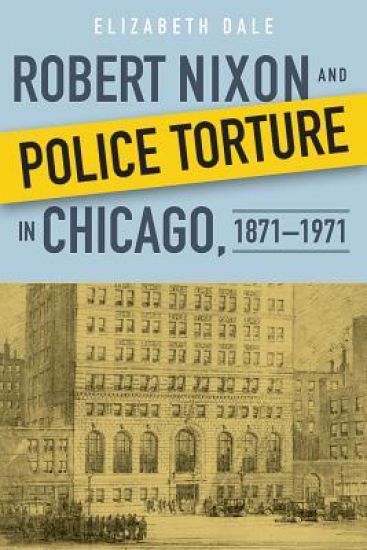
Robert Nixon and Police Torture in Chicago, 1871–1971

Robert Nixon and Police Torture in Chicago, 1871–1971

Elizabeth Dale

Northern Illinois University Press
2016
sidottu
In 2015, Chicago became the first city in the United States to create a reparations fund for victims of police torture, after investigations revealed that former Chicago police commander Jon Burge tortured numerous suspects in the 1970s, '80s, and '90s. But claims of police torture have even deeper roots in Chicago. In the late 19th century, suspects maintained that Chicago police officers put them in sweatboxes or held them incommunicado until they confessed to crimes they had not committed. In the first decades of the 20th century, suspects and witnesses stated that they admitted guilt only because Chicago officers beat them, threatened them, and subjected them to "sweatbox methods." Those claims continued into the 1960s. In Robert Nixon and Police Torture in Chicago, 1871–1971, Elizabeth Dale uncovers the lost history of police torture in Chicago between the Chicago Fire and 1971, tracing the types of torture claims made in cases across that period. To show why the criminal justice system failed to adequately deal with many of those allegations of police torture, Dale examines one case in particular, the 1938 trial of Robert Nixon for murder. Nixon's case is famous for being the basis for the novel Native Son, by Richard Wright. Dale considers the part of Nixon's account that Wright left out of his story: Nixon's claims that he confessed after being strung up by his wrists and beaten and the legal system's treatment of those claims. This original study will appeal to scholars and students interested in the history of criminal justice, and general readers interested in Midwest history, criminal cases, and the topic of police torture.
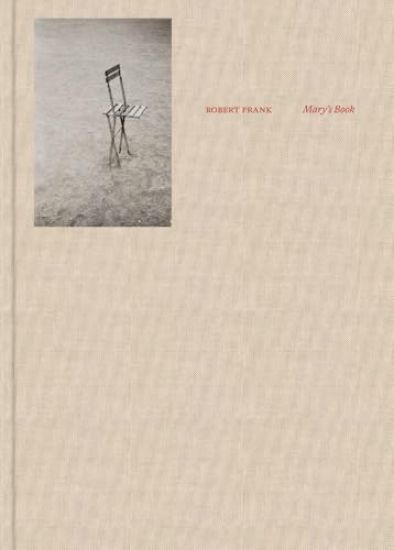
Robert Frank: Mary’s Book

Robert Frank: Mary’s Book

MUSEUM OF FINE ARTS,BOSTON
2025
sidottu
Frank’s artist’s book and love letter for his first wife exemplifies the poetic, virtuosic approach to photobooks that would come to define his storied career Called "a poet with a camera" by Edward Steichen, Robert Frank (1924–2019) was one of many artists who searched for creative freedom in postwar Paris. It was while he was living in the city in 1949 that Frank produced a seminal volume in his oeuvre: a rare, personal photobook made for his then-girlfriend, artist Mary Frank (née Lockspeiser). In Mary’s Book, the photographer chronicled his time in the city with his poetic, insightful and inquisitive eye, and experimented for the first time with combining text and image. This singular object proved an important bookmaking exercise for Frank, and remains as evidence of his maturing artistic vision, which led to one of the most influential photobooks of the 20th century, The Americans (1958). Mary’s Book reproduces this love letter in full for the first time, accompanied by insightful essays from leading scholars. This facsimile clothbound volume, inscribed "this is for you" in Frank’s handwriting, re-creates the series of unbound pages nestled within one another, filled with handwritten notes and hand-cut prints. Readers can experience the Paris of the late 1940s through the visual harmonies of Robert Frank.
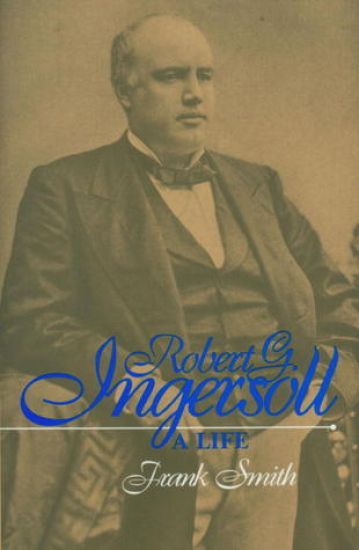
Robert G. Ingersoll

Robert G. Ingersoll

Frank Smith

Prometheus Books
1991
sidottu
Robert G Ingersoll (1833-1899) was a complex figure - a brilliant lawyer and orator who courageously advanced the concept of free-thought; a magnetic extrovert whose public esteem, eagerly sought, never earned him the private favours he so generously bestowed on others. Ingersoll was a staunch republican in the great tradition of Abraham Lincoln, and he vigorously championed such progressive causes as equal rights for blacks, women, and children; liberal divorce laws; and better wages and conditions for workers. Perhaps Ingersoll's greatest legacy derives from his daring rejection of religious superstition (during an era which saw a tremendous revival of spiritualism and religious fundamentalism) and his ardent belief in humanity.Ingersoll is considered one of the most prominent figures of the 19th century. From about 1880 to his death in 1899, he probably spoke to more Americans in person than anyone before or since; he had daily audiences of as many as three thousand people while he was on tour, several months a year for many years. Despite this, Ingersoll's career has not yet received the attention it clearly merits. In this comprehensive work, Frank Smith explores the life and thought of this charismatic figure, using newspaper accounts of the time and extensive quotations from Ingersoll's correspondence. Ingersoll's words provide a vivid portrait of 19th-century America from the stormy antebellum period to the beginnings of modern industrialism. His life reflects the great current of his age and speaks forcefully to the problems of our own.
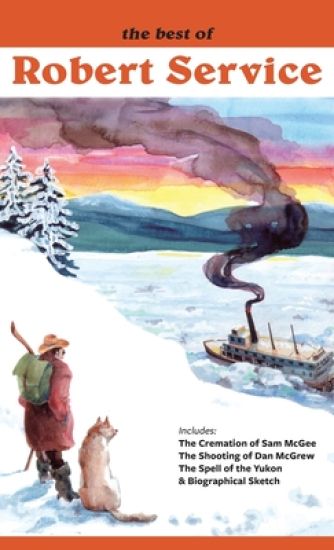
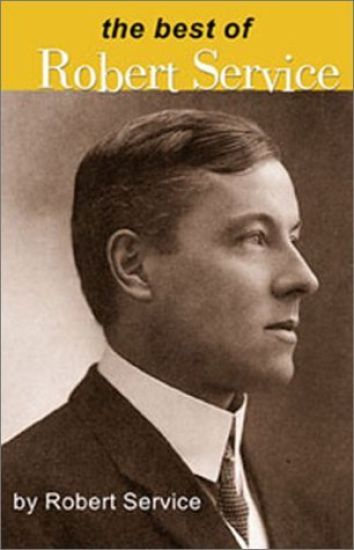
The Best of Robert Service

The Best of Robert Service

Robert Service; Mariken Van Nimwegen

Hancock House Publishers Ltd ,Canada
2017
pokkari
This new and revised edition of poems about the men and women of the North features the most loved ballads by Robert Service. This new and revised edition of poems about the men and women of the North features the most loved ballads by Robert Service, and is illustrated with lively art by Marilen Van Nimwegen. While living in Whitehorse, Robert Service wrote The Cremation of Sam McGee, and other well-known poems. He wrote and published into his mid-eighties. He was quoted as saying, I just go for a walk and come back with a poem in my pocket.
Robert Thorne Coryndon

Robert Thorne Coryndon

WILFRID LAURIER UNIVERSITY PRESS
1986
sidottu
Robert Thorne Coryndon, born in South Africa in 1870, served twenty-eight years as the top-ranking administrator of African dependencies, a career unmatched by any other British colonial governor. "Governors were expected, through a combination of good sense and good character, to exercise rule over dependent peoples in an honest and impartial manner--an amalgam of liberal values and autocratic methods which lent a certain ambiguity to British imperial rule in Africa and elsewhere." During his rule in Barotseland (1897-1907) under Cecil Rhodes' British South Africa Company, Coryndon confronted the problems of establishing a colonial regime; in 1914-1915, during the last seven years of his Swaziland appointment, he served as Chairman of the land commission that delineated the boundaries of African reserves in Southern Rhodesia; as governor of Uganda during a time of rapid economic expansion (1917-1922), he set up legislative and executive councils; and as governor of Kenya (1922-1925) he formed local native councils as an experiment in indigenous administration. This first full-length study of Coryndon is neither a traditional gubernatorial biography of a favoured son of the imperial school nor an ideological history of colonial oppression. Instead Youé sets out to analyze Coryndon's relationships with African rulers, white settlers, Indian traders, and metropolitan officials in order to assess the impact of his administrations on the territories he governed and to delineate the constraints on proconsular rule.
Robert Rauschenberg: Gluts

Robert Rauschenberg: Gluts

Guggenheim Museum Publications,U.S.
2009
pokkari
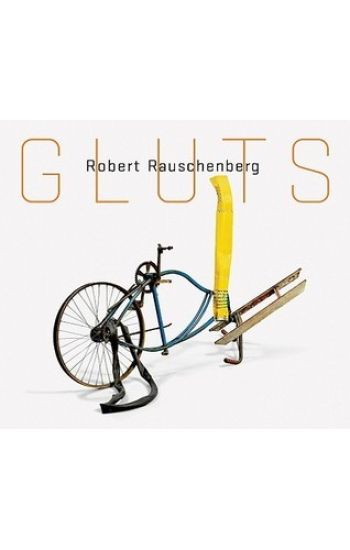
In the mid-1980s, Robert Rauschenberg's creative attentions turned toward the visual and plastic properties of junk metal when he began to assemble found metal objects and screenprint his photographic images onto aluminum, bronze, brass and copper. His first body of work in this vein was Gluts, a series begun in 1986 and continued intermittently until 1995, in which ornate metalwork seemingly derived from a bedpost might attach to a slice of mesh wire, or twisted petals of yellow metal might sprout from the remains of an eviscerated toaster. Asked to comment on his novel use of the word "gluts," Rauschenberg said, "It's a time of glut. Greed is rampant... I simply want to present people with their ruins... I think of the Gluts as souvenirs without nostalgia." Published to accompany the Peggy Guggenheim Collection's exhibition Robert Rauschenberg: Gluts (the first show to focus on Rauschenberg's sculpture since 1995), this fully illustrated catalogue features a selection of approximately 40 sculptures drawn from the holdings of institutions and private collections in the United States and abroad. It includes a reassessment of Rauschenberg's work as a sculptor by author and painter Mimi Thompson, an essay by Trisha Brown, an illustrated exhibition history, a preface by Philip Rylands and introduction by Susan Davidson that focuses on Rauschenberg's relationship to the Guggenheim and the artist's engagement with Venice in particular.
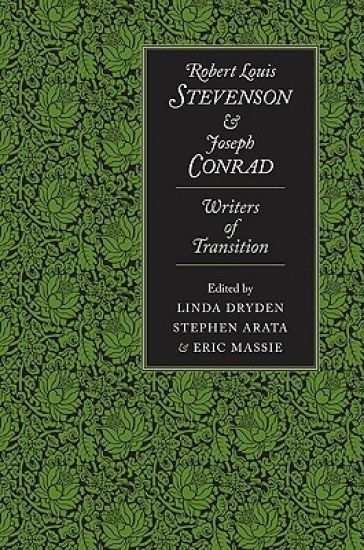
Robert Louis Stevenson and Joseph Conrad
The first book-length study to specifically examine the many intersections in the works of Robert Louis Stevenson and Joseph Conrad, this volume extends the focus of current debate beyond the writers' South Seas literature. Considering Stevenson and Conrad's shared literary history and experience of Victorian London, it examines their convergence of styles in the emergent modernism of the fin de siecle, their romance and adventure modes, their fictions of duality, and their exploration of the human psyche. Moreover, the book recuperates Stevenson's reputation as a serious writer, not only as Conrad's antecedent and influence but as a writer equally worthy of study in these shared modes.
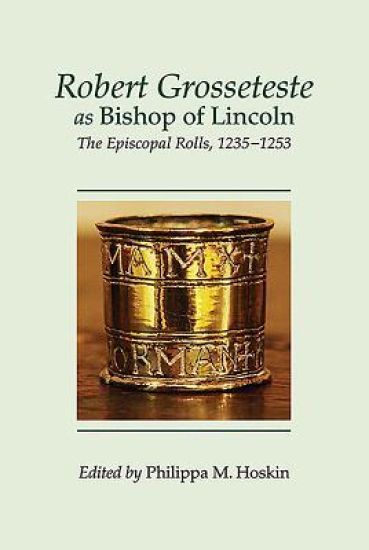
Robert Grosseteste as Bishop of Lincoln
First modern edition of medieval ecclesiastical documents illuminates the career of a senior prelate. Robert Grosseteste, teacher, scholar and pastor, remains one of the dominant figures of the medieval English church. A major influence on the early history of Oxford University, his writings on a wide range of theological and scientific subjects have been widely studied. His concern for pastoral care is also well attested; as bishop of Lincoln from 1235 until his death in 1253, he had the opportunity to exercise the pastoral office in the largest diocesein western Europe. But how did Grosseteste's theories of pastoral care work out in practice? The study of Grosseteste's career as a diocesan bishop has been hampered by the relative inaccessibility of the records of his episcopate, published in an unsatisfactory edition in 1911 and long out of print. This completely new edition of Grosseteste's episcopal rolls makes it possible to take a fresh look at how he tackled the vexed issues of clerical ignorance, pluralism and non-residence in the aftermath of the reforms of the Lateran Council of 1215. They are presented here with an introductory study and elucidatory notes. Dr Philippa M. Hoskin is Reader in medieval history at the University of Lincoln