Kirjojen hintavertailu. Mukana 11 536 120 kirjaa ja 12 kauppaa.

Kirjahaku

Etsi kirjoja tekijän nimen, kirjan nimen tai ISBN:n perusteella.

1000 tulosta hakusanalla Robert Griffith

The Complete Works of Robert Browning, Volume II

The Complete Works of Robert Browning, Volume II

Robert Browning

Ohio University Press
1971
sidottu
In seventeen volumes, copublished with Baylor University, this acclaimed series features annotated texts of all of Robert Browning's known writing. The series encompasses autobiography as well as influences bearing on Browning's life and career and aspects of Victorian thought and culture. Volume II contains Browning's play, Strafford: An Historical Tragedy (1837), and the long poem, Sordello (1840). Strafford was Browning's first play, based on the tragic life of Thomas Wentworth, Earl of Strafford. The editors note that the play had only four performances, "undoubtedly due… to its esoteric subject and bad acting." Sordello is a fictionalized version of the life of Sordello da Goito, a 13th century Italian troubadour. The poem itself was famously known for being "difficult." As always in this acclaimed series, a complete record of textual variants is provided, as well as extensive explanatory notes.
The Complete Works of Robert Browning, Volume III

The Complete Works of Robert Browning, Volume III

Robert Browning

Ohio University Press
1972
sidottu
In seventeen volumes, copublished with Baylor University, this acclaimed series features annotated texts of all of Robert Browning's known writing. The series encompasses autobiography as well as influences bearing on Browning's life and career and aspects of Victorian thought and culture. Volume III contains Browning's dramatic piece, Pippa Passes (1841), which Arthur Symons said was "Browning's most perfect work"; another play King Victor and King Charles; A Tragedy, which Browning described as "the first artistic consequence of what Voltaire termed 'a terrible event without consequences'"; the "Essay on Chatterton," which appeared anonymously in the Foreign Quarterly Review in July, 1842; the play The Return of the Druses: A Tragedy (1843); and the short pieces of Dramatic Lyrics, which contain some of Browning's finest and most popular works such as "My Last Duchess," "The Soliloquy of the Spanish Cloister," and "The Pied Piper of Hamelin." As always in this acclaimed series, a complete record of textual variants is provided, as well as extensive explanatory notes.
The Complete Works of Robert Browning, Volume VII

The Complete Works of Robert Browning, Volume VII

Robert Browning

Ohio University Press
1985
sidottu
The first complete edition of the works of Robert Browning with variant readings and annotations contains: 1. The entire contents of the first editions of Browning's work; 2. All prefaces and dedications which Browning wrote for his own works and for those of Elizabeth Barrett Browning and others; 3. The two prose essays: The Essay on Chatterton and The Essay on Shelley; 4. The front matter and tables of contents of each of the collected editions (1849, 1863, 1865, 1868, 1888–1889) which Browning himself saw through the press; 5 Poems by Browning published during his lifetime but not collected by him; 9. Poems not published during Browning's lifetime which have come to light since his death; 7. John Forster's Thomas Wentworth, Earl of Strafford to which Browning contributed significantly, though to what precise extent has not been determined. The edition provides a full apparatus, including variant readings and annotations.
Robert Browning's Rondures Brave

Robert Browning's Rondures Brave

Michael Bright

Ohio University Press
1995
sidottu
Browning's Fra Lippo Lippi says that we may pass things a hundred times and never see them. One thing that Browning's readers have passed without seeing, or at least without remarking upon, is the circular conclusion in so many of his poems. Some sixty poems (almost a third of them) have such conclusions. These sixty span his entire career and include both well-known and neglected poems. The circular conclusion is so called because it returns to the introduction — circles back round to it — by repeating something from the introduction. Although in principle this rhetorical device is quite simple, in practice Browning works many and complex variations on it. Also, by incorporating this repeated words or phrases within the body of the poems, he uses them to make structural divisions. And above all, by selecting for repetition key words or phrases, he indicates central themes in the poems. An analysis of repetition in the poems allows us to see more clearly their circularity, the divisions of the circles, and their themes. It also brings to light thematic dynamism of the poems, some of them concluding with a restatement of the theme set forth in the repetition to trend at a point beyond the original idea, some reversing in their conclusions the statement made in the introduction, and some restating at the end the introductory statement after two reversals. Finally, by focusing on the introductions and conclusions of the poems, we clarify the dramatic situations, which are ordinarily established in these two places, and come to see their relationships with the monologues they encircle. All this we see, not with the optics of modern literary theory, but simply by looking at Browning's work with the same careful attention Fra Lippo Lippi pays to God's creation.
The Complete Works of Robert Browning, Volume VI

The Complete Works of Robert Browning, Volume VI

Robert Browning

Ohio University Press
1996
sidottu
In seventeen volumes, copublished with Baylor University, this acclaimed series features annotated texts of all of Robert Browning's known writing. The series encompasses autobiography as well as influences bearing on Browning's life and career and aspects of Victorian thought and culture. The sixth in the projected seventeen-volume work, this volume covers the second half of Men and Women (1855), perhaps Browning's most famous collection, and the entirety of Dramatis Personae (1864), the first book Browning produced after the death of Elizabeth Barrett Browning in 1861. Men and Women II contains several great dramatic poems on which Browning's reputation still depends, including "Andrea del Sarto," "Saul," and "Cleon." It also includes the more intimate and personal works "The Guardian Angel" and "One Word More," as well as the mysterious "Women and Roses." The Brownings' shared interests in Renaissance art and nineteenth-century Italian politics inform the challenging "Old Pictures in Florence." The publication of Dramatis Personae was a key event in the rapid rise of Browning's fame in the 1860s, though the collection is marked by a welter of conflicting impulses that arose after the poet left Italy and his married life behind. The classic monologues "Rabbi Ben Ezra" and "Abt Vogler" are here, but beside them Browning placed the nearly surreal "Caliban upon Setebos" and the achingly self-regarding "James Lee's Wife," one of the volume's handful of dramatic lyrics about betrayed or failed relationships. Also included are "A Death in the Desert," which contributed to the intense Victorian debate about scriptural validity and religious authority; and "Mr Sludge, 'The Medium,'" Browning's ferocious, pyrotechnic exposé of a spiritualist fraud. As always in this acclaimed series, a complete record of textual variants is provided, as well as extensive explanatory notes.
The Complete Works of Robert Browning, Volume XVI

The Complete Works of Robert Browning, Volume XVI

Robert Browning

Ohio University Press
1999
sidottu
In seventeen volumes, copublished with Baylor University, this acclaimed series features annotated texts of all of Robert Browning's known writing. The series encompasses autobiography as well as influences bearing on Browning's life and career and aspects of Victorian thought and culture. Robert Browning wrote Parleyings with Certain People of Importance in Their Day in his seventy-third year. The work is a capstone to the poet's long career, encompassing autobiography as well as influences bearing on the poet's life and career and on Victorian thought and culture in general. One of Browning's most complex works, Parleyings is also a work essential to understanding his genius and career as a whole. The Ohio/Baylor Browning edition offers keys to the complexity and interest of Parleyings through a definitive, emended text, full annotations for allusions both explicit and implicit in the text, and variant readings for the manuscript and all editions revised by Browning during his lifetime. In form and structure, Parleyings is a series of seven poems written in Browning's own voice and addressed to figures influential in his development. The series is framed by a prologue and an epilogue, the whole amounting to some 3,500 lines. The poems are a formal contrast and a pendant to the great series of linked dramatic monologues in The Ring and the Book. They demonstrate the zest for innovation possessed by the master of the dramatic monologue in his ripe maturity. Interested readers as well as students and scholars of Browning will find a rich field of poetry and a critical mass of resources in Volume XVI of the Ohio/Baylor Browning edition. As always in this acclaimed series, a complete record of textual variants is provided, as well as extensive explanatory notes.
Robert Lowell's Shifting Colors

Robert Lowell's Shifting Colors

William Edward Doreski

Ohio University Press
1999
sidottu
In the two decades that have passed since Robert Lowell’s death, Robert Lowell’s Shifting Colors is the first critical survey of the poet's aesthetic efforts to make personal vision and public exhortation cohere and thus combine poetic genres that have been historically discrete. Rather than consider Lowell primarily as either a religious, political, or autobiographical poet, William Doreski proposes that Lowell’s primary poetic impulse was to shape differing voices into a single entity in which public and private concerns cohere. This makes him an essential poet for our era, in which the political almost universally seems to have become the personal.
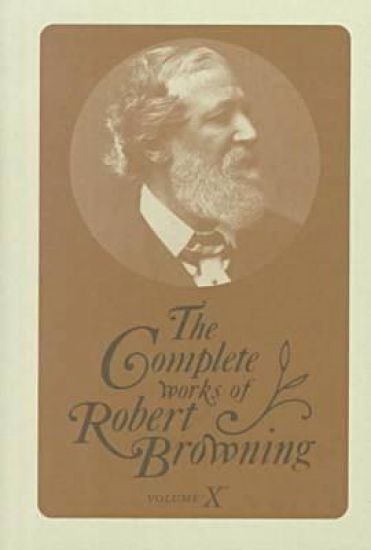
The Complete Works of Robert Browning, Volume X

The Complete Works of Robert Browning, Volume X

Robert Browning

Ohio University Press
1999
sidottu
In seventeen volumes, copublished with Baylor University, this acclaimed series features annotated texts of all of Robert Browning's known writing. The series encompasses autobiography as well as influences bearing on Browning's life and career and aspects of Victorian thought and culture. The Complete Works of Robert Browning, Volume X contains critical editions of Balaustion's Adventure: Including a Transcript from Euripides and Prince Hohenstiel-Schwangau, Saviour of Society. Both published in 1871, these two long poems take up a pair of subjects that held enduring fascination for Robert and Elizabeth Barrett Browning: classical Greek literature and the career of Napoleon III, Emperor of France. Balaustion's Adventure, which the poet characterized as merely a "May-month amusement," was surprisingly successful with the reading public that paid more attention to Browning after the triumph of The Ring and the Book in 1868–69. His first poem since the publication of that masterpiece, Balaustion's Adventure creates a charming and brave narrator who recalls in vivid detail a performance of Euripides' play Alcestis. Browning began a poem on Louis Napoleon in 1860, but not until after the fall of the Second Empire in 1870 did he attempt a full-scale portrait of the French emperor. As an exercise in self-justification, Prince Hohenstiel-Schwangau falls into a familiar sub-genre of Browning's dramatic monologues. The most intriguing aspect of the poem lies in its biographical importance: the character and career of Napoleon III was a topic of sustained, sharp disagreement between Robert and Elizabeth Browning. As always in this acclaimed series, a complete record of textual variants is provided, as well as extensive explanatory notes.
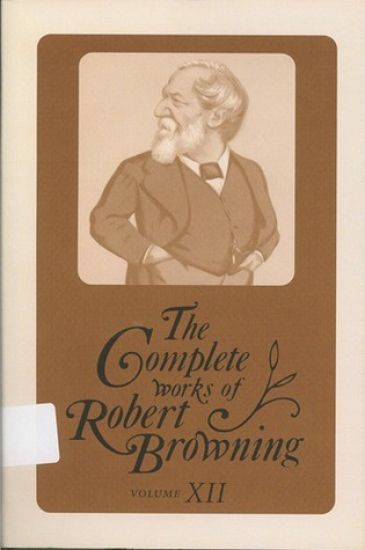
The Complete Works of Robert Browning, Volume XII

The Complete Works of Robert Browning, Volume XII

Robert Browning

Ohio University Press
2001
sidottu
In seventeen volumes, copublished with Baylor University, this acclaimed series features annotated texts of all of Robert Browning's known writing. The series encompasses autobiography as well as influences bearing on Browning's life and career and aspects of Victorian thought and culture. A single work, the complex Aristophanes' Apology (1875), comprises the twelfth volume of The Complete Works of Robert Browning. Second in Browning's series of long narrative poems based on classical Greek materials, Aristophanes' Apology begins as a further adventure of Browning's young Greek heroine, Balaustion (previously encountered in Balaustion's Adventure, in Volume X of the present edition). In a confrontation with Aristophanes, Balaustion defends her (and Browning's) favorite tragedian, Euripides, whom Aristophanes had repeatedly satirized. Aristophanes offers an ingenious, vigorous explanation of his motives and values, but Browning ensures that Balaustion claims the higher moral and artistic ground for Euripides. To demonstrate his greatness, she reads Euripides' play Herakles aloud, in Browning's own translation. Browning's understanding of this play and its author, like his view of Greek drama overall, is both idiosyncratic and strongly held. He energetically takes up artistic and philosophical issues ancient and modern through his dramatized speaker. Many interpreters have noted that the charges against Euripides are parallel to Victorian critics' complaints about Browning's own works, and that the poet's justification of Euripides constitutes a vehement defense of his art. As always in this acclaimed series, a complete record of textual variants is provided, as well as extensive explanatory notes.
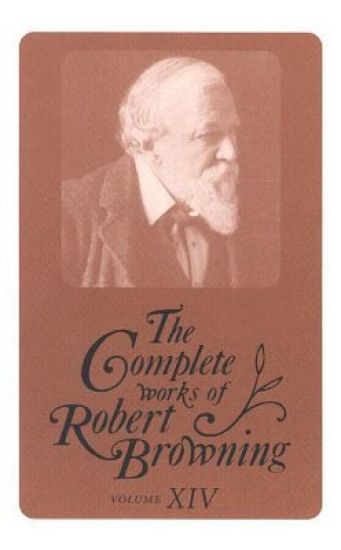
The Complete Works of Robert Browning, Volume XIV

The Complete Works of Robert Browning, Volume XIV

Robert Browning

Ohio University Press
2003
sidottu
In seventeen volumes, copublished with Baylor University, this acclaimed series features annotated texts of all of Robert Browning's known writing. The series encompasses autobiography as well as influences bearing on Browning's life and career and aspects of Victorian thought and culture. Volume XIV of The Complete Works of Robert Browning records a transition in the poet's career. With The Agamemnon of Aeschylus (1877), Browning ended his experiments with classical sources, creating his "transcript" — not quite a translation — of the Greek original and providing an intriguing explanation for his approach. La Saisiaz, the deeply personal expression of Browning's shock at the sudden death of a dear friend, was published in 1878 with The Two Poets of Croisic, an extended ironic meditation on literary fame. Browning's collection of six poems under the title Dramatic Idyls (1879) marks the poet's return to the dramatic forms he perfected in Men and Women and Dramatis Personae, and a revival of his interest in the psychology of motives. As always in this acclaimed series, a complete record of textual variants is provided, as well as extensive explanatory notes.
The Complete Works of Robert Browning, Volume XV

The Complete Works of Robert Browning, Volume XV

Robert Browning

Ohio University Press
2007
sidottu
In seventeen volumes, copublished with Baylor University, this acclaimed series features annotated texts of all of Robert Browning's known writing. The series encompasses autobiography as well as influences bearing on Browning's life and career and aspects of Victorian thought and culture. In the 1880s, the aging Browning showed once again the remarkable versatility of his lyric and narrative talents. Ranging across eras and cultures, the books here reveal his late thoughts about history, myth, legend, faith, love, and desire. He had never been more popular, and the founding of the Browning Society in 1881 expanded both his audience and his sense of his place in English letters. The first title in Volume XV is Dramatic Idylls, Second Series (1880). Taking his subjects from classical history, colonial India, Arabian legend, medieval sorcery, Jewish folk tales, and Greek myth, Browning startles the reader with the rapidity of his thought and the inventiveness of his art. In Jocoseria (1883) Browning's subjects range across time and space from Hebraic legend to the England of the Romantics. Such variety helped attract new readers: Jocoseria was immediately successful, and a second edition was printed in the same year as the first. Although Browning's next volume, Ferishtah's Fancies (1884), was so popular that three editions were printed in less than two years, this artful string of anecdotes and lyrics has attracted little favorable criticism. The materials—Persian legends and Arabic backgrounds—chimed with the wildly popular Orientalism of FitzGerald's Rubáiyát, Whistler's Peacock Room, and Alma-Tadema's paintings. But the thought was pure Browning in his most optimistic vein, and not at all in tune with the growing pessimism of the day. As always in this series of critical editions, a complete record of textual variants is provided, as well as extensive explanatory notes.
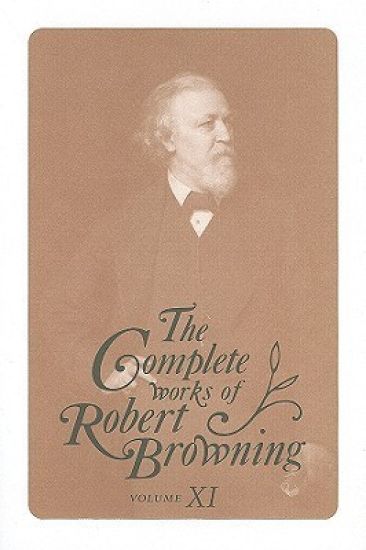
The Complete Works of Robert Browning, Volume XI

The Complete Works of Robert Browning, Volume XI

Robert Browning

Ohio University Press
2008
sidottu
In seventeen volumes, copublished with Baylor University, this acclaimed series features annotated texts of all of Robert Browning's known writing. The series encompasses autobiography as well as influences bearing on Browning's life and career and aspects of Victorian thought and culture. Volume XI of The Complete Works of Robert Browning contains two strikingly disparate long poems from the 1870s, Fifine at the Fair and Red Cotton Night-Cap Country. In Fifine at the Fair, Browning creates an idiosyncratic version of the Don Juan figure, a distinctly post-Romantic and intellectual Don Juan who derives little from any literary predecessor. The legendary character is realized in a modern French setting, the village of Pornic, a favorite vacation spot for Browning. The poem is a sustained exercise in self-justification and casuistry, with Don Juan persuading himself that he can reconcile his love of his wife with his carnal love for a gipsy girl. Though Red Cotton Night-Cap Country is similarly concerned with a struggle between spirit and flesh, the poem is entirely based in contemporary events. Using newspaper accounts and legal documents, Browning tells the strange and shocking tale of a rich and devout Frenchman who throws himself from the roof of his chateau, convinced that heaven will deliver him from death. Upon the question of his sanity hinges the disposition of his considerable estate, and the poet traces the claims and counterclaims to their settlement in court only a few months before he wrote the poem. As always in this series of critical editions, a complete record of textual variants is provided, as well as extensive explanatory notes.
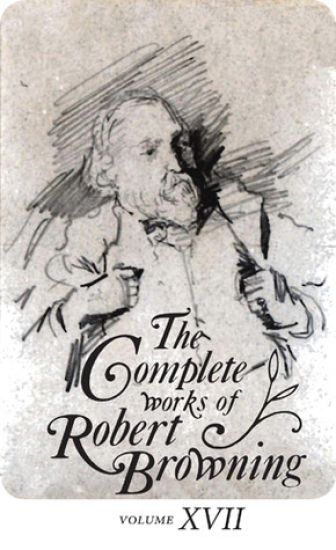
The Complete Works of Robert Browning, Volume XVII

The Complete Works of Robert Browning, Volume XVII

Robert Browning

Ohio University Press
2012
sidottu
In seventeen volumes, copublished with Baylor University, this acclaimed series features annotated texts of all of Robert Browning's known writing. The series encompasses autobiography as well as influences bearing on Browning's life and career and aspects of Victorian thought and culture. With this seventeenth and final volume, The Complete Works of Robert Browning concludes the major phase of a great scholarly project: the accurate preservation and transmission of the poet's works for future generations of readers. Volume XVII begins with Browning's last collection of poems, Asolando: Fancies and Facts, published on the day of the poet's death, 12 December 1889. Wonderful in its diversity and intensity, Asolando contains lyrics of startling emotion, autobiographical narratives, and a few of the dramatic monologues for which Browning had become famed. Also in this final volume are ninety-nine fugitive pieces, either unpublished or uncollected during the poet's lifetime. Ranging from experimental poems of Browning's youth to Greek translations to joking couplets and witty ephemera, these works illustrate the endless variety of the poet's talent. Finally, Volume XVII includes "Thomas Wentworth, Earl of Strafford," a biographical essay that Browning coauthored with John Forster in 1836. The historical research done for this work formed a basis for Strafford, a play Browning completed the following year. Comprehensive explanatory notes for the works in this volume are provided, as is a title index to all seventeen volumes of The Complete Works.
Robert Mugabe

Robert Mugabe

Sue Onslow; Martin Plaut

Ohio University Press
2018
pokkari
Zimbabwe's President Robert Mugabe sharply divides opinion and embodies the contradictions of his country's history and political culture. As a symbol of African liberation and a stalwart opponent of white rule, he was respected and revered by many. This heroic status contrasted sharply, in the eyes of his rivals and victims, with repeated cycles of gross human rights violations. Mugabe presided over the destruction of a vibrant society, capital flight, and mass emigration precipitated by the policies of his government, resulting in his demonic image in Western media. This timely biography addresses the coup, led by some of Mugabe's closest associates, that forced his resignation after thirty-seven years in power. Sue Onslow and Martin Plaut explain Mugabe's formative experiences as a child and young man; his role as an admired Afro-nationalist leader in the struggle against white settler rule; and his evolution into a political manipulator and survivalist. They also address the emergence of political opposition to his leadership and the uneasy period of coalition government. Ultimately, they reveal the complexity of the man who stamped his personality on Zimbabwe's first four decades of independence.
Robert Steinberg Collected Papers

Robert Steinberg Collected Papers

Robert Steinberg

AMERICAN MATHEMATICAL SOCIETY
1997
sidottu
A collection of papers by Robert Steinberg. It contains his published papers on group theory, including those on 'special representations' (now called Steinberg representations), tensor products of representations, finite reflection groups, regular elements of algebraic groups, Galois cohomology, and universal extensions.
The Robert Bellah Reader

The Robert Bellah Reader

Robert N. Bellah

Duke University Press
2006
sidottu
Perhaps best known for his coauthored bestselling books Habits of the Heart and The Good Society, Robert N. Bellah is a truly visionary leader in the social study of religion. For more than four decades, he has examined the role of religion in modern and premodern societies, attempting to discern how religious meaning is formed and how it shapes ethical and political practices. The Robert Bellah Reader brings together twenty-eight of Bellah’s seminal essays. While the essays span a period of more than forty years, nearly half of them were written in the past decade, many in the past few years.The Reader is organized around four central concerns. It seeks to place modernity in theoretical and historical perspective, drawing from major figures in social science, historical and contemporary, from Aristotle and Rousseau through Durkheim and Weber to Habermas and Mary Douglas. It takes the United States to be in some respects the type-case of modernity and in others the most atypical of modern societies, analyzing its common faith in individual freedom and democratic self-government, and its persistent paradoxes of inequality, exclusion, and empire. The Reader is also concerned to test the axiomatic modern assumption that rational cognition and moral evaluation, fact and value, are absolutely divided, arguing instead that they overlap and interact much more than conventional wisdom in the university today usually admits. Finally, it criticizes modernity’s affirmation that faith and knowledge stand even more utterly at odds, arguing instead that their overlap and interaction, obvious in every premodern society, animate the modern world as well.Through such critical and constructive inquiry this Reader probes many of our deepest social and cultural quandaries, quandaries that put modernity itself, with all its immense achievements, at mortal risk. Through the practical self-understanding such inquiry spurs, Bellah shows how we may share responsibility for the world we have made and seek to heal it.
The Robert Bellah Reader

The Robert Bellah Reader

Robert N. Bellah

Duke University Press
2006
pokkari
Perhaps best known for his coauthored bestselling books Habits of the Heart and The Good Society, Robert N. Bellah is a truly visionary leader in the social study of religion. For more than four decades, he has examined the role of religion in modern and premodern societies, attempting to discern how religious meaning is formed and how it shapes ethical and political practices. The Robert Bellah Reader brings together twenty-eight of Bellah’s seminal essays. While the essays span a period of more than forty years, nearly half of them were written in the past decade, many in the past few years.The Reader is organized around four central concerns. It seeks to place modernity in theoretical and historical perspective, drawing from major figures in social science, historical and contemporary, from Aristotle and Rousseau through Durkheim and Weber to Habermas and Mary Douglas. It takes the United States to be in some respects the type-case of modernity and in others the most atypical of modern societies, analyzing its common faith in individual freedom and democratic self-government, and its persistent paradoxes of inequality, exclusion, and empire. The Reader is also concerned to test the axiomatic modern assumption that rational cognition and moral evaluation, fact and value, are absolutely divided, arguing instead that they overlap and interact much more than conventional wisdom in the university today usually admits. Finally, it criticizes modernity’s affirmation that faith and knowledge stand even more utterly at odds, arguing instead that their overlap and interaction, obvious in every premodern society, animate the modern world as well.Through such critical and constructive inquiry this Reader probes many of our deepest social and cultural quandaries, quandaries that put modernity itself, with all its immense achievements, at mortal risk. Through the practical self-understanding such inquiry spurs, Bellah shows how we may share responsibility for the world we have made and seek to heal it.