Kirjojen hintavertailu. Mukana 11 244 527 kirjaa ja 12 kauppaa.

Kirjahaku

Etsi kirjoja tekijän nimen, kirjan nimen tai ISBN:n perusteella.

1000 tulosta hakusanalla Robert Long Daugherty

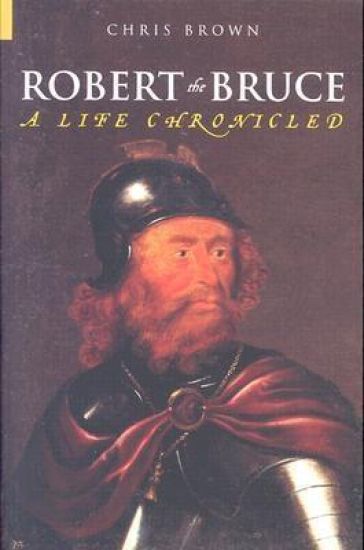
Robert the Bruce

Robert the Bruce

Chris Brown

The History Press Ltd
2004
nidottu
Much is known about Robert the Bruce's military campaigns for Scottish Independence in Scotland and England but what about his expeditions to Ireland? In the early summer of 1315 a fleet-load of Scots veterans of Bannockburn put ashore on the coast of what is now County Antrim. The Anglo-Scottish conflict had transferred itself to Irish soil.The expedition was led by Edward Bruce, Robert the Bruce's brother, and recently ratified as heir-presumptive to the Scottish throne. By any standards, it was a major undertaking, planned well in advance, to which a significant proportion of Scotland's hard-pressed resources were devoted. It amounted to a full scale invasion. What the Bruce brothers hoped to achieve from their Irish venture is hotly debated. Did the Bruces envisage turning the invasion into a permanent conquest?Was the aim to exploit Irish dissidence to push Edward II into acknowledging Robert's claim to Scotland? Or had Robert been hoping for the former but been content with the latter? This lavishly illustrated study attempts to answer these questions and tells the story of the invasion itself and the battles that followed.
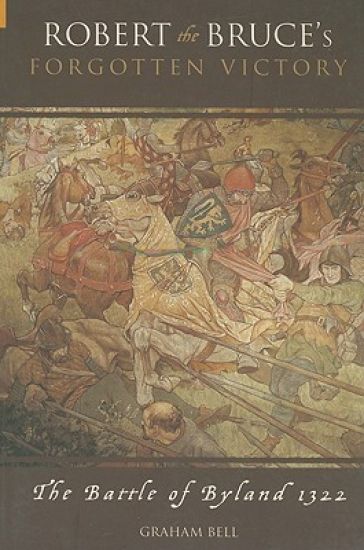
Robert the Bruce's Forgotten Victory

Robert the Bruce's Forgotten Victory

Graham Bell

The History Press Ltd
2005
nidottu
Waged on 14 October 1322, the battle of Byland (an area north-east of Thirsk) was fought between the two monarchs, Edward II and Robert the Bruce, and their forces. The Scots' motive for the engagement was to force the English into accepting the independence that Bannockburn hadn't actually achieved, the aim being to capture the King and force his hand. The plan nearly worked, and Edward II had to make a humiliating escape, losing his baggage train (again), putting his queen, Isabella, dangerously close to capture, and allowing the the Scots to pursue him to the gates of York. This new history of one of Robert the Bruce's most significant victories shows how close the Scots came to capturing the King.
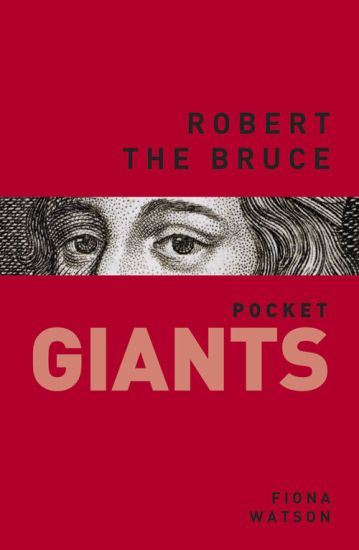
Robert the Bruce: pocket GIANTS

Robert the Bruce: pocket GIANTS

Fiona Watson

The History Press Ltd
2014
nidottu
From disastrous beginnings after he took the throne of Scotland, having murdered a powerful rival, Robert I became a military leader of consummate genius. Throwing away the rulebook of medieval warfare, which favoured the mounted knight, he remodelled the Scottish army as a disciplined, audacious band of brothers capable of surprising castles, raiding and extracting blackmail as far south as Yorkshire and even defeating a mighty English army in pitched battle. Ruthless, charismatic, indomitable and lucky, the ‘Bruce’ is a towering example of an underdog capable of turning disadvantage into advantage and winning the day through talent and sheer determination. The English turned the lessons they learnt from him to good effect in their Hundred Years war against France.
Robert Burns - Nature Poems

Robert Burns - Nature Poems

Robert Burns

Octopus Publishing Group
2025
sidottu
This enchanting collection of more than 80 poems captures the essence of the natural world, as seen through the eyes of Scotland's beloved bard. Each chapter explores a different aspect of nature - from wild, mossy mountains and glens to murmuring streams, the sorrowful song of the woodlark, and the ever-changing seasons. Burns's profound appreciation for the landscape of Scotland and its creatures shines through every verse, and this collection is a heartfelt love letter to his homeland. Whether you're a long-time admirer of Burns or discovering his work for the first time, Nature Poems will transport you to the heart of Scotland's natural splendour.Illustrated by local artist, The Ink Bothy, and compiled by Scottish resident and poet Robert Tuesley Anderson, this is a collection to treasure.
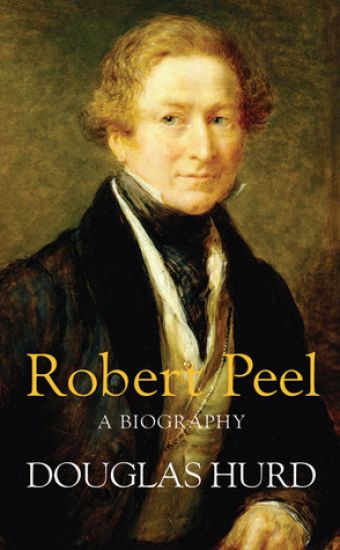
Robert Peel

Robert Peel

Douglas Hurd

Weidenfeld Nicolson
2008
nidottu
Life of one of the greatest British Prime Ministers - by an author who knows the scene from his years as a senior Minister in Margaret Thatcher's Cabinet.Robert Peel, as much as any man in the nineteenth century, transformed Great Britain into a modern nation. He invented our police force, which became a model for the world. He steered through the Bill which allowed Catholics to sit in Parliament. He reorganised the criminal justice system. Above all he tackled poverty by repealing the Corn Laws. Thanks to Peel the most powerful trading nation chose free trade and opened the door for our globalised world of today.Peel was not all politics. He built two great houses, filled them with famous pictures and was devoted to a beautiful wife. Many followers never forgave him for splitting his Party. But when in 1850 he was carried home after a fall from his horse crowds gathered outside, mainly of working people, to read the medical bulletins. When he died a few days later, factories closed, flags flew at half mast and thousands contributed small sums to memorials in his honour. He was the man who provided cheap bread and sacrificed his career for the welfare of ordinary people.
Robert the Monk's History of the First Crusade
This is the first English translation of Robert the Monk's Historia Iherosolimitana, a Latin prose chronicle describing the First Crusade. In addition to providing new and unique information on the Crusade (Robert claims to have been an eyewitness of the Council of Clermont in 1095), its particular interest lies in the great popularity it enjoyed in the Middle Ages. The text has close links with the vernacular literary tradition and is written in a racy style which would not disgrace a modern tabloid journalist. Its reflection of contemporary legends and anecdotes gives us insights into perceptions of the Crusade at that time and opens up interesting perspectives onto the relationship of history and fiction in the twelfth century. The introduction discusses what we know about Robert, his importance as a historical source and his place in the literary tradition of the First Crusade.
Robert Greene

Robert Greene

Ashgate Publishing Limited
2011
sidottu
While Robert Greene was the most prolific and perhaps the most notorious professional writer in Elizabethan England, he continues to be best known for his 1592 quip comparing Shakespeare to "an upstart crow." In his short twelve-year career, Greene wrote dozens of popular pamphlets in a variety of genres and numerous professional plays. At his premature death in 1592, he was a bonafide London celebrity, simultaneously maligned as Grub-Street profligate and celebrated as literary prodigy. The present volume constitutes the first collection of Greene's reception both in the early modern period and in our present era, offering in its poems, prose passages, essays, and chapters that which is most singular among what has been written about Greene and his work. It also includes a complete list of Greene's contemporary reception until 1640. Kirk Melnikoff's wide-ranging and revisionist introduction organizes this reception generically while at the same time situating it in the context of recent critical methodologies.
Robert Louis Stevenson and the Colonial Imagination

Robert Louis Stevenson and the Colonial Imagination

Ann C. Colley

Ashgate Publishing Limited
2004
sidottu
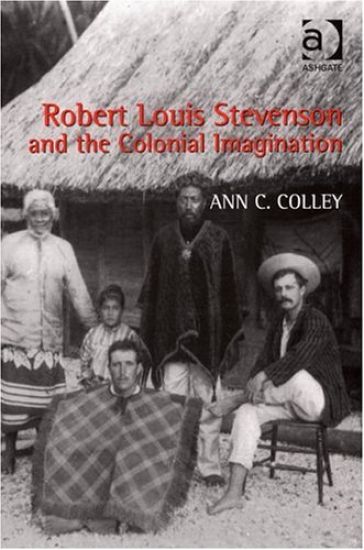
In her distinguished and hauntingly rendered book, Ann C. Colley provides a fresh insight into Stevenson's multi-voiced South Seas fiction, as well as into the particulars and complications of living within a newly established site of Empire. Bringing to light information from the archives of the London Missionary Society and from other sources, such as the Royal Geographical Society (London), the Writers' Museum (Edinburgh), the Beinecke Library (Yale University), and the Huntington Library (San Marino, California), Colley examines the intricate nature of Robert Louis Stevenson's relation to imperialism. In particular, she investigates Stevenson's complex relationship to the missionary culture that surrounded him during the last six years of his life (1888-1894), revealing hitherto unscouted routes by which to understand Stevenson's experiences while he was cruising among the South Sea islands, and later while he was a resident colonial in Samoa. Beginning with a history of the missionaries in the Pacific that reveals Stevenson's criticism of, yet ultimate support for, their work, and demonstrates how these attitudes helped shape his South Sea fiction, Robert Louis Stevenson and the Colonial Imagination constitutes a major work of reconstruction from archival sources. Subsequent chapters focus on Stevenson's struggles with personal and cultural identity in the South Seas, and his interest in photography, panoramas, and magic lantern shows, revealing Stevenson's sensitivity to the ways light plays upon darkness to create meaning. In addition, Stevenson's serious commitment to political issues and his thoughts about power and nationhood are explored. Finally, Stevenson's recollections of his childhood are engaged not only to suggest an unacknowledged source (the juvenile missionary magazines) for A Child's Garden of Verses, but also to illuminate the generous reach of his imagination that exceeds the formulae of the missionary culture and the boundaries of the colonial construct.
Robert Stephenson – The Eminent Engineer
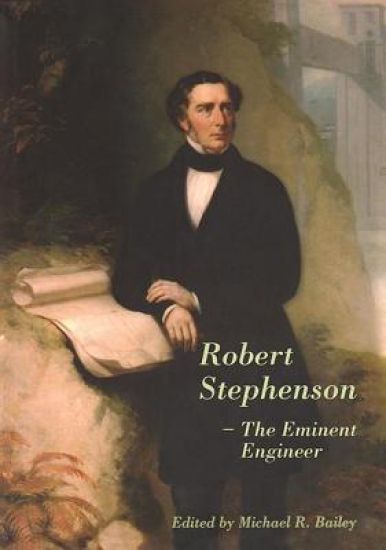
Robert Stephenson, the leading engineer of the mid-nineteenth century whose substantial public works brought about considerable social change is now the subject of this excellent new biography: Robert Stephenson - The Eminent Engineer. Stephenson's engineering practice was responsible for major railway building programmes in Britain and overseas. He oversaw the building of many bridges, particularly the innovative tubular bridges in North Wales and was influential in the development of England's railway network. Stephenson's engineering practice in Westminster, whose many associates were engaged throughout England, were responsible for substantial railway building programmes during the 'mania' years of the 1840s. By 1850, he was associated with one third of the railway network. His overseas railway involvements included building many miles of line and developing national transport plans. Robert Stephenson - The Eminent Engineer also considers Stephenson's public roles and shows how he was perceived by his contemporaries. Stephenson was a Member of Parliament and Commissioner for the Great Exhibition, was well respected as an arbitrator, received several British and overseas honours and was President of both the Institutions of Civil and Mechanical Engineering.
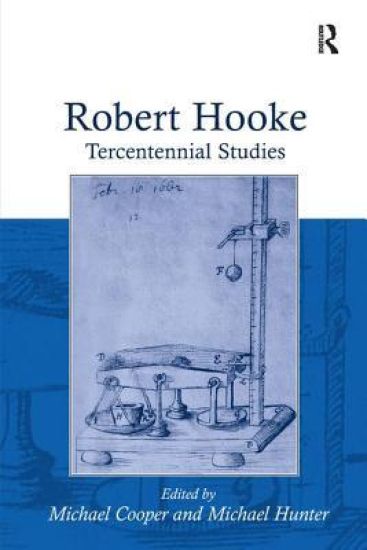
Robert Hooke

Robert Hooke

Michael Hunter

Ashgate Publishing Limited
2006
sidottu
Robert Hooke (1635-1703) was a genius whose wide-ranging achievements are at last receiving the recognition that they deserve. Long overshadowed by such eminent contemporaries as Sir Isaac Newton and Sir Christopher Wren, Hooke's own seminal contributions to science, architecture and technology are now being acclaimed in their own right. Curator of Experiments to the Royal Society when it was chartered in 1662 and author of the famous Micrographia (1665), Hooke also showed unparalleled ingenuity in designing machines and instruments, and played a crucial role as Surveyor to the City of London after the Great Fire. This volume represents a benchmark in the study of Hooke, bringing together a comprehensive set of studies of different aspects of his life, thought and artistry. Its sections deal with Hooke's life and reputation; his contributions to celestial mechanics and astronomy, and to speculative natural philosophy; the instruments that he designed; and his work in architecture and construction. The introduction places the studies in the context of our current understanding of Hooke and his milieu, while the book also contains a comprehensive bibliography. In all, it will be an invaluable resource for all those interested in a figure whose complexity and importance are becoming clear after centuries of neglect.
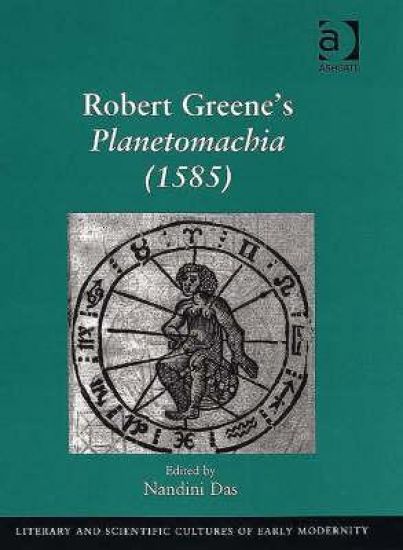
Robert Greene's Planetomachia (1585)

Robert Greene's Planetomachia (1585)

Ashgate Publishing Limited
2007
sidottu
When Planetomachia was published in 1585, Greene himself-always the best advertiser of his own books-promised his readers a perfectly balanced diet of edification and entertainment. He described his newest offering as an astronomical discourse on the nature and influence of the planets interlaced with 'pleasant and tragical histories,' which one could ostensibly use as a manual to identify various planetary influences on 'natural constitution.' In this first complete critical edition, Nandini Das presents Planetomachia as a complex hybrid which is eminently a product of its times, exploring how the two very different intellectual and cultural spheres of Humanist scholarship and Renaissance popular print engage in an intriguing, albeit uneasy, dialogue to produce this unique work of prose fiction. The volume gives a clear sense, afforded by no other existing edition, of the intellectual climate which shaped this text. It offers substantial introductory material (on biographical, literary and scientific contexts) and extensive annotation identifying Greene's allusions and elucidating his vocabulary. It also includes translations and extracts from significant sources, along with a bibliography of relevant primary texts and critical work on Greene generally and on Planetomachia in particular.
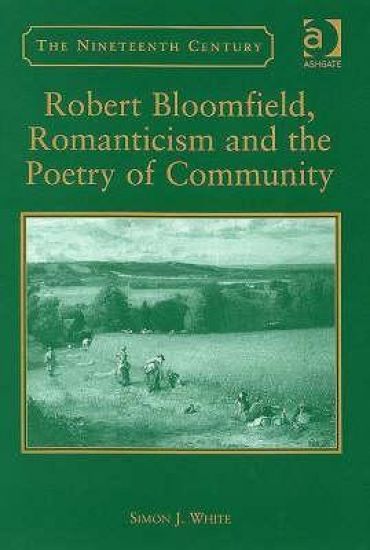
Robert Bloomfield, Romanticism and the Poetry of Community

Robert Bloomfield, Romanticism and the Poetry of Community

Simon J. White

Ashgate Publishing Limited
2007
sidottu
Robert Bloomfield, whom John Clare described as 'the most original poet of the age,' was a widely read and critically acclaimed poet throughout the first decade of the nineteenth century, and remained popular until the beginning of the twentieth century. Yet until now, no modern critic has undertaken a full-length study of his poetry and its contexts. Simon J. White considers the relationship between Bloomfield's poetry and that of other Romantic poets. For example, her argues that Wordsworth's poetics of rural life was in some respects a response to Bloomfield's The Farmer's Boy. White considers Bloomfield's emphasis on the importance of local tradition and community in the lives of labouring people. In challenging the idea that the formal and rhetorical innovation of Wordsworth and Coleridge was principally responsible for the emergence of a new kind of poetry at the turn of the eighteenth century, he also shows that it is impossible to understand how the lyric and the literary ballad evolved during the Romantic period without considering Bloomfield's poetry. White's authoritative study demonstrates that, on the contrary, Bloomfield's poetry was pivotal in the development of Romanticism.
Robert the Monk's History of the First Crusade
This is the first English translation of Robert the Monk's Historia Iherosolimitana, a Latin prose chronicle describing the First Crusade. In addition to providing new and unique information on the Crusade (Robert claims to have been an eyewitness of the Council of Clermont in 1095), its particular interest lies in the great popularity it enjoyed in the Middle Ages. The text has close links with the vernacular literary tradition and is written in a racy style which would not disgrace a modern tabloid journalist. Its reflection of contemporary legends and anecdotes gives us insights into perceptions of the Crusade at that time and opens up interesting perspectives onto the relationship of history and fiction in the twelfth century. The introduction discusses what we know about Robert, his importance as a historical source and his place in the literary tradition of the First Crusade.
Robert Louis Stevenson in the Pacific

Robert Louis Stevenson in the Pacific

Roslyn Jolly

Ashgate Publishing Limited
2009
sidottu
Robert Louis Stevenson's departure from Europe in 1887 coincided with a vocational crisis prompted by his father's death. Impatient with his established identity as a writer, Stevenson was eager to explore different ways of writing, at the same time that living in the Pacific stimulated a range of latent intellectual and political interests. Roslyn Jolly examines the crucial period from 1887 to 1894, focusing on the self-transformation wrought in Stevenson's Pacific travel-writing and political texts. Jolly shows how Stevenson's desire to understand unfamiliar Polynesian and Micronesian cultures, and to record and intervene in the politics of Samoa, gave him opportunities to use his legal education, pursue his interest in historiography, and experiment with anthropology and journalism. Thus as his geographical and cultural horizons expanded, Stevenson's professional sphere enlarged as well, stretching the category of authorship in which his successes as a novelist had placed him. Rather than enhancing his stature as a popular writer, however, Stevenson's experiments with new styles and genres, and the Pacific subject matter of his later works, were resisted by his readers. Jolly's analysis of contemporary responses to Stevenson's writing, gleaned from an extensive collection of reviews, many of which are not readily available, provides fascinating insights into the interests, obsessions, and resistances of Victorian readers. As Stevenson sought to escape the vocational straightjacket that confined him, his readers just as strenuously expressed their loyalty to outmoded images of Stevenson the author, and their distrust of the new guises in which he presented himself.
Robert Saxton: Caritas

Robert Saxton: Caritas

Wyndham Thomas

Ashgate Publishing Limited
2012
sidottu
Caritas relates the 'true', yet largely undocumented story of Christine Carpenter, a 14th-century anchoress who moves towards insanity as her desire for a divine revelation continues to be unfulfilled after a period of three years locked in her cell. Although physically isolated, she is aware of the worldly life and love that she has abandoned. The very essence of the drama is the dogmatic refusal of her Bishop to release her from her vows. Set against the backcloth of the Peasants' Uprising (1381), the libretto/play juxtaposes sacred and secular worlds, the relative power and servitude of rulers and serfs, and the terrifying ordeal of Christine who is caught between the inflexibility of the established church and her personal religious expectations. Such a narrative was to offer rich opportunities for musical characterization and evocation of the historical context of the action, as well as substantial challenges in pacing and integrating the sequence of dramatic 'snap-shots' that culminate in a scene of total despair. The colourful juxtaposition of secular life and that of a recluse in Act One culminates in a Second Act finale of immense dramatic power in which Saxton's vocal and instrumental writing reaches new heights - a landmark both in his output and in late 20th century opera. Caritas - first performed in 1991 - occupies an important position in Robert Saxton's output and, as Thomas argues, in British opera during the closing decades of the 20th century. Thomas provides a detailed contextual setting in which to evaluate Caritas, as well as presenting an analytical commentary on the structure, musical language, instrumentation, staging and production of the opera. Thomas concludes with a reflection on the reception of Caritas as well as looking forward to Saxton's later and future works. A downloadable resource of the first performance is included.
Finding Robert

Finding Robert

Robert J. Stevens; Catherine E. Stevens

Square One Publishers
2016
nidottu
Diagnosed with attention deficit hyperactivity disorder, oppositional defiance disorder, and pervasive developmental disorder in the early 1990s, Robert Stevens was anexceptionally intelligent child who could not function in a mainstream environment.Being the problem child of every play group, sports league, and extracurricular activityhe joined, Robert had no friends, no internal means of self-control, no off switch, and as his parents, Robert and Catherine Stevens, were warned perhaps no realfuture. Thinking it for the best, Robert s parents did what the experts told them to do.Despite having a remarkably high IQ, Robert was placed in a special education program, under a psychiatrist s care, and on several powerful medications, including Ritalin andProzac. Unfortunately, nothing worked quite as intended, and Robert suffered from nearlyevery side effect these drugs had to offer.Robert s parents saw they were losing him. Witnesses to Robert s drastic mood swingsand anxious displays, they did not know whether they were seeing their son or theresults of the medications he was taking. While initially helpful, the special educationclass began to create its own world of problems, with Robert taking a step backwards foreach step forward. Desperate, the Stevens family turned to holistic therapies. Amazingly, Robert began to show improvement. Wondering why their son s doctors had discouragedsuch strategies, Robert and Catherine started researching new approaches on their own.Using nontraditional approaches, Robert was found. By third grade, he was off allmedications, attending a mainstream school, making friends, and simply being himself.Finding Robert chronicles one family s journey through the world of developmentaldisorders. It depicts the struggles faced, examines the decisions made, and offers athorough analysis of the therapies utilized. Amid sadness and confusion, with strengthand resolve, Robert and Catherine regained their son and undertook a mission to changethe way we look at these conditions."
Robert Pickus, Pacifist Warrior

Robert Pickus, Pacifist Warrior

Robert Woito

Hamilton Books
2020
nidottu
Pacifist Warrior introduces Robert Pickus, his leadership role in the pacifist community (1951–2016), and his thoughtful work to constructively engage the United States in world politics. He called for leadership by the United States to move a conflict-filled world towards peace through non-military initiatives, designed to gain the reciprocation of allies and dedicated adversaries alike. Robert Pickus earned the title “Pacifist Warrior” because he not only believed pacifism in a nuclear age was a moral imperative, it was also a more effective strategy towards a world without war. Pickus’ career lasted from 1951 to 2016. As Director of the World Without War Council office in Berkeley, he engaged civic, labor, business, and religious organizations to work for a world without war. He worked at the juncture where advocates of war-as-a-last-resort met community peace advocates to develop non-military alternatives to war. His signature contribution was a compendium of American Peace Initiatives developed with other key leaders, including George Weigel, Harold Guetzkow, Sidney Hook and Ted Sorensen. During his tenure, the WWWC developed a strategy of American peace initiatives to get from here to a world without war. The ideas of reciprocation, universal participation and non-violent change apply to both arms control and disarmament as well as climate change.