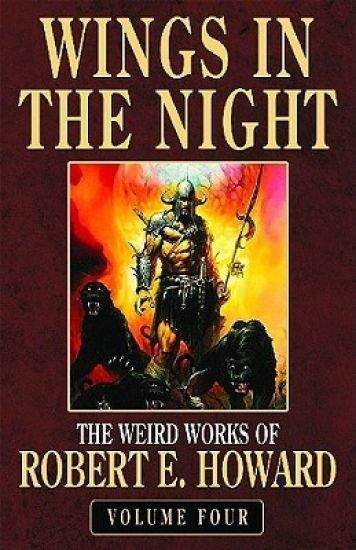
Wings in the Night collects Robert E. Howard's fiction and prose published in Weird Tales Magazine from July 1932 to May 1933. These works represent literary stepping-stones to Howard's infamous Cthulhu mythos stories and his most famous character of all — Conan the Cimmerian — and ably demonstrate that each of Howard's stories improved and added to his formidable skills as a master of fantasy and adventure.
The seventh volume of the Weird Works of Robert E. Howard continues reprinting Howard's fantasy from Weird Tales and Strange Tales in order of original publication. All texts have been meticulously restored to their original pulp appearances.
The third volume of the Weird Works of Robert E. Howard continues reprinting Howard's fantasy from Weird Tales and Strange Tales in order of original publication. All texts have been meticulously restored to their original pulp appearances. Introduction by Joe R. Lansdale. This volume contains: "The Black Stone," "Children of the Night," "The Dark Man," "The Footfalls Within," "Gods of Gal-Sagoth," "Horror from the Mound," "Kings of the Night," "The Last Day," "People of the Dark," "The Song of the Mad Minstrel," and "The Thing on the Roof."
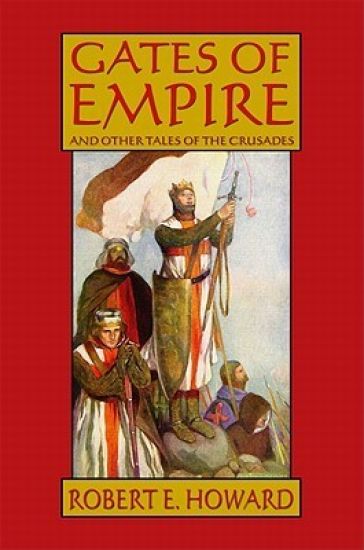
Gates of Empire presents eight of Robert E. Howard's classic adventure stories, all of which are set during the Crusades. Stories include "Red Blades of Black Cathay," "Hawks of Outremer," "Blood of Belshazzar," "The Sowers of the Thunder," "The Lion of Tiberias," "The Shadow of the Vulture" and "Gates of Empire"
Shadow Kingdoms is the first volume of the Weird Works of Robert E. Howard, presenting all of Howard's work from the classic magazine Weird Tales, meticulously restored to its original texts. This volume begins with "Spear and Fang," Howard's first professional fiction sale, and concludes with "Red Thunder," a gripping sword & sorcery tale. Series characters present in this volume include King Kull and Solomon Kane.
Meticulously restored text by renowned Howard scholar Paul Herman, this is the eighth installment in a ten book definitive chronological collection of Robert E. Howard’s stories that appeared in pulp magazines like the revered Weird Tales. Robert E. Howard is considered the Godfather of Sword and Sorcery, and the creator of the international icon, Conan the Cimmerian.
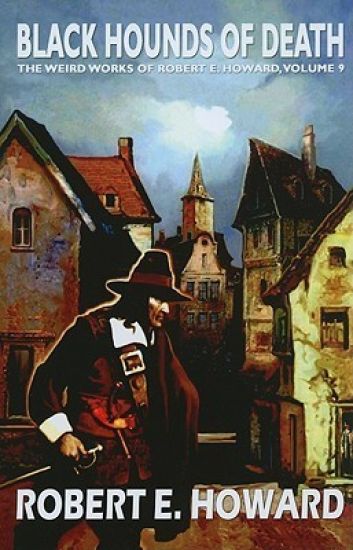
Meticulously-restored text by renowned Robert E. Howard scholar Paul Herman, this is the ninth in a ten book definitive chronological collection of Robert E. Howard's stories that appeared in pulp magazines like the revered Weird Tales.
Meticulously restored text by renowned Howard scholar Paul Herman, this is the last in a ten-book definitive chronological collection of Robert E. Howard's stories that appeared in pulp magazines like the revered Weird Tales. Howard is the creator of the international icon, Conan the Cimmerian and considered the Godfather of Sword and Sorcery.
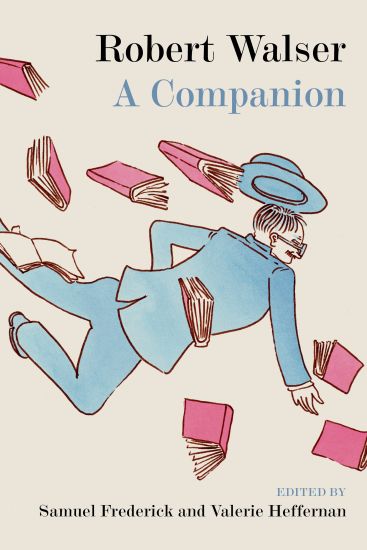
Interest in the Swiss modernist writer Robert Walser (1878-1956) has widened thanks to high praise from intellectuals such as Susan Sontag, W. G. Sebald, and J. M. Coetzee, and an increasing number of his books are now available in English translation. Robert Walser: A Companion offers the most comprehensive and authoritative guide to Walser’s work available in English to date.Examining Walser’s literary works, milieu, and idiosyncratic writing process, the twelve essays in Robert Walser: A Companion addresses aspects of his biography; discusses the various genres in which he wrote—the novel, short prose, drama, lyric poetry, and letters—and analyzes his best-known novels and short stories alongside lesser-known but no less fascinating poems, dramas, and prose pieces.A welcome addition to scholarship about this idiosyncratic, prolific, and influential writer’s work, Robert Walser: A Companion will be of interest both to established scholars and to those coming to the Walser literature for the first time.
Impressed by the success of The Birth of a Nation, Robert Goldstein, owner of a well-known Los Angeles costume supply house, produced his own epic film drama, The Spirit of '76 and screened it in Los Angeles shortly after America's entry into World War I. The film was denounced as anti-British and treasonous. Arrested under the Espionage Act, Goldstein became the first and only American jailed for the crime of producing a patriotic film. Film historian Tony Slide includes an introductory essay, reprints contemporary documentation, and publishes a 1927 manuscript by Goldstein, in which he fully documents the background to the film, its making, his arrest and trial, and his later suffering.
In Robert Ward's The Crucible: Creating an American Musical Nationalism, Robert Paul Kolt explores the life of the American composer Robert Ward through an examination of his most popular and enduring work, The Crucible. Focusing on the musical-linguistic relationships within the opera, Kolt demonstrates Ward's unique synthesis of text and music, one that lends itself to the perception of American musical nationalism. This book contains the most thorough and in-depth biography of Ward yet in print. Based on interviews with the composer, Kolt presents new information about Ward's life and career, focusing on his opera and examining the formation and construction of The Crucible's libretto and score, in turn offering new insights into the process of composing an opera. Kolt observes how the libretto's linguistic aspects helped Ward formulate the opera's melodic and rhythmic musical material. A detailed and unique analysis of the opera, particularly the musical and linguistic techniques Ward employed, demonstrates how these techniques lend themselves to the opera's reception as a work of American musical nationalism. The book also provides yet unpublished information on Arthur Miller's play, examining how it came to be written and soon after became the basis for Ward's work. Several appendixes provide a fuller picture, including a deleted scene from Miller's play and Ward's version of the scene, a chronological overview of the Salem Witchcraft Trials, and illustrations and photo reproductions from Ward's manuscript.
Robert Mangold: Beyond the Line celebrates the vision of an artist who has earned a distinguished place in the grand tradition of abstract painting. Marking a forthcoming exhibition at the prestigious Albright-Knox Gallery in Buffalo, New York, this book tracks Mangold's artistic roots and development and documents the varied series he has made during the last eight years. It also marks his important window commission for the new Federal courthouse in Buffalo, slated for completion in 2010, and designed by Kohn Pedersen Fox as part of the U.S. General Services Administration Design Excellence Program.Insightful essays and an in-depth interview with the artist afford an intimate look into Mangold's creative process, from the austere geometric paintings of the 1970s to his recent work on windows and the vibrant Ring Images he is creating today.Luxuriously packaged, each volume contains a woodcut reproduced by offset lithography, initialed and dated by the artist in the print, suitable for framing and made especially for, and available only with, this book.
This edition of the standard textbook on its subject has been revised by Robert Churchill's biographer. Macdonald Hastings, himself well-known in the shooting field (and other fields as well), has incorporated comments on matters which, since Churchill's Game Shooting as first published in 1955, required further enlargement or modification. He has also brought the entire work completely up-to-date. Macdonald Hastings, who collaborated with the author in the writing of the original edition, was Robert Churchill's own choice to revise the text and this new edition of Churchill's drill book, as the great gunmaker and coach himself liked to describe it, may be regarded as contemporarily definitive. None who read the first edition will want to miss this second one, in which every point of controversy and prejudice has been underlined with an editorial note to assist the shooting man in improving his own performance. To those who are still unfamiliar with Churchill's method of teaching game-shooting, it is important to add that this books is aimed to help not merely the experienced shot who wonders why he is missing, but also the novice handling a gun for the first time. It contains complete and always practical advice on all forms of shot-gun work for everybody. Those who make good use of this manual will not only be welcome guests in any company but quickly pay the cost of the book out of the saving they make on wasted cartridges.
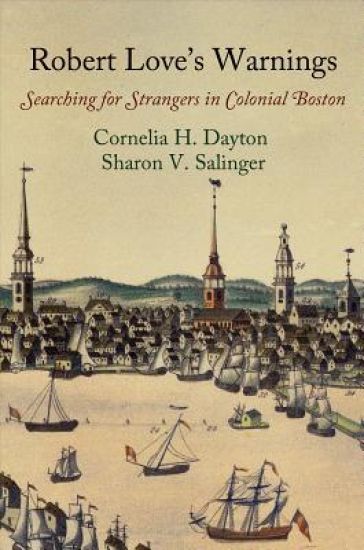
In colonial America, the system of "warning out" was distinctive to New England, a way for a community to regulate those to whom it would extend welfare. Robert Love's Warnings animates this nearly forgotten aspect of colonial life, richly detailing the moral and legal basis of the practice and the religious and humanistic vision of those who enforced it. Historians Cornelia H. Dayton and Sharon V. Salinger follow one otherwise obscure town clerk, Robert Love, as he walked through Boston's streets to tell sojourners, "in His Majesty's Name," that they were warned to depart the town in fourteen days. This declaration meant not that newcomers literally had to leave, but that they could not claim legal settlement or rely on town poor relief. Warned youths and adults could reside, work, marry, or buy a house in the city. If they became needy, their relief was paid for by the province treasurer. Warning thus functioned as a registration system, encouraging the flow of labor and protecting town coffers. Between 1765 and 1774, Robert Love warned four thousand itinerants, including youthful migrant workers, demobilized British soldiers, recently exiled Acadians, and women following the redcoats who occupied Boston in 1768. Appointed warner at age sixty-eight owing to his unusual capacity for remembering faces, Love kept meticulous records of the sojourners he spoke to, including where they lodged and whether they were lame, ragged, drunk, impudent, homeless, or begging. Through these documents, Dayton and Salinger reconstruct the biographies of travelers, exploring why so many people were on the move throughout the British Atlantic and why they came to Boston. With a fresh interpretation of the role that warning played in Boston's civic structure and street life, Robert Love's Warnings reveals the complex legal, social, and political landscape of New England in the decade before the Revolution.
In colonial America, the system of "warning out" was distinctive to New England, a way for a community to regulate those to whom it would extend welfare. Robert Love's Warnings animates this nearly forgotten aspect of colonial life, richly detailing the moral and legal basis of the practice and the religious and humanistic vision of those who enforced it. Historians Cornelia H. Dayton and Sharon V. Salinger follow one otherwise obscure town clerk, Robert Love, as he walked through Boston's streets to tell sojourners, "in His Majesty's Name," that they were warned to depart the town in fourteen days. This declaration meant not that newcomers literally had to leave, but that they could not claim legal settlement or rely on town poor relief. Warned youths and adults could reside, work, marry, or buy a house in the city. If they became needy, their relief was paid for by the province treasurer. Warning thus functioned as a registration system, encouraging the flow of labor and protecting town coffers. Between 1765 and 1774, Robert Love warned four thousand itinerants, including youthful migrant workers, demobilized British soldiers, recently exiled Acadians, and women following the redcoats who occupied Boston in 1768. Appointed warner at age sixty-eight owing to his unusual capacity for remembering faces, Love kept meticulous records of the sojourners he spoke to, including where they lodged and whether they were lame, ragged, drunk, impudent, homeless, or begging. Through these documents, Dayton and Salinger reconstruct the biographies of travelers, exploring why so many people were on the move throughout the British Atlantic and why they came to Boston. With a fresh interpretation of the role that warning played in Boston's civic structure and street life, Robert Love's Warnings reveals the complex legal, social, and political landscape of New England in the decade before the Revolution.
Robert McNamara is best known for his key role in the escalation of the Vietnam War as U.S. secretary of defense under Presidents John F. Kennedy and Lyndon Johnson. The familiar story begins with the brilliant young executive transforming Ford Motor Company, followed by his rise to political power under Kennedy, and culminating in his downfall after eight years of failed military policies. Many believe McNamara's fall from grace after Vietnam marked the end of his career. They were wrong. In Robert McNamara's Other War, Patrick Allan Sharma reveals the previously untold story of what happened next. As president of the World Bank from 1968 to 1981, McNamara changed the way many people thought about international development by shifting the World Bank's focus to poverty alleviation. Though his efforts to redeem himself after his failures in Vietnam were well-intentioned, Sharma argues, his expansion of the World Bank's agenda contributed to a decline in the quality of its activities. McNamara's policies at the Bank also helped lay the groundwork for the economic crises that have plagued the developing world during the past three decades. Not only has Sharma crafted an engaging chronicle of one of the most enigmatic figures in modern American history; he has also produced one of the first detailed histories of the World Bank. He mines previously unstudied Bank documents that have only recently become available to researchers as well as material from archives on three continents. Sharma's extensive research shows that McNamara's influence extended well beyond Vietnam and that his World Bank years may be his most enduring legacy.
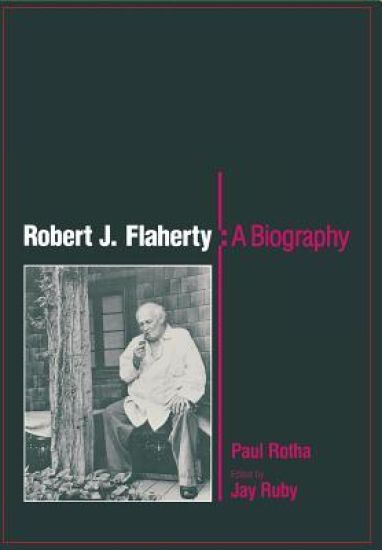
Producer of Nanook of the North, Moana, Man of Aran, and other pioneering documentaries between 1920 and 1940, Robert J. Flaherty was America's first independent film artist. Popular conceptions of Flaherty have led many either to worship his work and regard him in mythical terms or to debunk him as a fraud and castigate him for lack of a social consciousness. Rarely has the attempt been made to understand him in the context of his times. This captivating study presents Flaherty through the eyes of someone who knew him personally-the brilliant British filmmaker and scholar Paul Rotha. A colleague and close friend of Flaherty, Rotha gives us s a powerfully written biography that is a balanced and intimate look at the life and work of an American genius. Editor Jay Ruby has restored the Rotha biography, including a wealth of anecdotes, letters, and memoirs that begin to bring Robert Flaherty the man into focus. An especially valuable dimension of this work is the appraisal of Flaherty the filmmaker from the viewpoint of a major figure of the British industry. He summarizes in detail the critical response to Flaherty of his contemporaries, about which only sketchy information has previously been available. Flaherty regarded himself as an explorer as well as a filmmaker. The exciting story of this biography takes us from the Arctic, where Flaherty spent years filming Nanook, to the South Pacific, England, the Aran Islands, and finally the United States. his courage and overarching vision resulted in an unprecedented recording of the human struggle and in documentary films that reached a wider audience than ever before.