The idea for this book was conceived over the second bottle of Villa Maria's Caber net Medot '89, at the dinner of the Australasian Combinatorics Conference held at Palmerston North, New Zealand in December 1990, where the authors first met and discovered they had a number of interests in common. Initially, we embarked on a small project to try to formulate reductions to address the apparent parame terized intractability of DOMINATING SET, and to introduce a structure in which to frame our answers. Having spent several months trying to get the definitions for the reductions right (they now seem so obvious), we turned to our tattered copies of Garey and Johnson's work [239]. We were stunned to find that virtually none of the classical reductions worked in the parameterized setting. We then wondered if we'd be able to find any interesting reductions. Several years, many more bottles, so many papers, and reductions later it [3] seemed that we had unwittingly stumbled upon what we believe is a truly central and new area of complexity theory. It seemed to us that the material would be of great interest to people working in areas where exact algorithms for a small range of parameters are natural and useful (e. g. , Molecular Biology, VLSI design). The tractability theory was rich with distinctive and powerful techniques. The intractability theory seemed to have a deep structure and techniques all of its own.
This book serves as an introduction to calculus on normed vector spaces at a higher undergraduate or beginning graduate level. The prerequisites include basic calculus and linear algebra, as well as a certain mathematical maturity. All the important topology and functional analysis topics are introduced where necessary.In its attempt to show how calculus on normed vector spaces extends the basic calculus of functions of several variables, this book is one of the few textbooks to bridge the gap between the available elementary texts and high level texts. The inclusion of many non-trivial applications of the theory and interesting exercises provides motivation for the reader.
Without the foundational right of religious conscience, James Madison knew, this country could not survive. This inspiring book chronicles how this right became sacred to Madison and how, with a relentlessness borne of faith in God and country, he carefully wove this truth into the Constitution and the Bill of Rights. More than two hundred years later, his message still rings true: there is no liberty without faith.
In a time of unprecedented division and hyper-partisanship, ¬+Cease to Contend offers a transformative approach to healing political hostility and fostering understanding. Drawing on timeless principles from George Washington's Farewell Address, the Restored Gospel, and modern social science, Rodney B. Dieser, Ph.D., presents a practical, three-step method to reduce contention and promote civility in today's polarized world. This book equips readers with tools to: Identify cognitive distortions that fuel division and foster political politeness Listen with empathy to understand opposing views without escalating conflict Navigate media with clarity and critical thinking to avoid misinformation and bias Apply scriptural and historical wisdom, including insights from Pahoran' s example in the Book of Mormon and Washington's warnings on partisanship Whether you're seeking peace in your relationships, improving your role as a citizen, or simply navigating the political landscape, this book provides actionable strategies for building unity and becoming a force for positive change.
Rod Cambridge created an iPhone app called Top-Tens to see how easy it was to make some money as an app developer. In this book, Rod uses this experience to take the reader step by step through the things that should, and shouldn't, be done when creating an app for Apple's iPhone or its rivals including Google's Android and Microsoft's Windows Mobile devices. Learn: What things should you incorporate, and avoid, when designing your app's User Interface. How to employ innovative, and guerilla, marketing tactics to get sales moving. Develop a two-minute elevator pitch. You did realise that you need an an elevator pitch, didn't you? In addition, you'll learn much, much more. Read "How NOT To Write an App" to give your app an edge in a very crowded marketplace. NOTE: This 84 page book was originally sold as an eBook and has been converted into paperback form due to popular demand.
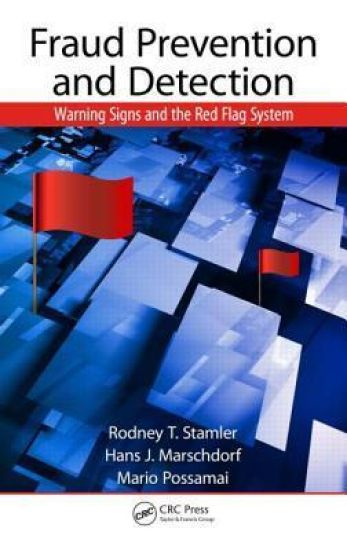
Lessons can be learned from major fraud cases. Whether the victim is a company, public agency, nonprofit, foundation, or charity, there is a high likelihood that many of these frauds could have been prevented or detected sooner if early Red Flag warning signs had been identified and acted upon. Fraud Prevention and Detection: Warning Signs and the Red Flag System will enable officers and directors, internal and external stakeholders, as well as outside analysts to protect themselves and their organizations against fraud by effectively detecting, analyzing, and acting on early Red Flag warning signs. Based on an empirically tested strategy, the Red Flag System reflects the authors’ more than 100 years combined experience in the investigation of fraud in high-profile, global cases in North America, Africa, Europe, and the Far East.Readers of this book will:Acquire a general awareness of the nature, characteristics, and dynamics of fraudUnderstand the process for determining whether a fraud has been committedDevelop an understanding of enterprise risk management approaches for fraud risk management, compliance risk management, and managing the risk of fraudulent financial reporting—including an understanding of the limitations inherent in these approachesLearn how to find Red Flag indicators of fraud or suspicious transactions in financial statements, budgets, and contractsKnow how to ensure that, once a Red Flag has been identified, appropriate action is takenFraud can lead to significant financial loss as well as bad press and publicity with significant reputational impact for officers, directors, corporations, and their stakeholders. This book’s no-nonsense approach empowers those charged with protecting organizations to stop these frauds before the organization’s livelihood is jeopardized or to mitigate damage when fraud has occurred.