Kirjojen hintavertailu. Mukana 11 699 587 kirjaa ja 12 kauppaa.

Kirjahaku

Etsi kirjoja tekijän nimen, kirjan nimen tai ISBN:n perusteella.

1000 tulosta hakusanalla Ronald M. Hals

Osteoporosis

Osteoporosis

Ronald C. Hamdy; E. Michael Lewiecki

Oxford University Press Inc
2013
nidottu
Osteoporosis is a common, underdiagnosed, and undertreated condition, complicated by fractures which lead to significant mortality and morbidity. The prevalence of osteoporotic fractures in postmenopausal women exceeds the combined prevalence of breast cancer, stroke, heart failure, and myocardial infarction. Often called "the silent disease," it does not reveal itself with obvious symptoms until a fracture occurs. In the first year after sustaining a hip fracture, mortality is increased by almost 24% in women and is even higher in men. About half of those who sustain an osteoporotic hip fracture become so disabled that they are no longer able to resume their daily activities, and as many as 20% require long-term institutional care. Effective treatments for osteoporosis are now available if it is diagnosed and addressed in a timely manner. Unfortunately, this disease remains shockingly underdiagnosed and undertreated, even in patients who sustain low-trauma hip fractures. The past two decades have witnessed radical changes in the diagnosis and management of osteoporosis. The densitometric diagnosis of osteoporosis is noninvasive, quick, and relatively simple. Tools are now available to predict the patient's probability of sustaining fractures, to identify patients who are particularly vulnerable, and to determine which patients will benefit from further investigation and treatment. Various associations have developed guidelines to help clinicians reach a diagnosis and initiate treatment. Due to better understanding of the basic pathophysiology of bone turnover, potent and relatively safe medications that significantly reduce the risk of fractures are now widely available. It is of paramount importance that this disease be diagnosed and treated as early as possible in order to take advantage of these developments and reduce the enormous socioeconomic and psychological impact of osteoporosis. Given the burden of osteoporotic fractures, all clinicians should have a working knowledge of e diagnosis, treatment, and prevention of the disease. Clinicians should feel comfortable diagnosing and initiating treatment for the majority of patients with osteoporosis. Only complicated cases or patients who are unresponsive to treatment should be referred to specialists. The aim of this book is to distill the available information on osteoporosis into an easily comprehensible format that will serve as a practical guide for busy clinicians. Numerous boxes, tables, diagrams, and figures present the information in an accessible manner. This book will be of particular use to general practitioners, endocrinologists, rheumatologists, gynecologists, internists, geriatricians, and orthopedic surgeons.
The Unloved Dollar Standard

The Unloved Dollar Standard

Ronald I. McKinnon

Oxford University Press Inc
2013
sidottu
The world dollar standard is an accident of history that greatly facilitates international trade and exchange-even trade not directly involving the United States. Since 1945, the dollar has been the key currency for clearing international payments among banks including interventions by governments to set exchange rates, the dominant currency for invoicing trade in primary commodities, and the principal currency in official exchange reserves. Although the strong network effects of the dollar standard greatly increases the financial efficiency of multilateral trade, nobody loves it. Erratic U.S. monetary and exchange rate policies have continually made foreigners unhappy. A weak and falling dollar led to the worldwide price inflations of the 1970s and contributed to the disastrous asset bubbles and global credit crisis of the noughties -- including the global credit crunch of 2008-09. Dollar weakness aggravated the postwar world's three great oil shocks in 1973, 1979, and 2007-08. After 2008, the U.S. Federal Reserve Bank's policy of keeping short-term interest rates near zero and out of alignment with emerging markets on the dollar standard's periphery, makes the international monetary system vulnerable to 'carry' trades: hot money inflows into the periphery that cause a loss of monetary control, commodity bubbles, and worldwide inflation . When these carry-trade bubbles suddenly unwind, they can result in huge swings in exchange rates and credit crunches. The asymmetrical nature of the dollar standard also makes many Americans unhappy because they cannot control their own exchange rate. Under the rules of the dollar standard game as explained in chapters 2 and 3 of this book, foreign governments may opt to set their exchange rates against the dollar while, to prevent conflict, the U.S. government typically does not intervene. Nevertheless, Americans often complain about how foreigners set their dollar exchange rates unfairly. Japan bashing in the late 1970s to the mid-1990s over the alleged under valuation of the yen, and China bashing in the new millennium over the alleged undervaluation of the renminbi, are two cases in point. Thus, while nobody loves the dollar standard, the revealed preference of both governments and private participants in the foreign exchange markets since 1945 is to continue to use it. As the principal monetary mechanism ensuring that international trade remains robustly multilateral rather than narrowly bilateral, it is a remarkable survivor that is too valuable to lose and too difficult to replace. This book provides historical and analytical perspectives on the different phases of the postwar dollar standard in order to better understand its resilience in spite of the great volatility in today's global monetary system.
Essentials of Cognitive Grammar

Essentials of Cognitive Grammar

Ronald W. Langacker

Oxford University Press Inc
2013
nidottu
Ronald W. Langacker created an approach to linguistics called Cognitive Grammar, which is essentially a system of symbols that can be used to organize and analyze how semantics and phonology interact with each other in human language. Cognitive Grammar lays the groundwork for cognitive linguistics, which has become a major sub-field over the past 30 years. Langacker's 2008 OUP book Cognitive Grammar is the authoritative introduction to CG. But for an introduction it's rather long-584 pages, divided into four sections, two of which are truly introductory and two of which offer a more detailed methodology for researchers. This abridged version of Cognitive Grammar makes the two introductory sections available for course adoption at a reduced price. It will reinvigorate this copyright by tailoring it to the course market that has become its primary audience, and by positioning Langacker's authoritative work as an accessible, attractive cornerstone of cognitive linguistics as the field continues to evolve.
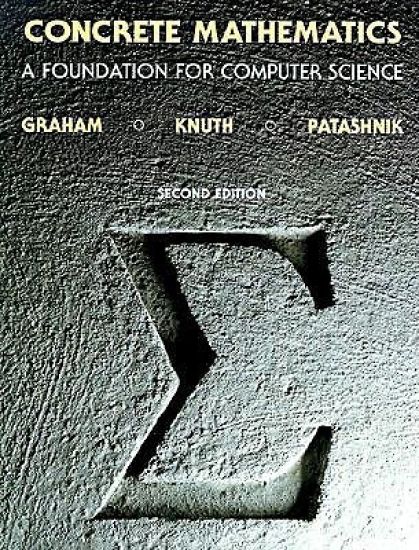
Concrete Mathematics

Concrete Mathematics

Ronald Graham

Addison Wesley
1994
sidottu
This book introduces the mathematics that supports advanced computer programming and the analysis of algorithms. The primary aim of its well-known authors is to provide a solid and relevant base of mathematical skills - the skills needed to solve complex problems, to evaluate horrendous sums, and to discover subtle patterns in data. It is an indispensable text and reference not only for computer scientists - the authors themselves rely heavily on it! - but for serious users of mathematics in virtually every discipline. Concrete Mathematics is a blending of CONtinuous and disCRETE mathematics. "More concretely," the authors explain, "it is the controlled manipulation of mathematical formulas, using a collection of techniques for solving problems." The subject matter is primarily an expansion of the Mathematical Preliminaries section in Knuth's classic Art of Computer Programming, but the style of presentation is more leisurely, and individual topics are covered more deeply. Several new topics have been added, and the most significant ideas have been traced to their historical roots. The book includes more than 500 exercises, divided into six categories. Complete answers are provided for all exercises, except research problems, making the book particularly valuable for self-study. Major topics include: Sums Recurrences Integer functions Elementary number theory Binomial coefficients Generating functions Discrete probability Asymptotic methods This second edition includes important new material about mechanical summation. In response to the widespread use of the first edition as a reference book, the bibliography and index have also been expanded, and additional nontrivial improvements can be found on almost every page. Readers will appreciate the informal style of Concrete Mathematics. Particularly enjoyable are the marginal graffiti contributed by students who have taken courses based on this material. The authors want to convey not only the importance of the techniques presented, but some of the fun in learning and using them.
Population Growth

Population Growth

Ronald Freedman

AldineTransaction
2008
nidottu
The population of the modern world continues to grow at a rate unprecedented in human history. How are we to explain this massive increase in the number of living people? What is its consequence, now and for the future? How have populations changed in size and structure since the advent of industrial technology? Can we predict the population trends in developing countries? These and many other significant questions are dealt with in a persuasive yet accessible manner in Ronald Freedman's pivotal "Population Growth".Modern population trends are unique in historical perspective; describing them as part of a "vital revolution" is not an exaggeration. The more popular term "population explosion" is less accurate because it refers to only one aspect of the current situation - the unprecedented growth rates. In the last two centuries other important trends have developed, also without precedent in all of the previous millennia of human history. While the size of population growth is very important in itself, the essays in this volume demonstrate that many other aspects of structure and change in populations are equally important.In readable, non-technical language, these collected essays analyze the most important modern trends in world population. The essays include comprehensive discussions of population theory, analyses of population trends, and prospects in the United States and surveys of population trends in other major areas of the world. As a survey of current population problems, this book will be a library staple for those involved in international development programs, sociologists, family planning workers, and everyone concerned with the contemporary vital revolution in population.
Theatre

Theatre

Ronald Wainscott; Kathy Fletcher

Pearson
2012
nidottu
Updated in its 4th edition Theatre: Collaborative Actsstimulates creative thinking and discussions of artistic, social, and ethical questions through its interwoven themes of theatre as culture, collaboration, spatial art, and a fusion of the past and present. It emphasizes the diversity of purpose and effect of theatre, and the collaborative nature of the theatrical process.
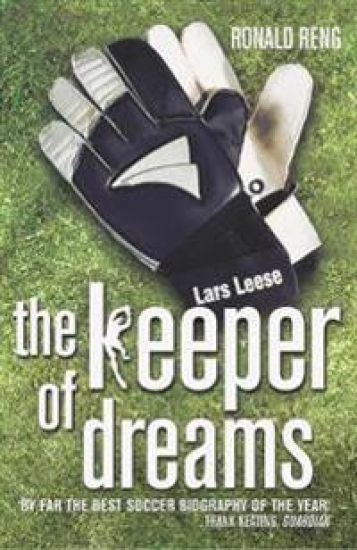
Keeper of Dreams

Keeper of Dreams

Ronald Reng

Vintage
2004
pokkari
At the age of 20, Lars Leese was still playing in the 'Westerwald' District League, yet by 28 he'd abandoned his job as a computer software salesman and was helping Barnsley to their 1:0 Premiership victory over Liverpool FC. This title traces his stratospheric rise and equally rapid fall.
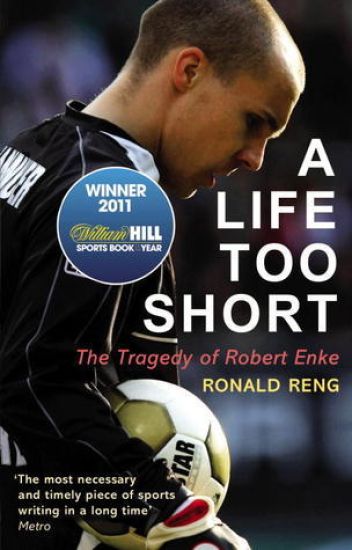
A Life Too Short

A Life Too Short

Ronald Reng

Yellow Jersey Press
2012
pokkari
WINNER OF THE WILLIAM HILL SPORTS BOOK OF THE YEAR WINNER OF THE BRITISH SPORTS BOOK AWARDS FOOTBALL BOOK OF THE YEAR Why does an international footballer with the world at his feet decide to take his own life? On 10 November 2009 the German national goalkeeper, Robert Enke, stepped in front of a passing train. He was thirty-two years old and a devoted husband and father. Enke had played for a string of Europe's top clubs, including Barcelona and Jose Mourinho's Benfica and was destined to become his country's first choice in goal for years to come. But beneath the veneer of success, Enke battled with crippling depression. Award-winning writer Ronald Reng pieces together the puzzle of his friend's life, shedding valuable light on the crushing pressures endured by professional sportsmen and on life at the top clubs. At its heart, Enke's tragedy is a universal story of a man struggling against his demons.‘It should be on every British football fan's reading list’ Metro
Camus and Sartre

Camus and Sartre

Ronald Aronson

University of Chicago Press
2005
nidottu
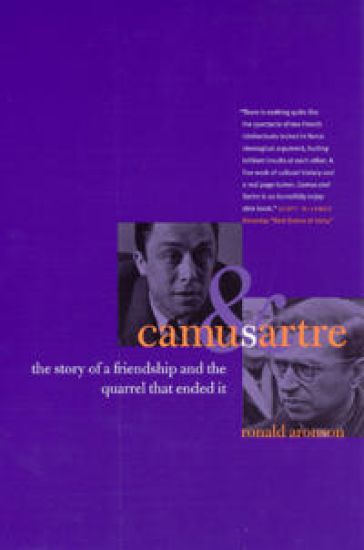
Albert Camus and Jean-Paul Sartre first met in 1943, during the German occupation of France. Intellectual as well as political allies, they grew famous overnight after Paris was liberated. But East West tensions began to strain their friendship as they evolved in opposing directions, disagreeing over philosophy, the responsibilities of intellectuals, and what sorts of political changes were necessary or possible. And while Sartre embraced violence as a path to change, Camus sharply opposed it, leading to a bitter and very public falling out in 1952, after which they never spoke again. Ronald Aronson chronicles this riveting story while demonstrating how Camus and Sartre developed first in connection with and then against each other, each keeping the other in his sights long after their break. Combining biography and intellectual history, philosophical and political passion, Camus and Sartre will fascinate anyone interested in these great writers or the world-historical issues that tore them apart.
Our Magnetic Earth

Our Magnetic Earth

Ronald T. Merrill

University of Chicago Press
2012
nidottu
For the general public, magnetism often seems more the province of new age quacks, movie mad scientists, and grade-school teachers than an area of actual, ongoing scientific inquiry. But as Ronald T. Merrill reveals in "Our Magnetic Earth", geomagnetism really is an enduring, vibrant area of science, one that offers answers to some of the biggest questions about our planet's past - and maybe even its future. In a clear and careful fashion, he lays out the physics of geomagnetism and magnetic fields, then goes on to explain how Earth's magnetic field provides crucial evidence for our understanding of continental drift and plate tectonics; how and why animals, ranging from bacteria to mammals, sense and use the magnetic field; how changes in climate over eons can be studied through variations in the magnetic field in rocks; and much more. Throughout, Merrill peppers his scientific account with bizarre anecdotes and fascinating details, from levitating pizzas to Moon missions to blackmailing KGB agents - a reminder that real science can at times be stranger, and more amusing, than fiction. A winning primer for anyone who has ever struggled with a compass or admired a ragged V of migrating geese, "Our Magnetic Earth" demonstrates that education and entertainment need not be polar opposites.
Camus and Sartre

Camus and Sartre

Ronald Aronson

University of Chicago Press
2004
sidottu
Until now it has been impossible to read the full story of the relationship between Albert Camus and Jean-Paul Sartre. Their dramatic rupture at the height of the Cold War, like that conflict itself, demanded those caught in its wake to take sides rather than to appreciate its tragic complexity. Now, using newly available sources, Ronald Aronson offers the first book-length account of the twentieth century's most famous friendship and its end. Albert Camus and Jean-Paul Sartre first met in 1943, during the German occupation of France. The two became fast friends. Intellectual as well as political allies, they grew famous overnight after Paris was liberated. As playwrights, novelists, philosophers, journalists, and editors, the two seemed to be everywhere and in command of every medium in post-war France. East-West tensions would put a strain on their friendship, however, as they evolved in opposing directions and began to disagree over philosophy, the responsibilities of intellectuals, and what sorts of political changes were necessary or possible. As Camus, then Sartre adopted the mantle of public spokesperson for his side, a historic showdown seemed inevitable. Sartre embraced violence as a path to change and Camus sharply opposed it, leading to a bitter and very public falling out in 1952. They never spoke again, although they continued to disagree, in code, until Camus's death in 1960. In a remarkably nuanced and balanced account, Aronson chronicles this riveting story while demonstrating how Camus and Sartre developed first in connection with and then against each other, each keeping the other in his sights long after their break. Combining biography and intellectual history, philosophical and political passion, Camus and Sartre will fascinate anyone interested in these great writers or the world-historical issues that tore them apart.
"Stay Out of Politics"

"Stay Out of Politics"

Ronald Aronson

University of Chicago Press
1990
sidottu
As a lifelong radical and political activist, Ronald Aronson accepted an invitation to lecture in South Africa only after two years of deliberation. "Stay Out of Politics," which begins with the moral questions that Aronson confronted in his decision to go, is a reaffirmation of the necessity for majority rule and the abolition of apartheid. Amidst the pressure of widespread talk of an academic boycott of South Africa, Aronson decided to lecture there as a contribution to the struggle for majority rule. He decided to become mobilized as a philosopher and activist by engaging in the effort close at hand rather than settling for a distant and comfortable protest by avoidance. Along with his visa, Aronson was given the following warning by a consular officer: "Stay out of politics!" Believing that philosophy not only has a role to play but that it can, and must, involve itself in the vital social and political issues of our time, Aronson equally discovered that in South Africa politics is everywhere and inescapable. The lectures Aronson delivered focused on the meaning of progress and hope, on the threat—and experience—of disaster today, and on our responsibility to join the struggle for a humane and rational world. Two of the most provocative lectures are included here, the first a discussion of the Holocaust that has direct and intentional applications to the current situation in South Africa. The second lecture, in memory of the assassinated political philosopher Richard Turner, is a sketch of Aronson's philosophy of hope as seen from within the South African context. Despite the limitations of teaching under possible surveillance in a revolutionary situation, Aronson witnessed the social reality of apartheid and heard the voices of its victims. Aronson's love for the South African people motivated him to write this powerful account. He presents a lecturer's tour of South Africa: the experiences that both confirmed his belief in the urgent need for majority rule but also revealed the complexities of the society that seeks to continue apartheid through all reforms; and his philosopher's reflections upon returning to the United States on the irrationality of apartheid and the ambiguities of the struggle to end it. "Stay Out of Politics" is not only a powerful encounter with South Africa today, it is a provocative statement about philosophy—its nature, its tasks, its duty to understand and change the world in which we live.
"Stay Out of Politics"

"Stay Out of Politics"

Ronald Aronson

University of Chicago Press
1990
nidottu
As a lifelong radical and political activist, Ronald Aronson accepted an invitation to lecture in South Africa only after two years of deliberation. "Stay Out of Politics," which begins with the moral questions that Aronson confronted in his decision to go, is a reaffirmation of the necessity for majority rule and the abolition of apartheid. Amidst the pressure of widespread talk of an academic boycott of South Africa, Aronson decided to lecture there as a contribution to the struggle for majority rule. He decided to become mobilized as a philosopher and activist by engaging in the effort close at hand rather than settling for a distant and comfortable protest by avoidance. Along with his visa, Aronson was given the following warning by a consular officer: "Stay out of politics!" Believing that philosophy not only has a role to play but that it can, and must, involve itself in the vital social and political issues of our time, Aronson equally discovered that in South Africa politics is everywhere and inescapable. The lectures Aronson delivered focused on the meaning of progress and hope, on the threat—and experience—of disaster today, and on our responsibility to join the struggle for a humane and rational world. Two of the most provocative lectures are included here, the first a discussion of the Holocaust that has direct and intentional applications to the current situation in South Africa. The second lecture, in memory of the assassinated political philosopher Richard Turner, is a sketch of Aronson's philosophy of hope as seen from within the South African context. Despite the limitations of teaching under possible surveillance in a revolutionary situation, Aronson witnessed the social reality of apartheid and heard the voices of its victims. Aronson's love for the South African people motivated him to write this powerful account. He presents a lecturer's tour of South Africa: the experiences that both confirmed his belief in the urgent need for majority rule but also revealed the complexities of the society that seeks to continue apartheid through all reforms; and his philosopher's reflections upon returning to the United States on the irrationality of apartheid and the ambiguities of the struggle to end it. "Stay Out of Politics" is not only a powerful encounter with South Africa today, it is a provocative statement about philosophy—its nature, its tasks, its duty to understand and change the world in which we live.
Explaining Science

Explaining Science

Ronald N. Giere

University of Chicago Press
1990
nidottu
Debate over the nature of science has recently moved from the halls of academia into the public sphere, where it has taken shape as the "science wars." At issue is the question of whether scientific knowledge is objective and universal or socially mediated, whether scientific truths are independent of human values and beliefs. Ronald Giere is a philosopher of science who has been at the forefront of this debate from its inception, and Science without Laws offers a much-needed mediating perspective on an increasingly volatile line of inquiry. Giere does not question the major findings of modern science: for example, that the universe is expanding or that inheritance is carried by DNA molecules with a double helical structure. But like many critics of modern science, he rejects the widespread notion of science--deriving ultimately from the Enlightenment--as a uniquely rational activity leading to the discovery of universal truths underlying all natural phenomena. In these highly readable essays, Giere argues that it is better to understand scientists as merely constructing more or less abstract models of limited aspects of the world. Such an understanding makes possible a resolution of the issues at stake in the science wars. The critics of science are seen to be correct in rejecting the Enlightenment idea of science, and its defenders are seen to be correct in insisting that science does produce genuine knowledge of the natural world. Giere is utterly persuasive in arguing that to criticize the Enlightenment ideal is not to criticize science itself, and that to defend science one need not defend the Enlightenment ideal. Science without Laws thus stakes out a middle ground in these debates by showing us how science can be better conceived in other ways.
Scientific Perspectivism

Scientific Perspectivism

Ronald N. Giere

University of Chicago Press
2010
nidottu
Many people assume that the claims of scientists are objective truths. But "Scientific Perspectivism" argues that the acts of observing and theorizing are both matters of perspective - which makes scientific knowledge contingent. Using the example of color vision in humans to illustrate how his theory of 'perspectivism' works, Ronald N. Giere argues that colors do not actually exist in objects; rather, color is the result of an interaction between aspects of the world and the human visual system. Giere extends this argument into a general interpretation of human perception and, more controversially, to scientific observation, conjecturing that the output of scientific instruments is perspectival. Furthermore, as Giere posits, complex scientific principles - such as Maxwell's equations describing the behavior of both the electric and magnetic fields - by themselves make no claims about the world, but models based on those principles can be used to make claims about specific aspects of the world.
We

We

Ronald Aronson

University of Chicago Press
2017
sidottu
What was it about Barack Obama's campaign of hope that resonated so much not just with Americans, but people the world over? Have we really become so despairing in the face of collapsed economies and the threat of violence around every corner that a simple rallying cry to remember hope can have such a powerful effect? In this moving and thoughtful book, Ronald Aronson explores our relationship to hope at a time some have called the end of history, others the end of politics, in order to formulate a more active stance, one in which hope is far more than a mood or feeling it is the very basis of social will and political action. Aronson examines our own heartbreaking story: a century of violence, upheaval, and the undelivered promises of progress all of which have contributed to the evaporation of social hope. As he shows, we are now in an era when hope has been privatized, when despite all the ways we are connected to each other we are desperately alone, struggling to weather the maelstrom around us, demoralized by the cynicism that permeates our culture and politics, and burdened with finding personal solutions to social problems. Yet social hope, Aronson argues, still persists. Carefully exploring what we mean when we say we "hope" and teasing hope apart from its dangerously misconstrued sibling, progress, he locates real seeds of change. He argues that always underlying our experience even if we completely ignore it is a sense of social belonging, and that this can be reactivated into a powerful collective force, an active we. He looks to various political movements, from the massive collective force of environmentalists to the stunning rise of movement-centered politicians such as Bernie Sanders and Jeremy Corbyn, as powerful examples of socially energized, politically determined, and actionably engaged forms of hope. The result is an illuminating and inspiring call that anyone can clearly hear: we can still create a better future for ourselves, but only if we do it together.
The Federal Civil Service System and the Problem of Bureaucracy

The Federal Civil Service System and the Problem of Bureaucracy

Ronald N. Johnson; Gary D. Libecap

University of Chicago Press
1994
nidottu
Examining the political and economic forces that have shaped the civil service system from the Pendleton Act of 1883 through today, the authors explain why, despite efforts to overhaul the federal bureaucracy (most recently by Vice President Al Gore), significant change remains a formidable challenge. Although politicians criticize the unwieldiness of the bureaucracy, this volume shows how they have been largely responsible for its design. The authors examine the development of federal employee interest groups and their negotiations with the president and Congress over hiring policies, salaries and conditions for terminating employment. Using transaction cost analysis and public choice theory, this book aims to provide a new understanding of the growth of the federal bureaucracy and the political and economic obstacles to reforming it.
A Genealogy of Terror in Eighteenth-Century France

A Genealogy of Terror in Eighteenth-Century France

Ronald Schechter

University of Chicago Press
2018
sidottu
In contemporary political discourse, it is common to denounce violent acts as “terroristic.” But this reflexive denunciation is a surprisingly recent development. In A Genealogy of Terror in Eighteenth-Century France, Ronald Schechter tells the story of the term’s evolution in Western thought, examining a neglected yet crucial chapter of our complicated romance with terror. For centuries prior to the French Revolution, the word “terror” had largely positive connotations. Subjects flattered monarchs with the label “terror of his enemies.” Lawyers invoked the “terror of the laws.” Theater critics praised tragedies that imparted terror and pity. By August 1794, however, terror had lost its positive valence. As revolutionaries sought to rid France of its enemies, terror became associated with surveillance committees, tribunals, and the guillotine. By unearthing the tradition that associated terror with justice, magnificence, and health, Schechter helps us understand how the revolutionary call to make terror the order of the day could inspire such fervent loyalty in the first place—even as the gratuitous violence of the revolution eventually transformed it into the dreadful term we would recognize today. Most important, perhaps, Schechter proposes that terror is not an import to Western civilization—as contemporary discourse often suggests—but rather a domestic product with a long and consequential tradition.
Our Magnetic Earth

Our Magnetic Earth

Ronald T. Merrill

University of Chicago Press
2010
sidottu
For the general public, magnetism often seems more the province of new age quacks, movie mad scientists, and grade-school teachers than an area of actual, ongoing scientific inquiry. But as Ronald T. Merrill reveals in "Our Magnetic Earth", geomagnetism really is an enduring, vibrant area of science, one that offers answers to some of the biggest questions about our planet's past - and maybe even its future. In a clear and careful fashion, he lays out the physics of geomagnetism and magnetic fields, then goes on to explain how Earth's magnetic field provides crucial evidence for our understanding of continental drift and plate tectonics; how and why animals, ranging from bacteria to mammals, sense and use the magnetic field; how changes in climate over eons can be studied through variations in the magnetic field in rocks; and much more. Throughout, Merrill peppers his scientific account with bizarre anecdotes and fascinating details, from levitating pizzas to Moon missions to blackmailing KGB agents - a reminder that real science can at times be stranger, and more amusing, than fiction. A winning primer for anyone who has ever struggled with a compass or admired a ragged V of migrating geese, "Our Magnetic Earth" demonstrates that education and entertainment need not be polar opposites.