Kirjojen hintavertailu. Mukana 11 699 587 kirjaa ja 12 kauppaa.

Kirjahaku

Etsi kirjoja tekijän nimen, kirjan nimen tai ISBN:n perusteella.

1000 tulosta hakusanalla S. Fatou

Eugene V. Debs: The Life and Legacy of America's Most Famous Socialist Political Leader
*Includes pictures *Includes contemporary accounts *Includes online resources and a bibliography for further reading "When great changes occur in history, when great principles are involved, as a rule the majority are wrong." - Eugene V. Debs History is full of tales of men who were in the right place at the right time and thereby rose to greatness, but rarely is the story told of a man who was in the right place at the wrong time. The life of Eugene V. Debs is such a tale. Debs was born in Middle America just before the outbreak of the Civil War, and had he been born a century later, or in a large city on one of the coasts, his story might have been much different. As he grew, he had the restlessness that often indicates greatness, but he lacked the crisis that might have allowed him to hone and use his leadership skills. He saw the needs of those less fortunate around him, and at first, like so many others, he thought that he could work within the system to correct them. However, when he ultimately concluded that he could best serve others through firebrand speeches and increasingly controversial actions, he was unable to convince enough people to follow him to make the massive changes he desired. Instead, he found himself thwarted time and again by those with more power and more established views. Of course, this is not to discount the profound impact Debs had on the country; after all, he was one of the most famous men in America during the late 19th and early 20th century. Indeed, he was able to give to the nation a new understanding of the values and power of industrial workers, helping organize them into some of the first industrial unions in the country. He also taught the men themselves to think as a unit, and to act with a united front that allowed them to make their voices heard and to earn for themselves and their families a living wage and benefits commiserate with their work's value. As one early 20th century socialist put it, "Something was in Debs, seemingly, that did not come out unless you saw him. I'm told that even those speeches of his which seem to any reader indifferent stuff, took on vitality from his presence. A hard-bitten socialist told me once, "Gene Debs is the only one who can get away with the sentimental flummery that's been tied onto Socialism in this country. Pretty nearly always it gives me a swift pain to go around to meetings and have people call me 'comrade.' That's a lot of bunk. But the funny part of it is that when Debs says 'comrade' it is all right. He means it. That old man with the burning eyes actually believes that there can be such a thing as the brotherhood of man. And that's not the funniest part of it. As long as he's around I believe it myself." In the course of his work, Debs also changed the political scene in America. He established the Socialist Party, and when he ran for president in 1912, he attracted a noticeable percentage of the popular vote. No Socialist politician has been as successful on the national level before or since. However, even as he garnered popularity, the times in which he lived hampered his work, for the outbreak of World War I, along with the Bolshevik Revolution in Russia, brought socialism under suspicion. Most controversially, Debs was arrested and imprisoned during World War I on charges of sedition, and while that episode has justly marred President Woodrow Wilson's legacy, prison damaged Debs' health even as his spirit strove on for one last victory. In many ways, his end seems tragic, but for those who benefited through the years from his practical work for organized labor and his theoretical work for socialism, his death marked neither a tragedy nor an end, just a new type of beginning. Eugene V. Debs: The Life and Legacy of America's Most Famous Socialist Political Leader chronicles the life and work that made him one of America's most influential men.
Henry Clay Frick: The Life and Legacy of the Railroad and Steel Magnate Who Became One of America's Most Famous Art Collectors
*Includes pictures *Includes online resources and a bibliography for further reading "Statistics are no substitute for judgment." - Henry Clay Frick The term robber baron has largely fallen into disuse in the 21st century but there was a time when it was a popular epithet that described the kind of man who, it was believed, built his fortune by taking things belonging to others. The Gilded Age and the dawn of the 20th century are often remembered as an era full of monopolies, trusts, and economic giants in heavy industries like oil and steel. Men like Andrew Carnegie built empires like Carnegie Steel, and financiers like J.P. Morgan merged and consolidated them. The era also made names like Astor, Cooke, and Vanderbilt instantly recognizable across the globe. Over time, the unfathomable wealth generated by the businesses made the individuals on top incredibly rich, and that in turn led to immense criticism and an infamous epithet used to rail against them: robber barons. The industrial might wielded by men like Gould in the later 19th century directly led to a public backlash and made President Teddy Roosevelt the "trust buster", and there has since been countless regulations to attempt to avoid the types of monopolies found over 100 years ago. However, many 20th century historians and writers pushed back against the allegations hurled at the "robber barons" and even took issue with the name. For example, Libertarian writer John Stossel argued, "They weren't robbers, because they didn't steal from anyone, and they weren't barons-they were born poor..." Of all the men labeled as robber barons during the Gilded Age, few were as influential as Henry Clay Frick, who rubbed shoulders with men like J.P. Morgan and Andrew Carnegie while overseeing some of the era's biggest companies. Though his was not the "rags to riches" story one often hears of this era, his drive and ambition helped transform a young man from a solidly middle class family into a millionaire by the age of 30. At the same time, despite the characteristic ruthlessness with which he dealt with business associates and foes alike, he was devoted and sometime even tender to his friends and family. After surviving an assassination attempt, he lived to toast the 20th century and avoided going down with so many others of his era on the Titanic, only to see the world he had worked to create consumed by a European war that spread around the world. Perhaps the most amazing thing about Frick is that his most well-known and lasting legacy had nothing to do with his business but with his most prized hobby. Should the name Frick come up in a New York boardroom today, it is not in the context of some business deal but instead in reference to a social event held at his former estate, now one of the most popular art museums in New York City. His own possessions, which grew out of his love of art, formed the initial core of the collection, and upon his death, he bequeathed the lion's share of his fortune to a foundation to preserve and expand upon it for generations to come. Henry Clay Frick: The Life and Legacy of the Railroad and Steel Magnate Who Became One of America's Most Famous Art Collectors analyzes the famous businessman's life and his lasting legacy. Along with pictures depicting important people, places, and events, you will learn about Frick like never before.
Henry Clay Frick: The Life and Legacy of the Railroad and Steel Magnate Who Became One of America's Most Famous Art Collectors
*Includes pictures *Includes online resources and a bibliography for further reading "Statistics are no substitute for judgment." - Henry Clay Frick The term robber baron has largely fallen into disuse in the 21st century but there was a time when it was a popular epithet that described the kind of man who, it was believed, built his fortune by taking things belonging to others. The Gilded Age and the dawn of the 20th century are often remembered as an era full of monopolies, trusts, and economic giants in heavy industries like oil and steel. Men like Andrew Carnegie built empires like Carnegie Steel, and financiers like J.P. Morgan merged and consolidated them. The era also made names like Astor, Cooke, and Vanderbilt instantly recognizable across the globe. Over time, the unfathomable wealth generated by the businesses made the individuals on top incredibly rich, and that in turn led to immense criticism and an infamous epithet used to rail against them: robber barons. The industrial might wielded by men like Gould in the later 19th century directly led to a public backlash and made President Teddy Roosevelt the "trust buster", and there has since been countless regulations to attempt to avoid the types of monopolies found over 100 years ago. However, many 20th century historians and writers pushed back against the allegations hurled at the "robber barons" and even took issue with the name. For example, Libertarian writer John Stossel argued, "They weren't robbers, because they didn't steal from anyone, and they weren't barons-they were born poor..." Of all the men labeled as robber barons during the Gilded Age, few were as influential as Henry Clay Frick, who rubbed shoulders with men like J.P. Morgan and Andrew Carnegie while overseeing some of the era's biggest companies. Though his was not the "rags to riches" story one often hears of this era, his drive and ambition helped transform a young man from a solidly middle class family into a millionaire by the age of 30. At the same time, despite the characteristic ruthlessness with which he dealt with business associates and foes alike, he was devoted and sometime even tender to his friends and family. After surviving an assassination attempt, he lived to toast the 20th century and avoided going down with so many others of his era on the Titanic, only to see the world he had worked to create consumed by a European war that spread around the world. Perhaps the most amazing thing about Frick is that his most well-known and lasting legacy had nothing to do with his business but with his most prized hobby. Should the name Frick come up in a New York boardroom today, it is not in the context of some business deal but instead in reference to a social event held at his former estate, now one of the most popular art museums in New York City. His own possessions, which grew out of his love of art, formed the initial core of the collection, and upon his death, he bequeathed the lion's share of his fortune to a foundation to preserve and expand upon it for generations to come. Henry Clay Frick: The Life and Legacy of the Railroad and Steel Magnate Who Became One of America's Most Famous Art Collectors analyzes the famous businessman's life and his lasting legacy. Along with pictures depicting important people, places, and events, you will learn about Frick like never before.
Famous Works - Mrs Dalloway, to the Lighthouse, Orlando, & a Room of One's Own
Virginia Woolf is thought to be the foremost modernist writer of the twentieth century. Her most famous writings are reproduced in full in a single volume: Mrs Dalloway (1925), - A day in the life of a woman who is preparing a party. The novel stretches forwards and backwards in time as Clarissa wonders about the choices she has made. To the Lighthouse (1927) - a novel about loss and subjectivity. The Modern Library named it as No. 15 on its list of the 100 best English-language novels of the
The York Patrol: The Real Story of Alvin York and the Unsung Heroes Who Made Him World War I's Most Famous Soldier
In the vein of Band of Brothers and American Sniper, a riveting history of Alvin York, the World War I legend who killed two dozen Germans and captured more than 100, detailing York's heroics yet also restoring the unsung heroes of his patrol to their rightful place in history--from renowned World War I historian James Carl Nelson. October 8, 1918 was a banner day for heroes of the American Expeditionary Force. Thirteen men performed heroic deeds that would earn them Medals of Honor. Of this group, one man emerged as the single greatest American hero of the Great War: Alvin Cullum York. A poor young farmer from Tennessee, Sergeant York was said to have single-handedly killed two dozen Germans and captured another 132 of the enemy plus thirty-five machine guns before noon on that fateful Day of Valor. York would become an American legend, celebrated in magazines, books, and a blockbuster biopic starring Gary Cooper. The film, Sergeant York, told of a hell-raiser from backwoods Tennessee who had a come-to-Jesus moment, then wrestled with his newfound Christian convictions to become one of the greatest heroes the U.S. Army had ever known. It was a great story--but not the whole story.In this absorbing history, James Carl Nelson unspools, for the first time, the complete story of Alvin York and the events that occurred in the Argonne Forest on that day. Nelson gives voice, in particular, to the sixteen "others" who fought beside York. Hailing from big cities and small towns across the U.S. as well as several foreign countries, these soldiers included a patrician Connecticut farmer whose lineage could be traced back to the American Revolution, a poor runaway from Massachusetts who joined the Army under a false name, and a Polish immigrant who enlisted in hopes of expediting his citizenship. The York Patrol shines a long overdue spotlight on these men and York, and pays homage to their bravery and sacrifice. The York Patrol is a rousing tale of courage, tragedy, and heroism.Supplemental enhancement PDF accompanies the audiobook.
Fly Fishing Southern Baja: A Quick, Clear Understanding of How & Where to Fly Fish Baja's Famous and Remote Saltwaters
The Southern Baja peninsula is now a premier saltwater fly fishing destination. Here's the latest and best ""how to"" info from Baja On The Fly authority Gary Graham. Gary tells you what you need to know: what to pack, flies to use and how to find fish. With this guide you can plan a Baja trip, fly down, rent a car and find exciting fly fishing, either on your own or with a guide.
A Word from One Investor to Another: Based on Techniques and Wisdom Provided by the World's Most Famous and Successful Investor Warren Buffett
A Word From One Investor To Another - Based On Techniques And Wisdom Provided By The World's Most Famous And Successful Investor Warren Buffett Detailed Step By Step Guide For Valuing A Company In-depth Explanation On How To Calculate The Rate Of Return On Investment Step By Step Explanation To Create Your Own Mutual Fund Detailed Explanation On Three Different Methods To Calculate The Fair Value Of Company
The Dutch East India Company and British East India Company: The History and Legacy of the World's Most Famous Colonial Trade Companies
*Includes pictures *Includes contemporary accounts of the companies *Includes a bibliography for further reading From classic grilled meat to exotic and savory 5-star dishes, pepper has long been the ultimate staple spice. While bulk pepper may be readily stocked in supermarkets and convenience stores today, there was once a time when the common spice was considered one of the most valuable commodities in the world. Merchants tripped over one another to get their hands on the tiny black beads, which live in colorful clusters of berry-like shells reminiscent of Christmas lights. They were so precious that an uncountable number of men crossed the turbulent and uncharted seas for them. In fact, the tropical spice was so highly sought after that blood was shed over the edible gold. To many, the mention of maritime merchants evokes an imagery of growling pirates donned in their stereotypical hats and a colorful parrot perched upon their shoulders. These nautical rascals wander the high seas in search of treasure and adventure. Though that imagery may be inaccurate, the real life companies that once dominated international waters operated on a similar thirst for conquest and riches. Perhaps the most famous - or as many would put it, infamous - of these naval corporations was the Dutch East India Company, also known as VOC. Established around the beginning of the 17th century, this nautical behemoth of a corporation was determined to squeeze everyone else out of the market. Vested with the power to wage war and exterminate any who dared stand in their way, the rest of the world stood by as the unstoppable force took over the whole of international maritime trade. The company would crush its opponents on the way to the top, establishing a monopoly on the global spice trade that would not only rock the world but forever change the course of modern business history. The British East India Company served as one of the key players in the formation of the British Empire. From its origins as a trading company struggling to keep up with its superior Dutch, Portuguese, and Spanish competitors to its tenure as the ruling authority of the Indian subcontinent to its eventual hubristic downfall, the East India Company serves as a lens through which to explore the much larger economic and social forces that shaped the formation of a global British Empire. As a private company that became a non-state global power in its own right, the East India Company also serves as a cautionary tale all too relevant to the modern world's current political and economic situation. Beyond its obvious influence in areas like trade and commerce, the East India Company also served as a point of cultural contact between Western Europeans, South Asians, and East Asians. Quintessentially British practices such as tea drinking were made possible by East India Company trade. The products and cultural practices traveling back and forth on East India Company ships from one continent to another also reconfigured the way societies around the globe viewed sexuality, gender, class, and labor. On a much darker level, the East India Company fueled white supremacy and European concepts of Orientalism (See Said, Orientalism). One of the major reasons that the East India Company remains the subject of intense interest is that the consequences of its influence remain visible in India, Britain, and other parts of the world to this day. While the British Crown eventually replaced the East India Company as the governing authority of India, the systems of production they had established remained intact. More than half a century after India declared independence from the British Empire, the economic and cultural effects of this colonial system of production remained apparent. The disparities in wealth and power between the Global North and the Global South may not stem from the East India Company alone, but the company played an indisputable role in imperial processes.
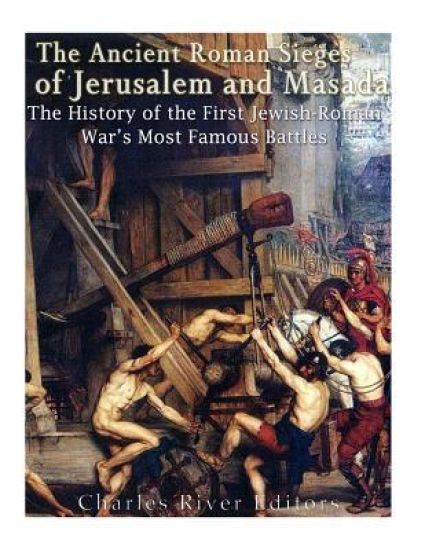
The Ancient Roman Sieges of Jerusalem and Masada: The History of the First Jewish-Roman War's Most Famous Battles
*Includes pictures *Includes ancient accounts of the battles *Includes a bibliography for further reading The Siege of Jerusalem in 70 CE is arguably the most important event in Jewish history. First, it was the central battle in the First Jewish-Roman war. Second, the failure of the siege on the Jewish side resulted in the destruction of the Second Temple of Jerusalem, a disaster that would eventually prove both permanent and catastrophic, since it was never rebuilt. Third, it permanently altered the diaspora of Judaism in the Ancient World. Fourth, because it was indecisive in breaking the power of the Jewish revolt permanently, it was also inconclusive and led to further, inevitable revolts that broke Judean identity completely. . It was not the first time the Romans had conquered the capital of the kingdom, nor was it the first time Jerusalem had been sacked by a foreign power. It was unusual for the Romans, however, because it was not the final act that such a conquest generally was. With few exceptions, such as the Carthaginians and the Celts, the Romans had not encountered an opponent who refused to remain defeated. Roman generals and governors found this stubborn resistance unnerving and that may have contributed to an increased cruelty toward the local Jewish population, not that the Romans generally required an excuse to be brutal. To the Romans' bewilderment, the Jews were absolutely, adamantly opposed to worshiping any deity above God (in the universal form of Yahweh), or even alongside or beneath God. At this point in their theological history, the Jews had become strict monotheists. Worshiping the Emperor as a deity would imperil their immortal souls. Therefore, they absolutely refused to do this and were willing to die for their faith. The Jewish refusal to tolerate the Cult of the Emperor in their main place of worship was a direct challenge to Roman political power. The Roman refusal to recognize Jewish monotheism was a direct challenge to Jewish theology. The clash of ideologies would result in many casualties. Josephus, a primary source for the revolt, would calculate the death toll at over 1,000,000. The Siege of Masada was the final battle in a long series of fights that constituted the First Jewish-Roman War. However, what made this battle qualitatively different from most was not just the difficulty Rome had in retaking control of it with incredibly disproportional military equipment and numbers, but also the actions of the Judean defenders. In the final hours of the battle, just as the Romans were about to breach the walls of the city, the defenders gathered together and committed mass suicide, rather than being killed or taken captive by the Romans. Many Westerners have never heard of the Siege of Masada, and those who have may simply know it as an obscure reference to a minor battle fought in a remote location of the Roman world. By contrast, virtually all Israeli school children know the story of Masada as a premier example of nationalistic pride. The heroic story of a small band of fighters facing incalculable odds has many elements that are reminiscent of both the Battle of Thermopylae and the Battle of the Alamo. The refrain "Masada shall not fall again," coined in a poem on the subject by Yitzak Lamdan, became a cry of resolve in battle for Israeli soldiers in the 20th century, just as the cry of "Remember the Alamo" had galvanized Americans. For decades the Israelite military used the site of Masada as the location for swearing in their new recruits; the choice of the site was designed to evoke within the new soldiers a deep sense of connection with their national history.
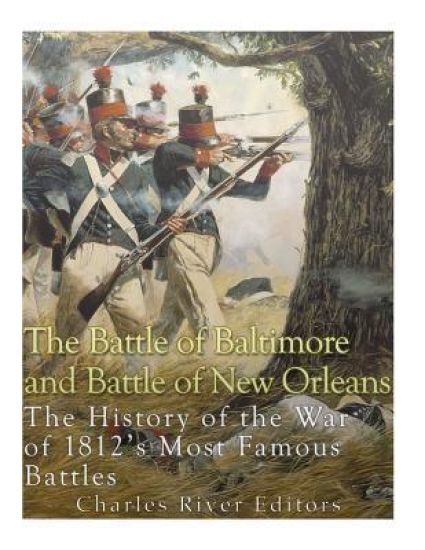
The Battle of Baltimore and Battle of New Orleans: The History of the War of 1812's Most Famous Battles
*Includes pictures *Includes excerpts of accounts of the battles written by soldiers *Includes online resources and a bibliography for further reading Sandwiched between the Revolution and the Civil War, the War of 1812 is one of America's forgotten conflicts, and the stalemated nature of the war (which resolved virtually none of either side's war aims) has also ensured that it is often given merely a cursory overview. Indeed, one of the few aspects of the war that remains common knowledge is that the most famous battle, the Battle of New Orleans, was fought after the Treaty of Ghent had formally ended the war. One other famous aspect of the war is that one of the battles inspired Francis Scott Key to pen the Star-Spangled Banner, which ultimately became America's national anthem. While the British horrified many Americans with the ease in which they sacked the capital at Washington, they faced stiff resistance around Baltimore, with American forces successfully fighting a delaying action that allowed for a proper defense of the city and its harbor. On September 13, 1814, Key and others bore witness to a heavy British bombardment of Fort McHenry that lasted for over a day, yet they proved unable to reduce the American defenses despite trying to land an invasion force outside the fort. In the wake of the unsuccessful assault, the British pulled back their forces, spurring Francis Scott Key to write the poem "Defence of McHenry." Ironically, the lyrics to that poem would eventually go together with an old, popular British hymn to produce America's Star-Spangled Banner. There are countless examples of battles that take place in wars after a peace treaty is signed. The last battle of the Civil War was a skirmish in Texas that Confederate forces won, nearly a month after Lee's surrender at Appomattox. But it's certainly rare for the most famous battle of a war to take place after the peace treaty is signed. Luckily for Andrew Jackson, the War of 1812 was that unique exception. Less than a year after his victory in the Battle of Horseshoe Creek, Jackson led his forces into a more important battle at the Battle of New Orleans. The British hoped to grab as much of the land on the western frontier as they could, especially New Orleans, which had a prominent position on the Mississippi River for trading. With more than 8,000 soldiers aboard a British fleet sailing in from Jamaica in early January 1815, the attack on New Orleans promised to be a significant one, while Jackson's men defended New Orleans with about half that number. This went on despite the fact that the two sides had signed the Treaty of Ghent on Christmas Eve 1814, which was supposed to end the war. However, the slow nature of bringing news from England to America ensured that the battle would take place anyway. At the beginning of the battle, Jackson and his forces were aided by the weather, with the first fighting taking place in heavy fog. When the fog lifted as morning began, the British found themselves exposed to American artillery. On top of that, Jackson's men held out under an intense artillery bombardment and two frontal assaults on different wings of the battle, before Jackson led a counterattack. By the end of the battle, the Americans had scored a stunning victory. Jackson's men killed nearly 300 British, including their Major General Pakenham and his two lead subordinates. More importantly, nearly 1500 additional British were captured or injured, and the Americans suffered fewer than 500 casualties. Though it was an enormous victory for Jackson and the Americans - the most important of the entire war - it proved to be a completely unnecessary one. The Treaty of Ghent had officially ended the war by keeping the status quo ante bellum. This essentially meant that both sides agreed to offer nothing, keeping things as they were before the war.
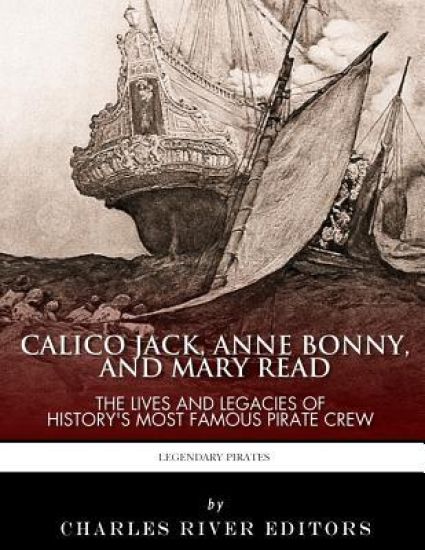
Calico Jack, Anne Bonny and Mary Read: The Lives and Legacies of History's Most Famous Pirate Crew
*Includes historic illustrations depicting Calico Jack, Anne Bonny, Mary Read, and important people in their lives. *Includes the profiles of Calico Jack, Anne Bonny and Mary Read from the famous English pirate history "A General History of the Pyrates". *Discusses common legends about the three famous pirates, separating fact from fiction. *Includes a Bibliography for further reading. "The Day that Rackam was executed, by special Favour, he was admitted to see Anne Bonny]; but all the Comfort she gave him, was, that she was sorry to see him there, but if he had fought like a Man, he need not have been hang'd like a Dog." - Captain Charles Johnson, A General History of the Robberies and Murders of the most notorious Pyrates One of the most famous pirates of all time, and possibly the most famous woman to ever become one, was Anne Bonny. The Irish-born girl moved with her family to the Bahamas at a young age in the early 18th century, which at that time was a hotbed for piracy by the likes of Blackbeard, but the redhead with a fiery temper would go on to forge her own reputation. After marrying a poor sailor who accepted clemency to give up piracy, Anne began a legendary affair with Calico Jack Rackam and became pregnant with his child, but that did not stop them from plundering the high seas aboard his pirate ship Revenge, at least until they were captured by British authorities. Anne avoided execution by "pleading her belly", getting a temporary stay of execution due to her pregnancy. It is at that point that Anne Bonny drops off the historical record and becomes the stuff of legends. It's unclear whether she was eventually executed or pardoned or even ransomed, and it's unclear what became of her child. Her relationship with Mary Read aboard the Revenge is also the stuff of legends, and people have been filling in the gaps ever since. Among all the pirates of the "Golden Age of Piracy", none were as unique as Mary Read, who was one of just two known women to be tried as a pirate during the Golden Age, alongside her own crewmate (and possible lover) Anne Bonny. Like Anne, Mary Read was an illegitimate child who spent some of her childhood dressed up as and disguised as a little boy through incredibly strange circumstances. But unlike her future shipmate, Mary ultimately took a liking to it, and she continued to disguise her gender to take on roles reserved for men, including in the British army. Though he would accomplish many things in his career that would earn him notoriety among the pirates of his age, the simple truth is that he is remembered mostly for his association with Anne Bonny and Mary Read, two of history's most famous women pirates. In fact, had it not been for his involvement with them, his name might have disappeared from the history books entirely. And fittingly, even his nickname, "Calico," came from the type of fabric he preferred for his shirts, the same fabric typically used for women's everyday clothing. Rackham preferred attractive print fabrics produced for trade with natives in the New World, a flamboyant taste worthy of the common pirate stereotype. Calico Jack to make yet another contribution to pirate history and legend: the "Jolly Roger" pirate flag. Flying the simple yet frightening flag that featured a white skull and crossed swords against a black banner, Calico Jack ensured his targets knew they were in trouble as soon as they could spot the flag. To this day, the flag remains synonymous with piracy. Still, it seems Calico Jack will never escape the shadow of his famous female shipmates, despite the fact he was their captain, and if anything it seems he enjoyed having the fairer sex aboard, in more ways than one. This book chronicles the lives and legends of history's most famous pirate crew, with historic illustrations and contemporary accounts. It also includes a bibliography and Table of Contents.
The Authorship of 'The Taming of a Shrew, ' 'The Famous Victories of Henry V' and the Attidions to Marlowe's 'Faustus'. Read Before a Meeting of the Shakekspeare Association Held at King's College on February 28, 1919
This work has been selected by scholars as being culturally important, and is part of the knowledge base of civilization as we know it. This work was reproduced from the original artifact, and remains as true to the original work as possible. Therefore, you will see the original copyright references, library stamps (as most of these works have been housed in our most important libraries around the world), and other notations in the work.This work is in the public domain in the United States of America, and possibly other nations. Within the United States, you may freely copy and distribute this work, as no entity (individual or corporate) has a copyright on the body of the work.As a reproduction of a historical artifact, this work may contain missing or blurred pages, poor pictures, errant marks, etc. Scholars believe, and we concur, that this work is important enough to be preserved, reproduced, and made generally available to the public. We appreciate your support of the preservation process, and thank you for being an important part of keeping this knowledge alive and relevant.
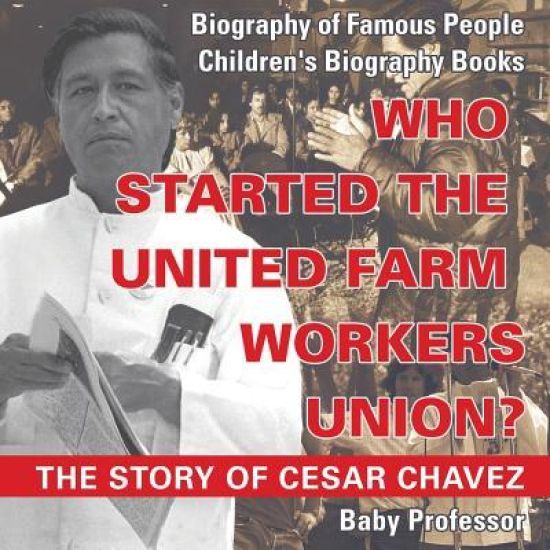
Who Started the United Farm Workers Union? The Story of Cesar Chavez - Biography of Famous People Children's Biography Books
Cesar Chavez was one tough fellow. He dared to speak out against the injustices that he saw around him, particularly his workplace. It was because he was brave that the United Farm Workers Union was created. Reading about the life led by individuals who made it to history books will instill powerful lessons of skills and other values. Such is the case of this biography book. Grab a copy now
The Tall, Skinny Jewish Kid with Eyeglasses from Bridgeport: A Radio Guy's Chance Encounters With The Colorful And Famous
Al Herskovitz is an 87-year-old Korean War veteran who, following his service to America, embarked upon a 68-year (and still going strong) career in the radio business. In The Tall Skinny Jewish Kid from Bridgeport: A Radio Guy's Chance Encounters with the Colorful and Famous, he vividly recalls the fascinating characters with whom he crossed paths as a child of immigrants, a young man in the army, and then as a highly respected radio broadcaster. These include show business celebrities, sports stars, politicians, several mysterious international figures (including a spy or two), and even a few mobsters
The life, campaigns and battles of General Ulysses S. Grant, comprising a full and authentic account of the famous soldier
The life, campaigns and battles of General Ulysses S. Grant, comprising a full and authentic account of the famous soldier - From his earliest boyhood to the present time is an unchanged, high-quality reprint of the original edition of 1868. Hansebooks is editor of the literature on different topic areas such as research and science, travel and expeditions, cooking and nutrition, medicine, and other genres. As a publisher we focus on the preservation of historical literature. Many works of historical writers and scientists are available today as antiques only. Hansebooks newly publishes these books and contributes to the preservation of literature which has become rare and historical knowledge for the future.
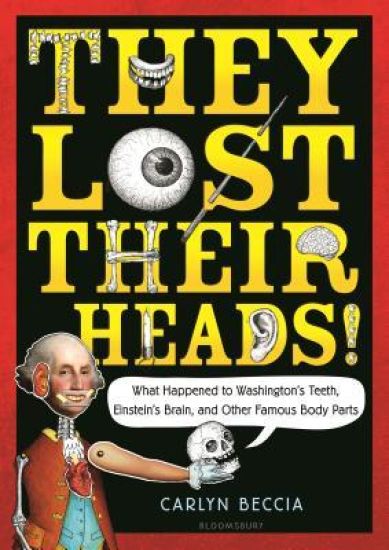
They Lost Their Heads!: What Happened to Washington's Teeth, Einstein's Brain, and Other Famous Body Parts
From the kidnapping of Einstein's brain to the horrifying end of Louis XIV's heart, the mysteries surrounding some of history's most famous body parts range from medical to macabre. Carlyn Beccia explores the misadventures of noteworthy body parts through history and springboards to exploring STEM topics such as forensics, DNA testing, brain science, organ donation, and cloning. The engaging tone, wonderfully creepy subject matter, and delightfully detailed art are sure to capture even the most reluctant readers. The famous people and their body parts include: Galileo Galilei / Fingers Louis XIV / Heart George Washington / Teeth Franz Joseph Hadyn / Head Beethoven / Hair Abraham Lincoln / Body Chang and Eng Bunker / Liver Phineas Gage / Skull John Wilkes Booth / Neck vertebrae Sarah Bernhardt / Leg Vincent Van Gogh / Ear Mata Hari / Head Albert Einstein / Brain Elvis Presley / Wart Thomas Edison / Last Breath
King of the Mountains, The Remarkable Story of Giuseppe Musolino, Italy's Most Famous Outlaw
In 1897, a young Calabrian peasant named Giuseppe Musolino was sentenced to 21 years of hard labor for a crime he did not commit. However, defying all odds, he orchestrated a daring escape and embarked on a relentless pursuit of those responsible for his wrongful conviction, exacting a chilling and deadly retribution. Evading capture for nearly three years, he cunningly outmaneuvered a vast manhunt consisting of hundreds of local and regional police, the Carabinieri, and even an Italian Army regiment. His exploits transformed him into a beloved Robin Hood figure among the inhabitants of the Mezzogiorno, the impoverished southern region of Italy. However, to the authorities, he was a cold-blooded murderer who had to be stopped. Eventually apprehended, the Ministry of Justice relocated his trial 600 miles to the north, from Reggio di Calabria to Lucca, due to its belief that no jury in the south would convict him. The trial captured the attention of newspapers around the world. When Giuseppe Musolino passed away in 1956, half a century after his capture, TIME magazine aptly remarked, "Few adventurers, past or present, have become so legendary in so short a time."