Kirjojen hintavertailu. Mukana 11 627 220 kirjaa ja 12 kauppaa.

Kirjahaku

Etsi kirjoja tekijän nimen, kirjan nimen tai ISBN:n perusteella.

1000 tulosta hakusanalla S. M

Children’s Palliative Care: An International Case-Based Manual
This manual enables individuals working in children’s palliative care (CPC) globally to learn through engaging real-world cases. The aim is to provide a clinical case-based resource that is globally relevant and accessible to those working in CPC. Drawing on case histories from around the world that reflect key issues and elements of CPC, it provides a practical approach grounded in experience. It addresses multidisciplinary care in the management of children and their families; discusses cases from an international perspective, and shares examples from a variety of countries, utilising cases across a range of ages and conditions, demonstrating holistic care. It represents the first case-based manual on global CPC and is endorsed and promoted by the International Children’s Palliative Care Network (ICPCN). Children’s palliative care is a rapidly developing field, both in the UK and internationally. The provision of CPC varies considerably, with provision often being insufficient, and over 65% of countries having no recognised CPC service provision whatsoever. As such, while there are an estimated 21.6 million children who require palliative care, in many areas of the world, CPC is poor or non-existent, and children are treated like little adults without their distinctive needs being recognised or understood. There is also a dearth of literature on CPC, hence this clinical case-based manual fills a gap in the market, and is aimed at a global audience, making it a unique text in the field.
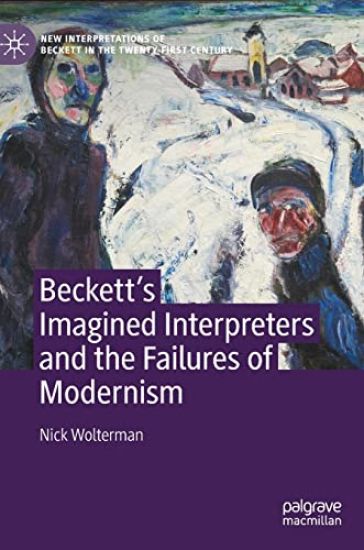
Beckett’s Imagined Interpreters and the Failures of Modernism

Beckett’s Imagined Interpreters and the Failures of Modernism

Nick Wolterman

Springer International Publishing AG
2022
sidottu
Samuel Beckett’s work is littered with ironic self-reflexive comments on presumed audience expectations that it should ultimately make explicable sense. An ample store of letters and anecdotes suggests Beckett’s own preoccupation with and resistance to similar interpretive mindsets. Yet until now such concerns have remained the stuff of scholarly footnotes and asides. Beckett’s Imagined Interpreters and the Failures of Modernism addresses these issues head-on and investigates how Beckett’s ideas about who he writes for affect what he writes. What it finds speaks to current understandings not only of Beckett’s techniques and ambitions, but also of modernism’s experiments as fundamentally compromised challenges to enshrined ways of understanding and organizing the social world. Beckett’s uniquely anxious audience-targeting brings out similarly self-doubting strategies in the work of other experimental twentieth-century writers and artists in whom he is interested: his corpus proves emblematic of a modernism that understands its inability to achieve transformative social effects all at once, but that nevertheless judiciously complicates too-neat distinctions drawn within ongoing culture wars. For its re-evaluations of four key points of orientation for understanding Beckett’s artistic ambitions—his arch critical pronouncements, his postwar conflations of value and valuelessness, his often-ambiguous self-commentary, and his sardonic metatheatrical play—as well as for its running dialogue with wider debates around modernism as a social phenomenon, this book is of interest to students and researchers interested in Beckett, modernism, and the relations between modern and contemporary artistic and social developments.
Beckett’s Imagined Interpreters and the Failures of Modernism

Beckett’s Imagined Interpreters and the Failures of Modernism

Nick Wolterman

Springer International Publishing AG
2023
nidottu
Samuel Beckett’s work is littered with ironic self-reflexive comments on presumed audience expectations that it should ultimately make explicable sense. An ample store of letters and anecdotes suggests Beckett’s own preoccupation with and resistance to similar interpretive mindsets. Yet until now such concerns have remained the stuff of scholarly footnotes and asides. Beckett’s Imagined Interpreters and the Failures of Modernism addresses these issues head-on and investigates how Beckett’s ideas about who he writes for affect what he writes. What it finds speaks to current understandings not only of Beckett’s techniques and ambitions, but also of modernism’s experiments as fundamentally compromised challenges to enshrined ways of understanding and organizing the social world. Beckett’s uniquely anxious audience-targeting brings out similarly self-doubting strategies in the work of other experimental twentieth-century writers and artists in whom he is interested: his corpus proves emblematic of a modernism that understands its inability to achieve transformative social effects all at once, but that nevertheless judiciously complicates too-neat distinctions drawn within ongoing culture wars. For its re-evaluations of four key points of orientation for understanding Beckett’s artistic ambitions—his arch critical pronouncements, his postwar conflations of value and valuelessness, his often-ambiguous self-commentary, and his sardonic metatheatrical play—as well as for its running dialogue with wider debates around modernism as a social phenomenon, this book is of interest to students and researchers interested in Beckett, modernism, and the relations between modern and contemporary artistic and social developments.
Lesniewski's Systems of Logic and Foundations of Mathematics

Lesniewski's Systems of Logic and Foundations of Mathematics

Rafal Urbaniak

Springer International Publishing AG
2013
sidottu
This meticulous critical assessment of the ground-breaking work of philosopher Stanislaw Lesniewski focuses exclusively on primary texts and explores the full range of output by one of the master logicians of the Lvov-Warsaw school. The author’s nuanced survey eschews secondary commentary, analyzing Lesniewski's core philosophical views and evaluating the formulations that were to have such a profound influence on the evolution of mathematical logic. One of the undisputed leaders of the cohort of brilliant logicians that congregated in Poland in the early twentieth century, Lesniewski was a guide and mentor to a generation of celebrated analytical philosophers (Alfred Tarski was his PhD student). His primary achievement was a system of foundational mathematical logic intended as an alternative to the Principia Mathematica of Alfred North Whitehead and Bertrand Russell. Its three strands—‘protothetic’, ‘ontology’, and ‘mereology’, are detailed in discrete sectionsof this volume, alongside a wealth other chapters grouped to provide the fullest possible coverage of Lesniewski’s academic output. With material on his early philosophical views, his contributions to set theory and his work on nominalism and higher-order quantification, this book offers a uniquely expansive critical commentary on one of analytical philosophy’s great pioneers.?
Lesniewski's Systems of Logic and Foundations of Mathematics

Lesniewski's Systems of Logic and Foundations of Mathematics

Rafal Urbaniak

Springer International Publishing AG
2016
nidottu
This meticulous critical assessment of the ground-breaking work of philosopher Stanislaw Lesniewski focuses exclusively on primary texts and explores the full range of output by one of the master logicians of the Lvov-Warsaw school. The author’s nuanced survey eschews secondary commentary, analyzing Lesniewski's core philosophical views and evaluating the formulations that were to have such a profound influence on the evolution of mathematical logic. One of the undisputed leaders of the cohort of brilliant logicians that congregated in Poland in the early twentieth century, Lesniewski was a guide and mentor to a generation of celebrated analytical philosophers (Alfred Tarski was his PhD student). His primary achievement was a system of foundational mathematical logic intended as an alternative to the Principia Mathematica of Alfred North Whitehead and Bertrand Russell. Its three strands—‘protothetic’, ‘ontology’, and ‘mereology’, are detailed in discrete sectionsof this volume, alongside a wealth other chapters grouped to provide the fullest possible coverage of Lesniewski’s academic output. With material on his early philosophical views, his contributions to set theory and his work on nominalism and higher-order quantification, this book offers a uniquely expansive critical commentary on one of analytical philosophy’s great pioneers.?
Campbell's Complete Guide and Descriptive Book of Mexico
Campbell's Complete Guide and Descriptive Book of Mexico - Volume 1 is an unchanged, high-quality reprint of the original edition of 1895. Hansebooks is editor of the literature on different topic areas such as research and science, travel and expeditions, cooking and nutrition, medicine, and other genres. As a publisher we focus on the preservation of historical literature. Many works of historical writers and scientists are available today as antiques only. Hansebooks newly publishes these books and contributes to the preservation of literature which has become rare and historical knowledge for the future.