

Kirjahaku
Etsi kirjoja tekijän nimen, kirjan nimen tai ISBN:n perusteella.
1000 tulosta hakusanalla S. Zellinger

Vesta Dean had no family and her friends had dumped her long ago. Rumors always seemed to have a way of following her around, especially when her mother had been known as the town slut and her father could have been any of the numerous men who'd graced her mom's bed. In her twenties, Vesta was more than ready to leave her two-bit hometown in her rearview mirror - if only she had the resources.Rico Salvatore grew up in an abusive home with his father using him as a punching bag any chance he got. Rico searched for an outlet and found it his junior year of high school - girls, drugs, fighting, and motorcycles. He ran the streets day and night and eventually found his way into the ranks of Fuego's Inferno MC; where years later, he now sits at the top of the food chain as Prez. Life is good. No one can stop him. No one will ever make him feel weak again. He is in control of his own salvation... until now...
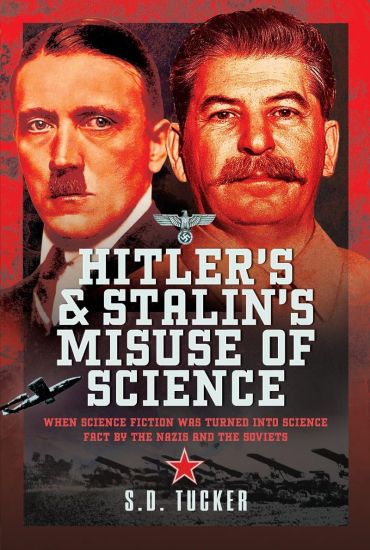
In today’s world, science itself, which we are constantly being told is a neutral vehicle for wholly objective ideas and theories, is increasingly being hijacked and abused by the toxic modern cult of identity politics, of both left and right. But should we be too surprised by any of this? No, because this exact same sorry process has happened time and again before, under the rule of totalitarian political cults like the Nazis and the Soviets, both of which vigorously promoted various pseudoscientific theories of ‘Aryan Science’ and ‘Marxist Science’ on the sole grounds that they were ideologically correct as opposed to being factually so. Nazi racial pseudoscience and belief in nonsense like the ‘World Ice Theory’, which claimed that stars did not really exist and were actually just reflections of the sun off giant floating space-icebergs, were widely encouraged in the Third Reich, and used for long-term military weather-forecasting purposes. Likewise, the ideas of the renegade biologist Trofim Lysenko, who developed a deluded ‘anti-capitalist’ theory of genetics opposed to Darwin’s, were responsible for widespread famine in the USSR when Stalin allowed him to apply them practically towards the nation’s crop-harvests. Those academics and functionaries who disputed these clearly false pseudoscientific notions often found themselves in deep trouble – or, ultimately, dead. In this incisive and challenging study, author S.D. Tucker explores the often weird and fanciful theories that were proposed and took hold under these extreme regimes – and in doing so sends a word of warning to the modern world of the internet and social media where similar bizarre ideas are expounded and consumed with frightening gullibility. Everywhere from Western universities, schools and hospitals to Vladimir Putin’s Russia, absurd stories of sexist glaciers, racist gravity, socialist trees and NATO-backed mutant extra-terrestrial potatoes are being promoted as items of politically mandated scientific fact by compliant collaborators and credulous social media followers. Pseudoscientific narratives are even now used to justify the 2022 invasion of Ukraine, much as they were once used to justify the Nazi conquest of Europe or the spread of Communist revolution across the globe.
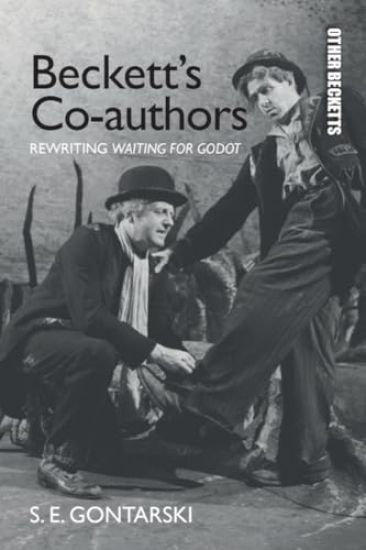
Beckett's Co-authors takes a fresh look at Samuel Beckett and the business of authorship, especially his involvement in the complicated machinery of commercial theatre. Focusing particularly on Beckett's first professionally produced play, Waiting for Godot, and its premieres in the US, UK and the Republic of Ireland, this book examines extra-authorial interventions into the creative process and how such interventions challenges the autonomy of the author and his artwork. Calling the result of these early collaborations 'co-authorship', S. E. Gontarski delves into the hybrid genre of theatre where collective aesthetics tends to override and thus supersede individual creation, using the methodology of archival archaeology to uncover previously unpublished letters and unknown archival documents relating to three national premieres. These case studies nevertheless have implications far beyond a single theatrical work, placing a spotlight on the nature of authorship and the process of realising dramatic texts in a monetised culture.
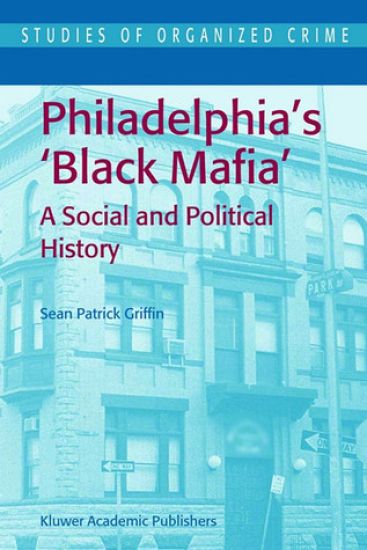
Philadelphia's 'Black Mafia' could be used as primary reading in deviance and organized crime courses. Academicians in the fields of criminology, sociology, history, political science and African-American Studies will find the book compelling and important. This book provides the first sociological analysis to date of Philadelphia's infamous "Black Mafia" which has organized crime (with varying degrees of success) in predominantly African-American sections of the city dating back to the late 1960's. Philadelphia's 'Black Mafia': -is a first step in developing both data and sophisticated theoretical propositions germane to the ongoing study of organized crime; -uses primary source documents, including confidential law enforcement files, court transcripts and interviews; -explores the group's activities in detail, depicting some of the most notorious crimes in Philadelphia's history; -thoroughly examines the organization of the Black Mafia and the group's alliances, conspiracies and conflicts; -challenges many of the current historical and theoretical assumptions regarding organized crime.


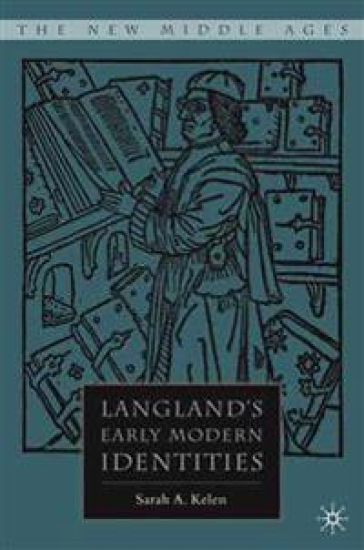
This book uses the methodologies of cultural studies and the history of the book to show how editors and readers of the Sixteenth through the early Nineteenth century successively remade Piers Plowman and its author according to their own ideologies of the Middle Ages.

This book examines Austen's novels in relation to her philosophical and religious context, demonstrating that the combination of the classical and theological traditions of the virtues is central to her work. Austen's heroines learn to confront the fundamental ethical question of how to live their lives. Instead of defining virtue only in the narrow sense of female sexual virtue, Austen opens up questions about a plurality of virtues. In fresh readings of the six completed novels, plus Lady Susan, Emsley shows how Austen's complex imaginative representations of the tensions among the virtues engage with and expand on classical and Christian ethical thought.
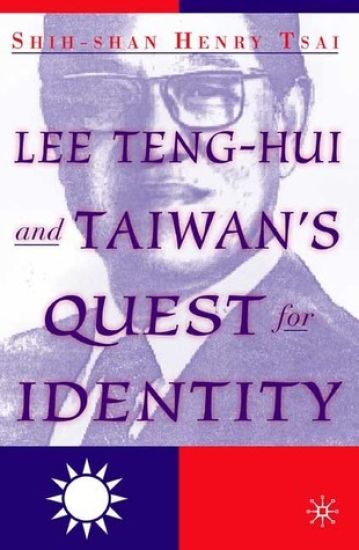
The book is an account of Taiwan's evolving national consciousness told through the biography of its former President Lee Teng-hui - the central figure in the island's political transformation over the past two decades. In describing the broader historical and social context of the various stages of Lee's life, the book also analyzes Taiwan's own evolution during the past century as a Japanese colony, a Leninist party-state dictatorship, and then an American-inspired fledgling democracy. The book explores such questions as: Is Lee Teng-hui an opportunistic recidivist who is interested only in his own self-preservation, or is he a hero who not only propelled Taiwan into a new era, but also constructed a new national identity for the islanders? Are the multi-ethnic islanders culturally 'Chinese' or are they 'Taiwanese'? Is Taiwan historically and politically part of 'China' or does it have its own history and identity, and deserves international recognition as an independent sovereign country?

The Lingua Ignota, "brought forth" by the twelfth-century German nun Hildegard of Bingen, provides 1012 neologisms for praise of Church and new expression of the things of her world. Noting her visionary metaphors, her music, and various medieval linguistic philosophies, Higley examines how the "Unknown Language" makes arid signifiers green again. This text, however, is too often seen in too narrow a context: glossolalia, angelic language, secret code. Higley provides an edition and English translation of its glosses in the Riesencodex (with assistance from the Berlin MS) , but also places it within a history of imaginary language making from medieval times to the most contemporary projects in efforts to uncover this woman s bold involvement in an intellectual and creative endeavor that spans centuries.

Schmid shows how reception processes work across linguistic, national, and cultural boundaries, taking the English Romantic poet Shelley's German reception as a case study. It also highlights Anglo-German literary and cultural relations of the nineteenth and twentieth centuries and supplies a theoretical framework for further analysis.

Russia's Oil Barons and Metal Magnates contains a critical analysis of the claims made against oligarchs. In doing so, it presents a detailed analysis of the place of the oligarchs in both the metals sector and in the Russian political economy.
This book is a comprehensive and positive study of the special pattern of China's industrialization and economic development, covering all of the relevant, main policies (more than one hundred) from 1949 to the twenty-first century.

S L Prim Sci 1
Macmillan Education
2006
nidottu

S L Prim Sci 1 TB
Macmillan Education
2006
nidottu

S L Prim Sci 2
Macmillan Education
2006
nidottu

S L Prim Sci 2 TB
Macmillan Education
2006
nidottu

S L Prim Sci 3
Macmillan Education
2006
nidottu