Kirjahaku
Etsi kirjoja tekijän nimen, kirjan nimen tai ISBN:n perusteella.
1000 tulosta hakusanalla S.A. Noskov
It's a King's Life in Aspen: Featuring the Hotel Jerome
Emily Randolph
Createspace Independent Publishing Platform
2013
nidottu
U.S.A. The Republic: The Empty House
David E. Robinson
Createspace Independent Publishing Platform
2013
nidottu
Our Republic is now celebrating the 222nd year of the Bill of Rights, to our Constitution. Through the wisdom of a few free-thinking men, we have come incredibly far in these years. Our nation has been blessed with prosperity more than any other in world history. The technology in this country compares with no other. Our leadership in world politics and economics has no rival. Yet all this has happened outside of the "house" our predecessors, on this continent, designed and built. This fantastic and majestic political building which our forefathers constructed with their lives and sacred honor, has fallen into disuse, and now sits empty. When it was new, it was the most beautiful mansion in the world. There was nothing else like it for it was built on a foundation called the "common law". The walls were shaped in liberty by a unique arrangement referred to as the separation of powers and its roof was made of transparent material to let in the light of the Law... so all encompassing that it is adaptable to any people, regardless of color, race, creed or religion. Our Republic did not crumble overnight. What took place was the result of a delusion, for people would never give up their liberty knowingly - only through deception. Gradually the deceptive-rot took hold and one by one the citizens of the house called a "Republic" moved out, into a third rate structure called a "Democracy".
It's A Bird, It's A Plane, No Just Death.....
T. Baptiste
Createspace Independent Publishing Platform
2013
nidottu
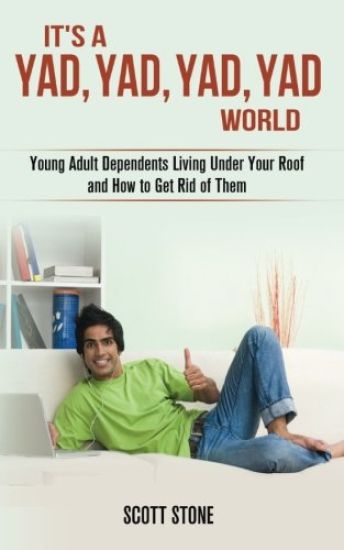
It's a YAD, YAD, YAD, YAD World: Young Adult Dependents Living Under Your Roof and How to Get Rid of Them
Scott Stone
Createspace Independent Publishing Platform
2014
nidottu
When John Lennon declared in 1966 that the Beatles were more popular than Jesus Christ, teenagers and twentysomethings of the baby boomer generation nodded in agreement and turned a cynical eye toward their parents, who believed otherwise, of course. Scott Stone, in his book, It's a YAD, YAD, YAD, YAD World, suggests that this breach contributed to the infamous "Generation Gap" which resulted in many boomers viewing with cynicism the opinions and practices of their parents. This moved boomers to later adopt a "helicopter" parenting style with their own children, a pattern of micromanagement that valued love and honesty above all else, while trying to protect their offspring from the frailties and evils of the world. Fast forward to today, where recent economic conditions and other social circumstances have driven those children to return home to live with their parents as young adult dependents-or YADs, an apt coinage by the author. Many have moved back to the sanctuary of their childhood bedrooms, emerging only to clean out the family cupboards and camp out on the living room sofa, playing video games, texting, and hogging the flat-screen TV instead of making their way in the real world. Stone explains why boomers must accept partial responsibility for what he calls the infestation of YADs in their homes. Their doting parental style contributed to their children's dependence, and the technology-dominated society in which they've been immersed since birth has further isolated them from the world's realities, making many of them poor communicators. They certainly aren't listening to their parents' message to get on with their lives outside of their childhood homes. Through scholarly investigation as well as historical and personal anecdotes and pop culture references, Stone shares with his fellow boomers both relevant context and useful recommendations for dealing with the YADs in their homes, all presented in a sharp, tongue-in-cheek writing style. Note his three cardinal rules for dealing with YADs: - Don't Ignore. Stone believes that ignoring these young adults will create a situation in which no one feels comfortable speaking about the larger issue of dependence, thus creating bigger problems in the future. - Don't Force. The author quotes Newton's third law of motion: "For every action, there is an equal and opposite reaction." He puts forth that pressing YADs in one direction will likely result in them going in the other. Alternative communication tactics include the use of leading with noncontroversial statements, conceding as many points as possible if the argument is not working, and saying nothing to get the reluctant YAD to say something. - Don't Give In. Stone admits this is the hardest rule to follow, but warns that if parents don't, they face losing control over their households. Here he paraphrases Sun Tzu, the famous Chinese general and author of The Art of War: "The clever parent imposes his will on his children, but does not allow the children's will to be imposed on him." Those who find themselves in the same position that the author once did will appreciate his advice on how to gently but firmly get rid of YADs before it's too late-and parents become reliant on seeing life through their children's non-cynical eyes and open-minded perspectives. Readers will also find interesting his look into the future of how millennials in general may approach parenthood. Will 9/11 be their Pearl Harbor, as some believe, resulting in their parenting style resembling that of their 'Greatest Generation" grandparents more than that of their boomer parents? And whom will their children take after?
It's a Connection! It's a Comedy! Internet Dating The Good. The Bad. And the Ugly!: Book One: Initial Contact
Patrice Gendelman
Createspace Independent Publishing Platform
2013
nidottu
It's A Dog's World: A dog behavior and training guide for the everyday dog owner.
Mark Oszoli
Createspace Independent Publishing Platform
2014
nidottu
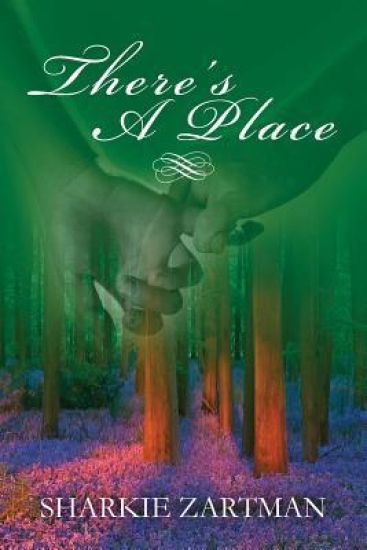
There's a Place: A thought-provoking and uplifting story that gracefully draws attention to the importance of end-of-life directives
Sharkie Zartman
Createspace Independent Publishing Platform
2013
nidottu
Dana Brown has pulled the plug on a comatose man after emerging from a coma, herself. Why did she do it? The answer will surprise you. Sharkie Zartman gets readers thinking "What if?" in this intriguing paranormal romance. There's a Place is a fictional account of what happens when a woman experiences an almost-fatal car crash. After Dana awakes from her coma, she asks to see Henry Amerson's wife, but takes things into her own hands when she fails to convince Mrs. Amerson to take her husband off life support. The risk of the death penalty doesn't sway her opinion that she did the right thing. After all, she met Henry in a beautiful place between this world and the next, where souls remain in limbo before going on to heaven or returning to earth. There's a Place is a thought-provoking and uplifting story that gracefully draws attention to the importance of end-of-life directives, exploring who we are really trying to please when we are left to decide to keep someone on life support-or take them off. As the host of the Health Life Radio show Sharkie's PEP Talk, Zartman inspires people to take charge of their own lives and health, just as she does in her new book.
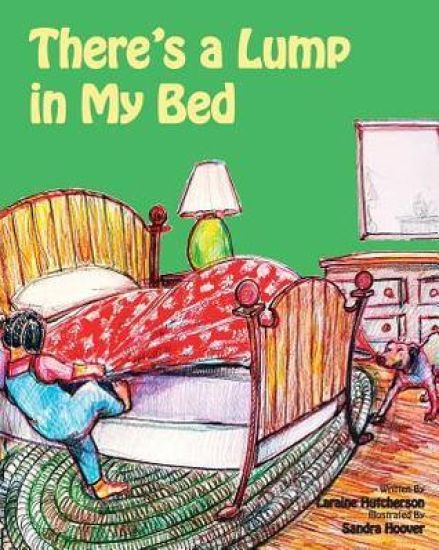
There's A Lump In My Bed
Laraine Adelle Hutcherson
Createspace Independent Publishing Platform
2013
nidottu
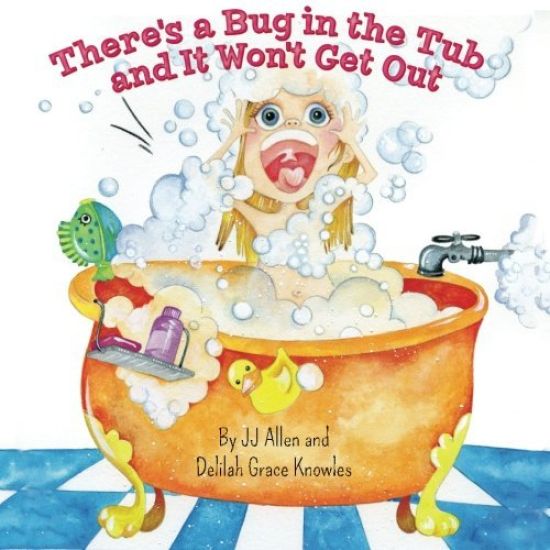
There's a Bug in the Tub and It Won't Get Out
Delilah Grace Knowles; Jj Allen
Createspace Independent Publishing Platform
2015
nidottu