

Kirjahaku
Etsi kirjoja tekijän nimen, kirjan nimen tai ISBN:n perusteella.
1000 tulosta hakusanalla Sakil Ahmed
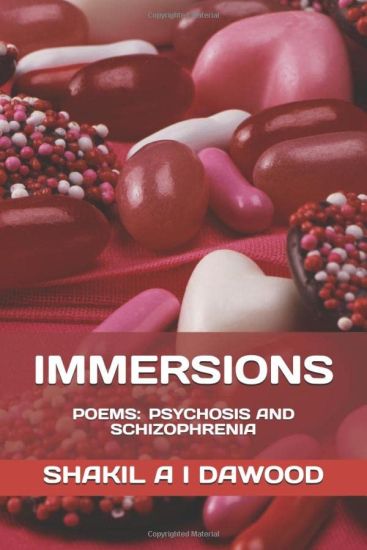
Immersions: Poems: Psychosis and Schizophrenia
Shakil a. I. Dawood
Independently Published
2020
nidottu
This extremely insightful writing shows clearly the duality of internal struggle and the pressure of an uncomprehending external world. This experience and place - mental illness in society - is one where small things can make a large difference: A smile, a nod of the head in recognition, a handshake freely given - these small and seemingly insignificant gestures have a profound effect which can only appropriately be gauged by the recipient. Shakil has clearly successfully survived these difficult and significant situations and lived to tell a most meaningful tale, part of which is represented by this volume of poetry. In Shakil they will find an eloquent spokesperson. Gary Kramer, RMN.
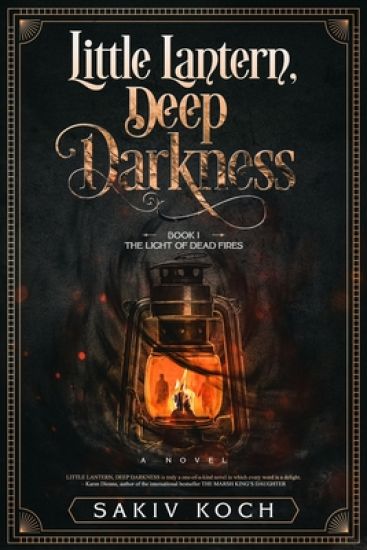
Little Lantern, Deep Darkness: Book I: The Light of Dead Fires
Sakiv Koch
Independently Published
2019
nidottu
Himalayan foothills, 1934Smastrus Anand - a fourteen-year-old, fatherless boy - understands what it is to live with sorrow in his heart. His mother, Nina, is a debt-slave, and Smast has been forced to grow up on a steady diet of hunger and oppression. Pintu, the ultra-privileged son of Nina's employers, has always taken pleasure in abusing and bullying Smast. Life as Smast knows it changes forever one evening when he finally hits back at Pintu.Smast's unthinkable act rips open a Pandora's box. Two things emerge from it: i.) a long-buried secret that devastates and strengthens Smast simultaneously, and ii.) the unwelcome attention of the enigmatic, ruthless woman responsible for destroying Smast's parents' lives before his birth. This woman, Pintu's mother, would stop at nothing to crush the remnants of hope still surviving somewhere deep in Nina's shriveled heart - a hope that stems from and inheres in her only child. Atmospheric, lyrical, and fast-paced, the first installment of Smast's epic tale chronicles his metamorphosis from a punching-bag to a fledgeling, imperfect fighter struggling for his inalienable right to live and love on his own terms.

When William Came: A Story of London Under the Hohenzollerns is a novel written by the British author Saki (the pseudonym of Hector Hugh Munro) and published in November 1913. It is set several years in what was then the future, after a war between Germany and Great Britain in which the former won. The "William" of the book's title is Kaiser Wilhelm II of the House of Hohenzollern. The book chronicles life in London under German occupation and the changes that come with a foreign army's invasion and triumph.
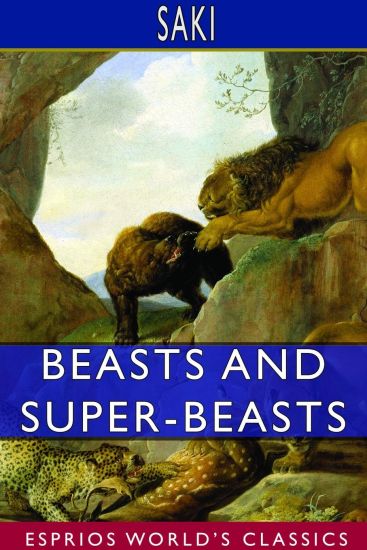
Beasts and Super-Beasts is a collection of short stories, written by Saki (the literary pseudonym of Hector Hugh Munro) and first published in 1914. The title parodies that of George Bernard Shaw's Man and Superman. Along with The Chronicles of Clovis, Beasts and Super-Beasts is one of Saki's best-known works. It was his final collection of stories before his death in World War I, and several of its stories, in particular "The Open Window", are reprinted frequently in anthologies. The majority of the volume's stories deal in some fashion with animals, providing the source for its title. Stylistically, Beasts and Super-Beasts displays the simple language, cynicism and wry humor that characterize Saki's earlier literary output.
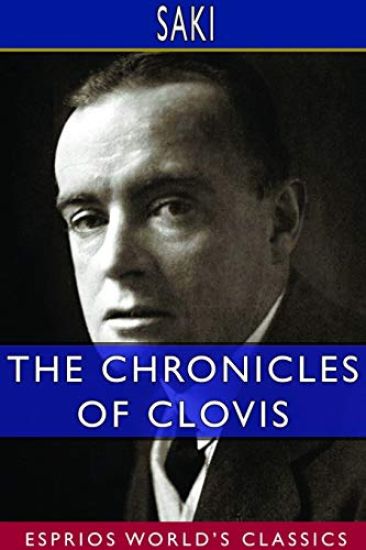
The Chronicles of Clovis written by Saki (the literary pseudonym of Hector Hugh Munro). In 1908, Saki gave up foreign reporting and settled in London. Many of his stories from this period feature Reginald and Clovis, young men-about-town who take mischievous delight in the discomfort or downfall of their conventional, pretentious elders.

Reginald in Russia was written in 1910 by Hector Hugh Munro (18 December 1870 - 14 November 1916), better known by the pen name Saki and also frequently as H. H. Munro. He was a British writer whose witty, mischievous and sometimes macabre stories satirize Edwardian society and culture. Influenced by Oscar Wilde, Lewis Carroll and Rudyard Kipling, he himself influenced A. A. Milne, No l Coward and P. G. Wodehouse.

The Toys of Peace was written in 1919 by Hector Hugh Munro (18 December 1870 - 14 November 1916), better known by the pen name Saki and also frequently as H. H. Munro. He was a British writer whose witty, mischievous and sometimes macabre stories satirize Edwardian society and culture. Influenced by Oscar Wilde, Lewis Carroll and Rudyard Kipling, he himself influenced A. A. Milne, No l Coward and P. G. Wodehouse.
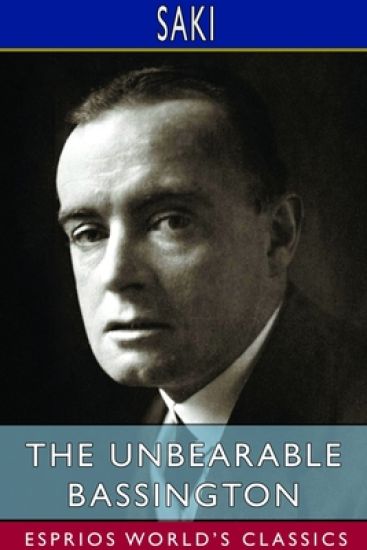
The Unbearable Bassington was written in 1912 by Hector Hugh Munro (18 December 1870 - 14 November 1916), better known by the pen name Saki and also frequently as H. H. Munro. He was a British writer whose witty, mischievous and sometimes macabre stories satirize Edwardian society and culture. Influenced by Oscar Wilde, Lewis Carroll and Rudyard Kipling, he himself influenced A. A. Milne, No l Coward and P. G. Wodehouse.

"When peace comes," wrote an officer of the 22nd Royal Fusiliers, the regiment in which Munro was a private and in which he rose to the rank of lance-sergeant, "Saki will give us the most wonderful of all the books about the war." But that book of the war will not be written; for Munro has died for King and country. In this volume are his last tales. And it is because these tales, brilliant and elusive as butterflies, hide, rather than reveal, the character of the man who wrote them, give but a suggestion of his tenderness and simplicity, of his iron will, of his splendour in the grip of war, that it is my duty to write these pages about him, now that he lies in the kind earth of France. It is but to do what his choice of a pen-name makes me sure he himself would have done for a friend.
Leonard Bilsiter was one of those people who have failed to find this world attractive or interesting, and who have sought compensation in an "unseen world" of their own experience or imagination-or invention. Children do that sort of thing successfully, but children are content to convince themselves, and do not vulgarise their beliefs by trying to convince other people. Leonard Bilsiter's beliefs were for "the few," that is to say, anyone who would listen to him. His dabblings in the unseen might not have carried him beyond the customary platitudes of the drawing-room visionary if accident had not reinforced his stock-in-trade of mystical lore. In company with a friend, who was interested in a Ural mining concern, he had made a trip across Eastern Europe at a moment when the great Russian railway strike was developing from a threat to a reality; its outbreak caught him on the return journey, somewhere on the further side of Perm, and it was while waiting for a couple of days at a wayside station in a state of suspended locomotion that he made the acquaintance of a dealer in harness and metalware, who profitably whiled away the tedium of the long halt by initiating his English travelling companion in a fragmentary system of folk-lore that he had picked up from Trans-Baikal traders and natives. Leonard returned to his home circle garrulous about his Russian strike experiences, but oppressively reticent about certain dark mysteries, which he alluded to under the resounding title of Siberian Magic. The reticence wore off in a week or two under the influence of an entire lack of general curiosity, and Leonard began to make more detailed allusions to the enormous powers which this new esoteric force, to use his own description of it, conferred on the initiated few who knew how to wield it. His aunt, Cecilia Hoops, who loved sensation perhaps rather better than she loved the truth, gave him as clamorous an advertisement as anyone could wish for by retailing an account of how he had turned a vegetable marrow into a wood pigeon before her very eyes. As a manifestation of the possession of supernatural powers, the story was discounted in some quarters by the respect accorded to Mrs. Hoops' powers of imagination.
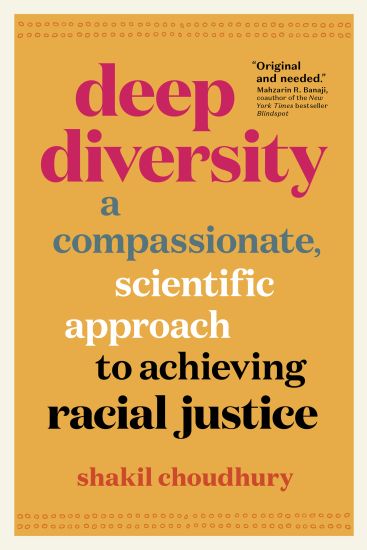
“Shakil is a rare jewel in the work of what it means to heal, repair, and take responsibility... This book is required reading for anyone interested in building a loving, just and diverse world.”—Sensei Koshin Paley Ellison, Zen teacher & author of Wholehearted: Slow Down, Help Out, Wake UpRacial justice without shame or blame.Road-tested tools to start making a difference today.In Deep Diversity, award-winning racial justice educator Shakil Choudhury explores the emotionally loaded topic of racism using a compassionate, scientific approach that everyone can understand—whether you are Black, Indigenous, a person of color (BIPOC), or white.With clear language and engaging stories that will appeal to readers of Brené Brown and Malcom Gladwell, Choudhury explains how and why well-intentioned people can perpetuate systems of oppression, often unconsciously. Using a trauma-informed approach that removes shame or blame, he offers us the tools to recognize, take authentic responsibility, and enact deep change. In easy-to-absorb chapters, Choudhury interweaves research into the brain and studies on human behavior with hard-won lessons from his career of helping organizations and CEOs create more inclusive environments. He models vulnerability and mistake-making, sharing examples of his own bias-missteps so readers are encouraged into their own racial justice journey without judgment.Readers will come away from the book with practical tools and an understanding of:How to becomes a systems thinker by developing “racial pattern recognition” skills in order to challenge racism and other forms of systemic discrimination when we encounter them, while minimizing the tendency to shame or blame ourselves or others.How to recognize when the unconscious influence of bias, identity, emotions, or power contradict our beliefs about equality, and how to realign our thoughts/words/actions.How to break the racial “prejudice habits” we have all been socialized into since birth, using research-based strategies.How the rise in authoritarianism and income inequality (among other factors) contribute to a rise in hate crimes and racial discrimination, and what to do about it.Traditional approaches to anti-racism overly rely on analyzing history to explain systemic discrimination, which only tells us a part of the story. What’s missing, Choudhury argues, is to understand why humans do what we do, the evolutionary impulses underlying our group-ish nature and our struggles with power, bias, and social dominance. This is why psychology and neuroscience perspectives are critical to integrate into anti-racist work, as is practicing compassion for ourselves and for others. Deep Diversity is a unique, evidence-based approach to racial justice that seeks to overcome feelings of shame that so often block our progress and prevent deep change at individual and systemic levels.Deep Diversity meets you where you’re at, regardless of your identity, class, ability, or belief system, and invites you to come along on a journey of self-discovery, social awareness, and lifelong learning.It’s only just begun.“Choudhury draws on heart-touching stories, research on the brain, and hard-won lessons from real-world interventions to offer useful strategies to know ourselves, and others better.”—New York Times-bestselling author of Buddha’s Brain, Rick Hanson
“Shakil is a rare jewel in the work of what it means to heal, repair, and take responsibility... This book is required reading for anyone interested in building a loving, just and diverse world.”—Sensei Koshin Paley Ellison, Zen teacher & author of Wholehearted: Slow Down, Help Out, Wake UpRacial justice without shame or blame.Road-tested tools to start making a difference today.In Deep Diversity, award-winning racial justice educator Shakil Choudhury explores the emotionally loaded topic of racism using a compassionate, scientific approach that everyone can understand—whether you are Black, Indigenous, a person of color (BIPOC), or white.With clear language and engaging stories that will appeal to readers of Brené Brown and Malcom Gladwell, Choudhury explains how and why well-intentioned people can perpetuate systems of oppression, often unconsciously. Using a trauma-informed approach that removes shame or blame, he offers us the tools to recognize, take authentic responsibility, and enact deep change. In easy-to-absorb chapters, Choudhury interweaves research into the brain and studies on human behavior with hard-won lessons from his career of helping organizations and CEOs create more inclusive environments. He models vulnerability and mistake-making, sharing examples of his own bias-missteps so readers are encouraged into their own racial justice journey without judgment.Readers will come away from the book with practical tools and an understanding of:How to becomes a systems thinker by developing “racial pattern recognition” skills in order to challenge racism and other forms of systemic discrimination when we encounter them, while minimizing the tendency to shame or blame ourselves or others.How to recognize when the unconscious influence of bias, identity, emotions, or power contradict our beliefs about equality, and how to realign our thoughts/words/actions.How to break the racial “prejudice habits” we have all been socialized into since birth, using research-based strategies.How the rise in authoritarianism and income inequality (among other factors) contribute to a rise in hate crimes and racial discrimination, and what to do about it.Traditional approaches to anti-racism overly rely on analyzing history to explain systemic discrimination, which only tells us a part of the story. What’s missing, Choudhury argues, is to understand why humans do what we do, the evolutionary impulses underlying our group-ish nature and our struggles with power, bias, and social dominance. This is why psychology and neuroscience perspectives are critical to integrate into anti-racist work, as is practicing compassion for ourselves and for others. Deep Diversity is a unique, evidence-based approach to racial justice that seeks to overcome feelings of shame that so often block our progress and prevent deep change at individual and systemic levels.Deep Diversity meets you where you’re at, regardless of your identity, class, ability, or belief system, and invites you to come along on a journey of self-discovery, social awareness, and lifelong learning.It’s only just begun.“Choudhury draws on heart-touching stories, research on the brain, and hard-won lessons from real-world interventions to offer useful strategies to know ourselves, and others better.”—New York Times-bestselling author of Buddha’s Brain, Rick Hanson
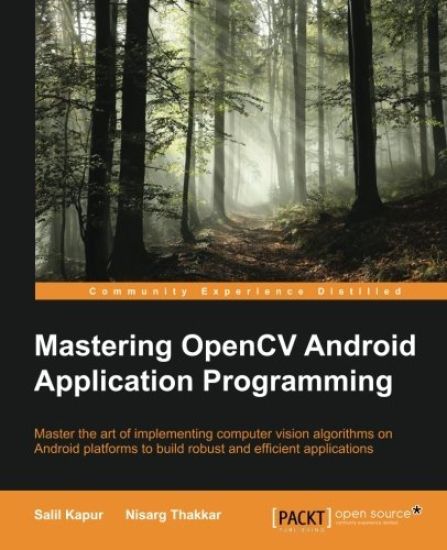
Mastering OpenCV Android Application Programming
Salil Kapur; Nisarg Thakkar
Packt Publishing Limited
2015
nidottu
About This BookUnderstand and utilise the features of OpenCV, Android SDK, and OpenGLDetect and track specific objects in a video using Optical Flow and Lucas Kanade TrackerAn advanced guide full of real-world examples, helping you to build smart OpenCV Android applicationsWho This Book Is ForIf you are a Java and Android developer looking to enhance your skills by learning the latest features of OpenCV Android application programming, then this book is for you.What You Will LearnUnderstand image processing using OpenCVDetect specific objects in an image or video using various state-of-the-art feature-matching algorithms such as SIFT, SURF, and ORBPerform image transformations such as changing color, space, resizing, applying filters like Gaussian blur, and likesUse mobile phone cameras to interact with the real worldExplore face detection, object detection, and image stitching in OpenCV Android programmingBuild smarter applications by using machine learning algorithmsLearn to debug applications and create optimal custom algorithms by understanding how data is stored internallyIn DetailOpenCV is a famous computer vision library, used to analyze and transform copious amounts of image data, even in real time and on a mobile device.This book focuses on leveraging mobile platforms to build interactive and useful applications. The book starts off with an introduction to OpenCV and Android and how they interact with each other using OpenCV's Java API. You'll also discover basic image processing techniques such as erosion and dilation of images, before walking through how to build more complex applications, such as object detection, image stitching, and face detection. As you progress, you will be introduced to OpenCV's machine learning framework, enabling you to make your applications smarter.The book ends with a short chapter covering useful Android tips and tricks and some common errors and solutions that people might face while building an application. By the end of the book, readers will have gained more expertise in building their own OpenCV projects for the Android platform and integrating OpenCV application programming into existing projects.

Of the many European territorial recon?gurations that followed the wars of the early nineteenth century, the Ionian State remains among the least understood. Xenocracy o?ers a much-needed account of the region during its half-century as a Protectorate of Great Britain – a period that embodied all of the contradictions of British colonialism. A middle class of merchants, lawyers and state o?cials embraced and promoted a liberal modernization project. Yet despite the improvements experienced by many Ionians, the deterioration of state ?nances led to divisions along class lines and presented a signi?cant threat to social stability. Sakis Gekas shows that the impasse engendered de- pendency upon and ambivalence toward Western Europe, anticipating the ‘neocolonial’ condition with which the Greek nation struggles even today.

14 Tricks to Weight Loss: Get the Results You Want the Healthy Way
Shakil K
Independently Published
2018
nidottu
If you want to lose five actual pounds by next weekend, listen up: Losing weight fast is almost always unhealthy. That's because it can set you up for binge-eating and fluctuations that interfere with long-lasting results, which basically defeats the whole point, right?
1000+ McQs on North-Eastern States of India: History, Society, Culture, Festivals, Geography, Polity, Language & Literature: For Civil Services Prelim
Sakir Alam
Independently Published
2019
nidottu

Practical Automated Machine Learning Using H2O.ai
Salil Ajgaonkar
PACKT PUBLISHING LIMITED
2022
nidottu
Accelerate the adoption of machine learning by automating away the complex parts of the ML pipeline using H2O.aiKey FeaturesLearn how to train the best models with a single click using H2O AutoMLGet a simple explanation of model performance using H2O ExplainabilityEasily deploy your trained models to production using H2O MOJO and POJOBook DescriptionWith the huge amount of data being generated over the internet and the benefits that Machine Learning (ML) predictions bring to businesses, ML implementation has become a low-hanging fruit that everyone is striving for. The complex mathematics behind it, however, can be discouraging for a lot of users. This is where H2O comes in – it automates various repetitive steps, and this encapsulation helps developers focus on results rather than handling complexities. You'll begin by understanding how H2O's AutoML simplifies the implementation of ML by providing a simple, easy-to-use interface to train and use ML models. Next, you'll see how AutoML automates the entire process of training multiple models, optimizing their hyperparameters, as well as explaining their performance. As you advance, you'll find out how to leverage a Plain Old Java Object (POJO) and Model Object, Optimized (MOJO) to deploy your models to production. Throughout this book, you'll take a hands-on approach to implementation using H2O that'll enable you to set up your ML systems in no time. By the end of this H2O book, you'll be able to train and use your ML models using H2O AutoML, right from experimentation all the way to production without a single need to understand complex statistics or data science.What you will learnGet to grips with H2O AutoML and learn how to use itExplore the H2O Flow Web UIUnderstand how H2O AutoML trains the best models and automates hyperparameter optimizationFind out how H2O Explainability helps understand model performanceExplore H2O integration with scikit-learn, the Spring Framework, and Apache StormDiscover how to use H2O with Spark using H2O Sparkling WaterWho this book is forThis book is for engineers and data scientists who want to quickly adopt machine learning into their products without worrying about the internal intricacies of training ML models. If you're someone who wants to incorporate machine learning into your software system but don't know where to start or don't have much expertise in the domain of ML, then you'll find this book useful. Basic knowledge of statistics and programming is beneficial. Some understanding of ML and Python will be helpful.

Of the many European territorial recon?gurations that followed the wars of the early nineteenth century, the Ionian State remains among the least understood. Xenocracy o?ers a much-needed account of the region during its half-century as a Protectorate of Great Britain – a period that embodied all of the contradictions of British colonialism. A middle class of merchants, lawyers and state o?cials embraced and promoted a liberal modernization project. Yet despite the improvements experienced by many Ionians, the deterioration of state ?nances led to divisions along class lines and presented a signi?cant threat to social stability. Sakis Gekas shows that the impasse engendered de- pendency upon and ambivalence toward Western Europe, anticipating the ‘neocolonial’ condition with which the Greek nation struggles even today.