Kirjojen hintavertailu. Mukana 12 016 292 kirjaa ja 12 kauppaa.

Kirjahaku

Etsi kirjoja tekijän nimen, kirjan nimen tai ISBN:n perusteella.

1000 tulosta hakusanalla Satish Modh

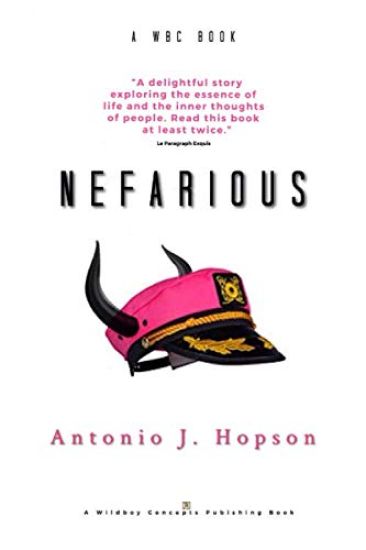
Nefarious: Sailboat Racing In The Salish Sea

Nefarious: Sailboat Racing In The Salish Sea

Antonio J. Hopson

Independently Published
2018
nidottu
There's more than one way to win a race. Animal House meets Moby Dick. Poetic prose meets action. Phenom Robin Mac Bradaigh meets the devil, aka "Mac," a young, fiery, unapologetic sailor who refuses to be pushed around by a fleet of scoundrels. Nefarious is a fictional account of real-life sailboat racing; literary, funny at times, sexy and poetic. A handbook of human drama and competition. Max Rigby falls for Mac, the pit-girl from S/V Nefarious, a sailing vessel that lives up to its name. The woman who has awakened his heart is the fleet's most fierce sailor, but Nefarious carries a dark reputation, and Max soon finds himself caught up in a sailing race that is as dangerous as it is thrilling.
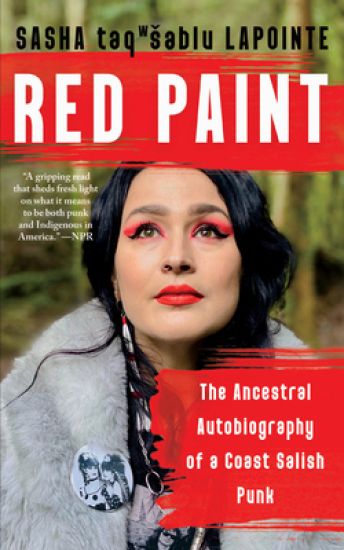
Red Paint: The Ancestral Autobiography of a Coast Salish Punk
An Indigenous artist blends the aesthetics of punk rock with the traditional spiritual practices of the women in her lineage in this bold, contemporary journey to reclaim her heritage and unleash her power and voice while searching for a permanent home Sasha taqʷšəblu LaPointe has always longed for a sense of home. When she was a child, her family moved around frequently, often staying in barely habitable church attics and trailers, dangerous places for young Sasha. With little more to guide her than a passion for the thriving punk scene of the Pacific Northwest and a desire to live up to the responsibility of being the namesake of her beloved great-grandmother--a linguist who helped preserve her Indigenous language of Lushootseed--Sasha throws herself headlong into the world, determined to build a better future for herself and her people. Set against a backdrop of the breathtaking beauty of Coast Salish ancestral land and imbued with the universal spirit of punk, Red Paint is ultimately a story of the ways we learn to find our true selves while fighting for our right to claim a place of our own. Examining what it means to be vulnerable in love and in art, Sasha offers up an unblinking reckoning with personal traumas amplified by the collective historical traumas of colonialism and genocide that continue to haunt native peoples. Red Paint is an intersectional autobiography of lineage, resilience, and, above all, the ability to heal.
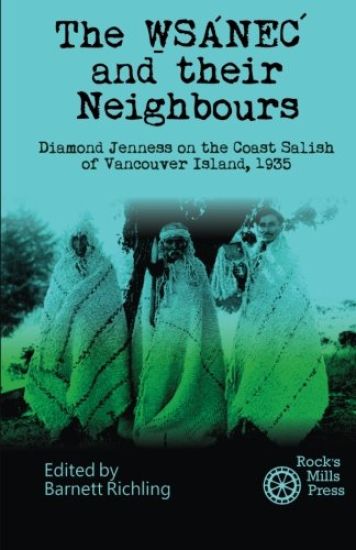
The WSANEC and Their Neighbours: Diamond Jenness on the Coast Salish of Vancouver Island, 1935
In 1935, National Museum of Canada anthropologist Diamond Jenness did several months of fieldwork with the Coast Salish peoples of southwestern Vancouver Island. His main focus was the WSANEC, then a little-known group whose reserves lay on the Saanich Peninsula, a short distance from Victoria. Here, and later in neighbouring areas, local elders shared with him their knowledge of the "old ways," a mode of living they all knew at first-hand in their younger days. Covering a wide array of subjects, everythingfrom fishing practices and marriage customs to conceptions of the natural world around them, the elders filled Jenness' notebooks with the substance of what stood to become a major contribution to the growing literature on the indigenous peoples of Canada's Pacific northwest. But when World War II intervened and he was called away to other duties, his partly-finished manuscript-The Saanich Indians of Vancouver Island-was set aside, the only of his many museum-sponsored ethnographic researches to remain unpublished in his lifetime. Now, with publication of The WSANEC and their Neighbours, the words and insights of those elders, written down eighty years ago, are available to a general readership for the first time. Drawing on Jenness' notes, editor Barnett Richling has completed the book as originally planned, supplementing the material with annotations, illustrations, and a collection of Salish myths and legends the anthropologist recorded during the same field trip. The result is a highly readable account, a blend of ethnography and oral history favouring description over analysis, and plain language over jargon. This body of WSANEC traditional knowledge comprises a valuable addition to scholarship on Coast Salish peoples, and also forms an excellent companion piece to Richling's recent edition of Jenness' Three Athapaskan Ethnographies."Richling has made a major contribution to the history of anthropology with the release of Diamond Jenness's 1935 study of the Coast Salish.... The most valuable contribution of the book are the 45 stories that follow Jenness's general ethnographic summary." --Wendy Wickwire, BC Studies"For over seventy years an important unfinished ethnographic manuscript and a stack of typed and handwritten field notes, recording the work of anthropologist Diamond Jenness with knowledgeable Coast Salish elders, languished in obscurity known only to a few specialists. Following his field work on the Saanich Peninsula, the east coast of Vancouver Island, and the Fraser Valley in 1934 and 1935, Jenness began writing. He completed nine of his sixteen planned chapters before other interests intervened. Now, thanks to the work of editor Barnett Richling and Rock's Mills Press, Jenness's manuscript, with additional material gleaned from his field notes, is made available to a wider audience.... These detailed and fascinating accounts will significantly enrich the reader's knowledge of the Indigenous history and culture of southern Vancouver Island and the Gulf Islands." --Chris Arnett, BC BookLookBarnett Richling ... has compiled Jenness's only unpublished notes with minimal editing into a book that is immediately engaging and highly readable. Jenness's narrative is packed with information about the lives of the WSANEC and five other Coast Salish bands.... With a keen ear, genuine interest in, and a high regard for Native culture, Jenness immersed himself in the WSANEC culture and formed close relationships with a dozen elders, giving him inside access to both the mundane and ritual lives of these Indigenous people.... Jenness does not impose on either his subjects or his readers his interpretations, analyses, speculations, and suppositions. He reports. Jenness simply, concisely, and thoroughly reports what he is learning in an engaging and interesting manner." --Melonie Ancheta, Native American and Indigenous Studies
Haust (Autumn): A Memoir of a Remarkable Daily Life on a Small Island in the Salish Sea Part One
In the 80s when we cruised through the San Juan Islands with our young family on a big green and white Washington State ferry, I wondered what it would be like to live in this beautiful place of mountains, forests, islands, and boats. And then we did. From October 19, 2010, through October 18, 2011, I kept a daily journal of our life on Crane Island, a private island at the south end of Deer Harbor on Orcas Island and north of Shaw Island, across Wasp Passage. This is that journal, Haust(Autumn), the first of four volumes - followed by Vetur, Vor, and Sumar, (winter, spring, and summer in Old Norse).Meet island people: odd, generous, insular, cosmopolitan, self-reliant, skeptical, devout. Follow resident otters, mink, raccoons, deer, voles, owls, ravens, eagles - all living sometimes reluctantly but creatively with us recent colonizers. See sunrises, wind-driven rain, king tides, opaque fog, starry skies, and hot tub sleet. Participate in wood cutting, daily boating and an occasional blown engine, a rock and roll choir, gardening club, food bank, men's group, ferry culture, hiking, crabbing, IKEA kitchen remodel, community politics, farmers market, northwest gardening, publishing business development, community projects, holiday potlucks, water system, and docks management, religious congregation, garage sales and exchanges, parties, music, horse training, and the surprising richness of a small population. Experience coping, planning, cooperation, elation, joy, frustration, disappointment, success, friendship, betrayal, peace, love, the numinous, and gossip. This is a memoir of a sort, what one person saw, reacted to, acted on, and wrote down, but it's mostly about daily life on small, beautiful, private island, a marriage, a family, and a community. And it's a report of specifics, specimen days, short on generalization and advice, with hundreds of examples that can be unpacked in different ways. And finally, it's not a travel book. It's what you see and experience if you live on Crane Island or in Deer Harbor, or on Orcas Island, but what you can't see passing through no matter how hard you look. Yvonne and I loved our life on Crane; it was precious, surprising, and deeply satisfying. But it was also difficult and eventually too challenging for aging boomers - so we decamped to an easier life, RV travel, and now city life. But we'll never forget our golden time on Crane. John Ashenhurst