Kirjahaku
Etsi kirjoja tekijän nimen, kirjan nimen tai ISBN:n perusteella.
1000 tulosta hakusanalla Scott Stuart
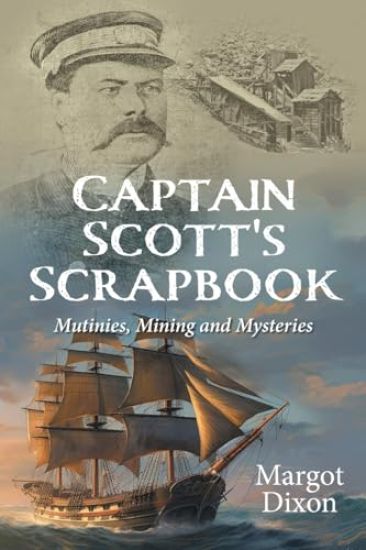

Will thought the job to Robinson, New Mexico was going to be a simple determination of whether it was worthwhile for the Atchison, Topeka and Santa Fe Railroad to build a spur to the town. They claimed to have a huge coal deposit, and Will would just have to do a quick evaluation of the viability to extract the coal. Then the simple trip turned into something totally different when he discovers a murder that had been committed by his brother just days before. The same brother who had tried to murder him when he was thirteen and did murder his fianc e when he was twenty-one. The trip to Robinson would cost him dearly.

Notices And Anecdotes Illustrative Of The Incidents, Characters, And Scenery Described In The Novels And Romances Of Sir Walter Scott (1833)
Walter Scott
KESSINGER PUBLISHING CO
2009
pokkari
Works Of The Learned And Reverend John Scott V3 (1826)
John Scott
KESSINGER PUBLISHING CO
2009
pokkari



By the close of the nineteenth century, the works of Sir Walter Scott (1771–1832) could be found on the bookshelves of every respectable Victorian. Public interest was such that, nearly sixty years after his death, there remained considerable demand for new insights into the man and his milieu. First published in 1890, his two-volume journal for the period 1825–32 immediately attracted press attention. One review observed that 'it shows us the man in prosperity and in adversity, now delightfully humorous … now saddened by the financial troubles which came upon his later years'. Notwithstanding his money worries, Scott's final decade was not without literary achievement. Volume 1 comprises entries from November 1825 to June 1827, soon after Scott had published Tales of the Crusaders (1825) and during which period he wrote his Letters of Malachi Malagrowther (1826).

By the close of the nineteenth century, the works of Sir Walter Scott (1771–1832) could be found on the bookshelves of every respectable Victorian. Public interest was such that, nearly sixty years after his death, there remained considerable demand for new insights into the man and his milieu. First published in 1890, his two-volume journal for the period 1825–32 immediately attracted press attention. One review observed that 'it shows us the man in prosperity and in adversity, now delightfully humorous … now saddened by the financial troubles which came upon his later years'. Notwithstanding his money worries, Scott's final decade was not without literary achievement. Volume 2 comprises entries from July 1827 to April 1832, during which time Scott published The Fair Maid of Perth (1828) and Letters on Demonology and Witchcraft (1830).
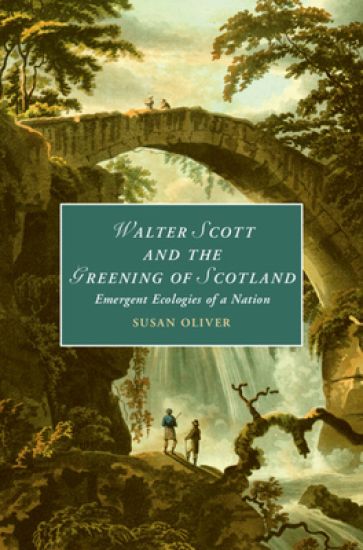
The work of Walter Scott, one of the most globally influential authors of the nineteenth century, provides us with a unique narrative of the changing ecologies of Scotland over several centuries and writes this narrative into the history of environmental literature. Farmed environments, mountains, moors and forests along with rivers, shorelines, islands and oceans are explored, situating Scott's writing about shared human and nonhuman environments in the context of the emerging Anthropocene. Susan Oliver attends to changes and losses acting in counterpoint to the narratives of 'improvement' that underpin modernization in land management. She investigates the imaginative ecologies of folklore and local culture. Each chapter establishes a dialogue between ecocritical theory and Scott as storyteller of social history. This is a book that shows how Scott challenged conventional assumptions about the permanency of stone and the evanescence of air; it begins with the land and ends by looking at the stars.

The work of Walter Scott, one of the most globally influential authors of the nineteenth century, provides us with a unique narrative of the changing ecologies of Scotland over several centuries and writes this narrative into the history of environmental literature. Farmed environments, mountains, moors and forests along with rivers, shorelines, islands and oceans are explored, situating Scott's writing about shared human and nonhuman environments in the context of the emerging Anthropocene. Susan Oliver attends to changes and losses acting in counterpoint to the narratives of 'improvement' that underpin modernization in land management. She investigates the imaginative ecologies of folklore and local culture. Each chapter establishes a dialogue between ecocritical theory and Scott as storyteller of social history. This is a book that shows how Scott challenged conventional assumptions about the permanency of stone and the evanescence of air; it begins with the land and ends by looking at the stars.