

Kirjahaku
Etsi kirjoja tekijän nimen, kirjan nimen tai ISBN:n perusteella.
1000 tulosta hakusanalla Stephanie Scheffler

Having grown up in a loving Christian home and church Stephanie felt she knew and loved the Lord, yet she struggled greatly with fear, rejection and other issues that kept her from confidently walking in faith. She had a nagging feeling there must be more to the Christian life. But she had no idea what 'more' was, or how to find it. 'Journey into More' with Stephanie as she awakens to life in the Spirit, walks towards spiritual freedom and maturity, and jumps into all that Father has to offer - a life so much bigger and better than she ever imagined

The New Aera; Or, Adventures of Julien Delmour
Stephanie Felicite Genlis
Trieste Publishing
2018
nidottu
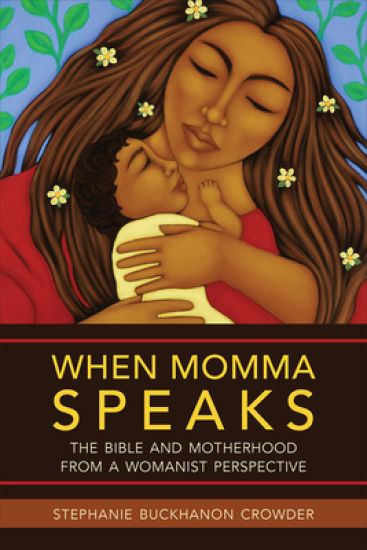
Stephanie Buckhanon Crowder provides an engaging womanist reading of mother characters in the Old and New Testaments. After providing a brief history of womanist biblical interpretation, she shows how the stories of several biblical mothersHagar, Rizpah, Bathsheba, Mary, the Canaanite woman, and Zebedee's wifecan be powerful sources for critical reflection, identification, and empowerment. Crowder also explores historical understandings of motherhood in the African American community and how these help to inform present-day perspectives. She includes questions for discussion with each chapter.

Every Woman's Guide to Diabetes
Stephanie A. Eisenstat M.D.; Ellen Barlow
Harvard University Press
2008
nidottu
Women have long needed a book devoted to their unique issues with diabetes. This up-to-date and practical guide advocates simple lifestyle changes that can help women reduce their risk of getting diabetes or, if already diagnosed, prevent the disease’s most serious complications. Every Woman’s Guide to Diabetes translates the latest findings from diabetes research into proven strategies busy women can use to stay healthy and gain control over an often overwhelming disease. The authors discuss the nature of diabetes, helping readers through the complex medical decisions involved in diabetes treatment. They highlight strategies to decrease the emotional stress and social isolation that often accompany diagnosis, and offer everyday techniques for managing blood sugar.Key features include:— Unique aspects of diabetes for women throughout the life cycle— Timetable of recommended tests and check-ups— Guide to medications with common dosages— Charts to help organize diabetes-care tasks and supplies— Time-management tips for better disease regulation— Guide to contraceptives available to women with diabetes— Review of issues critical to women before, during, and following pregnancy— Advice for overcoming barriers to weight loss and exercise— Plan for intelligent diet trade-offs while still enjoying meals— Practical tips for planning exercise— Strategies to avoid diabetes “burn-out”Written by two physicians (one of whom is a woman living with diabetes) and an experienced medical writer, Every Woman’s Guide to Diabetes recognizes the power that women have in their households to effect lifestyle changes that will benefit themselves and loved ones, including their mothers, daughters, sisters, and partners. This power can reduce the toll of the diabetes epidemic.

This bold, innovative book promises to radically alter our understanding of the Atlantic slave trade, and the depths of its horrors. Stephanie E. Smallwood offers a penetrating look at the process of enslavement from its African origins through the Middle Passage and into the American slave market.Smallwood's story is animated by deep research and gives us a startlingly graphic experience of the slave trade from the vantage point of the slaves themselves. Ultimately, Saltwater Slavery details how African people were transformed into Atlantic commodities in the process. She begins her narrative on the shores of seventeenth-century Africa, tracing how the trade in human bodies came to define the life of the Gold Coast. Smallwood takes us into the ports and stone fortresses where African captives were held and prepared, and then through the Middle Passage itself. In extraordinary detail, we witness these men and women cramped in the holds of ships, gasping for air, and trying to make sense of an unfamiliar sea and an unimaginable destination. Arriving in America, we see how these new migrants enter the market for laboring bodies, and struggle to reconstruct their social identities in the New World.Throughout, Smallwood examines how the people at the center of her story-merchant capitalists, sailors, and slaves-made sense of the bloody process in which they were joined. The result is both a remarkable transatlantic view of the culture of enslavement, and a painful, intimate vision of the bloody, daily business of the slave trade.

Few poetic forms have found more uses than the sonnet in English, and none is now more recognizable. It is one of the longest-lived of verse forms, and one of the briefest. A mere fourteen lines, fashioned by intricate rhymes, it is, as Dante Gabriel Rossetti called it, “a moment’s monument.” From the Renaissance to the present, the sonnet has given poets a superb vehicle for private contemplation, introspection, and the expression of passionate feelings and thoughts.The Art of the Sonnet collects one hundred exemplary sonnets of the English language (and a few sonnets in translation), representing highlights in the history of the sonnet, accompanied by short commentaries on each of the poems. The commentaries by Stephanie Burt and David Mikics offer new perspectives and insights, and, taken together, demonstrate the enduring as well as changing nature of the sonnet. The authors serve as guides to some of the most-celebrated sonnets in English as well as less-well-known gems by nineteenth- and twentieth-century poets. Also included is a general introductory essay, in which the authors examine the sonnet form and its long and fascinating history, from its origin in medieval Sicily to its English appropriation in the sixteenth century to sonnet writing today in the United States, the United Kingdom, and other English-speaking parts of the world.

Pulitzer Prize FinalistWinner of the Frederick Douglass Book PrizeWinner of the Merle Curti Award“McCurry strips the Confederacy of myth and romance to reveal its doomed essence. Dedicated to the proposition that men were not created equal, the Confederacy had to fight a two-front war. Not only against Union armies, but also slaves and poor white women who rose in revolt across the South. Richly detailed and lucidly told, Confederate Reckoning is a fresh, bold take on the Civil War that every student of the conflict should read.”—Tony Horwitz, author of Confederates in the Attic“McCurry challenges us to expand our definition of politics to encompass not simply government but the entire public sphere. The struggle for Southern independence, she shows, opened the door for the mobilization of two groups previously outside the political nation—white women of the nonslaveholding class and slaves…Confederate Reckoning offers a powerful new paradigm for understanding events on the Confederate home front.”—Eric Foner, The Nation“Perhaps the highest praise one can offer McCurry’s work is to say that once we look through her eyes, it will become almost impossible to believe that we ever saw or thought otherwise…At the outset of the book, McCurry insists that she is not going to ask or answer the timeworn question of why the South lost the Civil War. Yet in her vivid and richly textured portrait of what she calls the Confederacy’s ‘undoing,’ she has in fact accomplished exactly that.”—Drew Gilpin Faust, New Republic“A brilliant, eye-opening account of how Southern white women and black slaves fatally undermined the Confederacy from within.”—Edward Bonekemper, Civil War NewsThe story of the Confederate States of America, the proslavery, antidemocratic nation created by white Southern slaveholders to protect their property, has been told many times in heroic and martial narratives. Now, however, Stephanie McCurry tells a very different tale of the Confederate experience. When the grandiosity of Southerners’ national ambitions met the harsh realities of wartime crises, unintended consequences ensued. Although Southern statesmen and generals had built the most powerful slave regime in the Western world, they had excluded the majority of their own people—white women and slaves—and thereby sowed the seeds of their demise.Wartime scarcity of food, labor, and soldiers tested the Confederate vision at every point and created domestic crises to match those found on the battlefields. Women and slaves became critical political actors as they contested government enlistment and tax and welfare policies, and struggled for their freedom. The attempt to repress a majority of its own population backfired on the Confederate States of America as the disenfranchised demanded to be counted and considered in the great struggle over slavery, emancipation, democracy, and nationhood. That Confederate struggle played out in a highly charged international arena.The political project of the Confederacy was tried by its own people and failed. The government was forced to become accountable to women and slaves, provoking an astounding transformation of the slaveholders’ state. Confederate Reckoning is the startling story of this epic political battle in which women and slaves helped to decide the fate of the Confederacy and the outcome of the Civil War.
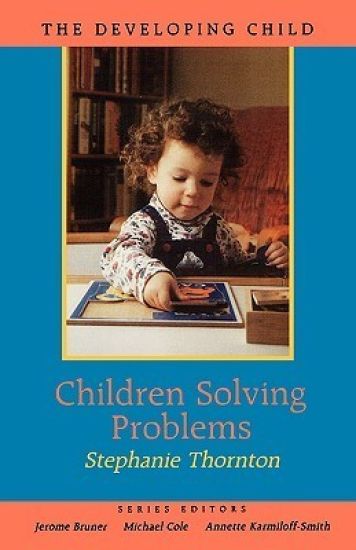
A one-year-old attempting to build a tower of blocks may bring the pile crashing down, yet her five-year-old sister accomplishes this task with ease. Why do young children have difficulty with problems that present no real challenge to older children? How do problem-solving skills develop? In Children Solving Problems, Stephanie Thornton surveys recent research from a broad range of perspectives in order to explore this important question.What Thornton finds may come as a surprise: successful problem-solving depends less on how smart we are—or, as the pioneering psychologist Jean Piaget claimed, how advanced our skill in logical reasoning is—and more on the factual knowledge we acquire as we learn and interpret cues from the world around us.Problem-solving skills evolve through experience and dynamic interaction with a problem. But equally important—as the Russian psychologist L. S. Vygotsky proposed—is social interaction. Successful problem-solving is a social process. Sharing problem-solving tasks—with skilled adults and with other children—is vital to a child’s growth in expertise and confidence. In problem-solving, confidence can be more important than skill.In a real sense, problem-solving lies at the heart of what we mean by intelligence. The ability to identify a goal, to work out how to achieve it, and to carry out that plan is the essence of every intelligent activity. Could it be, Thornton suggests, that problem-solving processes provide the fundamental machinery for cognitive development? In Children Solving Problems she synthesizes the dramatic insights and findings of post-Piagetian research and sets the agenda for the next stage in understanding the varied phenomena of children’s problem-solving.

Winner of the PEN Oakland–Josephine Miles Award“A stunning portrayal of a tragedy endured and survived by women.”—David W. Blight, author of Frederick Douglass“Readers expecting hoop-skirted ladies soothing fevered soldiers’ brows will not find them here…Explodes the fiction that men fight wars while women idle on the sidelines.”—Washington PostThe idea that women are outside of war is a powerful myth, one that shaped the Civil War and still determines how we write about it today. Through three dramatic stories that span the war, Stephanie McCurry invites us to see America’s bloodiest conflict for what it was: not just a brothers’ war but a women’s war.When Union soldiers faced the unexpected threat of female partisans, saboteurs, and spies, long held assumptions about the innocence of enemy women were suddenly thrown into question. McCurry shows how the case of Clara Judd, imprisoned for treason, transformed the writing of Lieber’s Code, leading to lasting changes in the laws of war. Black women’s fight for freedom had no place in the Union military’s emancipation plans. Facing a massive problem of governance as former slaves fled to their ranks, officers reclassified black women as “soldiers’ wives”—placing new obstacles on their path to freedom. Finally, McCurry offers a new perspective on the epic human drama of Reconstruction through the story of one slaveholding woman, whose losses went well beyond the material to intimate matters of family, love, and belonging, mixing grief with rage and recasting white supremacy in new, still relevant terms.“As McCurry points out in this gem of a book, many historians who view the American Civil War as a ‘people’s war’ nevertheless neglect the actions of half the people.”—James M. McPherson, author of Battle Cry of Freedom“In this brilliant exposition of the politics of the seemingly personal, McCurry illuminates previously unrecognized dimensions of the war’s elemental impact.”—Drew Gilpin Faust, author of This Republic of Suffering

A major poet and literary critic leads an aesthetic adventure through poems about queer experience, by writers who identify as lesbian, gay, bisexual, queer, trans, nonbinary, gender fluid, and more. A groundbreaking anthology edited by acclaimed poet, critic, and scholar Stephanie Burt, Super Gay Poems brings together fifty-one works encompassing the wide range of queer and trans verse after the Stonewall uprising of 1969. Since that galvanizing moment, poetry has served as both a vehicle for queer liberation and a witness to its sometimes fragile, sometimes ebullient flourishing, across the world.The poems in this anthology represent the great variety of queer and trans life itself. They include near-sonnets, iambic couplets, and rhymed quatrains; skinny dimeters and shaped poems; chatty free verse and intentionally inaccurate translations; the demotic and the rococo. Arranged in chronological order, the selections trace queer culture’s recent evolutions. Frank O’Hara, Audre Lorde, Judy Grahn, James Merrill, Thom Gunn, Jackie Kay, Adrienne Rich, Chen Chen, essa ranapiri, and The Cyborg Jillian Weise—poets widely known and poets who deserve to be—share their alienation, their euphoria, and their encounters with a protean community as it discovers new solidarities and new selves.Each piece is paired with a concise, eye-opening essay in Burt’s trademark style, with verve and an inimitable literary ear. A treasury of aesthetic experience and insight, Super Gay Poems points protestors, political organizers, poetry lovers, and LGBTQIA+ readers toward many beautiful tomorrows.
Contemporary American poetry has plenty to offer new readers, and plenty more for those who already follow it. Yet its difficulty—and sheer variety—leaves many readers puzzled or overwhelmed. The critic, scholar, and poet Stephanie Burt sets out to help. Beginning in the early 1980s, where critical consensus ends, Burt canvasses American poetry of the past four decades, from the headline-making urgency of Claudia Rankine’s Citizen to the stark pathos of Louise Glück, the limitless energy of Juan Felipe Herrera, and the erotic provocations of D. A. Powell.The Poem Is You: Sixty Contemporary American Poems and How to Read Them is a guide to the diverse magnificences of American poetry today. It presents a wide range of poems selected by Burt for this volume, each accompanied by an original essay explaining how a given poem works, why it matters, and how the poem speaks to other parts of art and culture. Included here are some classroom classics (by Ashbery, Komunyakaa, Hass), less famous poems by very famous poets (Glück, Kay Ryan), and poems by prizewinning poets near the start of their careers (such as Brandon Som), and by others who are not—or not yet—well known.The Poem Is You will appeal to poets, teachers, and students, but it is intended especially for readers who want to learn more about contemporary American poetry but who have not known where or how to start. It describes what American poets have fashioned for one another, and what they can give us today.
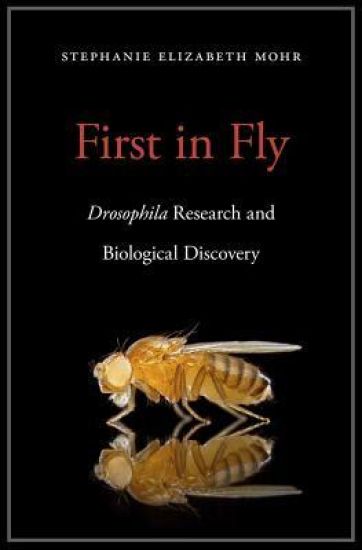
A single species of fly, Drosophila melanogaster, has been the subject of scientific research for more than one hundred years. Why does this tiny insect merit such intense scrutiny?Drosophila’s importance as a research organism began with its short life cycle, ability to reproduce in large numbers, and easy-to-see mutant phenotypes. Over time, laboratory investigation revealed surprising similarities between flies and other animals at the level of genes, gene networks, cell interactions, physiology, immunity, and behavior. Like humans, flies learn and remember, fight microbial infection, and slow down as they age. Scientists use Drosophila to investigate complex biological activities in a simple but intact living system. Fly research provides answers to some of the most challenging questions in biology and biomedicine, including how cells transmit signals and form ordered structures, how we can interpret the wealth of human genome data now available, and how we can develop effective treatments for cancer, diabetes, and neurodegenerative diseases.Written by a leader in the Drosophila research community, First in Fly celebrates key insights uncovered by investigators using this model organism. Stephanie Elizabeth Mohr draws on these “first in fly” findings to introduce fundamental biological concepts gained over the last century and explore how research in the common fruit fly has expanded our understanding of human health and disease.
Left-leaning political parties play an important role as representatives of the poor and disempowered. They once did so by promising protections from the forces of capital and the market’s tendencies to produce inequality. But in the 1990s they gave up on protection, asking voters to adapt to a market-driven world. Meanwhile, new, extreme parties began to promise economic protections of their own—albeit in an angry, anti-immigrant tone.To better understand today’s strange new political world, Stephanie L. Mudge’s Leftism Reinvented analyzes the history of the Swedish and German Social Democrats, the British Labour Party, and the American Democratic Party. Breaking with an assumption that parties simply respond to forces beyond their control, Mudge argues that left parties’ changing promises expressed the worldviews of different kinds of experts. To understand how left parties speak, we have to understand the people who speak for them.Leftism Reinvented shows how Keynesian economists came to speak for left parties by the early 1960s. These economists saw their task in terms of discretionary, politically-sensitive economic management. But in the 1980s a new kind of economist, who viewed the advancement of markets as left parties’ main task, came to the fore. Meanwhile, as voters’ loyalties to left parties waned, professional strategists were called upon to “spin” party messages. Ultimately, left parties undermined themselves, leaving a representative vacuum in their wake. Leftism Reinvented raises new questions about the roles and responsibilities of left parties—and their experts—in politics today.

How to Democratize Europe
Stephanie Hennette; Thomas Piketty; Guillaume Sacriste; Antoine Vauchez
Harvard University Press
2019
sidottu
An all-star cast of scholars and politicians from Europe and America propose and debate the creation of a new European parliament with substantial budgetary and legislative power to solve the crisis of governance in the Eurozone and promote social and fiscal justice and public investment. The European Union is struggling. The rise of Euroskeptic parties in member states, economic distress in the south, the migrant crisis, and Brexit top the news. But deeper structural problems may be a greater long-term peril. Not least is the economic management of the Eurozone, the nineteen countries that use the Euro. How can this be accomplished in a way generally acceptable to members, given a political system whose structures are routinely decried for a lack of democratic accountability? How can the EU promote fiscal and social justice while initiating the long-term public investments that Europe needs to overcome stagnation? These are the problems a distinguished group of European and American scholars set out to solve in this short but valuable book. Among many longstanding grievances is the charge that Eurozone policies serve large and wealthy countries at the expense of poorer nations. It is also unclear who decides economic policy, how the interests of diverse member states are balanced, and to whom the decision-makers are accountable. The four lead authors-Stephanie Hennette, Thomas Piketty, Guillaume Sacriste, and Antoine Vauchez-describe these and other problems, and respond with a draft treaty establishing a parliament for economic policy, its members drawn from national parliaments. We then hear from invited critics, who express support, objections, or alternative ideas. How to Democratize Europe offers a chance to observe how major thinkers view some of the Continent's most pressing issues and attempt to connect democratic reform with concrete changes in economic and social policies.

Most studies of eighteenth-century community life in America have focused on New England, and in many respects the New England town has become a model for our understanding of communities throughout the United States during this period. In this study of a mid-Atlantic town, Stephanie Grauman Wolf describes a very different way of organizing society, indicating that the New England model may prove atypical. In addition, her analysis suggests the origins of twentieth-century social patterns in eighteenth-century life. Germantown, Pennsylvania, was chosen for study because it was a small urban center characterized by an ethnically and religiously mixed population of high mobility. The author uses quantitative analysis and sample case study to examine all aspects of the community. She finds that heterogeneity and mobility had a marked effect on urban development--on landholding, occupation, life style, and related areas; community organization for the control of government and church affairs; and the structure and demographic development of the: family. Her work represents an important advance not only in our understanding of eighteenth-century American society, but also in the ways in which we investigate it.
Introduction to Social Neuroscience
Stephanie Cacioppo; John T. Cacioppo
PRINCETON UNIVERSITY PRESS
2020
sidottu
A textbook that lays down the foundational principles for understanding social neuroscienceHumans, like many other animals, are a highly social species. But how do our biological systems implement social behaviors, and how do these processes shape the brain and biology? Spanning multiple disciplines, Introduction to Social Neuroscience seeks to engage students and scholars alike in exploring the effects of the brain’s perceived connections with others. This wide-ranging textbook provides a quintessential foundation for comprehending the psychological, neural, hormonal, cellular, and genomic mechanisms underlying such varied social processes as loneliness, empathy, theory-of-mind, trust, and cooperation.Stephanie and John Cacioppo posit that our brain is our main social organ. They show how the same objective relationship can be perceived as friendly or threatening depending on the mental states of the individuals involved in that relationship. They present exercises and evidence-based findings readers can put into practice to better understand the neural roots of the social brain and the cognitive and health implications of a dysfunctional social brain. This textbook’s distinctive features include the integration of human and animal studies, clinical cases from medicine, multilevel analyses of topics from genes to societies, and a variety of methodologies.Unveiling new facets to the study of the social brain’s anatomy and function, Introduction to Social Neuroscience widens the scientific lens on human interaction in society.The first textbook on social neuroscience intended for advanced undergraduates and graduate studentsChapters address the psychological, neural, hormonal, cellular, and genomic mechanisms underlying the brain’s perceived connections with othersMaterials integrate human and animal studies, clinical cases, multilevel analyses, and multiple disciplines

The first English-language study of contemporary Russian poetry and its embrace of freedom—formally, thematically, and spirituallySince 1989 and the fall of the Berlin Wall, Russian poetry has exuded a powerful awareness of freedom, both aesthetic and political. No longer confined to the cultural underground, poets reacted with immediacy to events in the world. In The Freest Speech in Russia, Stephanie Sandler offers the first English-language study of contemporary Russian poetry, showing how these poems both express and exemplify freedom.This period was a time of great poetic flourishing for Russian poets, whether they remained in Russia or lived elsewhere. Sandler examines the work of dozens of poets—including Gennady Aygi, Joseph Brodsky, Grigory Dashevsky, Arkady Dragomoshchenko, Mikhail Eremin, Elena Fanailova, Anna Glazova, Elizaveta Mnatsakanova, Olga Sedakova, Elena Shvarts, and Maria Stepanova—analyzing their engagement with politics, performance, music, photography, and religious thought, and with poetic forms small and large. Each chapter investigates one of these topics, with extensive quotation from the poetry, including translations of all texts into English.In an afterword, Sandler considers poets’ responses to Russia’s war on Ukraine and the clampdown on free expression. Many have left Russia, but their work persists, and they remain vocal opponents of domestic political oppression and international violence.

International Macroeconomics
Stephanie Schmitt-Grohé; Martín Uribe; Michael Woodford
PRINCETON UNIVERSITY PRESS
2022
sidottu
An essential introduction to one of the most timely and important subjects in economicsInternational Macroeconomics presents a rigorous and theoretically elegant treatment of real-world international macroeconomic problems, incorporating the latest economic research while maintaining a microfounded, optimizing, and dynamic general equilibrium approach. This one-of-a-kind textbook introduces a basic model and applies it to fundamental questions in international economics, including the determinants of the current account in small and large economies, processes of adjustment to shocks, the determinants of the real exchange rate, the role of fixed and flexible exchange rates in models with nominal rigidities, and interactions between monetary and fiscal policy. The book confronts theoretical predictions using actual data, highlighting both the power and limits of given theories and encouraging critical thinking.Provides a rigorous and elegant treatment of fundamental questions in international macroeconomicsBrings undergraduate and master’s instruction in line with modern economic researchFollows a microfounded, optimizing, and dynamic general equilibrium approachAddresses fundamental questions in international economics, such as the role of capital controls in the presence of financial frictions and balance-of-payments crisesUses real-world data to test the predictions of theoretical modelsFeatures a wealth of exercises at the end of each chapter that challenge students to hone their theoretical skills and scrutinize the empirical relevance of modelsAccompanied by a website with lecture slides for every chapter

Contemporary translations and adaptations of ancient Greek poet Callimachus by noted writer and critic Stephanie BurtCallimachus may be the best-kept secret in all of ancient poetry. Loved and admired by later Greeks and Romans, his funny, sexy, generous, thoughtful, learned, sometimes elaborate, and always articulate lyric poems, hymns, epigrams, and short stories in verse have gone without a contemporary poetic champion, until now. In After Callimachus, esteemed poet and critic Stephanie Burt’s attentive translations and inspired adaptations introduce the work, spirit, and letter of Callimachus to today’s poetry readers.Skillfully combining intricate patterns of sound and classical precedent with the very modern concerns of sex, gender, love, death, and technology, these poems speak with a twenty-first-century voice, while also opening multiple gateways to ancient worlds. This Callimachus travels the Mediterranean, pays homage to Athena and Zeus, develops erotic fixations, practices funerary commemoration, and brings fresh gifts for the cult of Artemis. This reimagined poet also visits airports, uses Tumblr and Twitter, listens to pop music, and fights contemporary patriarchy. Burt bears careful fealty to Callimachus’s whole poems, even as she builds freely from some of the hundreds of surviving fragments. Here is an ancient Greek poet made fresh for our times. An informative foreword by classicist Mark Payne places Burt's renderings of Callimachus in literary and historical context.After Callimachus is at once a contribution to contemporary poetry and a new endeavor in the art of classical adaptation and translation.