Kirjojen hintavertailu. Mukana 11 509 801 kirjaa ja 12 kauppaa.

Kirjahaku

Etsi kirjoja tekijän nimen, kirjan nimen tai ISBN:n perusteella.

1000 tulosta hakusanalla Steven Casey

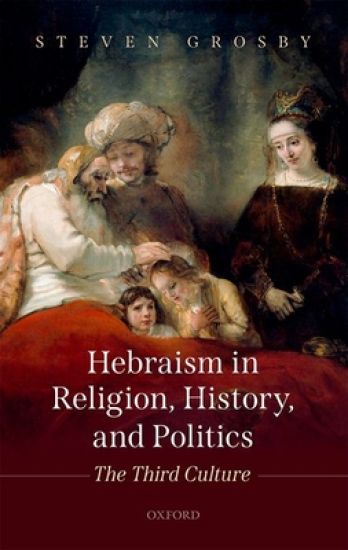
Hebraism in Religion, History, and Politics

Hebraism in Religion, History, and Politics

Steven Grosby

Oxford University Press
2021
sidottu
Hebraism in Religion, History, and Politics is an investigation into Hebraism as a category of cultural analysis within the history of Christendom. Its aim is to determine what Hebraism means or should mean when it is used. The characteristics of Hebraism indicate a changing relation between the Old and New Testaments that arose in Medieval and early modern Europe, between on the one hand a doctrinally universal Christianity, and on the other various Christian nations that were understood as being a 'new Israel'. Thus, Hebraism refers to the development of a paradoxically intriguing 'Jewish Christianity' or an 'Old Testament Christianity'. It represents a 'third culture' in contrast to the culture of Roman or Hellenistic empire and Christian universalism. There were attempts, with varying success, during the twentieth century to clarify Hebraism as a category of cultural history and religious history. Steven Grosby expertly contributes to that clarification. In so doing, the possibility arises that Hebraism and Hebraic culture offer a different way to look at religion, its history, and the history of the West.
Disclosure and Discretion in Roman Astrology

Disclosure and Discretion in Roman Astrology

Steven J. Green

Oxford University Press
2014
sidottu
In light of modern scepticism towards the practice, it is easy to overlook just how important a role astrology played in the career of Rome's first Emperor, Augustus. Augustus' enthusiasm for employing astrological predictions and symbols to cement his own position of power was matched by an equally forceful desire to restrict their use by his political rivals. Astrology in Rome was, then, to use Tacitus' neat formulation, both 'forbidden and maintained' (Tacitus, Histories, 1.22). This volume is the first to take seriously this imperial complex as a key to understanding the diverse ways in which contemporary commentators handle the volatile topic of astrology in their writings. It shows how Roman writers engage in elaborate discourses of discretion as they simultaneously celebrate the power of astrology and shy away from the sort of astrological revelations that might offend imperial sensibilities. With a particular focus on the key astrological poem of Manilius, this study provides a new conceptual framework in which to appreciate the complex treatments of astrology during the period of Octavian/Augustus.
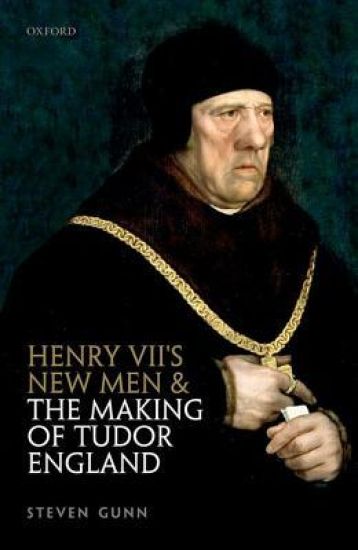
Henry VII's New Men and the Making of Tudor England

Henry VII's New Men and the Making of Tudor England

Steven Gunn

Oxford University Press
2016
sidottu
The reign of Henry VII is important but mysterious. He ended the Wars of the Roses and laid the foundations for the strong governments of Henry VIII and Elizabeth I. Yet his style of rule was unconventional and at times oppressive. At the heart of his regime stood his new men, low-born ministers with legal, financial, political, and military skills who enforced the king's will and in the process built their own careers and their families' fortunes. Some are well known, like Sir Edward Poynings, governor of Ireland, or Empson and Dudley, executed to buy popularity for the young Henry VIII. Others are less famous. Sir Robert Southwell was the king's chief auditor, Sir Andrew Windsor the keeper of the king's wardrobe, Sir Thomas Lovell, the Chancellor of the Exchequer so trusted by Henry that he was allowed to employ the former Yorkist pretender Lambert Simnel as his household falconer. Some paved the way to glory for their relatives. Sir Thomas Brandon, master of the horse, was the uncle of Henry VIII's favourite Charles Brandon, duke of Suffolk. Sir Henry Wyatt, keeper of the jewel house, was father to the poet Sir Thomas Wyatt. This volume, based on extensive archival research, presents a kaleidoscopic portrait of the new men. It analyses the offices and relationships through which they exercised power and the ways they gained their wealth and spent it to sustain their new-found status. It establishes their importance in the operation of Henry's government and, as their careers continued under his son, in the making of Tudor England.
The Oxford Solid State Basics

The Oxford Solid State Basics

Steven H. Simon

Oxford University Press
2013
sidottu
The study of solids is one of the richest, most exciting, and most successful branches of physics. While the subject of solid state physics is often viewed as dry and tedious this new book presents the topic instead as an exciting exposition of fundamental principles and great intellectual breakthroughs. Beginning with a discussion of how the study of heat capacity of solids ushered in the quantum revolution, the author presents the key ideas of the field while emphasizing the deep underlying concepts. The book begins with a discussion of the Einstein/Debye model of specific heat, and the Drude/Sommerfeld theories of electrons in solids, which can all be understood without reference to any underlying crystal structure. The failures of these theories force a more serious investigation of microscopics. Many of the key ideas about waves in solids are then introduced using one dimensional models in order to convey concepts without getting bogged down with details. Only then does the book turn to consider real materials. Chemical bonding is introduced and then atoms can be bonded together to crystal structures and reciprocal space results. Diffraction experiments, as the central application of these ideas, are discussed in great detail. From there, the connection is made to electron wave diffraction in solids and how it results in electronic band structure. The natural culmination of this thread is the triumph of semiconductor physics and devices. The final section of the book considers magnetism in order to discuss a range of deeper concepts. The failures of band theory due to electron interaction, spontaneous magnetic orders, and mean field theories are presented well. Finally, the book gives a brief exposition of the Hubbard model that undergraduates can understand. The book presents all of this material in a clear fashion, dense with explanatory or just plain entertaining footnotes. This may be the best introductory book for learning solid state physics. It is certainly the most fun to read.
The Oxford Solid State Basics

The Oxford Solid State Basics

Steven H. Simon

Oxford University Press
2013
nidottu
The study of solids is one of the richest, most exciting, and most successful branches of physics. While the subject of solid state physics is often viewed as dry and tedious this new book presents the topic instead as an exciting exposition of fundamental principles and great intellectual breakthroughs. Beginning with a discussion of how the study of heat capacity of solids ushered in the quantum revolution, the author presents the key ideas of the field while emphasizing the deep underlying concepts. The book begins with a discussion of the Einstein/Debye model of specific heat, and the Drude/Sommerfeld theories of electrons in solids, which can all be understood without reference to any underlying crystal structure. The failures of these theories force a more serious investigation of microscopics. Many of the key ideas about waves in solids are then introduced using one dimensional models in order to convey concepts without getting bogged down with details. Only then does the book turn to consider real materials. Chemical bonding is introduced and then atoms can be bonded together to crystal structures and reciprocal space results. Diffraction experiments, as the central application of these ideas, are discussed in great detail. From there, the connection is made to electron wave diffraction in solids and how it results in electronic band structure. The natural culmination of this thread is the triumph of semiconductor physics and devices. The final section of the book considers magnetism in order to discuss a range of deeper concepts. The failures of band theory due to electron interaction, spontaneous magnetic orders, and mean field theories are presented well. Finally, the book gives a brief exposition of the Hubbard model that undergraduates can understand. The book presents all of this material in a clear fashion, dense with explanatory or just plain entertaining footnotes. This may be the best introductory book for learning solid state physics. It is certainly the most fun to read.
The Structure of the World

The Structure of the World

Steven French

Oxford University Press
2014
sidottu
In The Structure of the World, Steven French articulates and defends the bold claim that there are no objects. At the most fundamental level, modern physics presents us with a world of structures and making sense of that view is the central aim of the increasingly widespread position known as structural realism. Drawing on contemporary work in metaphysics and philosophy of science, as well as the 'forgotten' history of structural realism itself, French attempts to further ground and develop this position. He argues that structural realism offers the best way of balancing our need to accommodate the results of modern science with our desire to arrive at an appropriately informed understanding of the world that science presents to us. Covering not only the realism-antirealism debate, the nature of representation, and the relationship between metaphysics and science, The Structure of the World defends a form of eliminativism about objects that sets laws and symmetry principles at the heart of ontology. In place of a world of microscopic objects banging into one another and governed by the laws of physics, it offers a world of laws and symmetries, on which determinate physical properties are dependent. In presenting this account, French also tackles the distinction between mathematical and physical structures, the nature of laws, and causality in the context of modern physics, and he concludes by exploring the extent to which structural realism can be extended into chemistry and biology.
A Guide to Old Spanish

A Guide to Old Spanish

Steven N. Dworkin

Oxford University Press
2018
sidottu
This book is a general introduction to the structures of the different medieval Romance vernaculars most commonly known as Old or Medieval Spanish, as preserved in texts from Spain from the eleventh to the fifteenth centuries. After discussing general methodological questions concerning the description and analysis of an earlier historical stage of a modern language, the individual chapters in the first part of the book describe the orthography, phonetics and phonology, morphology, syntax, and vocabulary of medieval Hispano-Romance. Steven N. Dworkin offers the first systematic description of the language in English, and compares its structures with those found in the modern variety. In the second part of the book, the features of medieval Hispano-Romance are exemplified in an anthology of selected texts, one from each of the thirteenth, fourteenth, and fifteenth centuries, accompanied by linguistic commentary. The volume will be of interest to scholars and students of Romance linguistics, Spanish historical linguistics, and Spanish medieval literary and cultural studies.
A Guide to Old Spanish

A Guide to Old Spanish

Steven N. Dworkin

Oxford University Press
2021
nidottu
This book is a general introduction to the structures of the different medieval Romance vernaculars most commonly known as Old or Medieval Spanish, as preserved in texts from Spain from the eleventh to the fifteenth centuries. After discussing general methodological questions concerning the description and analysis of an earlier historical stage of a modern language, the individual chapters in the first part of the book describe the orthography, phonetics and phonology, morphology, syntax, and vocabulary of medieval Hispano-Romance. Steven N. Dworkin offers the first systematic description of the language in English, and compares its structures with those found in the modern variety. In the second part of the book, the features of medieval Hispano-Romance are exemplified in an anthology of selected texts, one from each of the thirteenth, fourteenth, and fifteenth centuries, accompanied by linguistic commentary. The volume will be of interest to scholars and students of Romance linguistics, Spanish historical linguistics, and Spanish medieval literary and cultural studies.
Defending English Ground

Defending English Ground

Steven G. Ellis

Oxford University Press
2015
sidottu
A key duty of the Renaissance monarchy was the defence of its subjects. For the English monarchy, the rule and defence from enemies beyond the long-landed frontiers in Ireland and the English far-north proved an intractable problem. It was not, however, a duty which was accorded a high priority by successive Yorkist and early Tudor kings, nor is it an aspect of state formation which has attracted much attention from modern historians. This study assesses traditional arrangements for defending English ground, the impact of the frontier on border society, and the way in which the topography and patterns of settlement in border regions shaped the character of the march and border itself. Defending English Ground focuses on two English shires, Meath and Northumberland, in a period during which the ruling magnates of these shires who had hitherto supervised border rule and defence were mostly unavailable to the crown. Unwilling to foot the cost of large garrisons and extended fortifications, successive kings increasingly shifted the costs of defence onto the local population, prompting the border gentry and minor peers to organize themselves through county communities for the rule and defence of the region. This strategy was generally successful in Ireland where the military threat presented by 'the wild Irish' was not so formidable, but in the English far-north Tudor reform, centralized control, and the burden of defence against the Scots soon led to 'the decay of the borders'.
Foreign Accents

Foreign Accents

Steven Yao

Oxford University Press Inc
2010
sidottu
Foreign Accents sets forth a historical poetics of verse by writers of Chinese descent in the U.S. from the early twentieth century to the present. With readings of works by Ezra Pound, Li-young Lee, Marilyn Chin, Ha Jin, and John Yau, this study charts the dimensions of Asian American verse as an evolving and contested counterpoetic formation.
Urban Health

Urban Health

Steven Whitman; Ami Shah; Maureen Benjamins

Oxford University Press Inc
2010
sidottu
The 1980s opened a discussion of the varying nature of health in different segments of the United States. Falling under the rubric of "health disparities," a great deal of research has been published demonstrating the substantial differences in health status within a population. The causes of health disparities are varied and not always clear but most researchers agree that disparities are a reflection of social and economic inequities and political injustice. One of the obstacles to addressing disparities is the lack of meaningful health data especially for vulnerable populations, which is often nonexistent despite being a critical factor for informing health programs and policies at the local level. This book provides a model for combating health disparities by describing how the authors gathered local health information, engaged the community at every step of the process, and created movement toward evidence-based sustainable change. This book describes how a landmark health survey in Chicago generated dramatic data that are allowing investigators throughout the city to move from data to action and from observation to intervention. In providing a detailed description of how the community-focused collection and analysis of health data can serve as an impetus for improved well-being, Urban Health is an invaluable resource for researchers, community groups, students and professionals.
The Ohio State Constitution

The Ohio State Constitution

Steven H. Steinglass; Gino J. Scarselli

Oxford University Press Inc
2011
sidottu
In The Ohio State Constitution, Steven Steinglass and Gino Scarselli provide a comprehensive and accessible resource on the history of constitutional development and law in Ohio. This essential volume begins with an introductory essay outlining the history of the Ohio State Constitution and includes a detailed section-by-section commentary, providing insight and analysis on the case law, politics and cultural changes that have shaped Ohio's governing document. A complete list of all proposed amendments to the Constitution from 1851 to the present and relevant cases are included in easy-to-reference tables along with a bibliographical essay that aids further research. Previously published by Greenwood, this title has been brought back in to circulation by Oxford University Press with new verve. Re-printed with standardization of content organization in order to facilitate research across the series. This title, as with all titles in the series, is set to join the dynamic revision cycle of The Oxford Commentaries on the State Constitutions of the United States. The Oxford Commentaries on the State Constitutions of the United States is an important new series that reflects a renewed international interest in constitutional history and provides expert insight into each of the 50 state constitutions. Each volume in this innovative series contains a historical overview of the state's constitutional development, a section-by-section analysis of its current constitution, and a comprehensive guide to further research. Under the expert editorship of Professor G. Alan Tarr, Director of the Center on State Constitutional Studies at Rutgers University, this series provides essential reference tools for understanding state constitutional law. Books in the series can be purchased individually or as part of a complete set, giving readers unmatched access to these important political documents.
Classic and Contemporary Readings in the Philosophy of Education
Now even more affordably priced in its second edition, Classic and Contemporary Readings in the Philosophy of Education is ideal for undergraduate and graduate philosophy of education courses. Editor Steven M. Cahn, a highly respected contributor to the field, brings together writings by leading figures in the history of philosophy and notable contemporary thinkers. The first section of the book provides material from nine classic writers: Plato, Aristotle, Locke, Rousseau, Kant, Wollstonecraft, Mill, Whitehead, and Dewey. Their historically important works encourage students to view current issues and debates from broad perspectives. The second section presents twenty-one recent selections that reflect diverse approaches, including pragmatism, analytic philosophy, feminism, and multiculturalism. The readings are substantial or complete texts, not fragments. The second edition of Classic and Contemporary Readings in the Philosophy of Education features expanded selections by Locke, Rousseau, Kant, and Dewey, along with eight new readings: * Mary Wollstonecraft, "A Vindication of the Rights of Woman" (excerpt) * Patricia Heidenry, "Home Is Where the School Is" * Joseph S. Spoerl, "Justice and the Case for School Vouchers" * Jeffrey R. Henig, "Rethinking School Choice" * John Passmore, "The Concept of Teaching" * Michel Foucault, "Discipline and Punish" (excerpt) * Steven M. Cahn, "Guiding, Grading, and Guarding" * Martha Nussbaum, "Cultivating Humanity" (excerpt) Offering unprecedented breadth and depth of coverage, Classic and Contemporary Readings in the Philosophy of Education, Second Edition, is the most inclusive, thorough, and accessible introduction to the field.
Classics of Political and Moral Philosophy

Classics of Political and Moral Philosophy

Steven M. Cahn

Oxford University Press Inc
2011
nidottu
Classics of Political and Moral Philosophy provides in one volume the major writings from nearly 2,500 years of political and moral philosophy, from Plato through the twentieth century. The most comprehensive collection of its kind, it moves from classical thought (Plato, Aristotle, Epicurus, Cicero) through medieval views (Augustine, Aquinas) to modern perspectives (Machiavelli, Hobbes, Spinoza, Locke, Rousseau, Hume, Adam Smith, Kant). It includes major nineteenth-century thinkers (Bentham, Hegel, Mill) and considerably more twentieth-century theorists than are found in competing volumes (Rawls, Nozick, Taylor, Foucault, Habermas, Held, Nussbaum). Also included are numerous essays from The Federalist Papers and a variety of notable documents and addresses, among them Pericles' Funeral Oration, The Declaration of Independence, The Constitution of the United States, The Declaration of the Rights of Man and of the Citizen, and speeches by Edmund Burke, Abraham Lincoln, Elizabeth Cady Stanton, John Dewey, and Martin Luther King, Jr. The readings are substantial or complete texts, not fragments. The second edition contains two new readings--by Charles Taylor and Virginia Held--and adds The Universal Declaration of Human Rights. It also presents two works by John Locke in their entirety and includes a new translation of Kant's Groundwork for the Metaphysics of Morals. An especially valuable feature of this volume is that the writings of each author are introduced with a substantive and engaging essay by a leading contemporary authority. These introductions include Richard Kraut on Plato, Aristotle, Epicurus, and Cicero; Paul J. Weithman on Augustine and Aquinas; Roger D. Masters on Machiavelli; Jean Hampton on Hobbes; Steven B. Smith on Spinoza and Hegel; A. John Simmons on Locke; Joshua Cohen on Rousseau and Rawls; Donald W. Livingston on Hume; Charles L. Griswold, Jr., on Smith; Bernard E. Brown on Hamilton and Madison; Jeremy Waldron on Bentham and Mill; Paul Guyer on Kant; Richard Miller on Marx and Engels; Thomas Christiano on Nozick; Robert B. Talisse on Charles Taylor; Thomas A. McCarthy on Foucault and Habermas; Cheshire Calhoun on Held; and Eva Feder Kittay on Nussbaum. Offering unprecedented breadth of coverage, Classics of Political and Moral Philosophy, Second Edition, is an ideal text for courses in political philosophy, social and political philosophy, moral philosophy, or surveys in Western civilization.
No Accident, Comrade

No Accident, Comrade

Steven Belletto

Oxford University Press Inc
2012
sidottu
No Accident, Comrade argues that chance became a complex yet conflicted cultural signifier during the Cold War, when a range of thinkers--politicians, novelists, historians, biologists, sociologists, and others--contended that totalitarianism denied the very existence and operation of chance in the world. This contention often worked by claiming that the Soviet system perpetrated a vast fiction on its population, a fiction made visible by the Soviet view that there is no such thing as chance or accident, only manifestations of historical law (hence the refrain from which the title is taken: 'It was no accident, Comrade,' which encapsulates a popular American understanding of Marxism). By reading a wide swath of the era's novels, Steven Belletto explains how the association of chance with democratic freedom and the denial of chance with totalitarianism circulated in Cold War culture. He shows how writers innovated strategies for dealing with and incorporating chance, which allowed them to theorize the ever-changing relationship between the individual and the state during a largely rhetorical conflict. Indeed, by emphasizing the Cold War's narrative quality--that is, by viewing it as a rhetorical field--this book likewise argues that pressure was put on fictional narratives in general, and that if we attune ourselves to the uses of chance in such material, we can understand how the Cold War encouraged new relationships between aesthetics and politics.
The Bible, the School, and the Constitution

The Bible, the School, and the Constitution

Steven K. Green

Oxford University Press Inc
2012
sidottu
Few constitutional issues have been as contentious in modern times as those concerning school prayer and the public funding of religious schools. But as Steven K. Green surprisingly reveals in The Bible, the School, and the Constitution, the apogee of this debate was probably reached about one hundred and forty years ago, in the years between 1863 and 1876. As Green shows, the controversy over Bible reading in public schools captured national attention to an unprecedented degree, providing Americans with the opportunity to engage in a grand--and sometimes not so grand--public debate over the meaning of separation of church and state. Rarely in the nation's history have people from such various walks of life--Protestants and Catholics, skeptics and theocrats, nativists and immigrants, educators and politicians--been able to participate in a national discussion over the meaning of a constitutional principle. The debates of this period, Green shows, laid the foundation for constitutional arguments that still rage today.
Like Cats and Dogs

Like Cats and Dogs

Steven Heine

Oxford University Press Inc
2013
sidottu
A koan is a narrative or dialogue used to provoke the "great doubt" and test a student's progress in Zen practice. The Mu Koan consists of a brief conversation in which a monk asks master Zhaozhou Congshen whether or not a dog has Buddha-nature. The reply is Mu: literally, ''No.'' This case is widely considered to be the single best known and most widely circulated and transmitted koan record of the Zen school of Buddhism. The Mu Koan is especially well known for the intense personal experiences it offers those seeking an existential transformation from anxiety to spiritual illumination. Steven Heine demonstrates that the Gateless Gate version, preferred by Dahui and so many other key-phrase advocates, does not by any means constitute the final word concerning the meaning and significance of the Mu Koan. Another impact version has been the Dual Version, which is the ''Yes-No'' rendition to the Mu Koan. Like Cats and Dogs offers critical insight and a new historical perspective on ''the koan of koans.''
Like Cats and Dogs

Like Cats and Dogs

Steven Heine

Oxford University Press Inc
2013
nidottu
A koan is a narrative or dialogue used to provoke the "great doubt" and test a student's progress in Zen practice. The Mu Koan consists of a brief conversation in which a monk asks master Zhaozhou Congshen whether or not a dog has Buddha-nature. The reply is Mu: literally, ''No.'' This case is widely considered to be the single best known and most widely circulated and transmitted koan record of the Zen school of Buddhism. The Mu Koan is especially well known for the intense personal experiences it offers those seeking an existential transformation from anxiety to spiritual illumination. Steven Heine demonstrates that the Gateless Gate version, preferred by Dahui and so many other key-phrase advocates, does not by any means constitute the final word concerning the meaning and significance of the Mu Koan. Another impact version has been the Dual Version, which is the ''Yes-No'' rendition to the Mu Koan. Like Cats and Dogs offers critical insight and a new historical perspective on ''the koan of koans.''
Sacred High City, Sacred Low City

Sacred High City, Sacred Low City

Steven Heine

Oxford University Press Inc
2011
nidottu
In Sacred High City, Sacred Low City, Steven Heine argues that lived religion in Japan functions as an integral part of daily life; any apparent lack of interest masks a fundamental commitment to participating regularly in diverse, though diffused, religious practices. The book uses case studies of religious sites at two representative but contrasting Tokyo neighborhoods as a basis for reflecting on this apparently contradictory quality. In what ways does Japan continue to carry on and adapt tradition, and to what extent has modern secular society lost touch with the traditional elements of religion? Or does Japanese religiosity reflect another, possibly postmodern, alternative beyond the dichotomy of sacred and secular, in which religious differences as well as a seeming indifference to religion are encompassed as part of a contemporary lifestyle?
Beyond Reduction

Beyond Reduction

Steven Horst

Oxford University Press Inc
2012
nidottu
Contemporary philosophers of mind tend to assume that the world of nature can be reduced to basic physics. Yet there are features of the mind consciousness, intentionality, normativity that do not seem to be reducible to physics or neuroscience. This explanatory gap between mind and brain has thus been a major cause of concern in recent philosophy of mind. Reductionists hold that, despite all appearances, the mind can be reduced to the brain. Eliminativists hold that it cannot, and that this implies that there is something illegitimate about the mentalistic vocabulary. Dualists hold that the mental is irreducible, and that this implies either a substance or a property dualism. Mysterian non-reductive physicalists hold that the mind is uniquely irreducible, perhaps due to some limitation of our self-understanding. In this book, Steven Horst argues that this whole conversation is based on assumptions left over from an outdated philosophy of science. While reductionism was part of the philosophical orthodoxy fifty years ago, it has been decisively rejected by philosophers of science over the past thirty years, and for good reason. True reductions are in fact exceedingly rare in the sciences, and the conviction that they were there to be found was an artifact of armchair assumptions of 17th century Rationalists and 20th century Logical Empiricists. The explanatory gaps between mind and brain are far from unique. In fact, in the sciences it is gaps all the way down.And if reductions are rare in even the physical sciences, there is little reason to expect them in the case of psychology. Horst argues that this calls for a complete re-thinking of the contemporary problematic in philosophy of mind. Reductionism, dualism, eliminativism and non-reductive materialism are each severely compromised by post-reductionist philosophy of science, and philosophy of mind is in need of a new paradigm. Horst suggests that such a paradigm might be found in Cognitive Pluralism: the view that human cognitive architecture constrains us to understand the world through a plurality of partial, idealized, and pragmatically-constrained models, each employing a particular representational system optimized for its own problem domain. Such an architecture can explain the disunities of knowledge, and is plausible on evolutionary grounds.