Kirjojen hintavertailu. Mukana 11 244 527 kirjaa ja 12 kauppaa.

Kirjahaku

Etsi kirjoja tekijän nimen, kirjan nimen tai ISBN:n perusteella.

1000 tulosta hakusanalla Steven Clark

Language, Cognition, and Human Nature

Language, Cognition, and Human Nature

Steven Pinker

Oxford University Press Inc
2013
sidottu
Language, Cognition, and Human Nature collects together for the first time Steven Pinker's most influential scholarly work on language and cognition. Pinker is a highly eminent cognitive scientist, and his research emphasizes the importance of language and its connections to cognition, social relationships, child development, human evolution, and theories of human nature. The thirteen essays in this eclectic collection span Pinker's thirty-year career, ranging over topics such as language acquisitions, visual cognition, the meaning and syntax of verbs, regular and irregular phenomena in language and their implications for the mechanisms of cognition, and the social psychology of direct and indirect speech. Each outlines a major theory - such as evolution, or nature vs. nurture - or takes up an argument with other prominent scholars such as Stephen Jay Gould, Noam Chomsky, or Richard Dawkins. Featuring a new introduction by Pinker that discusses his books and scholarly work, this book represents a major contribution to the field of cognitive science, by one of the field's leading thinkers.
First Vision

First Vision

Steven C. Harper

Oxford University Press Inc
2019
sidottu
This is the biography of a contested memory, how it was born, grew, changed the world, and was changed by it. It's the story of the story of how the Church of Jesus Christ of Latter-day Saints began. Joseph Smith, the church's founder, remembered that his first audible prayer, uttered in spring of 1820 when he was about fourteen, was answered with a vision of heavenly beings. Appearing to the boy in the woods near his parents' home in western New York State, they told Smith that he was forgiven and warned him that Christianity had gone astray. Smith created a rich and controversial historical record by narrating and documenting this event repeatedly. In First Vision, Steven C. Harper shows how Latter-day Saints (beginning with Joseph Smith) and others have remembered this experience and rendered it meaningful. When and why and how did Joseph Smith's first vision, as saints know the event, become their seminal story? What challenges did it face along the way? What changes did it undergo as a result? Can it possibly hold its privileged position against the tides of doubt and disbelief, memory studies, and source criticism-all in the information age? Steven C. Harper tells the story of how Latter-day Saints forgot and then remembered accounts of Smith's experience and how Smith's 1838 account was redacted and canonized. He explores the dissonance many saints experienced after discovering multiple accounts of Smith's experience. He describes how, for many, the dissonance has been resolved by a reshaped collective memory.
Organized Innovation

Organized Innovation

Steven C. Currall; Ed Frauenheim; Sara Jansen Perry; Emily M. Hunter

Oxford University Press Inc
2014
sidottu
An innovation gap has emerged as American universities have focused on basic research and industry has concentrated on incremental product development. This gap has widened in recent decades, and the country has failed to close the gap in large part because of three myths-that innovation is about lone geniuses, the free market, and serendipity. It is time to embrace a new solution. In Organized Innovation: How Universities Can Join Forces with Business and Government to Renew America's Prosperity, Currall, Frauenheim, Perry, and Hunter provide a framework for optimizing the way America creates, develops, and commercializes technology breakthroughs. A blueprint for leaders in universities, business, and government, Organized Innovation addresses the innovation gap before us, builds upon the collaborative, brokered way that innovation happens best, and explains how these new discoveries can be most effectively put into practice today to the benefit of both our country and the world. The Organized Innovation framework is grounded in the authors' nearly decade-long study of lessons from a little-known but highly successful federal research program. Over the past quarter-century, the Engineering Research Center program has returned to the U.S. economy 10 times the funding invested in it. Detailed cases from the ERCs are used to bring to life the elements of the Organized Innovation framework.
No Accident, Comrade

No Accident, Comrade

Steven Belletto

Oxford University Press Inc
2014
nidottu
No Accident, Comrade argues that chance became a complex yet conflicted cultural signifier during the Cold War, when a range of thinkers--politicians, novelists, historians, biologists, sociologists, and others--contended that totalitarianism denied the very existence and operation of chance in the world. They claimed that the USSR perpetrated a vast fiction on its population, a fiction amplified by the Soviet view that there is no such thing as chance or accident, only manifestations of historical law (hence the popular American refrain used to refer to Marxism: "It was no accident, Comrade"). By reading an expansive range of American novels published between 1947-2005, alongside nonfiction texts by the likes of Jerzy Kosinski, Daniel Bell, Ian Hacking, and mid-century game theorists, No Accident, Comrade explains how associations of chance with democratic freedom and the denial of chance with totalitarianism circulated in Cold War America. Chance became tied to the liberties of U.S. democracy, whereas its eradication or denial became symptomatic of Soviet tyranny. With works by Nabokov, Ellison, Pynchon, Didion, DeLillo, Colson Whitehead, and many others, Steven Belletto shows how writers developed innovative strategies for dealing with and incorporating these ever-present beliefs about chance and its role in their culture. These newly developed narrative techniques allowed them to theorize, satirize, and make sense of the constantly changing relationship between the individual and the state during a largely rhetorical conflict.
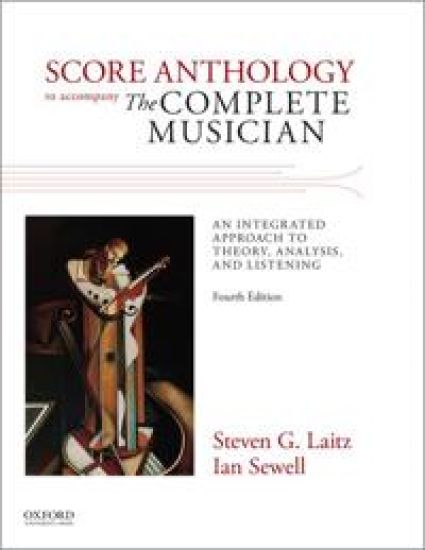
Score Anthology to Accompany The Complete Musician

Score Anthology to Accompany The Complete Musician

Steven G. Laitz

Oxford University Press Inc
2016
kierre
Covering works from the common practice and contemporary periods, the Score Anthology to Accompany The Complete Musician includes eighty-four complete scores for key works that are discussed in The Complete Musician: An Integrated Approach to Theory, Analysis, and Listening, Fourth Edition. The anthology also includes several dozen additional pieceschosen to complement the works discussed in the text and its accompanying workbooks. Brief introductory notes and study questions set the scores in context and direct student learning.
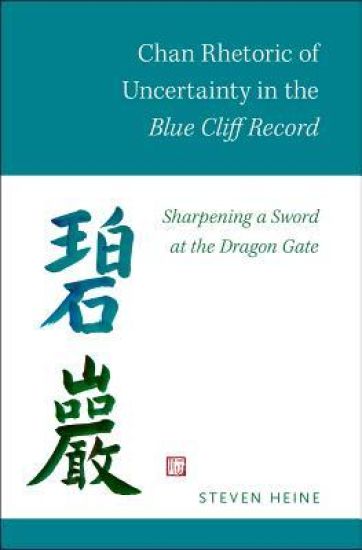
Chan Rhetoric of Uncertainty in the Blue Cliff Record

Chan Rhetoric of Uncertainty in the Blue Cliff Record

Steven Heine

Oxford University Press Inc
2016
sidottu
This book provides an in-depth textual and literary analysis of the Blue Cliff Record (Chinese Biyanlu, Japanese Hekiganroku), a seminal Chan/Zen Buddhist collection of commentaries on one hundred gongan/koan cases, considered in light of historical, cultural, and intellectual trends from the Song dynasty (960-1279). Compiled by Yuanwu Keqin in 1128, the Blue Cliff Record is considered a classic of East Asian literature for its creative integration of prose and verse as well as hybrid or capping-phrase interpretations of perplexing cases. The collection employs a variety of rhetorical devices culled from both classic and vernacular literary sources and styles and is particularly notable for its use of indirection, allusiveness, irony, paradox, and wordplay, all characteristic of the approach of literary or lettered Chan. However, as instrumental and influential as it is considered to be, the Blue Cliff Record has long been shrouded in controversy. The collection is probably best known today for having been destroyed in the 1130s at the dawn of the Southern Song dynasty (1127-1279) by Dahui Zonggao, Yuanwu's main disciple and harshest critic. It was out of circulation for nearly two centuries before being revived and partially reconstructed in the early 1300s. In this book, Steven Heine examines the diverse ideological connections and disconnections behind subsequent commentaries and translations of the Blue Cliff Record, thereby shedding light on the broad range of gongan literature produced in the eleventh to thirteenth centuries and beyond.
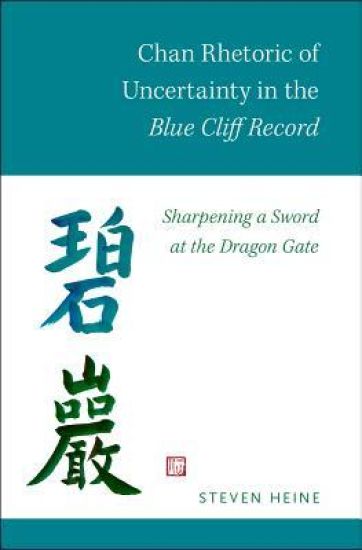
Chan Rhetoric of Uncertainty in the Blue Cliff Record

Chan Rhetoric of Uncertainty in the Blue Cliff Record

Steven Heine

Oxford University Press Inc
2016
nidottu
This book provides an in-depth textual and literary analysis of the Blue Cliff Record (Chinese Biyanlu, Japanese Hekiganroku), a seminal Chan/Zen Buddhist collection of commentaries on one hundred gongan/koan cases, considered in light of historical, cultural, and intellectual trends from the Song dynasty (960-1279). Compiled by Yuanwu Keqin in 1128, the Blue Cliff Record is considered a classic of East Asian literature for its creative integration of prose and verse as well as hybrid or capping-phrase interpretations of perplexing cases. The collection employs a variety of rhetorical devices culled from both classic and vernacular literary sources and styles and is particularly notable for its use of indirection, allusiveness, irony, paradox, and wordplay, all characteristic of the approach of literary or lettered Chan. However, as instrumental and influential as it is considered to be, the Blue Cliff Record has long been shrouded in controversy. The collection is probably best known today for having been destroyed in the 1130s at the dawn of the Southern Song dynasty (1127-1279) by Dahui Zonggao, Yuanwu's main disciple and harshest critic. It was out of circulation for nearly two centuries before being revived and partially reconstructed in the early 1300s. In this book, Steven Heine examines the diverse ideological connections and disconnections behind subsequent commentaries and translations of the Blue Cliff Record, thereby shedding light on the broad range of gongan literature produced in the eleventh to thirteenth centuries and beyond.
A History of the Spanish Lexicon

A History of the Spanish Lexicon

Steven N. Dworkin

Oxford University Press
2012
sidottu
This history of the Spanish lexicon is written from the interacting perspectives of linguistic and cultural change and in the light of advances in the study of language contact and lexical change. The author describes the language inherited from spoken Latin in the Iberian Peninsula during six centuries of Roman occupation and examines the degree to which it imported words from the languages - of which only Basque survives - of pre-Roman Spain. He then shows how Germanic words were imported either indirectly through Latin or Old French or directly by contact with the Visigoths. He describes the importation of Arabisms following the eighth-century Arab conquest of Spain, distinguishing those documented in medieval sources from those adopted for everyday use, many of which survive in modern Spanish. He considers the influence of Old French and Old Provençal and identifies late direct and indirect borrowings from Latin, including the Italian elements taken up during the Renaissance. After outlining minor influences from languages such as Flemish, Portuguese, and Catalan, Professor Dworkin examines the effects on the lexicon of contact between Spanish and the indigenous languages of South and Central America, and the impact of contact with English. The book is aimed at advanced students and scholars of Spanish linguistics and will interest specialists in Hispanic literary and cultural studies.
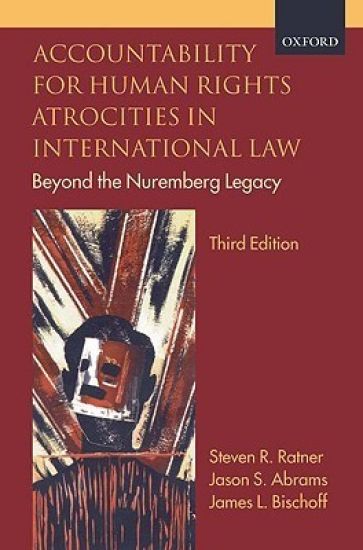
Accountability for Human Rights Atrocities in International Law

Accountability for Human Rights Atrocities in International Law

Steven R. Ratner; Jason S. Abrams; James L. Bischoff

Oxford University Press
2009
sidottu
This book explores the promises and limitations of holding individuals accountable for violations of international human rights and humanitarian law. It analyses the principal crimes under international law, such as genocide, crimes against humanity, and war crimes, and appraises both prosecutorial and other key mechanisms developed to bring individuals to justice. After applying their conclusions in a detailed case study, the authors offer a series of compelling conclusions on the prospects for accountability. This fully updated new edition contains expanded coverage of national trials under universal jurisdiction, international criminal tribunals including the International Criminal Court, new hybrid tribunals in Cambodia and elsewhere, truth commissions, and lustration. It also explores individual accountability for terrorist acts and for abuses committed in the name of counter-terrorism policy.
Accountability for Human Rights Atrocities in International Law

Accountability for Human Rights Atrocities in International Law

Steven R. Ratner; Jason S. Abrams; James L. Bischoff

Oxford University Press
2009
nidottu
This book explores the promises and limitations of holding individuals accountable for violations of international human rights and humanitarian law. It analyses the principal crimes under international law, such as genocide, crimes against humanity, and war crimes, and appraises both prosecutorial and other key mechanisms developed to bring individuals to justice. After applying their conclusions in a detailed case study, the authors offer a series of compelling conclusions on the prospects for accountability. This fully updated new edition contains expanded coverage of national trials under universal jurisdiction, international criminal tribunals including the International Criminal Court, new hybrid tribunals in Cambodia and elsewhere, truth commissions, and lustration. It also explores individual accountability for terrorist acts and for abuses committed in the name of counter-terrorism policy.
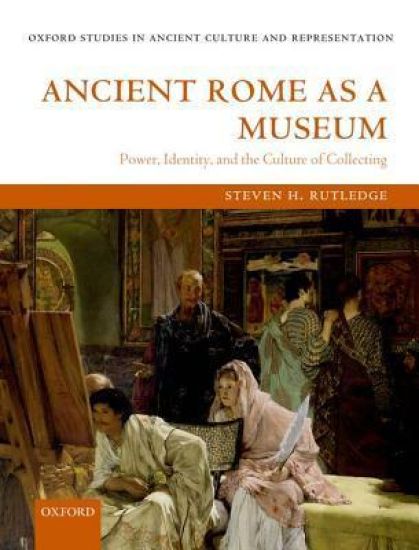
Ancient Rome as a Museum

Ancient Rome as a Museum

Steven Rutledge

Oxford University Press
2012
sidottu
In antiquity, Rome represented one of the world's great cultural capitals. The city constituted a collective repository for various commemoratives, cultural artefacts, and curiosities, not to mention plunder taken in war, and over its history became what we might call a 'museum city'. Ancient Rome as a Museum considers how cultural objects and memorabilia both from Rome and its empire came to reflect a specific Roman identity and, in some instances, to even construct or challenge Roman perceptions of power and of the self. In this volume, Rutledge argues that Roman cultural values and identity are indicated in part by what sort of materials Romans deemed worthy of display and how they chose to display, view, and preserve them. Grounded in the growing field of museum studies, this book includes a discussion on private acquisition of cultural property and asks how well the Roman community at large understood the meaning and history behind various objects and memorabilia. Of particular importance was the use of collections by a number of emperors in the further establishment of their legitimacy and authority. Through an examination of specific cultural objects, Rutledge questions how they came to reflect or even perpetuate Roman values and identity.
T.S. Eliot and Early Modern Literature

T.S. Eliot and Early Modern Literature

Steven Matthews

Oxford University Press
2013
sidottu
T.S. Eliot and Early Modern Literature, for the first time, considers the full imaginative and moral engagement of one of the most influential poets of the twentieth century, T.S. Eliot, with the Early Modern period of literature in English (1580-1630). This engagement haunted Eliot's poetry and critical writing across his career, and would have a profound impact on subsequent poetry across the world, as well as upon academic literary criticism, and wider cultural perceptions. To this end, the book elucidates and contextualizes several facets of Eliot's thinking and its impact: through establishment of his original and eclectic understanding of the Early Modern period in relation to the literary and critical source materials available to him; through consideration of uncollected and archival materials, which suggest a need to reassess established readings of the poet's career; and through attention to Eliot's resonant formulations about the period in consequent literary, critical and artistic arenas. To the end of his life, Eliot had to fend off the presumption that he had, in some way, 'invented' the Early Modern period for the modern age. Yet the presumption holds some force - it is famously and influentially an implication running through Eliot's essays on that earlier period, and through his many references to its writings in his poetry, that the Early Modern period formed the most exact historical analogy for the apocalyptic events (and consequent social, cultural and literary turmoil) of the first half of the twentieth-century. T.S. Eliot and Early Modern Literature gives a comprehensive sense of the vital engagement of this self-consciously modern poet with the earlier period he always declared to be his favourite.
Identity in Physics

Identity in Physics

Steven French; Décio Krause

Oxford University Press
2010
nidottu
Can quantum particles be regarded as individuals, just like books, tables and people? According to the 'received' view - articulated by several physicists in the immediate aftermath of the quantum revolution - quantum physics itself tells us they cannot: quantum particles, unlike their classical counterparts, must be regarded as 'non-individuals' in some sense. However, recent work has indicated that this is not the whole story and that the theory is also consistent with the position that such particles can be taken to be individuals, albeit at a metaphysical price. Drawing on philosophical accounts of identity and individuality, as well as the histories of both classical and quantum physics, the authors explore these two alternative metaphysical packages. In particular, they argue that if quantum particles are regarded as individuals, then Leibniz's famous Principle of the Identity of Indiscernibles is in fact violated. Recent discussions of this conclusion are analysed in detail and, again, the costs involved in saving the Principle are carefully considered. Taking the alternative package, the authors deploy recent work in non-standard logic and set theory to indicate how we can make sense of the idea that objects can be non-individuals. The concluding chapter suggests how these results might then be extended to quantum field theory. Identity in Physics brings together a range of work in this area and further develops the authors' own contributions to the debate. Uniquely, as the title indicates, it situates this work in the appropriate formal, historical, and philosophical contexts.
Sleep

Sleep

Steven W. Lockley; Russell G. Foster

Oxford University Press
2012
nidottu
Why do we need sleep? How much sleep is enough? What is sleep? What happens when we don't get enough? We spend about a third of our lives asleep - it plays a crucial role in our health and wellbeing. References to sleep abound in literature and art, and sleep has been recognized as fundamental to the human condition for thousands of years. Over the past century, our knowledge of how sleep occurs, what it does, and what happens to our health if we do not have enough has developed hugely. The impact of poor sleep on our quality of life is also gaining recognition and the prevalence of sleep disorders in the population appears to be increasing as we live ever stressful lives. This Very Short Introduction addresses the biological and psychological aspects of sleep, providing a basic understanding of what sleep is and how it is measured, looking at sleep through the human lifespan and the causes and consequences of major sleep disorders. Russell G. Foster and Steven W. Lockley go on to consider the impact of modern society, examining the relationship between sleep and work hours, and the impact of our 24/7 society. ABOUT THE SERIES: The Very Short Introductions series from Oxford University Press contains hundreds of titles in almost every subject area. These pocket-sized books are the perfect way to get ahead in a new subject quickly. Our expert authors combine facts, analysis, perspective, new ideas, and enthusiasm to make interesting and challenging topics highly readable.
EU Competition Law and Intellectual Property Rights

EU Competition Law and Intellectual Property Rights

Steven Anderman; Hedvig Schmidt

Oxford University Press
2011
nidottu
Widely read and appreciated in its first edition by students, academics and junior practitioners, this was the first book to offer an accessible introduction to the interface between competition law and intellectual property rights. Now fully updated, but retaining the accessible approach, it continues to represent an ideal gateway to this increasingly dynamic interface, offering a sound introduction to the topic based on thorough legal analysis. It provides a foundation to EU competition law rules as they relate to intellectual property rights, and explores how such a template can be applied to existing intellectual property rights and adapted to new technologies such as telecommunications and information technology. It demonstrates how, both under the EU law and as a matter of economic policy, EU competition law must provide a set of outer limits to, and a framework of rules which regulate, the exploitation and licensing of intellectual property rights. A group of landmark cases since the first edition - the Microsoft case and its predecessor concerned with database rights, the IMS case - has extended the scope of Article 102 TFEU to a refusal to license interface codes. Article 102 has also been applied in the Astra Zeneca case to regulate the behaviour of pharmaceutical companies and the pharmaceutical sector has recently experienced a sectoral enquiry. Finally, the field of industrial standards, patent ambushes and FRAND obligations has become the subject of competition law scrutiny. Under Article 101 TFEU, the modernisation reforms and the new Technology Transfer Block Exemption Regulation 772/2004 together with the Technology Transfer Guidelines have quite radically reformed the method that lawyers must use when analysing the limits of clauses in intellectual property licensing. It requires greater economic understanding, offers less legal certainty but allows more flexibility than its predecessor. The book offers a comprehensive insight to these new developments in a textbook style ideal for those approaching the subject for the first time, or a useful reference for those with more experience.
Motive and Rightness

Motive and Rightness

Steven Sverdlik

Oxford University Press
2011
sidottu
Motive and Rightness is the first book-length attempt to answer the question: Does the motive of an action ever make a difference to whether that action is morally right or wrong? Steven Sverdlik argues that the answer is yes. He examines the major contemporary moral theories to see if they can provide a plausible account of the relevance of motives to rightness and wrongness, and argues that consequentialism gives a better account of these matters than Kantianism or certain important forms of virtue ethics. In carrying out the investigation Sverdlik presents an analysis of the nature of motives, and he considers their relations to normative judgments and intentions. A chapter is devoted to analyzing the extent to which motives are 'available' to rational agents, and the importance of feelings and unconscious motives. Historical figures such as Kant, Bentham, Mill and Ross are discussed, as well as contemporary writers like Korsgaard, Herman, Hurka, Slote and Hursthouse. Motive and Rightness offers an original interweaving of ethical theory, both historical and contemporary, with moral psychology, action theory, and psychology.
Hebraism in Religion, History, and Politics

Hebraism in Religion, History, and Politics

Steven Grosby

Oxford University Press
2021
sidottu
Hebraism in Religion, History, and Politics is an investigation into Hebraism as a category of cultural analysis within the history of Christendom. Its aim is to determine what Hebraism means or should mean when it is used. The characteristics of Hebraism indicate a changing relation between the Old and New Testaments that arose in Medieval and early modern Europe, between on the one hand a doctrinally universal Christianity, and on the other various Christian nations that were understood as being a 'new Israel'. Thus, Hebraism refers to the development of a paradoxically intriguing 'Jewish Christianity' or an 'Old Testament Christianity'. It represents a 'third culture' in contrast to the culture of Roman or Hellenistic empire and Christian universalism. There were attempts, with varying success, during the twentieth century to clarify Hebraism as a category of cultural history and religious history. Steven Grosby expertly contributes to that clarification. In so doing, the possibility arises that Hebraism and Hebraic culture offer a different way to look at religion, its history, and the history of the West.
Disclosure and Discretion in Roman Astrology

Disclosure and Discretion in Roman Astrology

Steven J. Green

Oxford University Press
2014
sidottu
In light of modern scepticism towards the practice, it is easy to overlook just how important a role astrology played in the career of Rome's first Emperor, Augustus. Augustus' enthusiasm for employing astrological predictions and symbols to cement his own position of power was matched by an equally forceful desire to restrict their use by his political rivals. Astrology in Rome was, then, to use Tacitus' neat formulation, both 'forbidden and maintained' (Tacitus, Histories, 1.22). This volume is the first to take seriously this imperial complex as a key to understanding the diverse ways in which contemporary commentators handle the volatile topic of astrology in their writings. It shows how Roman writers engage in elaborate discourses of discretion as they simultaneously celebrate the power of astrology and shy away from the sort of astrological revelations that might offend imperial sensibilities. With a particular focus on the key astrological poem of Manilius, this study provides a new conceptual framework in which to appreciate the complex treatments of astrology during the period of Octavian/Augustus.
Henry VII's New Men and the Making of Tudor England

Henry VII's New Men and the Making of Tudor England

Steven Gunn

Oxford University Press
2016
sidottu
The reign of Henry VII is important but mysterious. He ended the Wars of the Roses and laid the foundations for the strong governments of Henry VIII and Elizabeth I. Yet his style of rule was unconventional and at times oppressive. At the heart of his regime stood his new men, low-born ministers with legal, financial, political, and military skills who enforced the king's will and in the process built their own careers and their families' fortunes. Some are well known, like Sir Edward Poynings, governor of Ireland, or Empson and Dudley, executed to buy popularity for the young Henry VIII. Others are less famous. Sir Robert Southwell was the king's chief auditor, Sir Andrew Windsor the keeper of the king's wardrobe, Sir Thomas Lovell, the Chancellor of the Exchequer so trusted by Henry that he was allowed to employ the former Yorkist pretender Lambert Simnel as his household falconer. Some paved the way to glory for their relatives. Sir Thomas Brandon, master of the horse, was the uncle of Henry VIII's favourite Charles Brandon, duke of Suffolk. Sir Henry Wyatt, keeper of the jewel house, was father to the poet Sir Thomas Wyatt. This volume, based on extensive archival research, presents a kaleidoscopic portrait of the new men. It analyses the offices and relationships through which they exercised power and the ways they gained their wealth and spent it to sustain their new-found status. It establishes their importance in the operation of Henry's government and, as their careers continued under his son, in the making of Tudor England.
The Oxford Solid State Basics

The Oxford Solid State Basics

Steven H. Simon

Oxford University Press
2013
sidottu
The study of solids is one of the richest, most exciting, and most successful branches of physics. While the subject of solid state physics is often viewed as dry and tedious this new book presents the topic instead as an exciting exposition of fundamental principles and great intellectual breakthroughs. Beginning with a discussion of how the study of heat capacity of solids ushered in the quantum revolution, the author presents the key ideas of the field while emphasizing the deep underlying concepts. The book begins with a discussion of the Einstein/Debye model of specific heat, and the Drude/Sommerfeld theories of electrons in solids, which can all be understood without reference to any underlying crystal structure. The failures of these theories force a more serious investigation of microscopics. Many of the key ideas about waves in solids are then introduced using one dimensional models in order to convey concepts without getting bogged down with details. Only then does the book turn to consider real materials. Chemical bonding is introduced and then atoms can be bonded together to crystal structures and reciprocal space results. Diffraction experiments, as the central application of these ideas, are discussed in great detail. From there, the connection is made to electron wave diffraction in solids and how it results in electronic band structure. The natural culmination of this thread is the triumph of semiconductor physics and devices. The final section of the book considers magnetism in order to discuss a range of deeper concepts. The failures of band theory due to electron interaction, spontaneous magnetic orders, and mean field theories are presented well. Finally, the book gives a brief exposition of the Hubbard model that undergraduates can understand. The book presents all of this material in a clear fashion, dense with explanatory or just plain entertaining footnotes. This may be the best introductory book for learning solid state physics. It is certainly the most fun to read.