Kirjojen hintavertailu. Mukana 11 627 542 kirjaa ja 12 kauppaa.

Kirjahaku

Etsi kirjoja tekijän nimen, kirjan nimen tai ISBN:n perusteella.

1000 tulosta hakusanalla Sydney Waterlow

Riding the Storm: A Rouge Paranormal Romance
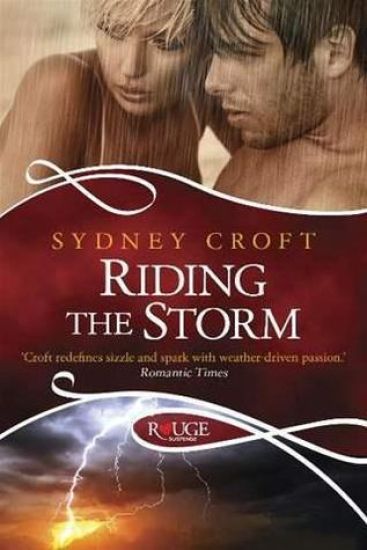
Rouge: red-hot romanceHaley Holmes has been dispatched to the Louisiana bayous to investigate the phenomenon known as Remy Begnaud - a man with a gift he never wanted: the ability to control a storm's fury. But even a woman trained in bizarre weather phenomena has no defense against the electrifying power of the ex-Navy SEAL...a power his enemies would kill to control.With her agency monitoring their every move, Haley's job is to seduce Remy, gain his trust - and help him harness his extraordinary gift. But who will protect her from this voracious lover who's introducing her to a new world of erotic thrills - a man who grows increasingly insatiable with each new weather event? The debut novel from Sydney Croft - a blisteringly hot paranormal series that has been described as The X-Men meets erotica....Titles in this series are: Riding the Storm, Unleashing the Storm, Seduced by the Storm, Taming the Fire, Tempting the Fire and Taken by Fire.Rouge Romance - your first stop for romance books
Thrilling Adventures of Lovelace and Babbage

Thrilling Adventures of Lovelace and Babbage

Sydney Padua

Penguin Books Ltd.
2016
pokkari
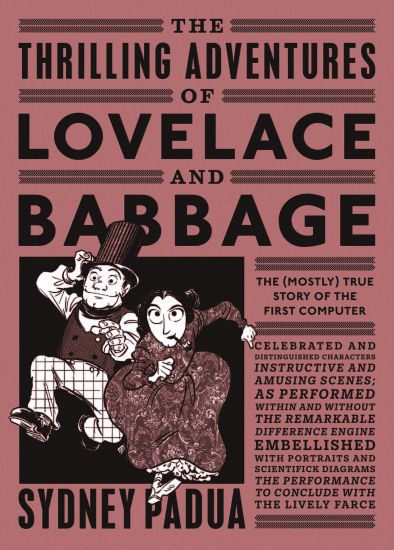
'So impossibly funny, clever, demented, charming and altogether wonderful that I was a convert within three pages. Buy it for everyone you know, regardless of what you think they like. Brilliant stuff' Lucy Mangan, Book of the Year, Stylist *Winner of the British Book Design and Production Award for Graphic Novels* *Winner of the Neumann Prize in the History of Mathematics* In The Thrilling Adventures of Lovelace and Babbage Sydney Padua transforms one of the most compelling scientific collaborations into a hilarious set of adventures Meet two of Victorian London's greatest geniuses...Ada Lovelace, daughter of Lord Byron: mathematician, gambler, and proto-programmer, whose writings contained the first ever appearance of general computing theory, a hundred years before an actual computer was built. And Charles Babbage, eccentric inventor of the Difference Engine, an enormous clockwork calculating machine that would have been the first computer, if he had ever finished it. But what if things had been different? The Thrilling Adventures of Lovelace and Babbage presents a delightful alternate reality in which Lovelace and Babbage do build the Difference Engine and use it to create runaway economic models, battle the scourge of spelling errors, explore the wider realms of mathematics and, of course, fight crime - for the sake of both London and science. Extremely funny and utterly unusual, The Thrilling Adventures of Lovelace and Babbage comes complete with historical curiosities, extensive footnotes and never-before-seen diagrams of Babbage's mechanical, steam-powered computer. And ray guns.
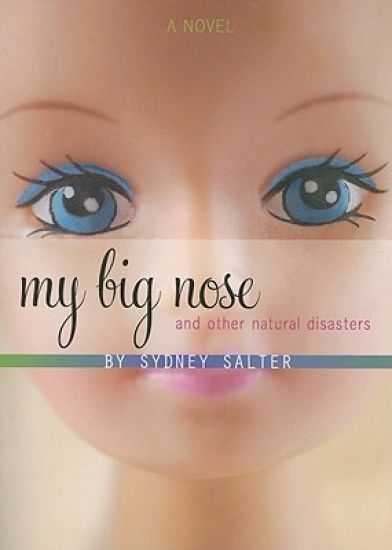
My Big Nose and Other Natural Disasters

My Big Nose and Other Natural Disasters

Sydney Salter

Houghton Mifflin
2009
nidottu
It's the end of junior year, and summer is about to begin. The Summer of Passion, to be exact, when Jory Michaels plans to explore all the possibilities of the future--and, with any luck, score a boyfriend in the process. But Jory has a problem. A big problem. A curvy, honking, bumpy, problem in the form of her Super Schnozz, the one thing standing between Jory and happiness. And now, with the Summer of Passion stretched before her like an open road, she's determined for Super Schnozz to disappear. Jory takes a job delivering wedding cakes to save up for a nose job at the end of the summer; she even keeps a book filled with magazine cutouts of perfect noses to show the doctor. But nothing is ever easy for accident-prone Jory--and before she knows it, her Summer of Passion falls apart faster than the delivery van she crashes. In this hilarious and heartbreaking novel, Sydney Salter delivers a story about broadening your horizons, accepting yourself, and finding love right under your nose.
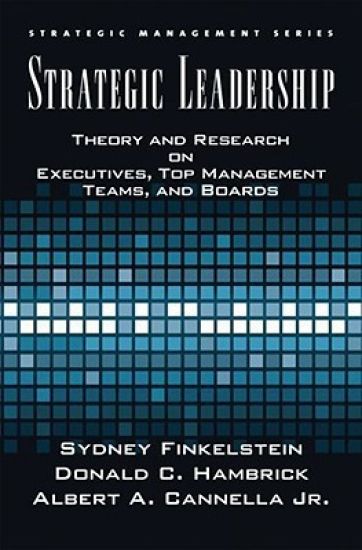
Strategic Leadership

Strategic Leadership

Sydney Finkelstein; Donald C. Hambrick; Albert Cannella

Oxford University Press Inc
2008
sidottu
This book integrates and assesses the vast and rapidly growing literature on strategic leadership, which is the study of top executives and their effects on organizations. The basic premise is that in order to understand why organizations do the things they do, or perform the way they do, we need to deeply comprehend the people at the top- their experiences, abilities, values, social connections, aspirations, and other human features. The actions - or inactions - of a relatively small number of key people at the apex of an organization can dramatically affect organizational outcomes. The scope of strategic leadership includes individual executives, especially chief executive officers (CEOs), groups of executives (top management teams, or TMTs); and governing bodies (particularly boards of directors). Accordingly, the book addresses an array of topics regarding CEOs (e.g., values, personality, motives, demography, succession, and compensation); TMTs (including composition, processes, and dynamics; and boards of directors (why boards look and behave the way they do, and the consequences of board profiles and behaviors). Strategic Leadership synthesizes what is known about strategic leadership and indicates new research directions. The book is meant primarily for scholars who strive to assess and understand the phenomena of strategic leadership. It offers a considerable foundation on which professionals involved in executive search, compensation, appraisal and staffing, as well as board members who evaluate executive performance and potential, might build their tools and perspectives.
Spectacle, Pageantry, and Early Tudor Policy
Sydney Anglo discusses every English royal entry, festival, disguising, masque, and tournament from the accession of Henry VII to the coronation celebrations of Elizabeth I. Based principally on primary sources, his study is analytical rather than descriptive. In 1969, when this book first appeared, the serious study of Renaissance court festivals and civic pageantry was in its infancy and - although the subject has since burgeoned - the volume of publications relevant to the early Tudors was modest and largely confined to matters of detail. In this new edition Professor Anglo discusses material published since 1969 in a preface where, as far as possible, the material is arranged according to the chronological and thematic order of the book. The original pagination and notes which have regularly been cited by scholars has thereby been retained. A bibliography of works cited in the text has been added to facilitate the work of a new generation of students.
Physical Realization

Physical Realization

Sydney Shoemaker

Clarendon Press
2007
sidottu
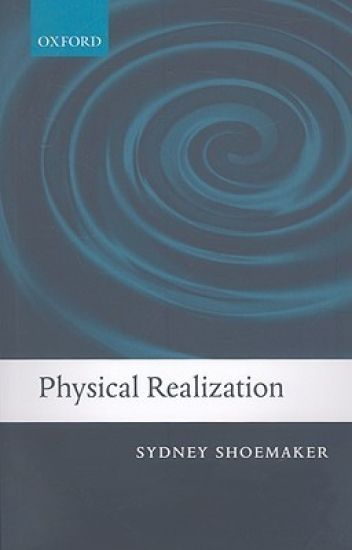
In Physical Realization, Sydney Shoemaker considers the question of how physicalism can be true: how can all facts about the world, including mental ones, be constituted by facts about the distribution in the world of physical properties? Physicalism requires that the mental properties of a person are 'realized in' the physical properties of that person, and that all instantiations of properties in macroscopic objects are realized in microphysical states of affairs. Shoemaker offers an account of both these sorts of realization, one which allows the realized properties to be causally efficacious. He also explores the implications of this account for a wide range of metaphysical issues, including the nature of persistence through time, the problem of material constitution, the possibility of emergent properties, and the nature of phenomenal consciousness.
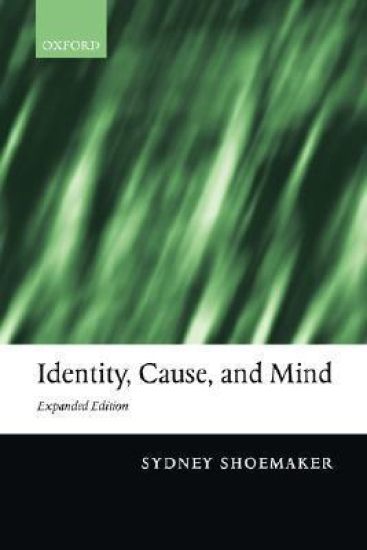
Identity, Cause, and Mind

Identity, Cause, and Mind

Sydney Shoemaker

Clarendon Press
2003
sidottu
An expanded edition of Sydney Shoemaker's collection of his work on interrelated issues in the philosophy of mind and metaphysics. Reproducing all of the original papers, many of which are now regarded as classics, and including four papers published since the first edition appeared in 1984, "Identity, Cause, and Mind" is aimed at philosophers and students alike.
Identity, Cause, and Mind

Identity, Cause, and Mind

Sydney Shoemaker

Clarendon Press
2003
nidottu
This is an expanded edition of Sydney Shoemaker's seminal collection of his work on interrelated issues in the philosophy of mind and metaphysics. It reproduces all of the original papers, many of which are now regarded as classics, and includes four papers published since the first edition appeared in 1984. Themes include the nature of self-knowledge and self-reference, personal identity, persistence over time, properties, mental states, and perceptual experience. A number of the papers, including 'Self-Reference and Self-Awareness', 'Persons and Their Pasts', 'Causality and Properties', and 'The Inverted Spectrum', have remained at the centre of discussion of their topics. Several of the essays in the original collection discuss the ways in which causal considerations enter into the individuation of properties, and three of the added essays - 'Causal and Metaphysical Necessity', 'Realization and Mental Causation', and 'On What There Are' - deal with related themes. The neo-Lockean view of personal identity presented in 'Persons and Their Pasts' is developed with a different emphasis in the added paper 'Self and Substance'. Identity, Cause, and Mind's reappearance will be warmly welcomed by scholars and students alike.
Machiavelli - The First Century

Machiavelli - The First Century

Sydney Anglo

Oxford University Press
2005
sidottu
Between 1513 and 1525 Niccolò Machiavelli wrote a series of works dealing with political, military, and historical matters. One of these (the 'Arte della guerra') was published in 1521, but the rest of his major writings were not published until 1531-2, nearly five years after his death. They continued to be reissued regularly, well into the early seventeenth century. The popularity of Machiavelli's books, the variety of his themes, the different contexts within which he was studied, the range of readers' interests, and the fact that his name entered the vocabulary of every European language - all make his early reception a fruitful field of enquiry. Historians of ideas have tended to tidy up the past in order to make it comprehensible but Sydney Anglo is concerned with heterogeneity, and with the often irrational and emotional aspects of sixteenth-century thought. Basing his research entirely upon primary sources he quotes extensively in the conviction that, in a battle of words, the words themselves and their tone convey more than summaries of intellectual abstractions. Authors - hostile, enthusiastic, and indifferent - are closely examined; and many different contexts, political and intellectual, are considered. Sometimes Machiavelli was influential, sometimes not, but in this history of his reception, silences often prove significant. Written in a lively and trenchant style, this new interpretation of the impact of Machievalli is an original contribution of high quality by a leading expert in the field of Renaissance studies.
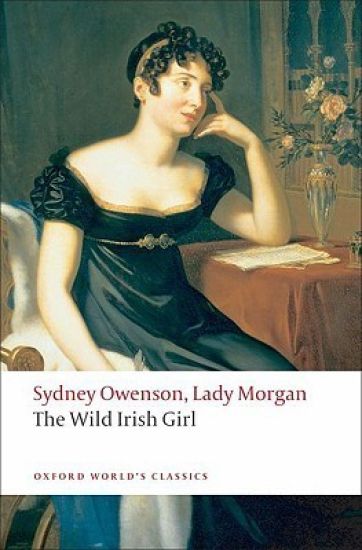
The Wild Irish Girl

The Wild Irish Girl

Sydney Owenson

Oxford University Press
2008
nidottu
`I long to study the purely national, natural character of an Irishwoman' When Horatio, the son of an English lord, is banished to his father's Irish estate as punishment for gambling debts and dissipated living, he adopts the persona of knight errant and goes off in search of adventure. On the wild west coast of Connaught he finds remnants of a romantic Gaelic past a dilapidated castle, a Catholic priest, a deposed king and the king's lovely and learned daughter, Glorvina. In this setting and among these characters Horatio learns the history, culture and language of a country he had once scorned, but he must do so in disguise for his own English ancestors are responsible for the ruin of the Gaelic family he comes to love. Written after the Act of Union, The Wild Irish Girl (1806) is a passionately nationalistic novel and a founding text in the discourse of Irish nationalism. The novel proved so controversial in Ireland that Sydney Owenson, later Lady Morgan, was put under surveillance by Dublin Castle. ABOUT THE SERIES: For over 100 years Oxford World's Classics has made available the widest range of literature from around the globe. Each affordable volume reflects Oxford's commitment to scholarship, providing the most accurate text plus a wealth of other valuable features, including expert introductions by leading authorities, helpful notes to clarify the text, up-to-date bibliographies for further study, and much more.
Physical Realization

Physical Realization

Sydney Shoemaker

Oxford University Press
2009
nidottu
In Physical Realization, Sydney Shoemaker considers the question of how physicalism can be true: how can all facts about the world, including mental ones, be constituted by facts about the distribution in the world of physical properties? Physicalism requires that the mental properties of a person are 'realized in' the physical properties of that person, and that all instantiations of properties in macroscopic objects are realized in microphysical states of affairs. Shoemaker offers an account of both these sorts of realization, one which allows the realized properties to be causally efficacious. He also explores the implications of this account for a wide range of metaphysical issues, including the nature of persistence through time, the problem of material constitution, the possibility of emergent properties, and the nature of phenomenal consciousness.
The Index Number Problem

The Index Number Problem

Sydney Afriat

Oxford University Press
2014
sidottu
A theft amounting to £1 was a capital offence in 1260 and a judge in 1610 affirmed the law could not then be applied since £1 was no longer what it was. Such association of money with a date is well recognized for its importance in very many connections. Thus arises the need to know how to convert an amount at one date into the right amount at another date: in other words, a price index. The longstanding question concerning how such an index should be constructed is known as 'The Index Number Problem'. The ordinary consumer price index represents a practical response to this need. However the search for a true price index has given rise to extensive thought and theory to which an impressive number of economists have each contributed a word, or volume. However, there have been hold-ups at a basic level, which are addressed in this book. The approach brings the subject into involvement with utility construction on the basis of finite data, in a form referred to as 'Afriat's Theorem' but now with utility subject to constant (and also possibly approximate) returns.
Lesser Harms

Lesser Harms

Sydney A. Halpern

University of Chicago Press
2004
sidottu
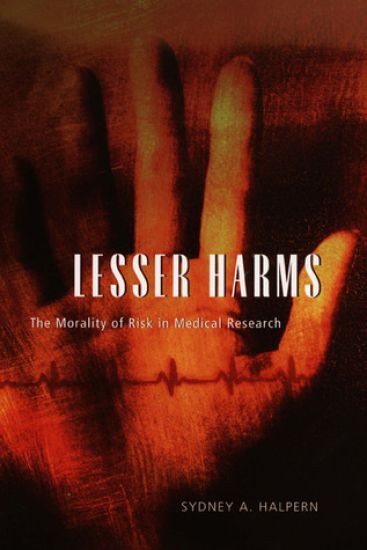
Research physicians face intractable dilemmas when they consider introducing new medical procedures. Innovations carry the promise of preventing or curing life-threatening diseases, but they can also lead to injury or even death. How have clinical scientists made high-stakes decisions about undertaking human tests of new medical treatments? In Lesser Harms, Sydney Halpern explores this issue as she examines vaccine trials in America during the early and mid-twentieth century.Today's scientists follow federal guidelines for research on human subjects developed during the 1960s and 1970s. But long before these government regulations, medical investigators observed informal rules when conducting human research. They insisted that the dangers of natural disease should outweigh the risks of a medical intervention, and they struggled to accurately assess the relative hazards. Halpern explores this logic of risk in immunization controversies extending as far back as the eighteenth century. Then, focusing on the period between 1930 and 1960, she shows how research physicians and their sponsors debated the moral quandaries involved in moving vaccine use from the laboratory to the clinic.This probing work vividly describes the efforts of clinical investigators to balance the benefits and dangers of untested vaccines, to respond to popular sentiment about medical hazards, and to strategically present risk laden research to sponsors and the public. “Concise and extremely well-written. . . . A fascinating synthesis of sociology, history, and institutional theory.”—Samuel C. Blackman, Journal of the American Medical Association
Lesser Harms

Lesser Harms

Sydney A. Halpern

University of Chicago Press
2006
nidottu
Research physicians face intractable dilemmas when they consider introducing new medical procedures. Innovations carry the promise of preventing or curing life-threatening diseases, but they can also lead to injury or even death. How have clinical scientists made high-stakes decisions about undertaking human tests of new medical treatments? In Lesser Harms, Sydney Halpern explores this issue as she examines vaccine trials in America during the early and mid-twentieth century.Today's scientists follow federal guidelines for research on human subjects developed during the 1960s and 1970s. But long before these government regulations, medical investigators observed informal rules when conducting human research. They insisted that the dangers of natural disease should outweigh the risks of a medical intervention, and they struggled to accurately assess the relative hazards. Halpern explores this logic of risk in immunization controversies extending as far back as the eighteenth century. Then, focusing on the period between 1930 and 1960, she shows how research physicians and their sponsors debated the moral quandaries involved in moving vaccine use from the laboratory to the clinic.This probing work vividly describes the efforts of clinical investigators to balance the benefits and dangers of untested vaccines, to respond to popular sentiment about medical hazards, and to strategically present risk laden research to sponsors and the public. “Concise and extremely well-written. . . . A fascinating synthesis of sociology, history, and institutional theory.”—Samuel C. Blackman, Journal of the American Medical Association
Tigers of a Different Stripe

Tigers of a Different Stripe

Sydney Hutchinson

University of Chicago Press
2016
sidottu
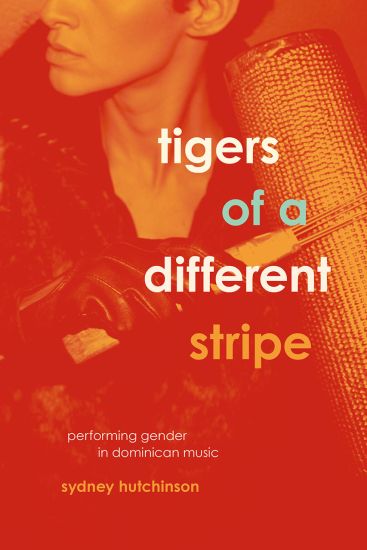
Tigers of a Different Stripe takes readers inside the unique world of merengue tipico, a traditional music of the Dominican Republic. While in most genres of Caribbean music women usually participate as dancers or vocalists, in merengue tipico they are more often instrumentalists and even bandleaders something nearly unheard of in the macho Caribbean music scene. Examining this cultural phenomenon, Sydney Hutchinson offers an unexpected and fascinating account of gender in Dominican art and life. Drawing on over a decade of fieldwork in the Dominican Republic and New York among musicians, fans, and patrons of merengue tipico not to mention her own experiences as a female instrumentalist Hutchinson details a complex nexus of class, race, and artistic tradition that unsettles the typical binary between the masculine and feminine. She sketches the portrait of the classic male figure of the tiguere, a dandified but sexually aggressive and street-smart "tiger," and she shows how female musicians have developed a feminine counterpart: the tiguera, an assertive, sensual, and respected female figure who looks like a woman but often plays and even sings like a man. Through these musical figures and studies of both straight and queer performers, she unveils rich ambiguities in gender construction in the Dominican Republic and the long history of a unique form of Caribbean feminism.
Tigers of a Different Stripe

Tigers of a Different Stripe

Sydney Hutchinson

University of Chicago Press
2016
nidottu
Tigers of a Different Stripe takes readers inside the unique world of merengue tipico, a traditional music of the Dominican Republic. While in most genres of Caribbean music women usually participate as dancers or vocalists, in merengue tipico they are more often instrumentalists and even bandleaders something nearly unheard of in the macho Caribbean music scene. Examining this cultural phenomenon, Sydney Hutchinson offers an unexpected and fascinating account of gender in Dominican art and life. Drawing on over a decade of fieldwork in the Dominican Republic and New York among musicians, fans, and patrons of merengue tipico not to mention her own experiences as a female instrumentalist Hutchinson details a complex nexus of class, race, and artistic tradition that unsettles the typical binary between the masculine and feminine. She sketches the portrait of the classic male figure of the tiguere, a dandified but sexually aggressive and street-smart "tiger," and she shows how female musicians have developed a feminine counterpart: the tiguera, an assertive, sensual, and respected female figure who looks like a woman but often plays and even sings like a man. Through these musical figures and studies of both straight and queer performers, she unveils rich ambiguities in gender construction in the Dominican Republic and the long history of a unique form of Caribbean feminism.
Princes and Kings

Princes and Kings

Sydney Williams

Tellwell Talent
2021
pokkari
In the year 1240 AD, the land of Gwynedd Wales found themselves without a leader when their king, Llywelyn the Great, died at a ripe old age. The natural successor to the king was his son Dafydd, who took on the job of ruler after his death. Soon after taking on the job he was forced to sign a treaty with the king of England and send his brother Gruffudd and his nephew Owain to England to be imprisoned in the Tower of London in exchange for keeping his land and title. His other nephew, Llywelyn, became the new head warrior after his father's imprisonment, travelling the country and patrolling the borders to the north and the south. After four years imprisonment in the Tower of London, Gruffudd died while attempting to escape from his tower cell, and his son Owain was released by the king himself. He wanted Owain to help him start a civil war in Gwynedd. Meanwhile, after finding out about his brother's death from a letter sent by his nephew Owain, Dafydd declared war on England, prompting Owain to escape Winchester Castle, where he had been recovering from his time in prison to find his brother Llywelyn and help him in the war between England and Gwynedd. During the course of the war, Dafydd was killed in battle, leaving the Welsh army without a leader. Being the brave and noble man that he was, Llywelyn called the men to him and, with his leadership, they managed to send the English packing. With the new weight of responsibility thrust upon his shoulders, Llywelyn rode home at the head of the army to find that his world had changed. Now not only was his father gone but his mother as well, and the land of Gwynedd was once again without a leader. It became clear that the best man for the job was Llywelyn himself, and he decided that there was nothing else to do but become the new ruler. He would do anything to keep his people safe, even if that meant taking on a responsibility that he felt he was too young for. He would never abandon his people for anything and let the English take everything from him.
Princes and Kings

Princes and Kings

Sydney Williams

Tellwell Talent
2021
sidottu
In the year 1240 AD, the land of Gwynedd Wales found themselves without a leader when their king, Llywelyn the Great, died at a ripe old age. The natural successor to the king was his son Dafydd, who took on the job of ruler after his death. Soon after taking on the job he was forced to sign a treaty with the king of England and send his brother Gruffudd and his nephew Owain to England to be imprisoned in the Tower of London in exchange for keeping his land and title. His other nephew, Llywelyn, became the new head warrior after his father's imprisonment, travelling the country and patrolling the borders to the north and the south. After four years imprisonment in the Tower of London, Gruffudd died while attempting to escape from his tower cell, and his son Owain was released by the king himself. He wanted Owain to help him start a civil war in Gwynedd. Meanwhile, after finding out about his brother's death from a letter sent by his nephew Owain, Dafydd declared war on England, prompting Owain to escape Winchester Castle, where he had been recovering from his time in prison to find his brother Llywelyn and help him in the war between England and Gwynedd. During the course of the war, Dafydd was killed in battle, leaving the Welsh army without a leader. Being the brave and noble man that he was, Llywelyn called the men to him and, with his leadership, they managed to send the English packing. With the new weight of responsibility thrust upon his shoulders, Llywelyn rode home at the head of the army to find that his world had changed. Now not only was his father gone but his mother as well, and the land of Gwynedd was once again without a leader. It became clear that the best man for the job was Llywelyn himself, and he decided that there was nothing else to do but become the new ruler. He would do anything to keep his people safe, even if that meant taking on a responsibility that he felt he was too young for. He would never abandon his people for anything and let the English take everything from him.