Kirjojen hintavertailu. Mukana 12 016 292 kirjaa ja 12 kauppaa.

Kirjahaku

Etsi kirjoja tekijän nimen, kirjan nimen tai ISBN:n perusteella.

1000 tulosta hakusanalla Theodor Gettinger

The Making of International Criminal Justice

The Making of International Criminal Justice

Theodor Meron

Oxford University Press
2012
nidottu
Until recently, and with a few notable exceptions in the wake of World War II, violations of the laws of war and international humanitarian law were addressed primarily as claims between states. However, this approach has changed radically in the last twenty years, as the international community has increasingly accepted the idea of individual criminal responsibility for violations of international humanitarian law. The International Criminal Tribunals for the former Yugoslavia and Rwanda have played a key role in this transformation and, as the trailblazers for a growing number of new international or hybrid criminal courts, in establishing the field of international criminal justice and encouraging the national prosecution of war crimes. Understanding the Tribunals' origins, their ground-breaking jurisprudence, and how they have addressed critical legal and practical challenges is essential to understanding both the revolution that has occurred over the past twenty years and how international criminal law will change and grow in the years ahead. As a leading scholar on humanitarian law, and President of the International Criminal Tribunal for the former Yugoslavia, Theodor Meron has observed and influenced the development of international criminal law as it has evolved from a mostly academic exercise to a cornerstone of the new international legal order. In this collection of speeches delivered during his first decade on the bench, he offers an insightful overview of the foundations of international criminal law as well as a unique insider's perspective on the challenges faced by international criminal tribunals, their creation of a corpus of substantive and procedural law, and the responsibilities of international jurists. Judge Meron's experience in international criminal justice makes this volume as rewarding for experts as it is for the general public.
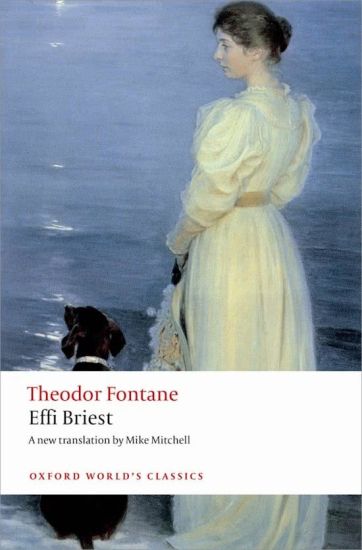
Effi Briest

Effi Briest

Theodor Fontane

Oxford University Press
2015
nidottu
'I loathe what I did, but what I loathe even more is your virtue.' Seventeen-year-old Effi Briest is steered by her parents into marriage with an ambitious bureaucrat, twenty years her senior. He takes her from her home to a remote provincial town on the Baltic coast of Prussia where she is isolated, bored, and prey to superstitious fears. She drifts into a half-hearted affair with a manipulative, womanizing officer, which ends when her husband is transferred to Berlin. Years later, events are triggered that will have profound consequences for Effi and her family. Effi Briest (1895) is recognized as one of the masterpieces by Theodor Fontane, Germany's premier realist novelist, and one of the great novels of marital relations together with Madame Bovary and Anna Karenina. It presents life among the conservative Prussian aristocracy with irony and gentle humour, and opposes the rigid and antiquated morality of the time by treating its heroine with sympathy and keen psychological insight. ABOUT THE SERIES: For over 100 years Oxford World's Classics has made available the widest range of literature from around the globe. Each affordable volume reflects Oxford's commitment to scholarship, providing the most accurate text plus a wealth of other valuable features, including expert introductions by leading authorities, helpful notes to clarify the text, up-to-date bibliographies for further study, and much more.
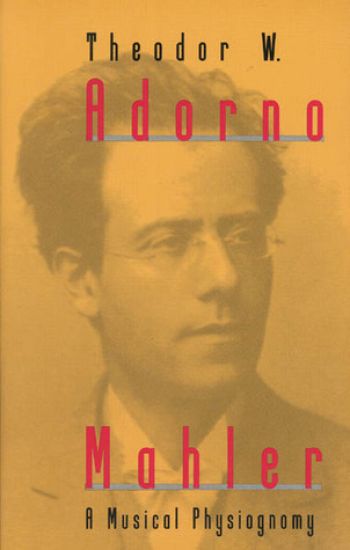
Mahler

Mahler

Theodor W. Adorno

University of Chicago Press
1996
nidottu
Theodor W. Adorno goes beyond conventional thematic analysis to gain a more complete understanding of Mahler's music through his character, his social and philosophical background, and his moment in musical history. Adorno examines the composer's works as a continuous and unified development that began with his childhood response to the marches and folk tunes of his native Bohemia.Since its appearance in 1960 in German, Mahler has established itself as a classic of musical interpretation. Now available in English, the work is presented here in a translation that captures the stylistic brilliance of the original.Theodor W. Adorno (1903-69), one of the foremost members of the Frankfurt school of critical theory, studied with Alban Berg in Vienna during the late twenties, and was later the director of the Institute of Social Research at the University of Frankfurt from 1956 until his death. His works include Aesthectic Theory, Introduction to the Sociology of Music, The Jargon of Authenticity, Prism, and Philosophy of Modern Music.
Critical Models

Critical Models

Theodor W. Adorno

Columbia University Press
2005
sidottu
Critical Models combines into a single volume two of Adorno's most important postwar works - Interventions: Nine Critical Models (1963) and Catchwords: Critical Models II (1969). Written after his return to Germany in 1949, the articles, essays, and radio talks included in this volume speak to the pressing political, cultural, and philosophical concerns of the postwar era. The pieces in Critical Models reflect the intellectually provocative as well as the practical Adorno as he addresses such issues as the dangers of ideological conformity, the fragility of democracy, educational reform, the influence of television and radio, and the aftermath of fascism. This new edition includes an introduction by Lydia Goehr, a renowned scholar in philosophy, aesthetic theory, and musicology. Goehr illuminates Adorno's ideas as well as the intellectual, historical, and critical contexts that shaped his postwar thinking.
Critical Models

Critical Models

Theodor W. Adorno

Columbia University Press
2005
pokkari
Critical Models combines into a single volume two of Adorno's most important postwar works - Interventions: Nine Critical Models (1963) and Catchwords: Critical Models II (1969). Written after his return to Germany in 1949, the articles, essays, and radio talks included in this volume speak to the pressing political, cultural, and philosophical concerns of the postwar era. The pieces in Critical Models reflect the intellectually provocative as well as the practical Adorno as he addresses such issues as the dangers of ideological conformity, the fragility of democracy, educational reform, the influence of television and radio, and the aftermath of fascism. This new edition includes an introduction by Lydia Goehr, a renowned scholar in philosophy, aesthetic theory, and musicology. Goehr illuminates Adorno's ideas as well as the intellectual, historical, and critical contexts that shaped his postwar thinking.
Notes to Literature

Notes to Literature

Theodor W. Adorno

Columbia University Press
2019
sidottu
Notes to Literature is a collection of the great social theorist Theodor W. Adorno’s essays on such writers as Mann, Bloch, Hölderlin, Siegfried Kracauer, Goethe, Benjamin, and Stefan George. It also includes his reflections on a variety of subjects, such as literary titles, the physical qualities of books, political commitment in literature, the light-hearted and the serious in art, and the use of foreign words in writing. This edition presents this classic work in full in a single volume, with a new introduction by Paul Kottman.
Notes to Literature

Notes to Literature

Theodor W. Adorno

Columbia University Press
2019
pokkari
Notes to Literature is a collection of the great social theorist Theodor W. Adorno’s essays on such writers as Mann, Bloch, Hölderlin, Siegfried Kracauer, Goethe, Benjamin, and Stefan George. It also includes his reflections on a variety of subjects, such as literary titles, the physical qualities of books, political commitment in literature, the light-hearted and the serious in art, and the use of foreign words in writing. This edition presents this classic work in full in a single volume, with a new introduction by Paul Kottman.
Hegel

Hegel

Theodor W. Adorno

MIT Press
1994
pokkari
This short masterwork in twentieth-century philosophy provides both a major reinterpretation of Hegel and insight into the evolution of Adorno's critical theory. The first study focuses on the relationship of reason, the individual, and society in Hegel, defending him against the criticism that he was merely an apologist for bourgeois society. The second study examines the experiential content of Hegel's idealism, considering the notion of experience in relation to immediacy, empirical reality, science, and society. The third study, "Skoteinos," is an unusual and fascinating essay in which Adorno lays out his thoughts on understanding Hegel. In his reflections, which spring from his experience teaching at the Goethe University in Frankfurt, questions of textual and philosophical interpretation are intertwined. Rescuing the truth value of Hegel's work is a recurring theme of the critical theory of the Frankfurt School, and nowhere is this goal pursued with more insight than in these three studies. The core problem Adorno sets for himself is how to read Hegel in a way that comprehends both the work and its historical context, thereby allowing conclusions to be drawn that may seem on the surface to be exactly opposed to what Hegel wrote but that are, nevertheless, valid as the present truth of the work. It is the elaboration of this method of interpretation, a negative dialectic, that was Adorno's underlying goal. Adorno's efforts to salvage the contemporaneity of Hegel's thought form part of his response to the increasingly tight net of social control in the aftermath of World War II. In this, his work is related to the very different attempts to undermine reified thinking undertaken by the various French theorists. The continued development of what Adorno called "the administered world" has only increased the relevance of his efforts.