

Kirjahaku
Etsi kirjoja tekijän nimen, kirjan nimen tai ISBN:n perusteella.
1000 tulosta hakusanalla Thomas D Clareson





Fifteen-year-old Ivan never expected to be targeted for death when he went on a quest to find his older brother who was spotted in the infamous West Forest. Only an hour from his farm home, Ivan travels there, but his mission is interrupted with a plea to save the life of an ancient Kingwood Oak by retrieving a magical tree sap. Sebastian, a kindly spirit imbued in the Long Dark Cloak, becomes Ivan's guide through a myriad of strange and mythical creatures that hinder their progress. When war is declared in the forest, Ivan finds himself a reluctant hero fighting to save the forest, his brother, and his own life.
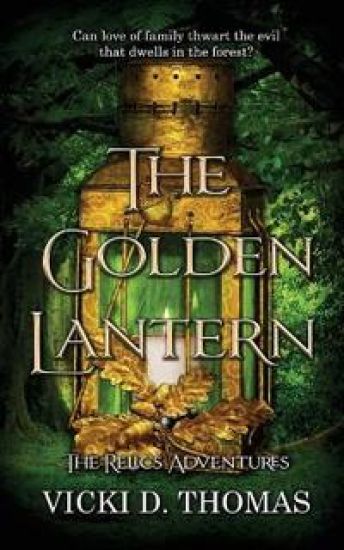
Fifteen-year-old Ivan Kimble returns to the mystical West Forest, willing to risk everything to find his older brother, who hasn't come home as he'd promised. The demon living in the fiery deep caverns warned Ivan not to return to the forest or he'd kill him. Ivan ignores the threat and ventures forward with his guide, Sebastian, the kindly spirit imbued in the Long Dark Cloak. Their journey is fraught with danger at every turn. Will Ivan find his brother and save the forest?

Ivan returns to the mystical West Forest for two reasons. He promised to testify during Merridyn's trial, though he doubts himself and his ability-until the Truth Chair is brought forth. The other reason is to answer his older brother's desperate plea to travel to the Mountain of Smoke and Fire to save him. From what? Ivan knows the mountain is a most-awful place. A monster dwells there, protected by the flesh-eating ghouls. Ivan's life hangs in the balance when he is attacked by the ghoul's vicious leader. Though his recovery is long and painful, he is cared for by his beloved brother and new girlfriend. Their relationship blooms and looks promising.


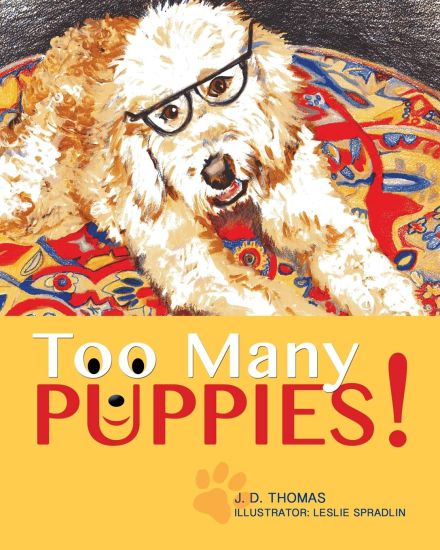
This book is filled with love, gentleness, and humor, and can be enjoyed by children of all ages. Beautifully illustrated, the story is based on the real life adventures of one family and their dog at Christmas time. The author is a former school teacher. Special thanks to J.R.G.T. and E.R.T.

Intrusive Islam has turned the writer Edward Bulyer-Lyttons 1839 metonymic adage on its head. No longer do we find the pen is mightier than the sword. Today, ideological Islam malevolently believes that the sword is mightier than the pen. Muslims resoundingly reject the edict that civilized communication is immutably preferable to gratuitous violence. For the Mohammadens the spilling of blood has extirpated the flow of ink. Fourteen centuries have elapsed, and nothing whatsoever has changed. Islam still savagely lives and dies by the sword. The Bloody Religion of Peace was first conceived by its writer in the terror-sponsoring state of Qatar. However, this work was not actually born until the author set foot in the vast country of Canada. As the pages are turned, we instantly discover that it is a transparent testimony to the uncompromising truth, that Islam has roots that are rotten and that it is therefore incapable of producing any fruit. There is only one hope for the one billion Muslims worldwide, and it is not Allah or Muhammad. Didymus D. Thomas has skillfully demonstrated that Islam is intrinsically a dark deception and that its followers are perilously close to running the risk of being consigned to corruption. The penning of this perspicacious piece has succeeded in attracting an avalanche of attention from all quarters, including both sides of the Atlantic.

Intrusive Islam has turned the writer Edward Bulyer-Lyttons 1839 metonymic adage on its head. No longer do we find the pen is mightier than the sword. Today, ideological Islam malevolently believes that the sword is mightier than the pen. Muslims resoundingly reject the edict that civilized communication is immutably preferable to gratuitous violence. For the Mohammadens the spilling of blood has extirpated the flow of ink. Fourteen centuries have elapsed, and nothing whatsoever has changed. Islam still savagely lives and dies by the sword. The Bloody Religion of Peace was first conceived by its writer in the terror-sponsoring state of Qatar. However, this work was not actually born until the author set foot in the vast country of Canada. As the pages are turned, we instantly discover that it is a transparent testimony to the uncompromising truth, that Islam has roots that are rotten and that it is therefore incapable of producing any fruit. There is only one hope for the one billion Muslims worldwide, and it is not Allah or Muhammad. Didymus D. Thomas has skillfully demonstrated that Islam is intrinsically a dark deception and that its followers are perilously close to running the risk of being consigned to corruption. The penning of this perspicacious piece has succeeded in attracting an avalanche of attention from all quarters, including both sides of the Atlantic.
The influence of Antonio Gramsci's thought is exceeded only by the diverse interpretations to which it has been subjected. Claimed by disparate schools of thought, Gramsci's writing has influenced scholars ranging from Michel Foucault to Noam Chomsky. In The Gramscian Moment, Peter D. Thomas compellingly argues that Gramsci is best understood as deepening the classical Marxist tradition. His significance derives from his distinctive position in the development of classical Marxism, giving it a renewed relevance for generations to come.

Do you wonder why you get yourself into arguments that don't matter, or you say things you don't mean but sound really mean? Would you like to learn how to change that? In How to Say What you Mean without Being Mean, author Jan D. Thomas offers a Christian-based guide to help you better communicate with others. Thomas explores a host of issues and suggests ways to communicate more effectively and facilitate more harmony in your relationships-with God and others-while learning to understand and even love yourself better. How to Say What you Mean without Being Mean discusses: - what communication is; - the role of communication and ways to work at it; - learning how to communicate; - the results of poor communication; - reprogramming your communication process; - hearing and understanding; - the problem of pride in communication; - resolving conflict; and more. This guide communicates that as a Christian, you have a power within you to help you improve your relationships with others. That power stems from God, is God, and it is the power to love as God loves.