Kirjojen hintavertailu. Mukana 11 699 587 kirjaa ja 12 kauppaa.

Kirjahaku

Etsi kirjoja tekijän nimen, kirjan nimen tai ISBN:n perusteella.

1000 tulosta hakusanalla Toby Neighbors

Going Stealth

Going Stealth

Toby Beauchamp

Duke University Press
2019
sidottu
In Going Stealth Toby Beauchamp demonstrates how the enforcement of gender conformity is linked to state surveillance practices that identify threats based on racial, gender, national, and ableist categories of difference. Positioning surveillance as central to our understanding of transgender politics, Beauchamp examines a range of issues, from bathroom bills and TSA screening practices to Chelsea Manning's trial, to show how security practices extend into the everyday aspects of our gendered lives. He brings the fields of disability, science and technology, and surveillance studies into conversation with transgender studies to show how the scrutinizing of gender nonconformity is motivated less by explicit transgender identities than by the perceived threat that gender nonconformity poses to the U.S. racial and security state. Beauchamp uses instances of gender surveillance to demonstrate how disciplinary power attempts to produce conformist citizens and regulate difference through discourses of security. At the same time, he contends that greater visibility and recognition for gender nonconformity, while sometimes beneficial, might actually enable the surveillance state to more effectively track, measure, and control trans bodies and identities.
Going Stealth

Going Stealth

Toby Beauchamp

Duke University Press
2019
pokkari
In Going Stealth Toby Beauchamp demonstrates how the enforcement of gender conformity is linked to state surveillance practices that identify threats based on racial, gender, national, and ableist categories of difference. Positioning surveillance as central to our understanding of transgender politics, Beauchamp examines a range of issues, from bathroom bills and TSA screening practices to Chelsea Manning's trial, to show how security practices extend into the everyday aspects of our gendered lives. He brings the fields of disability, science and technology, and surveillance studies into conversation with transgender studies to show how the scrutinizing of gender nonconformity is motivated less by explicit transgender identities than by the perceived threat that gender nonconformity poses to the U.S. racial and security state. Beauchamp uses instances of gender surveillance to demonstrate how disciplinary power attempts to produce conformist citizens and regulate difference through discourses of security. At the same time, he contends that greater visibility and recognition for gender nonconformity, while sometimes beneficial, might actually enable the surveillance state to more effectively track, measure, and control trans bodies and identities.
Inclusion Strategies That Work!

Inclusion Strategies That Work!

Toby J. Karten

Corwin Press Inc
2015
nidottu
Whether you are a general or a special education K-12 teacher, this guide helps you understand and implement hands-on strategies for successful classroom inclusion of students with disabilities. Students identified for special education services pose a variety of challenges, but this practical resource gives you research-based tools that make differentiating instruction for all students much easier.Designed to be taken off your shelf again and again, Inclusion Strategies That Work! includes an array of lists, charts, curriculum suggestions, tips for working with parents, strategies for preparing Individual Educational Plans (IEPs), including a mock IEP, reproducible activities and applications, and sample inclusion dilemmas. It also gives you information on disability characteristics as well as complementary instructional plans.
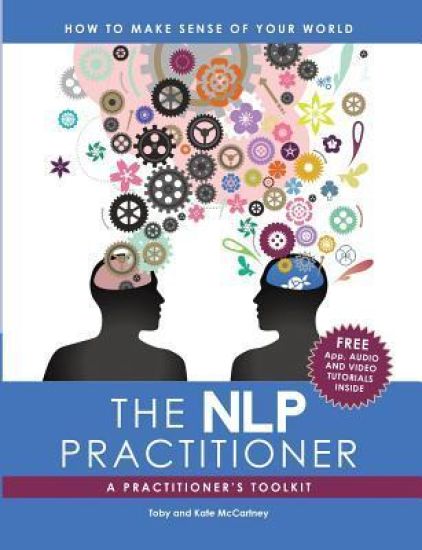
The Nlp Practitioner

The Nlp Practitioner

Toby and Kate McCartney

Lulu Publishing Services
2014
pokkari
Neuro Linguistic Programming (NLP) is the study of excellence and how we get outstanding results... It's an art and science designed for those who have a curiosity and an openness to learning more about the world we live in. NLP is not only a collection of effective tools and techniques, it is a process of replicating our conscious and unconscious patterns to get the right results that move us towards our desired successes. 'The NLP Practitioner' is a jargon free guide to NLP and is packed with step-by-step explanations and diagrams that untangle the mysteries of how to get outstanding results and success in your life. Whether you're a complete beginner, and avid student or an armchair expert, you'll find lots of food for thought in this book.
Scala for Java Developers

Scala for Java Developers

Toby Weston

APress
2017
nidottu
Master the fundamentals of Scala and understand its emphasis on functional programming that sets it apart from Java. This book will help you translate what you already know in Java to Scala to start your functional programming journey. Learn Scala is split into four parts: a tour of Scala, a comparison between Java and Scala, Scala-specific features and functional programming idioms, and finally a discussion about adopting Scala in existing Java teams and legacy projects. After reading and using this tutorial, you'll come away with the skills in Scala to kick-start your productivity with this growing popular language. What You'll Learn Tour Scala and learn the basic syntax, constructs, and how to use the REPLTranslate Java syntax that you already know into ScalaLearn what Scala offers over and above JavaBecome familiar with functional programming concepts and idiomsGaintips and advice useful when transitioning existing Java projects to Scala Who This Book Is For Java developers looking to transition to Scala. No prior experience necessary in Scala.
Laughing

Laughing

Toby Hillside

Trafford Publishing
2018
pokkari
Laughter and Sometimes Tears was written after a question I asked my husband, then of nine years: Why did you leave Puerto Rico? When I heard his answer, I knew there was something hidden inside that was kept a secret from me. You see, Diego was a young man of seventeen years when he came to the mainland and unfortunately ended up in very precarious situations. He even spent eighteen months in prison for a felony crime he did not commit. Many stories he told me either evoked belly laughter or evoked me into crying like a baby in the privacy of the shower.
Codename Nicolette

Codename Nicolette

Toby Oliver

Createspace Independent Publishing Platform
2013
nidottu
In 1941, after a telephone tip off to the Assistant Commissioner of the Metropolitan police the body of a young woman, Sarah Davis is discovered during the hours of the Blackout and at the height of a bombing raid by two Scotland Yard Detectives. The murder victim as reported to the Yard was found on the floor of the master bedroom in a rather rundown South London terraced house in a side street off the Kennington Road. This was a swift, clinical killing, and a single bullet wound to the forehead had killed Sarah Davis instantly. With the nightly Blackout crime was easy to conceal, the house was already damaged by a bomb blast; a direct hit would have obliterated any chance of finding forensic evidence. If they hadn't reached the body, the auxiliary services would simply have pulled Sarah's mutilated body out of the rubble without a second thought, and assumed she died as a result of the bombing.As Chief Inspector Luke Garvan knelt over the body illuminated by the weirdly intense bluish light of the incendry bombs exploding along Monkton Drive, he felt that this was no ordinary murder; it had all the hallmarks of a professional killing. On returning to the crime scene the following day his suspicions were confirmed when he found the leading Home Office Pathologist Sam Menzies examining the body rather the local Police Surgeon.Back at Scotland Yard during a meeting with the Assistant Commissioner he is introduced to Spencer Hall who claims to be from The Home Office, he is in fact like Sarah Davis a member of MI5's shadowy Twenty Committee. In normal circumstances Special Branch would have taken the lead on an investigation involving the security services, but for some reason MI5 demanded that Garvan head up the inquiry. Garvan's initial instinct that the murder had all the hallmarks of a professional killing are confirmed when Spencer Hall explains that MI5 believe Sarah was killed by one of their double-agents on the direct order of German Intelligence, and that as a consequence the Twenty Committee is on the brink of disaster. Their work is vital for the future conduct of the War; and one rogue agent could bring the entire system crashing down like a pack of cards. The price and the stakes are high; the Investigation becomes a race against time to track down the killer of Sarah Davis before it's too late, and Britain's counter-espionage battle against the Abwehr is lost, and the result, could quite literally affect the final outcome of the War against Nazi Germany
The Sphinx of the Charles

The Sphinx of the Charles

Toby Ayer

The Lyons Press
2016
sidottu
Harry Parker was probably the most important figure in American rowing of the past century. His heavyweight crews at Harvard topped the leagues more consistently than any other team (they won the Eastern Sprints regatta, against most of the top college crews, more than three times as often as their nearest rival). From the time they miraculously won the 1963 Harvard-Yale Race at the end of his first year at the helm, his varsity didn’t lose a race for six years, and they didn’t lose to Yale until the Reagan administration. He was the first US National Team coach, and oversaw five Olympic teams. He coached the sons of his great oarsmen from the 60’s and 70’s, and at age 70 was still putting the sons to shame on a bicycle, or running the steps of the Harvard Stadium. He was respected by all, revered and adored by his rowers, and yet no one seemed to know him. The persistent myth was that he hardly said a word, and that his powerful mystique alone made his oarsmen great and their boats go fast. Though a fundamentally compelling figure, Parker’s famous reticence means that few managed to spend much time close to him. Since he made no attempt to explain himself, legends abound: he never got older; he could control the weather; he could walk on water. The Sphinx of the Charles: A Year at Harvard with Harry Parker takes the reader not only inside the Harvard boathouse, but into the coaching launch with Parker. We see how he coached—how many words he actually uttered—as he guided his team through a year of training, and hear about his life in the sport. We see a paradox: Parker remained remarkably constant over the last forty-five years, yet he constantly evolved, changed his style, and used every means at his disposal to build champion crews. The Sphinx of the Charles goes inside the rowing world in a way hasn’t been done before, putting the reader in the passenger seat next to one of the most successful coaches of all time. Parker is a historical icon, part of a tradition that goes back to the beginning of intercollegiate athletics in America. His story needs to be told. The Sphinx of the Charles is fundamentally a chronicle of a year with the Harvard team and a profile of Harry Parker as he was, five years before his death: comfortable in his position as elder and master of the sport, reflective but not nostalgic, aged but nearly impervious to aging. It is driven by Ayer’s own observations of Parker from his seven years of coaching and training at the Harvard boathouse, but especially from one academic year, 2008-9. he shadowed him for a few days every week from September to June, observing practices both on and off the water, and interacting with the team. The present tense of the narrative reflects this immediacy, but also the sense that Parker has endured and continues to endure. And though The Sphinx of the Charles is not a biography in the usual sense, Parker’s life and career were rich and extraordinary and they must be explored. Thus, each chapter carries the reader another month through the training year at Harvard, with vivid descriptions of team practices and a sense of progress towards the spring racing goals. From the passenger seat next to Parker we watch the rowers tackling the daily workouts, honing their mental and physical stamina along with their bladework, always trying to beat their teammates in the crew next to them, under Parker’s watchful eye and ever-present megaphone. Parker makes asides in the launch that the rowers will never hear: remarks about the crews and their progress, passing wildlife, memories of his life in rowing, the river and its history, the sunlight on the water. Intertwined with the narrative are historical perspective, descriptions of the boathouse and the river, profiles of other coaches at Harvard, and impressions from rowers and coaches who worked with Parker over the previous forty-five years. Newspaper and magazine articles reveal how Parker was depicted, and how he revealed himself, to the rowing world and the public. The reader sees how Parker evolved and yet remained consistent. Parker was responsible for turning college crew into a three-season sport: varsity rowers now practice every day from September to early June. There are long “head” races in the fall, including the famous Head of the Charles in Boston. The winter months are a period of tough training on rowing machines and indoor “tanks,” lasting until the ice breaks up on the river. The official season of “sprint” races doesn’t start until April, and includes two championship regattas, the Harvard-Yale Race, and (if they win one of the championships) the Henley Royal Regatta in England.
Climbing California's Fourteeners

Climbing California's Fourteeners

Toby Evans

Falcon Guides
2021
pokkari
From the southernmost peak of Mt. Langley to Mt. Shasta in the north, California’s fifteen peaks of 14,000 feet or more are some of the most challenging and beautiful mountains in the country. Over the past decade the rise of endurance activities (including obstacle racing) and the popularity of reality television have increased the popularity of these daunting climbs (California’s Fourteeners have been featured on The Amazing Race, Man vs. Wild, and Django Unchained). No matter the skill level, this book will lay out the plans and logistics to allow every climber a positive experience. Each of the mountains will be broken down based on the technical skills needed, a recommended list of gear and equipment, how to prepare for rapidly changing weather and trail conditions, and a general timeframe needed to reach each summit.
The Sphinx of the Charles

The Sphinx of the Charles

Toby Ayer

ROWMAN LITTLEFIELD
2022
pokkari
Harry Parker was probably the most important figure in American rowing of the past century. His heavyweight crews at Harvard topped the leagues more consistently than any other team (they won the Eastern Sprints regatta, against most of the top college crews, more than three times as often as their nearest rival). From the time they miraculously won the 1963 Harvard-Yale Race at the end of his first year at the helm, his varsity didn’t lose a race for six years, and they didn’t lose to Yale until the Reagan administration. He was the first US National Team coach, and oversaw five Olympic teams. He coached the sons of his great oarsmen from the 60’s and 70’s, and at age 70 was still putting the sons to shame on a bicycle, or running the steps of the Harvard Stadium. He was respected by all, revered and adored by his rowers, and yet no one seemed to know him. The persistent myth was that he hardly said a word, and that his powerful mystique alone made his oarsmen great and their boats go fast.Though a fundamentally compelling figure, Parker’s famous reticence means that few managed to spend much time close to him. Since he made no attempt to explain himself, legends abound: he never got older; he could control the weather; he could walk on water. The Sphinx of the Charles: A Year at Harvard with Harry Parker takes the reader not only inside the Harvard boathouse, but into the coaching launch with Parker. We see how he coached—how many words he actually uttered—as he guided his team through a year of training, and hear about his life in the sport. We see a paradox: Parker remained remarkably constant over the last forty-five years, yet he constantly evolved, changed his style, and used every means at his disposal to build champion crews. The Sphinx of the Charles goes inside the rowing world in a way hasn’t been done before, putting the reader in the passenger seat next to one of the most successful coaches of all time. Parker is a historical icon, part of a tradition that goes back to the beginning of intercollegiate athletics in America. His story needs to be told.The Sphinx of the Charles is fundamentally a chronicle of a year with the Harvard team and a profile of Harry Parker as he was, five years before his death: comfortable in his position as elder and master of the sport, reflective but not nostalgic, aged but nearly impervious to aging. It is driven by Ayer’s own observations of Parker from his seven years of coaching and training at the Harvard boathouse, but especially from one academic year, 2008-9. he shadowed him for a few days every week from September to June, observing practices both on and off the water, and interacting with the team. The present tense of the narrative reflects this immediacy, but also the sense that Parker has endured and continues to endure. And though The Sphinx of the Charles is not a biography in the usual sense, Parker’s life and career were rich and extraordinary and they must be explored.Thus, each chapter carries the reader another month through the training year at Harvard, with vivid descriptions of team practices and a sense of progress towards the spring racing goals. From the passenger seat next to Parker we watch the rowers tackling the daily workouts, honing their mental and physical stamina along with their bladework, always trying to beat their teammates in the crew next to them, under Parker’s watchful eye and ever-present megaphone. Parker makes asides in the launch that the rowers will never hear: remarks about the crews and their progress, passing wildlife, memories of his life in rowing, the river and its history, the sunlight on the water. Intertwined with the narrative are historical perspective, descriptions of the boathouse and the river, profiles of other coaches at Harvard, and impressions from rowers and coaches who worked with Parker over the previous forty-five years. Newspaper and magazine articles reveal how Parker was depicted, and how he revealed himself, to the rowing world and the public. The reader sees how Parker evolved and yet remained consistent. Parker was responsible for turning college crew into a three-season sport: varsity rowers now practice every day from September to early June. There are long “head” races in the fall, including the famous Head of the Charles in Boston. The winter months are a period of tough training on rowing machines and indoor “tanks,” lasting until the ice breaks up on the river. The official season of “sprint” races doesn’t start until April, and includes two championship regattas, the Harvard-Yale Race, and (if they win one of the championships) the Henley Royal Regatta in England.