Kirjojen hintavertailu. Mukana 11 627 423 kirjaa ja 12 kauppaa.

Kirjahaku

Etsi kirjoja tekijän nimen, kirjan nimen tai ISBN:n perusteella.

1000 tulosta hakusanalla Ulysse Chevalier

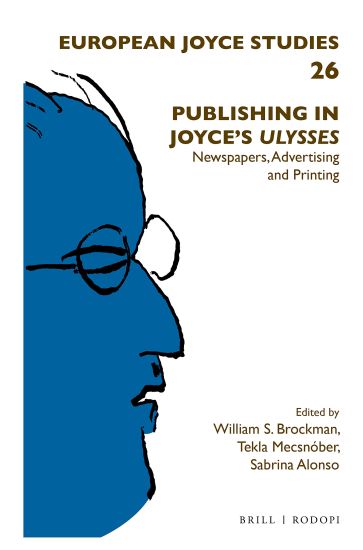
Publishing in Joyce's Ulysses
Appearing in an era of rapid change in the printing and publishing industries, James Joyce’s Ulysses exploited and exemplified those industries to the degree that the book can be seen as a virtual museum of 1904 media. Publishing in Joyce's “Ulysses”: Newspapers, Advertising and Printing, edited by William S. Brockman, Tekla Mecsnóber and Sabrina Alonso, gathers twelve essays by Joyce scholars exploring facets of those trades that pervade the substance of the book. Essays explore the book’s incorporation of mass-market weekly magazines, contemporary advertising slogans, newspaper clippings, the “Aeolus” episode’s printing office and the varied typographic styles of successive editions of Ulysses. Placing Joyce’s work in its historical milieu, the collection offers a fresh perspective on modern print culture. Contributors are: Sabrina Alonso, Harald Beck, William S. Brockman, Elisabetta d'Erme, Judith Harrington, Matthew Hayward, Sangam MacDuff, Tekla Mecsnóber, Tamara Radak, Fritz Senn, David Spurr, Jolanta Wawrzycka.
The Adventures Of Ulysses

The Adventures Of Ulysses

Charles Lamb

Double 9 Books
2023
nidottu
According to an ancient Greek myth, Ulysses and his companions wandered while making their way back from Troy after the Grecians had destroyed that renowned Asian city. After a ten-year hiatus, he was driven by the need to see his wife and Ithaca once again. Because of this, he turned down the goddess Calypso's invitations to stay with her and share in her immortality on the lovely island. Ulysses provided a striking illustration of wedded love as well as a deserving illustration of how precious his nation is to every good man.But a life that would never end in shame has less allure for a heroic mentality than dying with glory. When Neptune returned from seeing his favorite Ethiopians, he saw Ulysses taming the waters, which are his territory. The god's heart was set on fire at the sight of the offspring of the man he so bitterly despised for Polyphemus' sake.Demodocus approached and picked up his harp, which was suspended between two silver pillars. The hall was once more filled with the suitors as dawn finally broke through the clouds. Some people questioned the significance of the gleaming array of armor and lances that were piled up by the door's entrance.
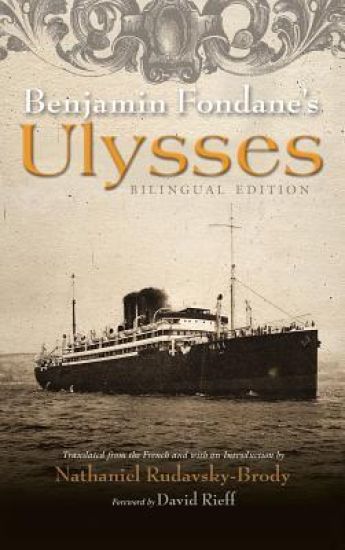
Benjamin Fondane's Ulysses

Benjamin Fondane's Ulysses

Benjamin Fondane

Syracuse University Press
2017
sidottu
From 1923, when he emigrated from Bucharest, to his deportation to Auschwitz-Birkenau in 1944, Benjamin Fondane made a unique and independent-minded contribution to the literary and intellectual life of Paris. One of the most significant pieces in Fondane’s body of work is the long poem Ulysses, first published in 1933. Fondane considerably revised his text during the dark years of occupied Paris, and it is this second ""edition without an end,"" left unfinished at the time of his deportation, that is translated here for the first time into English. It is a moving testament to the poetic voice and philosophical engagement of this exceptional figure of the Paris avant-garde.
The Economy of Ulysses

The Economy of Ulysses

Mark Osteen

Syracuse University Press
1995
nidottu
This original and wide-ranging study explores the "economies" of Ulysses using a number of different critical and theoretical methods. Not only do the economic circumstances of the characters form a significant part of the novel's realistic subject matter but the relationships between characters are also based upon modes of economic exchange. Moreover, the narrative itself is filled with economic terms that serve as tropes for its themes, events, and techniques. Some of the subjects and topics covered include Joyce's own "spendthrift" background, gift exchanges and reciprocity as a fundamental means of reader/author relationship in the novel, money and language, Bloom as an "economic man," the "narrative economy" of "Wandering Rocks," the relationship between commerce and eroticism, the function of sacrifice in the creation of value, counterfeiting, forgery, and other crimes of writing, and a demonstration of how the encounter between Stephen and Bloom "makes both ends meet." The book brings together not only the opposed economic impulses in Joyce but also the conflicting strains of regulation and excess in the novel's structural economy.