Kirjahaku
Etsi kirjoja tekijän nimen, kirjan nimen tai ISBN:n perusteella.
1000 tulosta hakusanalla Virginia Woolf

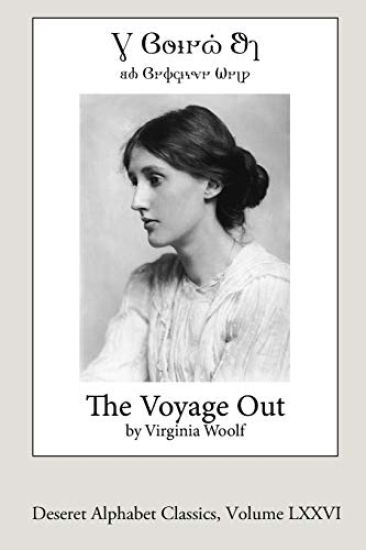
Adeline Virginia Stephen Woolf (1882-1941) was an English author best known for her novels. She is considered one of the most important modernist 20th century authors and also a pioneer in the use of stream of consciousness as a narrative device. She suffered from bipolar disorder and, ultimately, committed suicide at the age of fifty-nine. "The Voyage Out" (1915) is Woolf's first novel. It's the story of Rachel Vinrace, a na ve young girl who travels to a South American resort for an extended stay. While there, she learns about the wider world, both abroad and at home. This book is in the Deseret Alphabet, a phonetic alphabet for writing English developed in the mid-19th century at the University of Deseret (now the University of Utah).

Night and Day: Special Edition
Virginia Woolf
Createspace Independent Publishing Platform
2018
nidottu
Set in Edwardian London, Night and Day contrasts the daily lives and romantic attachments of two acquaintances, Katharine Hilbery and Mary Datchet. The novel examines the relationships between love, marriage, happiness, and success. We are delighted to publish this classic book as part of our extensive Classic Library collection. Many of the books in our collection have been out of print for decades, and therefore have not been accessible to the general public. The aim of our publishing program is to facilitate rapid access to this vast reservoir of literature, and our view is that this is a significant literary work, which deserves to be brought back into print after many decades. The contents of the vast majority of titles in the Classic Library have been scanned from the original works. To ensure a high quality product, each title has been meticulously hand curated by our staff. Our philosophy has been guided by a desire to provide the reader with a book that is as close as possible to ownership of the original work. We hope that you will enjoy this wonderful classic work, and that for you it becomes an enriching experience.

In The Voyage Out, one of Woolf's wittiest, socially satirical novels, Rachel Vinrace embarks for South America on her father's ship, and is launched on a course of self-discovery in a modern version of the mythic voyage. Lorna Sage's Introduction and Explanatory Notes offer guidance to the reader new to Woolf, and illuminate Woolf's presence, not identifiable in the heroine, but in the social satire, lyricism and patterning of consciousness in one woman's rite of passage.
A bold experiment in modernist fiction, Virginia Woolf's novel Night and Day is a study in contrasts. The narrative ricochets between the lives and thoughts of two friends, Katharine Hilbery and Mary Datchet, using the stark differences and points of similarity between them to construct an engrossingly complex and detailed portrait and social commentary.
Interested in diving into the works of brilliant modernist author Virginia Woolf, but don't know where to start? Try Monday or Tuesday, a collection of eight short stories originally published in 1921. Although the collected stories contain the same keen insight and bold experimentation that made Woolf's reputation, their easy-to-digest size make them a bit easier to tackle than one of Woolf's novels, especially for newcomers to this feminist icon's body of work.
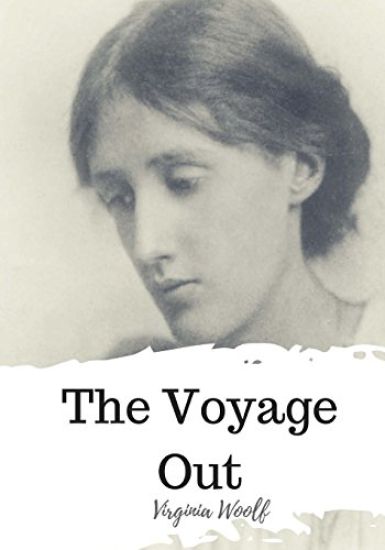
The first novel in what would be a remarkable but tragically curtailed creative career, Virginia Woolf's The Voyage Out recounts the tale of Rachel Vinrace's literal and metaphorical journey. En route to South America on one of her father's ships, Rachel undertakes her own voyage of self-discovery as she interacts with a motley crew of passengers, through whom Woolf takes the opportunity to savagely satirize the bourgeois mores of Edwardian England.

Jacob's Room is Virginia Woolf's first truly experimental novel. It is a portrait of a young man, who is both representative and victim of the social values which led Edwardian society into war. Jacob's life is traced from the time he is a small boy playing on the beach, through his years in Cambridge, then in artistic London, and finally making a trip to Greece, but this is no orthodox Bildungsroman. Jacob is presented in glimpses, in fragments, as Woolf breaks down traditional ways of representing character and experience. The novel's composition coincided with the consolidation of Woolf's interest in feminism, and she criticizes the privilege thoughtless smugness of patriarchy, "the other side," "the men in clubs and Cabinets." Her stylistic innovations are conscious attempts to realize and develop women's writing and the novel dramatizes her interest in the ways both language and social environments shape differently the lives of men and women.

Set in the summer home of an English family, the novel unfolds through shifting perspectives of each character's stream of consciousness, recalling childhood emotions and highlights of adult relationships. Shifts occur even mid-sentence, and in some sense they resemble the rotating beam of the lighthouse. A landmark of high modernism and one of Woolf's best works. To the Lighthouse features the serene and maternal Mrs. Ramsay, the tragic yet absurd Mr. Ramsay, and their children and assorted guests who are on holiday on the Isle of Skye. From the seemingly trivial postponement of a visit to a nearby lighthouse, Virginia Woolf constructs a moving examination of the complex tensions and allegiances of family life and the conflicts within a marriage.

Night and Day is a novel by Virginia Woolf first published on 20 October 1919. Set in Edwardian London, Night and Day contrasts the daily lives and romantic attachments of two acquaintances, Katharine Hilbery and Mary Datchet. The novel examines the relationships between love, marriage, happiness, and success. Katharine Hilbery is beautiful and privileged, but uncertain of her future. She must choose between becoming engaged to the oddly prosaic poet William Rodney, and her dangerous attraction to the passionate Ralph Denham. As she struggles to decide, the lives of two other women - women's rights activist Mary Datchet and Katharine's mother, Margaret, struggling to weave together the documents, events and memories of her own father's life into a biography - impinge on hers with unexpected and intriguing consequences. Virginia Woolf's delicate second novel is both a love story and a social comedy, yet it also subtly undermines these traditions, questioning a woman's role and the very nature of experience.
Jacob's Room is the third novel by Virginia Woolf, first published on 26 October 1922. Virginia Woolf's first original and distinguished work, Jacob's Room is the story of a sensitive young man named Jacob Flanders. The life story, character and friends of Jacob are presented in a series for separate scenes and moments from his childhood, through college at Cambridge, love affairs in London, and travels in Greece, to his death in the war. Jacob's Room established Virginia Woolf's reputation as a highly poetic and symbolic writer who places emphasis not on plot or action but on the psychological realm of occupied by her characters.