William Downing Webster (1868 - 1913) was a British ethnographic dealer and collector. In 1895 he began to issue illustrated ethnographic catalogues, 17 with illustrations, 14 with photographs.The 14 catalogues with photographs (18 - 31) are color corrected, cleaned and bundled in this publication.Includes indexes for object type and region that can be cross referenced to find specific items on exact pages.This Second Edition also includes and index for collection numbers.This publication is meant for academics, researchers and collectors
Are you too young to modern technologies and feeling like sometimes you can't even follow what is discussed on the internet? Or have you already seen some in school but are still feeling frustrated because there are still so many difficult languages you have never seen? In the modern digital era there are many new words and phrases popping up on a daily basis. These new language stuff tend to be flexible and way less formal. Still, they can become fairly easy to learn if there are straight forward explanations available to get you started. This is exactly what we have prepared for you here - plain-English introduction of the fundamental tech terms you need to know to survive the 21 century classroom.This book focuses on web related tech words and phrases.
W ARESZCIE UWIĘZIENI W MURACHW LAŃCUCHACH I SZNURACHCHODZĄ Z BAGAŻEMNIEPOMNI KTO JEST LEKARZEMDorothy K. Kardaś, urodzona w Żninie - w Polsce; wyemigrowalado Stan w Zjednoczonych w 1981 roku; otrzymala obywatelstwoamerykańskie w 1989 roku. Dorobek pisarski autorki jestwielogatunkowy i nieszablonowy zar wno w prozie jak i poezji.
W ARESZCIE UWIĘZIENI W MURACHW LAŃCUCHACH I SZNURACHCHODZĄ Z BAGAŻEMNIEPOMNI KTO JEST LEKARZEMDorothy K. Kardaś, urodzona w Żninie - w Polsce; wyemigrowalado Stan w Zjednoczonych w 1981 roku; otrzymala obywatelstwoamerykańskie w 1989 roku. Dorobek pisarski autorki jestwielogatunkowy i nieszablonowy zar wno w prozie jak i poezji.
This is the story about growing up in a poor cowboy/farmer family, serving in the armed forces during WWII, and then starting at the bottom in the oil fields of West Texas and then rising to an office position in the Gulf Building in down town Midland, Texas.
William Hurrell Mallock (7 February 1849 - 2 April 1923) was an English novelist and economics writer. A nephew of the historian Froude, he was educated privately and then at Balliol College, Oxford. He won the Newdigate Prize in 1872 for his poem The Isthmus of Suez and took a second class in the final classical schools in 1874, securing his Bachelor of Arts degree from Oxford University. Mallock never entered a profession, though at one time he considered the diplomatic service. He attracted considerable attention by his satirical novel, largely a symposium like Plato's Republic, The New Republic (1877), conceived while he was a student at Oxford, in which he introduced characters easily recognized as such prominent individuals as Benjamin Jowett, Matthew Arnold, Violet Fane, Thomas Carlyle, and Thomas Henry Huxley. Although the book was not well received by critics at first, it did cause instant scandal, particularly concerning the portrait of literary scholar Walter Pater: His Pater's] first main work, Studies in the History of the Renaissance was published in 1873. Over the next three or four years it became the focus of considerable hostility towards Pater, principally reviewers objected to its amoral hedonism. Moreover, Pater was the subject of a cruel satire in W. H. Mallock's The New Republic which was published in Belgravia in 1876-7 and in book form in 1877. He appeared there as 'Mr. Rose'-an effete, impotent, sensualist with a perchant for erotic literature and beautiful young men. In the second edition of the Renaissance the 'Conclusion' was removed, partly in response to the public ridicule, but mainly because of pressure brought to bear on Pater within Oxford by figures such as Benjamin Jowett. In particular, the discovery of his 'relationship' with William Money Hardinge, a Balliol undergraduate, threatened Pater with a sexual scandal. Mallock's book appeared during the competition for the Oxford Professorship of Poetry and played a role in convincing Pater to remove himself from consideration. A few months later Pater published what may have been a subtle riposte: "A Study of Dionysus: The Spiritual Form of Fire and Dew."Mallock's New Republic was an essential book to Ronald Knox], perhaps his favourite work of secular literature outside the classics"His keen logic and gift for acute exposition and criticism were displayed in later years both in fiction and in controversial works. In a series of books dealing with religious questions he insisted on dogma as the basis of religion and on the impossibility of founding religion on purely scientific data. In Is Life Worth Living? (1879) and the satirical novel The New Paul and Virginia (1878) he attacked positivist theories 17] 18] and defended the Roman Catholic Church; 19] 20] 21] 22] one of his uncles, Hurrell Froude, had been a founder of the Oxford Movement. In a volume on the intellectual position of the Church of England, Doctrine and Doctrinal Disruption (1900), he advocated the necessity of a strictly defined creed. Later volumes on similar topics were Religion as a Credible Doctrine (1903) and The Reconstruction of Belief (1905). He also authored articles, being a frequent contributor to many newspapers and magazines, including The Forum, National Review, Public Opinion, Contemporary Review, and Harper's Weekly. One in particular, directed against Thomas Huxley's agnosticism, appeared in the April 1889 issue of The Fortnightly Review, 23] being Mallock's response to a controversy between, among others, Huxley and the Bishop of Peterborough. 24] He published several works on economics, directed against radical and socialist 26] theories: Social Equality (1882), Property and Progress (1884), Labor and the Popular Welfare (1893), Classes and Masses (1896), Aristocracy and Evolution (1898), and A Critical Examination of Socialism (1908) - and later visited the United States in order to deliver a series of lectures on the subject: ....
We are innately whole, complete, intact, invincible, incorruptible and sovereign. Often we decide otherwise. Regain a clear view of your whole self, dissolving fear, jealousy, contest, anger, loneliness, lack and more.
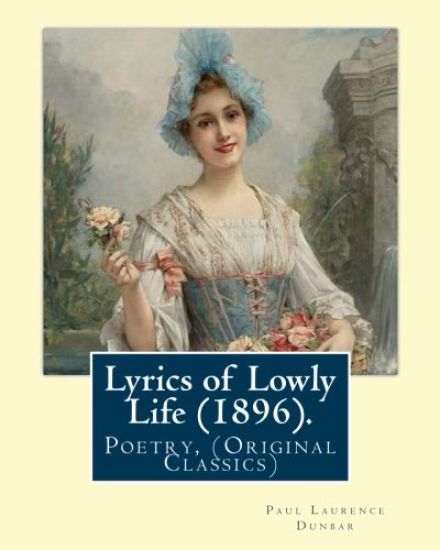
William Dean Howells (March 1, 1837 - May 11, 1920) was an American realist novelist, literary critic, and playwright, nicknamed "The Dean of American Letters". He was particularly known for his tenure as editor of The Atlantic Monthly, as well as for his own prolific writings, including the Christmas story "Christmas Every Day" and the novels The Rise of Silas Lapham and A Traveler from Altruria..... Paul Laurence Dunbar (June 27, 1872 - February 9, 1906) was an American poet, novelist, and playwright of the late 19th and early 20th centuries. Born in Dayton, Ohio, to parents who had been enslaved in Kentucky before the American Civil War, Dunbar began to write stories and verse when still a child; he was president of his high school's literary society. He published his first poems at the age of 16 in a Dayton newspaper. Much of Dunbar's more popular work in his lifetime was written in the Negro dialect associated with the antebellum South, though he also used the Midwestern regional dialect of James Whitcomb Riley. Dunbar's work was praised by William Dean Howells, a leading editor associated with the Harper's Weekly, and Dunbar was one of the first African-American writers to establish an international reputation. He wrote the lyrics for the musical comedy In Dahomey (1903), the first all-African-American musical produced on Broadway in New York. The musical later toured in the United States and the United Kingdom. Dunbar also wrote in conventional English in other poetry and novels. Since the late 20th century, scholars have become more interested in these other works. Suffering from tuberculosis, which then had no cure, Dunbar died in Dayton at the age of 33. Early life: Paul Laurence Dunbar was born at 311 Howard Street in Dayton, Ohio, on June 27, 1872, to parents who had been enslaved in Kentucky before the American Civil War. After being emancipated, his mother Matilda had moved to Dayton with other family members, including her two sons Robert and William from her first marriage. Dunbar's father Joshua had escaped from slavery in Kentucky before the war ended. He traveled to Massachusetts and volunteered for the 55th Massachusetts Infantry Regiment, one of the first two black units to serve in the war. The senior Dunbar also served in the 5th Massachusetts Cavalry Regiment. Paul Dunbar was born six months after Joshua and Matilda married on Christmas Eve, 1871. The marriage of Dunbar's parents was troubled and Dunbar's mother left Joshua soon after having their second child, a daughter.Joshua died on August 16, 1885; Paul was then 12 years old. Dunbar wrote his first poem at the age of six and gave his first public recital at the age of nine. His mother assisted him in his schooling, having learned to read expressly for that purpose. She often read the Bible with him, and thought he might become a minister in the African Methodist Episcopal Church. It was the first independent black denomination in America, founded in Philadelphia in the early 19th century. Dunbar was the only African-American student during his years at Central High School in Dayton; Orville Wright was a classmate and friend. Well-accepted, he was elected as president of the school's literary society, and became the editor of the school newspaper and a member of the debate club..........