
Kirjahaku
Etsi kirjoja tekijän nimen, kirjan nimen tai ISBN:n perusteella.
1000 tulosta hakusanalla WALTER RYE
Ivanhoe (1820) by: Walter Scott (A Historical Novel )
Walter Scott
Createspace Independent Publishing Platform
2017
nidottu
Ivanhoe is a historical novel by Sir Walter Scott, first published in 1820 in three volumes and subtitled A Romance. At the time it was written it represented a shift by Scott away from fairly realistic novels set in Scotland in the comparatively recent past, to a somewhat fanciful depiction of mediaeval England. It has proved to be one of the best known and most influential of Scott's novels. Ivanhoe is set in 12th-century England, with colourful descriptions of a tournament, outlaws, a witch trial and divisions between Jews and Christians. It has been credited for increasing interest in romance and medievalism; John Henry Newman claimed Scott "had first turned men's minds in the direction of the Middle Ages", while Carlyle and Ruskin made similar assertions of Scott's overwhelming influence over the revival, based primarily on the publication of this novel. It has also had an important influence on popular perceptions of Robin Hood, Richard the Lionheart and King John. There have been several adaptations for stage, film and television.
The big book of nursery rhymes. By: Walter Jerrold and ill. Charles Robinson (Children's Classics)
Walter Jerrold
Createspace Independent Publishing Platform
2017
nidottu
INTRODUCTION THE very title "Nursery Rhymes", which has come to be associated with a A great body of familiar verse, is in itself sufficient evidence ot how that verse has been passed down from generation to generation. Some pieces date, perhaps, from hundreds of years ago, and had been repeated thousands of times betore they were printed. There are not wanting learned tolk who tell us that there was once, in Britain, a King Cole, and that the only relic of his reign which we have is the verse in which he is shown calling for his pipe, his bowl, and his fiddlers three. Such wise people forget that pipes were not smoked here before the days of Queen Elizabeth, and that fiddles were not known before the sixteenth century. It is certain, however, that some ot these rhymes were familiar in those great days; Shakespeare seems to reter to one

The Virginians. By: William Makepeace Thackeray, edited By: Ernest Rhys, introduction By: Walter Jerrold: Historical novel (COMPLETE SET VOLUM 1, AND
Walter Jerrold; William Makepeace Thackeray
Createspace Independent Publishing Platform
2017
nidottu
The Virginians: A Tale of the Last Century (1857-59) is a historical novel by William Makepeace Thackeray which forms a sequel to his Henry Esmond and is also loosely linked to Pendennis. PLOT: It tells the story of Henry Esmond's twin grandsons, George and Henry Warrington. Henry's romantic entanglements with an older woman lead up to his taking a commission in the British army and fighting under the command of General Wolfe at the capture of Quebec. On the outbreak of the American War of Independence he takes the revolutionary side. George, who is also a British officer, thereupon resigns his commission rather than take up arms against his brother.... William Makepeace Thackeray (18 July 1811 - 24 December 1863) was an English novelist of the 19th century. He is known for his satirical works, particularly Vanity Fair, a panoramic portrait of English society. BIOGRAPHY: Thackeray, an only child, was born in Calcutta, British India, where his father, Richmond Thackeray (1 September 1781 - 13 September 1815), was secretary to the Board of Revenue in the British East India Company. His mother, Anne Becher (1792-1864), was the second daughter of Harriet Becher and John Harman Becher, who was also a secretary (writer) for the East India Company. Richmond died in 1815, which caused Anne to send her son to England in 1816, while she remained in British India. The ship on which he travelled made a short stopover at St. Helena, where the imprisoned Napoleon was pointed out to him. Once in England he was educated at schools in Southampton and Chiswick, and then at Charterhouse School, where he became a close friend of John Leech. Thackeray disliked Charterhouse, and parodied it in his fiction as "Slaughterhouse". Nevertheless, Thackeray was honoured in the Charterhouse Chapel with a monument after his death. Illness in his last year there, during which he reportedly grew to his full height of six foot three, postponed his matriculation at Trinity College, Cambridge, until February 1829. citation needed]Never too keen on academic studies, Thackeray left Cambridge in 1830, but some of his earliest published writing appeared in two university periodicals, The Snob and The Gownsman. Thackeray then travelled for some time on the continent, visiting Paris and Weimar, where he met Goethe. He returned to England and began to study law at the Middle Temple, but soon gave that up. On reaching the age of 21 he came into his inheritance from his father, but he squandered much of it on gambling and on funding two unsuccessful newspapers, The National Standard and The Constitutional, for which he had hoped to write. He also lost a good part of his fortune in the collapse of two Indian banks. Forced to consider a profession to support himself, he turned first to art, which he studied in Paris, but did not pursue it, except in later years as the illustrator of some of his own novels and other writings. Thackeray's years of semi-idleness ended after he married, on 20 August 1836, Isabella Gethin Shawe (1816-1893), second daughter of Isabella Creagh Shawe and Matthew Shawe, a colonel who had died after distinguished service, primarily in India. The Thackerays had three children, all girls: Anne Isabella (1837-1919), Jane (who died at eight months old) and Harriet Marian (1840-1875), who married Sir Leslie Stephen, editor, biographer and philosopher. Walter Copeland Jerrold (1865-1929) was an English writer, biographer and newspaper editor. Ernest Percival Rhys ( 17 July 1859 - 25 May 1946) was a Welsh-English writer, best known for his role as founding editor of the Everyman's Library series of affordable classics. He wrote essays, stories, poetry, novels and plays.
List of Walter Joseph Schenck Jr's Publications
Walter Joseph Schenck
Createspace Independent Publishing Platform
2017
nidottu
This is the latest update of Walter's books, rendered in full color, including critical reviews. Walter ranks among the most accomplished and diversified writers in the United States.
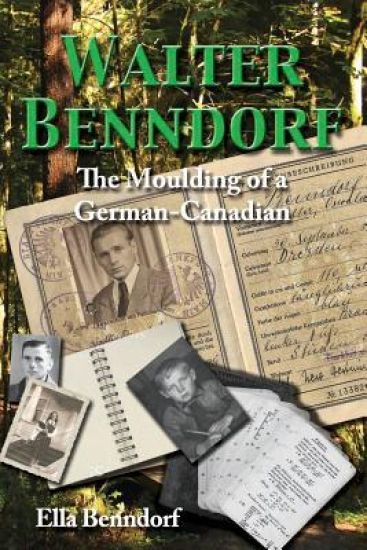
Walter Benndorf: The Moulding of a German Canadian
Ella Benndorf
Createspace Independent Publishing Platform
2017
nidottu

Walter Moose on Oak Hill
Patricia Mitchell Lapidus
Createspace Independent Publishing Platform
2017
nidottu
The Walter Moose Stories are based on memories of my early life on a hill farm in Maine and on stories my father told of his life there from the time he arrived into the borning room until he moved his family to a farm in the valley. These stories were written to entertain my grandson and to give him some of his family history, especially of the Mitchell farm on Oak Hill in Litchfield, Maine.

From a Bancroft Prize-winning historian, a biography of the famed poet, courtier, and colonizer, showing how he laid the foundations of the English EmpireSir Walter Ralegh was a favorite of Queen Elizabeth. She showered him with estates and political appointments. He envisioned her becoming empress of a universal empire. She gave him the opportunity to lead the way. In Walter Ralegh, Alan Gallay shows that, while Ralegh may be best known for founding the failed Roanoke colony, his historical importance vastly exceeds that enterprise. Inspired by the mystical religious philosophy of hermeticism, Ralegh led English attempts to colonize in North America, South America, and Ireland. He believed that the answer to English fears of national decline resided overseas -- and that colonialism could be achieved without conquest. Gallay reveals how Ralegh launched the English Empire and an era of colonization that shaped Western history for centuries after his death

From a Bancroft Prize-winning historian, a biography of the famed poet, courtier, and colonizer, showing how he laid the foundations of the English EmpireSir Walter Ralegh was a favorite of Queen Elizabeth. She showered him with estates and political appointments. He envisioned her becoming empress of a universal empire. She gave him the opportunity to lead the way. In Walter Ralegh, Alan Gallay shows that, while Ralegh may be best known for founding the failed Roanoke colony, his historical importance vastly exceeds that enterprise. Inspired by the mystical religious philosophy of hermeticism, Ralegh led English attempts to colonize in North America, South America, and Ireland. He believed that the answer to English fears of national decline resided overseas -- and that colonialism could be achieved without conquest. Gallay reveals how Ralegh launched the English Empire and an era of colonization that shaped Western history for centuries after his death

Walter Rauschenbusch and His Contribution to Social Christianity
Anna M Singer
Wipf Stock Publishers
2007
pokkari

The day Walter White was buried in 1955 the New York Times called him "the nearest approach to a national leader of American Negroes since Booker T. Washington." For more than two decades, White, as secretary of the NAACP, was perhaps the nation's most visible and most powerful African-American leader. He won passage of a federal anti-lynching law, hosted one of the premier salons of the Harlem Renaissance, created the legal strategy that led to Brown v. Board of Education, and initiated the campaign demanding that Hollywood give better roles to black actors. Driven by ambitions for himself and his people, he offered his entire life to the advancement of civil rights in America.

Walter Ong's Contributions to Cultural Studies
Thomas J. Farrell; Robert R. (Int) White
Hampton Pr
2000
pokkari

WALTER FARTING DOG 8" PLUSH
MERRYMAKERS,US
2005
nidottu

Walter Payton was arguably the greatest running back in the history of professional football. A star for the Chicago Bears from 1974 to 1987, Payton rushed for a National Football League career record of 16,726 yards. Known to football fans everywhere as "Sweetness," he helped lead the Bears to a Super Bowl victory following the 1985 season and over the years established himself as one of the sports world's most popular and personable role models. Payton was beloved by his teammates, idolized by his fans, and embraced by business partners. He captured the heart of the Windy City with a graciousness complimented by a spirit of humility and a wonderful sense of humor. Millions mourned in early November 1999 when Payton, a youthful 45, succumbed to cancer after a nearly year-long battle with various health problems. Even in his dying days, however, Payton maintained his dignity, a spirit of community charity, and a legendary ability to pull off practical jokes that would send friends and family reeling with laughter. Before he passed away, he reportedly also renewed his commitment to his Christian faith. His death on November 1 coincided with the day known as All Saints Day in many Christian quarters. In Walter Payton, dozens of his contemporaries, former teammates, coaches, childhood and college chums, business partners, fans, and friends offer in their own words their favorite memories and anecdotes of this man they loved so much. Walter Payton is a warm, entertaining, and inspiring book about a man whose fame transcended the sport in which he competed into the widest realms of life itself.

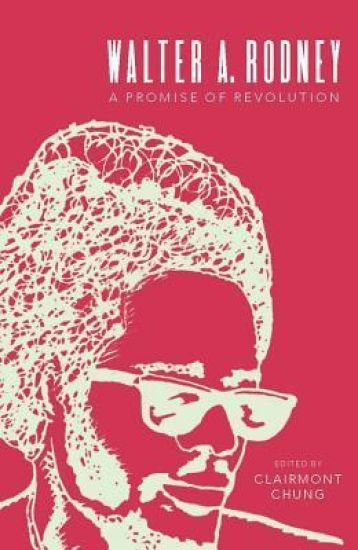
The life of the great Guyanese scholar and revolutionary Walter Rodney burned with a rare intensity. The son of working class parents, Rodney showed great academic promise and was awarded scholarships to the University of the West Indies in Jamaica and the School of African and Oriental Studies in London. He received his PhD from the latter at the age of twenty-four, and his thesis was published as A History of the Upper Guinea Coast, now a classic of African history. His most famous work, How Europe Underdeveloped Africa, is a mainstay of radical literature and anticipated the influential world systems theory of Immanuel Wallerstein. Not content merely to study the world, Rodney turned to revolutionary politics in Jamaica, Tanzania, and in Guyana. In his homeland, he helped form the Working People's Alliance (WPA) and was a consistent voice for the oppressed and exploited. As Rodney became more popular, the threat of his revolutionary message stirred fears among the powerful in Guyana and throughout the Caribbean, and he was assassinated in 1980. This book presents a moving and insightful portrait of Rodney through by the words of academics, writers, artists, and political activists who knew him intimately or felt his influence. These informal recollections and reflections demonstrate why Rodney is such a widely admired figure throughout the world, especially in poor countries and among oppressed peoples everywhere.
The life of the great Guyanese scholar and revolutionary Walter Rodney burned with a rare intensity. The son of working class parents, Rodney showed great academic promise and was awarded scholarships to the University of the West Indies in Jamaica and the School of African and Oriental Studies in London. He received his PhD from the latter at the age of twenty-four, and his thesis was published as A History of the Upper Guinea Coast, now a classic of African history. His most famous work, How Europe Underdeveloped Africa, is a mainstay of radical literature and anticipated the influential world systems theory of Immanuel Wallerstein. Not content merely to study the world, Rodney turned to revolutionary politics in Jamaica, Tanzania, and in Guyana. In his homeland, he helped form the Working People's Alliance (WPA) and was a consistent voice for the oppressed and exploited. As Rodney became more popular, the threat of his revolutionary message stirred fears among the powerful in Guyana and throughout the Caribbean, and he was assassinated in 1980. This book presents a moving and insightful portrait of Rodney through by the words of academics, writers, artists, and political activists who knew him intimately or felt his influence. These informal recollections and reflections demonstrate why Rodney is such a widely admired figure throughout the world, especially in poor countries and among oppressed peoples everywhere.

Warning: This book may cause flatulence. Walter is a fine dog, except for one small problem: he has gas. He can't help it; it's just the way he is. Fortunately, the kids Billy and Betty love him regardless, but Father says he's got to go Poor Walter, he's going to the dog pound tomorrow. And then, in the night, burglars strike. Walter has his chance to be a hero. A children's beloved classic, this story will have kids rolling on the floor with laughter. Adults are permitted to laugh too.

Lots of people know that Walter de la Mare was a fantastic poet, but his weird fiction is much less well known. It shouldn't be -- he was a marvelous fantasist, and The Return is a heck of a book. Arthur Lawford, recovering from a long bout with influenza, takes a fateful walk in an old cemetery one afternoon, returning a changed man who neither his wife, nor his friends, nor himself -- recognizes. . . . (Jacketless library hardcover.)

Gershom Scholem is celebrated as the twentieth century's most profound student of the Jewish mystical tradition; Walter Benjamin, as a master thinker whose extraordinary essays mix the revolutionary, the revelatory, and the esoteric. Scholem was a precocious teenager when he met Benjamin, who became his close friend and intellectual mentor. His account of that relationship--which was to remain crucial for both men--is both a celebration of his friend's spellbinding genius and a lament for the personal and intellectual self-destructiveness that culminated in Benjamin's suicide in 1940. At once prickly and heartbroken, argumentative and loving, "Walter Benjamin: The Story of a Friendship "is an absorbing memoir with the complication of character and motive of a novel. As Scholem revisits the passionate engagements over Marxism and Kabbala, Europe and Palestine that he shared with Benjamin, it is as if he sought to summon up his lost friend's spirit again, to have the last word in the argument that might have saved his life.