Kirjojen hintavertailu. Mukana 11 699 587 kirjaa ja 12 kauppaa.

Kirjahaku

Etsi kirjoja tekijän nimen, kirjan nimen tai ISBN:n perusteella.

1000 tulosta hakusanalla Wallace Edwards

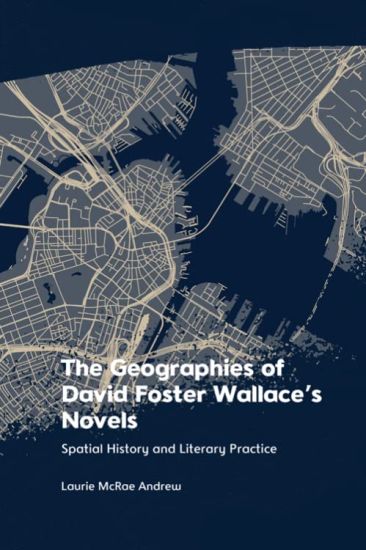
The Geographies of David Foster Wallace's Novels

The Geographies of David Foster Wallace's Novels

Laurie McRae Andrew

EDINBURGH UNIVERSITY PRESS
2024
nidottu
The Geographies of David Foster Wallace's Novels takes a fresh look at David Foster Wallace's novels through the lens of historical geography. It explores the connections between Wallace's literary practice and the reshaping of American geographical space that resulted from the transition between Fordist and post-Fordist forms of capitalism, presenting critical readings of the novels together with analysis of manuscripts and notebooks from Wallace's archive. Deploying an innovative methodology that combines aspects of cultural geography and literary criticism, each novel is historically situated through a spatial keyword, expanding our understanding of the connections between social context and formal innovation in Wallace's work.

I Love You David Foster Wallace

I Love You David Foster Wallace

Pattie Leo Krohn

Createspace Independent Publishing Platform
2013
nidottu
Bernadette and Norman Smith have just celebrated their fiftieth wedding anniversary. After all these years, they are still romantic and in love. They have four children who all have children of their own. The children live in nearby Los Angeles not far from the retirement park where Bernadette and Norman are living. Of all the grandchildren she has, Bernadette has a favorite, Eddie. She and Eddie, who is a teenager when the book begins, have many interests in common. They love books, history and language. And Eddie likes to help Bernadette do small things like show her how to use an iPod. When setting up her computer he scatters his back pack belongings all over the sofa in the study. He hurriedly grabs them up when his dad says it is time to go. Bernadette thinks that the study could use a little change of d cor. As she slides the sofa away from the wall she discovers a book wedged in between the wall and the sofa. The book is Infinite Jest by David Foster Wallace. On the inside cover someone has written "Eddie's Bible". Bernadette believes that Eddie has left her this treasure -- a modern translation of the Bible specifically for young people. And she begins to read it. She doesn't tell anyone about the book, but it starts to influence her decisions and beliefs. As she is beginning her senescence, her mind is aging, too, and logic is fleeing. She, in fact, is showing senility. How will the book influence her decisions about her children and grandchildren? How will it change how she copes and how she feels as old age begins to take its toll on both she and Norman. When their children have problems in their marriages and her grandchildren become unapproachable and her husband's health as well as her own begins to fail, how will "Eddie's Bible" help her, or will it at all? There are no quotes or references to Wallace's book in this novel. The novel is not based on any of his work or on any work about him. And could there be a more odd selection of novels to even refer to in this more delicate story? Perhaps you will find out why I chose that book as you read.
The Unspeakable Failures of David Foster Wallace

The Unspeakable Failures of David Foster Wallace

Clare Hayes-Brady

Bloomsbury Academic USA
2016
sidottu
This book examines the writing of David Foster Wallace, hailed as the voice of a generation on his death. Critics have identified horror of solipsism, obsession with sincerity and a corresponding ambivalence regarding postmodern irony, and detailed attention to contemporary culture as the central elements of Wallace’s writing. Clare Hayes-Brady draws on the evolving discourses of Wallace studies, focusing on the unifying anti-teleology of his writing, arguing that that position is a fundamentally political response to the condition of neo-liberal America. She argues that Wallace’s work is most unified by its resistance to closure, which pervades the structural, narrative and stylistic elements of his writing. Taking a broadly thematic approach to the numerous types of 'failure', or lack of completion, visible throughout his work, the book offers a framework within which to read Wallace’s work as a coherent whole, rather than split along the lines of fiction versus non-fiction, or pre- and post-Infinite Jest, two critical positions that have become dominant over the last five years. While demonstrating the centrality of 'failure', the book also explores Wallace’s approach to sincere communication as a recurring response to what he saw as the inane, self-absorbed commodification of language and society, along with less explored themes such as gender, naming and heroism. Situating Wallace as both a product of his time and an artist sui generis, Hayes-Brady details his abiding interest in philosophy, language and the struggle for an authentic self in late-twentieth-century America.
The Unspeakable Failures of David Foster Wallace

The Unspeakable Failures of David Foster Wallace

Clare Hayes-Brady

Bloomsbury Academic USA
2017
nidottu
This book examines the writing of David Foster Wallace, hailed as the voice of a generation on his death. Critics have identified horror of solipsism, obsession with sincerity and a corresponding ambivalence regarding postmodern irony, and detailed attention to contemporary culture as the central elements of Wallace’s writing. Clare Hayes-Brady draws on the evolving discourses of Wallace studies, focusing on the unifying anti-teleology of his writing, arguing that that position is a fundamentally political response to the condition of neo-liberal America. She argues that Wallace’s work is most unified by its resistance to closure, which pervades the structural, narrative and stylistic elements of his writing. Taking a broadly thematic approach to the numerous types of 'failure', or lack of completion, visible throughout his work, the book offers a framework within which to read Wallace’s work as a coherent whole, rather than split along the lines of fiction versus non-fiction, or pre- and post-Infinite Jest, two critical positions that have become dominant over the last five years. While demonstrating the centrality of 'failure', the book also explores Wallace’s approach to sincere communication as a recurring response to what he saw as the inane, self-absorbed commodification of language and society, along with less explored themes such as gender, naming and heroism. Situating Wallace as both a product of his time and an artist sui generis, Hayes-Brady details his abiding interest in philosophy, language and the struggle for an authentic self in late-twentieth-century America.
Wall: From the Life of Frederick William Wallace Van Keuren

Wall: From the Life of Frederick William Wallace Van Keuren

Robert E. Van Keuren Sr

Createspace Independent Publishing Platform
2015
nidottu
Frederick William Wallace ("Wall") Van Keuren was one of a now-legendary company - a Wisconsin lumberjack. WALL recounts joyous and tragic episodes from his life, his all-too-short time with his beloved "beautiful Emma", his lumberjack years alone and with his son Charlie, and the temporary parting from his son and his family years later.
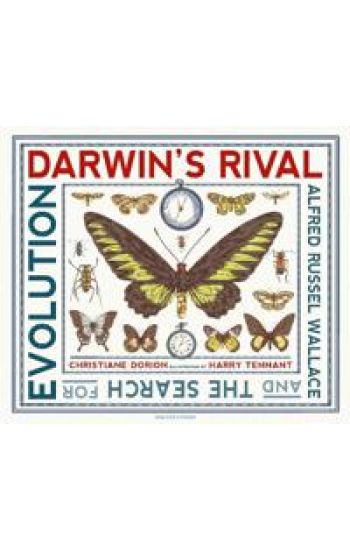
Darwin's Rival: Alfred Russel Wallace and the Search for Evolution
Follow Victorian naturalist and explorer Alfred Russel Wallace on his intrepid journeys across the globe and find out how he developed his own theory of evolution in this beautiful illustrated gift hardback. In 1858, Alfred Russel Wallace’s travels in the Amazon Basin and Malay Archipelago led him to discover natural selection independently of Charles Darwin. Darwin's Rival traces Wallace’s life from his childhood in the Welsh countryside to his rise to prominence among the scientific community, via dense tropical jungles and perilous journeys – and shines a light on one of the most important contributors to the theory of evolution. With evocative illustrations by Harry Tennant, this stunning gift book will appeal to children and adults alike, and is the perfect introduction to the man so often eclipsed by his contemporary and friend Charles Darwin.
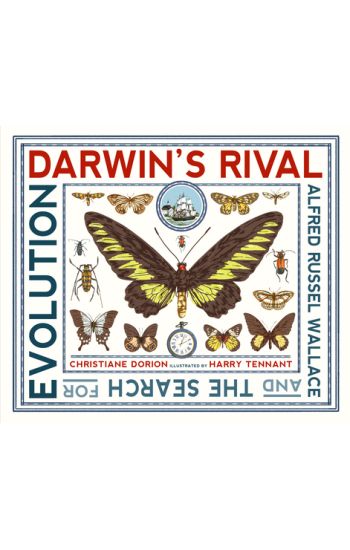
Darwin's Rival: Alfred Russel Wallace and the Search for Evolution
A beautifully illustrated volume follows a lesser-known Victorian naturalist and explorer on his global journeys -- and reveals how he developed his own theory of evolution. Everyone knows Charles Darwin, the famous naturalist who proposed a theory of evolution. But not everyone knows the story of Alfred Russel Wallace, Darwin's friend and rival who simultaneously discovered the process of natural selection. This sumptuously illustrated book tells Wallace's story, from his humble beginnings to his adventures in the Amazon rain forest and Malay Archipelago, and demonstrates the great contribution he made to one of the most important scientific discoveries of all time.
The Legacy of David Foster Wallace

The Legacy of David Foster Wallace

University of Iowa Press
2012
nidottu
Considered by many to be the greatest writer of his generation, David Foster Wallace was at the height of his creative powers when he committed suicide in 2008. In a sweeping portrait of Wallace's writing and thought and as a measure of his importance in literary history, The Legacy of David Foster Wallace gathers cutting-edge, field-defining scholarship by critics alongside remembrances by many of his writer friends, who include some of the world's most influential authors. In this elegant volume, literary critics scrutinize the existing Wallace scholarship and at the same time pioneer new ways of understanding Wallace's fiction and journalism. In critical essays exploring a variety of topics - including Wallace's relationship to American literary history, his place in literary journalism, his complicated relationship to his postmodernist predecessors, the formal difficulties of his 1996 magnum opus Infinite Jest, his environmental imagination, and the ""social life"" of his fiction and nonfiction - contributors plumb sources as diverse as Amazon.com reader recommendations, professional book reviews, the 2009 Infinite Summer project, and the David Foster Wallace archive at the University of Texas's Harry Ransom Center. The creative writers - including Don DeLillo, Jonathan Franzen, George Saunders, Rick Moody, Dave Eggers, and David Lipsky, and Wallace's Little, Brown editor, Michael Pietsch - reflect on the person behind the volumes of fiction and nonfiction created during the author's too-short life. All of the essays, critical and creative alike, are written in an accessible style that does not presume any background in Wallace criticism. Whether the reader is an expert in all things David Foster Wallace, a casual fan of his fiction and nonfiction, or completely new to Wallace, The Legacy of David Foster Wallace will reveal the power and innovation that defined his contribution to literary life and to self-understanding. This illuminating volume is destined to shape our understanding of Wallace, his writing, and his place in history.
Study Guide to an Introduction of Wallace Stevens
A comprehensive study guide offering in-depth explanation, essay, and test prep for Wallace Stevens including a brief commentary on a number of Stevens' works, which explore his philosophies on reality and imagination. As an author of the early twentieth-century, Stevens considered his work as continuing the ideas American realization introduced by Emerson and Whitman. Moreover, Stevens' poetry is structured around literary devices like iambic pentameter, blank verse, and abundant symbolism. This Bright Notes Study Guide explores the context and history of Stevens' classic work, helping students to thoroughly explore the reasons it has stood the literary test of time. Each Bright Notes Study Guide contains: - Introductions to the Author and the Work - Character Summaries - Plot Guides - Section and Chapter Overviews - Test Essay and Study Q&As The Bright Notes Study Guide series offers an in-depth tour of more than 275 classic works of literature, exploring characters, critical commentary, historical background, plots, and themes. This set of study guides encourages readers to dig deeper in their understanding by including essay questions and answers as well as topics for further research.
The Highly Improbable Adventures Of Wallace and Fang
The mysteries of the animal kingdom come to life in this tall tale of two delightfully energetic dogs. On the one hand, we have a fun-loving yellow Labrador Retriever, named Wallace. On the other, we have a tough-as-nails Belgium Malinois, named Fang. These two have very little in common except that their human parents, Hitch and Debbie, seem to be falling in love. If the blended family dynamic wasn't challenging enough, why not add a few squirrels, some goats, a moose (and squirrel), a pair of racoons, and a pirate (how did he get in there?). You can't blame a dog for wanting to relieve some of that hard-earned stress in a deep pool of muscle relaxing, mind refreshing mud. Just don't bring it in the house Author's bio ... hmm ... let's see if I got this right. He began life in Wheaton, Maryland (the second of four Perry kids) - check. He was "born-again" in a small traditional church in Bowie, Maryland - check. He helped raise two reasonably normal boys in Charles Town, West Virginia - check. He would finish his grueling working career in Parachute, Colorado (loathed the job, loved the skiing) - check. Today, he is a certified personal trainer, an amateur natural bodybuilding champion (classic physique 50+), and is now writing these short novels from Rock Hill, South Carolina - check. He is astonishingly content - check. He would not be this content without good friends that keep him based - check. That should do it.
The McCauley Family in Philadelphia: Including the Wallace & Patton Families from Mullaghinch, County Londonderry, Ireland
The McCauley family history documents the life of Stephen and Margaret (Wallace) McCauley and their three children, James, Thomas and Margaret. The narrative begins with a description of the early history of the McCauley family in County Londonderry, Ireland. It then describes their decision to leave home, their journey to America, and their life in Philadelphia after the arrival of the family in 1849. The family history concludes with a profile of each of the three adult children of Stephen and Margaret (Wallace) McCauley. The purpose of the narration is to document for posterity the sequence of major events in the life of the McCauley family; to bring them back to life, albeit only momentarily; and to depict their fundamental character and outlook on life as Scots-Irish Presbyterian immigrants to America.
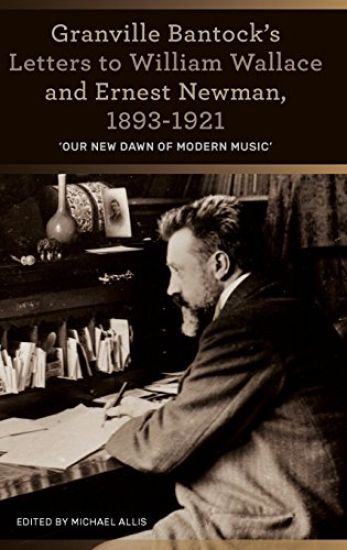
Granville Bantock's Letters to William Wallace and Ernest Newman, 1893-1921
Granville Bantock's letters to the Scottish composer William Wallace and the music critic Ernest Newman provide a fascinating window into British music and musical life in the early twentieth century and the 'dawn' of musical modernism. British music and musical life before the Great War have been relatively neglected in discussions of the idea of the 'modern' in the early twentieth century. This collection of almost 300 letters, written by Granville Bantock (1868-1946) to the Scottish composer William Wallace (1860-1940) and the music critic Ernest Newman (1868-1959) places Bantock and his circle at the heart of this debate. The letters highlight Bantock's and Wallace's development of the modern British symphonic poem, their contribution (with Newman) to music criticism and journalism, and their attempts to promote a young generation of British composers - revealing an early frustration with the musical establishment. Confirming the impact of visits to Britain by Richard Strauss and Sibelius, Bantock offers opinions on a range of composers active around the turn of the twentieth century, identifying Elgar and Delius as the future for English music. Along with references to conductors, entertainers and contemporary writers (Maeterlinck, Conrad), there are fascinating details of the musical culture of London, Liverpool and Birmingham - including programming strategies at the Tower, New Brighton, and abortive plans to relaunch the New Quarterly Musical Review. Fully annotated, the letters provide a fascinating window into British music and musical life in the early twentieth century and the 'dawn' of musical modernism. MICHAEL ALLIS is Professor of Musicology at the School of Music, University of Leeds.