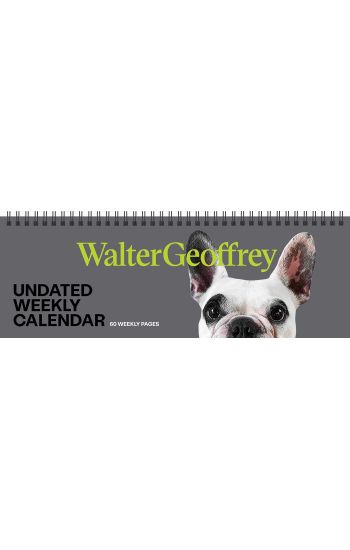
If you're a fan of Walter Geoffrey the Frenchie, you're going to want this undated weekly calendar that can be started anytime of the year. It's sleek, fresh, and equipped for a king (or queen)—just like Walter. Perfect for any Walter Geoffrey followers (or, Wallowers in this case), frenchie fanatics and/or dog enthusiasts alike, this trendy week at-a-glance desk pad is sized to fit neatly in front of your computer, and is perfect for jotting down tasks, tracking habits/details, planning activities, and more. • 60 weekly undated pages • Spiral bound to lay flat
Walter began life as an unloved street dog. Now everyday is an adventure with his sisters Nelly and Daisy. Follow the 3 amigos as they bounce from one escapade to the next.Trust me "You couldn't write it "
From the bestselling author of The Quiet Book comes an honest and touching new picture book about the ups and downs of friendship. Walter and Xavier are best friends. They do everything together But then...quietly...slowly...Xavier becomes best friends with someone else. Walter goes from feeling hurt and left out to feeling confused and angry to feeling just plain lonely. Until one morning he wakes up feeling a tiny bit hopeful. That day, while out for a hike by himself, he meets Ollie. Could this be the beginning of a new friendship? Sometimes best friends aren't forever, and that's okay. Because there might be a new pal waiting just around the corner.
Esta tese visa analisar o conceito de messianismo na obra de Walter Benjamin. Procuramos, acima de tudo, mostrar que este conceito n o um tema pac fico e que re na o consenso, mas, pelo contr rio, muito pol mico e controverso, na sua obra. Se, por um lado, numa primeira fase, Benjamin revela nos seus textos, de forma muito clara e expl cita, a presen a dessa tonalidade messi nica, por outro, nos textos mais tardios, a presen a do elemento messi nico desvanece-se, sob a presen a mais forte e mais vis vel do materialismo hist rico. Todavia, o elemento messi nico na sua obra nunca desapareceu e a prova derradeira o seu ressurgimento nos ltimos textos que redige em vida: O Livro das Passagens e Sobre o Conceito de Hist ria.
Summer 1206. Before it was renamed, Bury St Edmunds was known as Bedricksworth after the ancient family who lived there. Now the last surviving member of the Bedrick clan, Arnulf, wants an heir to carry on the family name. Marrying for a fifth time, this is his last chance to achieve it. But Arnulf has a secret.Jump forward seven hundred years to New Year's Day 1903. The antiquarian and celebrated writer of ghost stories, M. R. James, is excavating the graves of five medieval abbots of Bury. But in one of the graves he discovers something that shouldn't be there.How are the two events connected? What is the secret found buried in the abbot's grave? Over it all hovers the ghost of Brother Walter who drives the investigation on to solve not only a seven hundred year old murder mystery but also another in the twentieth century in the way only Walter can.
There are few difficulties that cannot be surmounted by patience, resolution, and pluck, and great as are the obstacles that nature and the Russian government oppose to an escape from the prisons of Siberia, such evasions have occasion- ally been successfully carried out, and that under far less advantageous circumstances than those under which the hero of this story undertook the venture. For the account of life in the convict establishments in Siberia I am indebted to the very valuable books by my friend the Rev. Dr. Lans- dell, who has made himself thoroughly acquainted with Siberia, traversing the country from end to end and visiting all the principal prisons.. George Alfred Henty (8 December 1832 - 16 November 1902) was a prolific English novelist and war correspondent.He is best known for his historical adventure stories that were popular in the late 19th century. His works include The Dragon & The Raven (1886), For The Temple (1888), Under Drake's Flag (1883) and In Freedom's Cause (1885).Biography--G.A.Henty was born in Trumpington, near Cambridge. He was a sickly child who had to spend long periods in bed. During his frequent illnesses he became an avid reader and developed a wide range of interests which he carried into adulthood. He attended Westminster School, London, and later Gonville and Caius College, Cambridge, where he was a keen sportsman. He left the university early without completing his degree to volunteer for the Army Hospital Commissariat when the Crimean War began. He was sent to the Crimea and while there he witnessed the appalling conditions under which the British soldier had to fight. His letters home were filled with vivid descriptions of what he saw. His father was impressed by his letters and sent them to The Morning Advertiser newspaper which printed them. This initial writing success was a factor in Henty's later decision to accept the offer to become a special correspondent, the early name for journalists now better known as war correspondents. Shortly before resigning from the army as a captain in 1859 he married Elizabeth Finucane. The couple had four children. Elizabeth died in 1865 after a long illness and shortly after her death Henty began writing articles for the Standard newspaper. In 1866 the newspaper sent him as their special correspondent to report on the Austro-Italian War where he met Giuseppe Garibaldi. He went on to cover the 1868 British punitive expedition to Abyssinia, the Franco-Prussian War, the Ashanti War, the Carlist Rebellion in Spain and the Turco-Serbian War.He also witnessed the opening of the Suez Canal and travelled to Palestine, Russia and India. Henty was a strong supporter of the British Empire all his life; according to literary critic Kathryn Castle: "Henty...exemplified the ethos of the new imperialism, and glorified in its successes".Henty's ideas about politics were influenced by writers such as Sir Charles Dilke and Thomas Carlyle.Henty once related in an interview how his storytelling skills grew out of tales told after dinner to his children. He wrote his first children's book, Out on the Pampas in 1868, naming the book's main characters after his children. The book was published by Griffith and Farran in November 1870 with a title page date of 1871. While most of the 122 books he wrote were for children, he also wrote adult novels, non-fiction such as The March to Magdala and Those Other Animals, short stories for the likes of The Boy's Own Paper and edited the Union Jack, a weekly boy's magazine. Walter Trueman Paget (7 February 1854 - 23 December 1930) was a member of the Queensland Legislative Assembly.
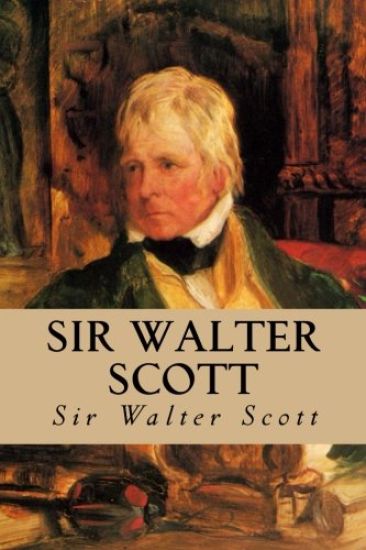
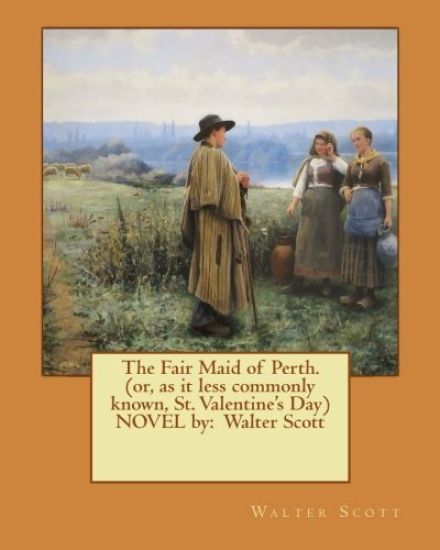
The Fair Maid of Perth (or St. Valentine's Day) is a novel by Sir Walter Scott. Inspired by the strange, but historically true, story of the Battle of the North Inch, 1] it is set in Perth (then called 'Saint Johnstone') and other parts of Scotland around 1400. The book had been intended to include two other stories in the same volume, "My Aunt Margaret's Mirror" and "Death of the Laird's Jock", which was to have been titled St. Valentine's Eve The fair maid of the title is Catharine Glover, daughter of a glovemaker in Perth, who kisses Henry Gow/Smith, the armourer, while he is sleeping, on Valentine's Day. But Catharine has caught the eye of the Duke of Rothesay, and when Gow interrupts an attempted abduction, the armourer is drawn simultaneously into royal intrigue and highland feud.