Kirjojen hintavertailu. Mukana 11 699 587 kirjaa ja 12 kauppaa.

Kirjahaku

Etsi kirjoja tekijän nimen, kirjan nimen tai ISBN:n perusteella.

1000 tulosta hakusanalla William Butler

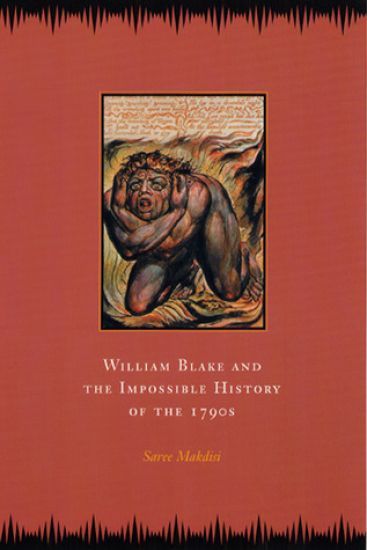
William Blake and the Impossible History of the 1790s

William Blake and the Impossible History of the 1790s

Saree Makdisi

University of Chicago Press
2002
nidottu
Modern scholars often find it difficult to account for the profound eccentricities in the work of William Blake, dismissing them as either ahistorical or simply meaningless. But with this pioneering study, Saree Makdisi develops a reliable and comprehensive framework for understanding these peculiarities. According to Makdisi, Blake's poetry and drawings should compel us to seriously reconsider ths history of the 1790s - the turbulent and revolutionary decade in which they first emerged. Taking into account the poet's unique brand of literary and artistic production, Makdisi challenges the idea that to understand Blake historically one must assimilate him within the radical struggle against the order of the Old Regime. Tracing for the first time the many links among economics, politics and religion in his work, Makdisi shows how Blake questioned and even subverted the commercial, consumerist and political liberties that his contemporaries championed, all while developing his own radical aesthetic. "William Blake and the Impossible History of the 1790s" should immediately take its place as a valuable study of one of English Romanticism's most popular figures.
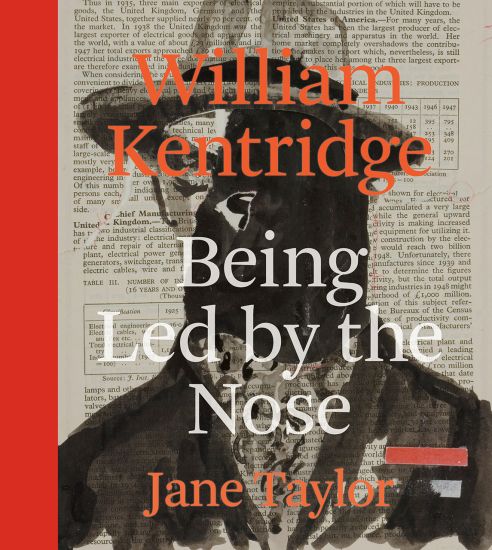
William Kentridge

William Kentridge

Jane Taylor

University of Chicago Press
2017
sidottu
South African artist William Kentridge's drawings, films, books, installations, and collaborations with opera and theater companies have established him as a world-class star in contemporary art, media, and theater. In 2010, and again in 2013, he staged Dmitri Shostakovich's The Nose at the Metropolitan Opera; after the premiere, the New York Times noted that "Kentridge, who directed this production, helped design the sets and created the videos that animate the staging, received the heartiest bravos." In this book, Jane Taylor, Kentridge's friend and frequent collaborator, invites us to take an extraordinary behind-the-scenes look at his work for the show. Kentridge has long been admired for his unconventional use of conventional media to produce art that is stunning, evocative, and narratively powerful and how he works is as important as what he creates. This book is more than just a simple record of The Nose. The opera serves as a springboard into a bracing conversation about how Kentridge's methods serve his unique mode of expression as a narrative and political artist. Taylor draws on his etchings, sculptures, and drawings to render visible the communication that occurs between his mind and hand as he thinks through the activity of making. Beautifully illustrated in color, William Kentridge offers striking insights about one of the most innovative artists of our present moment.
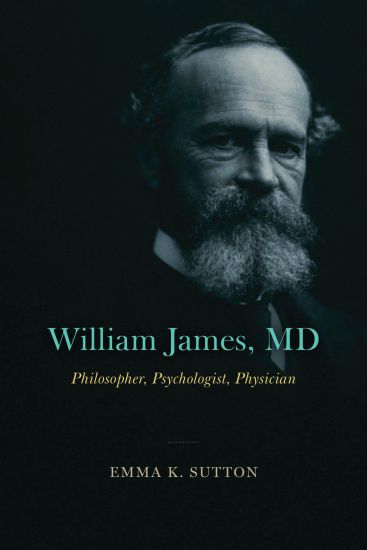
William James, MD

William James, MD

Emma K. Sutton

THE UNIVERSITY OF CHICAGO PRESS
2023
sidottu
The first book to map William James’s preoccupation with medical ideas, concerns, and values across the breadth of his work. William James is known as a nineteenth-century philosopher, psychologist, and psychical researcher. Less well-known is how his interest in medicine influenced his life and work, driving his ambition to change the way American society conceived of itself in body, mind, and soul. William James, MD offers an account of the development and cultural significance of James’s ideas and works, and establishes, for the first time, the relevance of medical themes to his major lines of thought. James lived at a time when old assumptions about faith and the moral and religious possibilities for human worth and redemption were increasingly displaced by a concern with the medically “normal” and the perfectibility of the body. Woven into treatises that warned against humanity’s decline, these ideas were part of the eugenics movement and reflected a growing social stigma attached to illness and invalidism, a disturbing intellectual current in which James felt personally implicated. Most chronicles of James’s life have portrayed a distressed young man, who then endured a psychological or spiritual crisis to emerge as a mature thinker who threw off his pallor of mental sickness for good. In contrast, Emma K. Sutton draws on his personal correspondence, unpublished notebooks, and diaries to show that James considered himself a genuine invalid to the end of his days. Sutton makes the compelling case that his philosophizing was not an abstract occupation but an impassioned response to his own life experiences and challenges. To ignore the medical James is to misread James altogether.
William James, MD

William James, MD

Emma K. Sutton

THE UNIVERSITY OF CHICAGO PRESS
2023
nidottu
The first book to map William James’s preoccupation with medical ideas, concerns, and values across the breadth of his work. William James is known as a nineteenth-century philosopher, psychologist, and psychical researcher. Less well-known is how his interest in medicine influenced his life and work, driving his ambition to change the way American society conceived of itself in body, mind, and soul. William James, MD offers an account of the development and cultural significance of James’s ideas and works, and establishes, for the first time, the relevance of medical themes to his major lines of thought. James lived at a time when old assumptions about faith and the moral and religious possibilities for human worth and redemption were increasingly displaced by a concern with the medically “normal” and the perfectibility of the body. Woven into treatises that warned against humanity’s decline, these ideas were part of the eugenics movement and reflected a growing social stigma attached to illness and invalidism, a disturbing intellectual current in which James felt personally implicated. Most chronicles of James’s life have portrayed a distressed young man, who then endured a psychological or spiritual crisis to emerge as a mature thinker who threw off his pallor of mental sickness for good. In contrast, Emma K. Sutton draws on his personal correspondence, unpublished notebooks, and diaries to show that James considered himself a genuine invalid to the end of his days. Sutton makes the compelling case that his philosophizing was not an abstract occupation but an impassioned response to his own life experiences and challenges. To ignore the medical James is to misread James altogether.
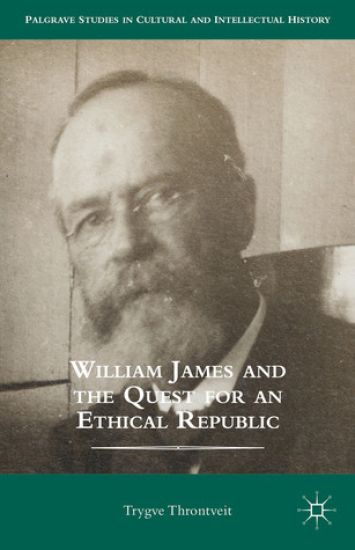
William James and the Quest for an Ethical Republic

William James and the Quest for an Ethical Republic

Trygve Throntveit

Palgrave Macmillan
2014
sidottu
Pragmatist philosopher William James has long been deemed a dubious guide to ethical reasoning. This book overturns such thinking, demonstrating the coherence of James's efforts to develop a flexible but rigorous framework for individuals and societies seeking freedom, meaning, and justice in a world of interdependence, uncertainty, and change.
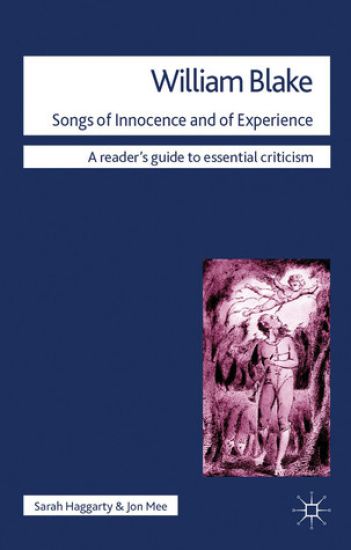
William Blake - Songs of Innocence and of Experience

William Blake - Songs of Innocence and of Experience

Sarah Haggarty; Jon A Mee

Red Globe Press
2013
nidottu
Songs of Innocence and of Experience (1794) is William Blake's best-known work, containing such familiar poems as 'London', 'Sick Rose' and 'The Tyger'. Evolving over the author's lifetime, the collection was printed by Blake himself on his own press.This Reader's Guide:• explains the unique development of Songs as an illuminated book• considers the earliest reactions to the text during Blake's lifetime, and his gathering posthumous reputation in the nineteenth century • explores modern critical approaches and recent debates• discusses key topics that have been of abiding interest to critics, including the relationship between text and image in Blake's 'composite art'.Insightful and stimulating, this introductory guide is an invaluable resource for anyone who is seeking to navigate their way through the mass of criticism surrounding Blake's most widely-studied work.
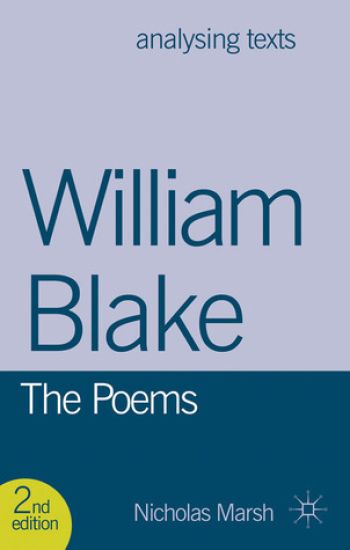
William Blake: The Poems

William Blake: The Poems

Nicholas Marsh

Red Globe Press
2012
sidottu
William Blake was ignored in his own time. Now, however, his Songs of Innocence and Experience and 'prophetic books' are widely admired and studied.The second edition of this successful introductory text:- Leads the reader into the Songs and 'prophetic books' via detailed analysis of individual poems and extracts, and now features additional insightful analyses- Provides useful sections on 'Methods of Analysis' and 'Suggested Work' to aid independent study- Offers expanded historical and cultural context, and an extended sample of critical views that includes discussion of the work of recent critics- Provides up-to-date suggestions for further readingWilliam Blake: The Poems is ideal for students who are encountering the work of this major English poet for the first time. Nicholas Marsh encourages you to enjoy and explore the power and beauty of Blake's poems for yourself.
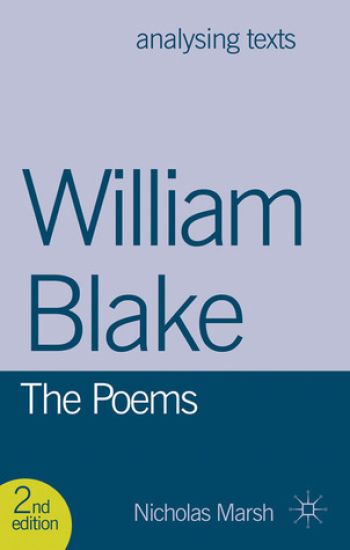
William Blake: The Poems

William Blake: The Poems

Nicholas Marsh

Red Globe Press
2012
nidottu
William Blake was ignored in his own time. Now, however, his Songs of Innocence and Experience and 'prophetic books' are widely admired and studied.The second edition of this successful introductory text:- Leads the reader into the Songs and 'prophetic books' via detailed analysis of individual poems and extracts, and now features additional insightful analyses- Provides useful sections on 'Methods of Analysis' and 'Suggested Work' to aid independent study- Offers expanded historical and cultural context, and an extended sample of critical views that includes discussion of the work of recent critics- Provides up-to-date suggestions for further readingWilliam Blake: The Poems is ideal for students who are encountering the work of this major English poet for the first time. Nicholas Marsh encourages you to enjoy and explore the power and beauty of Blake's poems for yourself.
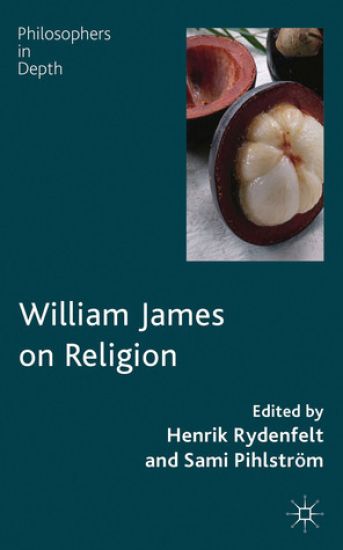
William James on Religion

William James on Religion

Palgrave Macmillan
2013
sidottu
A team of international experts present a collection of articles on William James's philosophy of religion and its current relevance. A new look at his philosophy of religion is crucially important for the development of this field of inquiry today.
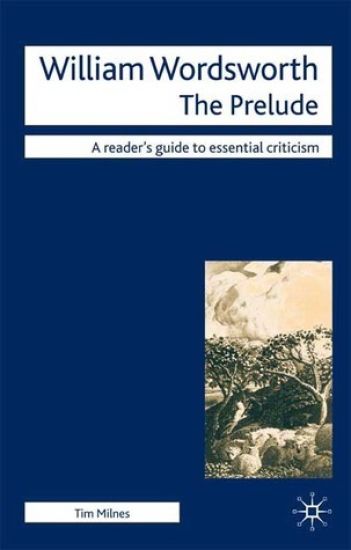
William Wordsworth - The Prelude

William Wordsworth - The Prelude

Tim Milnes

Red Globe Press
2009
sidottu
The Prelude is now seen as a central text in the Wordsworth corpus. This Guide identifies and gathers significant critical perspectives, interpretations and debates connected with the poem, contextualising and explaining criticism from the Victorian period right through to the present day.
William Wordsworth - The Prelude

William Wordsworth - The Prelude

Tim Milnes

Red Globe Press
2009
nidottu
The Prelude is now seen as a central text in the Wordsworth corpus. This Guide identifies and gathers significant critical perspectives, interpretations and debates connected with the poem, contextualising and explaining criticism from the Victorian period right through to the present day.
William Blake

William Blake

J. Beer

Palgrave Macmillan
2005
nidottu
This volume on Blake follows the writer's life and combines biography and critical analysis. Covering Blake's early career, his major works and his work as a visual artist, this new study will be a must for all Blake scholars and enthusiasts. Recent discoveries concerning Blake's forebears and their religion make this new study additionally timely.
William Faulkner: The Sound and the Fury and As I Lay Dying
Now recognized as two of Faulkner's greatest novels, "The Sound and the Fury" (1929) and "As I Lay Dying" (1930) were commercial failures in the decade following their publication. By the end of the Second World War, however, the reputation of both novels had grown and Faulkner's great fictional creation, Yoknapatawpha County, had become as much a part of America as any real area of the Mississippi landscape. This guide explores the wealth of critical material generated by these two exceptional works of modernist fiction. From the initially mixed critical responses to the novels in the early 1930s, the guide follows the enormous growth of interest in Faulkner's work across six decades. New writings shaped by a range of critical theories are discussed, offering the reader a clear view of the place now given to one of America's most innovative and influential novelists.
William Faulkner: The Sound and the Fury and As I Lay Dying
Now recognized as two of Faulkner's greatest novels, "The Sound and the Fury" (1929) and "As I Lay Dying" (1930) were commercial failures in the decade following their publication. By the end of the Second World War, however, the reputation of both novels had grown and Faulkner's great fictional creation, Yoknapatawpha County, had become as much a part of America as any real area of the Mississippi landscape. This guide explores the wealth of critical material generated by these two exceptional works of modernist fiction. From the initially mixed critical responses to the novels in the early 1930s, the guide follows the enormous growth of interest in Faulkner's work across six decades. New writings shaped by a range of critical theories are discussed, offering the reader a clear view of the place now given to one of America's most innovative and influential novelists.
William Shakespeare: Othello

William Shakespeare: Othello

Columbia University Press
2001
pokkari
"Othello" is perhaps Shakespeare's most troublesome tragedy. While it has retained its popularity on the stage, many critics have struggled to come to terms with it. The Romantics warmed to the figure of Othello himself and wrung their hands over the plight of Desdemona; the Modernists looked down on the play as an achievement of Shakespeare's stagecraft rather than of his imagination.Excerpting and discussing the critical history of the play from the earliest pronouncements to present-day criticism, this guide does justice to the variety of opinion and points out significant themes and recurring critical concerns, without glossing over the ugly racism of many critical accounts and the inadequacy of many attempts to face up to the issues raised by the play.
William James and a Science of Religions
The "science of religion" is an important element in the interpretation of William James's work and in the methodology of the study of religion. An authority on pragmatism and the philosophy of religion, Wayne Proudfoot and a stellar group of contributors from a variety of disciplines including religion, philosophy, psychology, and history, bring innovative perspectives to James's work. Each contributor focuses on a specific theme in The Varieties of Religious Experience and suggests how James's treatment of that theme can fruitfully be brought to bear, sometimes with revisions or extensions, on current debate about religious experience.
William Greaves

William Greaves

Columbia University Press
2021
sidottu
William Greaves is one of the most significant and compelling American filmmakers of the past century. Best known for his experimental film about its own making, Symbiopsychotaxiplasm: Take One, Greaves was an influential independent documentary filmmaker who produced, directed, shot, and edited more than a hundred films on a variety of social issues and on key African American figures ranging from Muhammad Ali to Ralph Bunche to Ida B. Wells. A multitalented artist, his career also included stints as a songwriter, a member of the Actors Studio, and, during the late 1960s, a producer and cohost of Black Journal, the first national television show focused on African American culture and politics.This volume provides the first comprehensive overview of Greaves’s remarkable career. It brings together a wide range of material, including a mix of incisive essays from critics and scholars, Greaves’s own writings, an extensive meta-interview with Greaves, conversations with his wife and collaborator Louise Archambault Greaves and his son David, and a critical dossier on Symbiopsychotaxiplasm. Together, they illuminate Greaves’s mission to use filmmaking as a tool for transforming the ways African Americans were perceived by others and the ways they saw themselves. This landmark book is an essential resource on Greaves’s work and his influence on independent cinema and African-American culture.
William Greaves

William Greaves

Columbia University Press
2021
pokkari
William Greaves is one of the most significant and compelling American filmmakers of the past century. Best known for his experimental film about its own making, Symbiopsychotaxiplasm: Take One, Greaves was an influential independent documentary filmmaker who produced, directed, shot, and edited more than a hundred films on a variety of social issues and on key African American figures ranging from Muhammad Ali to Ralph Bunche to Ida B. Wells. A multitalented artist, his career also included stints as a songwriter, a member of the Actors Studio, and, during the late 1960s, a producer and cohost of Black Journal, the first national television show focused on African American culture and politics.This volume provides the first comprehensive overview of Greaves’s remarkable career. It brings together a wide range of material, including a mix of incisive essays from critics and scholars, Greaves’s own writings, an extensive meta-interview with Greaves, conversations with his wife and collaborator Louise Archambault Greaves and his son David, and a critical dossier on Symbiopsychotaxiplasm. Together, they illuminate Greaves’s mission to use filmmaking as a tool for transforming the ways African Americans were perceived by others and the ways they saw themselves. This landmark book is an essential resource on Greaves’s work and his influence on independent cinema and African-American culture.