Kirjojen hintavertailu. Mukana 11 699 587 kirjaa ja 12 kauppaa.

Kirjahaku

Etsi kirjoja tekijän nimen, kirjan nimen tai ISBN:n perusteella.

1000 tulosta hakusanalla William Elliot Griffis

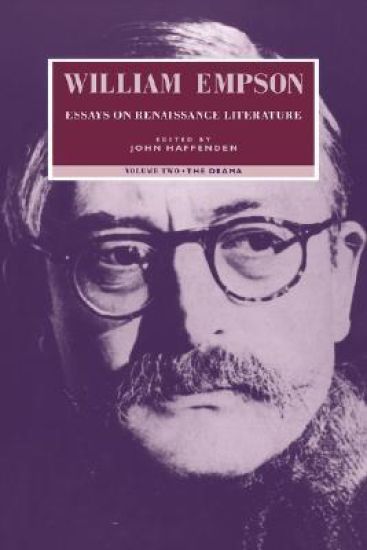
William Empson: Essays on Renaissance Literature: Volume 2, The Drama
This collection of William Empson’s essays on Elizabethan and Jacobean drama is the second volume of his writings on Renaissance literature. Edited with an introduction by the leading Empson scholar John Haffenden, the contents range from famous essays on The Spanish Tragedy, Volpone, The Alchemist and The Duchess of Malfi to a sprightly piece on Elizabethan spirits. In addition, there are previously unpublished essays which revisit critical controversies, and a magnificent, provocative study of A Midsummer Night’s Dream which ventures a major new reading of the play. ‘I am attracted by the notion of a hearty indifference to one’s own and other people’s feelings, when a fragment of the truth is in question,’ Empson stated. The incomparable Empson here fights his own critical corner with unequalled zest, intelligence and insight.
William Carlos Williams and Alterity

William Carlos Williams and Alterity

Barry Ahearn

Cambridge University Press
1994
sidottu
Many critics have noticed the paradoxes and contradictions in the work of William Carlos Williams, but few have analysed them in detail. Professor Ahearn argues that Williams criticism has not gone far enough in recognising the uses Williams saw for contradiction. He contends that Williams began to acquire his own voice as a poet when he recognised that he could be a vehicle for contending voices. His reading departs from previous examinations of the early poetry in the emphasis it places on the poems as expressions of Williams's personal struggles with himself, his parents, his domestic role and his social position. We find a Williams whose contribution to modernism came not through a radical break with tradition or a rejection of inherited poetic norms alone, but rather in a cultivation of tension, conflict, and a kind of poetic ‘crisis’ that could be held forth as the metier of the modernist writer. The reconciliation of things as old as civilisation itself with the newest form of poetry, Ahearn argues is the principal theme of Williams early poetic practice.
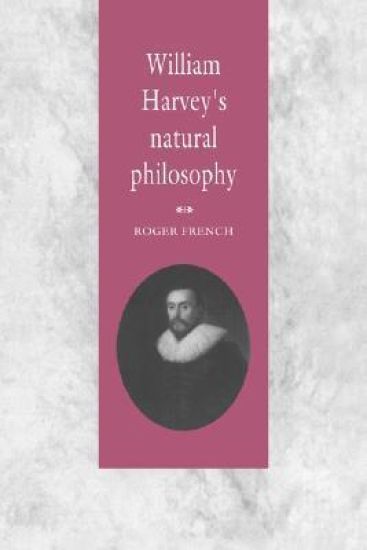
William Harvey's Natural Philosophy

William Harvey's Natural Philosophy

Roger French

Cambridge University Press
1994
sidottu
William Harvey’s natural philosophy was a view of the world that he had put together during his education in Cambridge and Padua. It contained ways of structuring knowledge, formulating questions and arriving at answers that directed the programme of work in which he discovered the circulation of the blood. This book, the most extensive discussion of Harvey to be published for over twenty-five years, reports extensively on the views of those who wrote for and against him. It is a study of a major change in natural philosophy and of the forces which acted for and, equally important, against change. In a period traditionally central to historians of science, it is argued here that natural philosophy and particularly Harvey’s speciality within it - anatomy - was theocentric. Harvey’s contribution was experiment; and the revolution which occurred in the seventeenth century was concerned not with science but with experiment and the status of natural knowledge.
William Cobbett

William Cobbett

Leonora Nattrass

Cambridge University Press
1995
sidottu
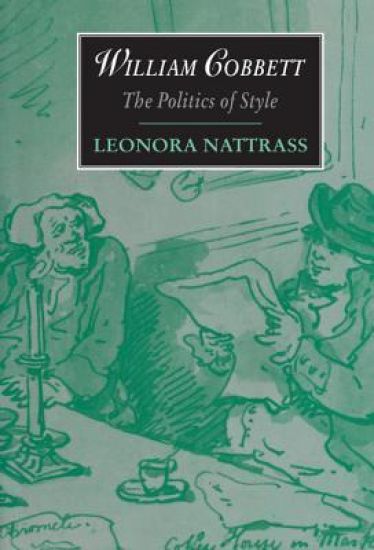
This book offers a thoroughgoing literary analysis of William Cobbett as a writer. Leonora Nattrass explores the nature and effect of Cobbett's rhetorical strategies, showing through close examination of a broad selection of his polemical writings (from his early American journalism onwards) the complexity, self-consciousness and skill of his stylistic procedures. Her close readings examine the political implications of Cobbett's style within the broader context of eighteenth-and early nineteenth-century political prose, and argue that his perceived ideological and stylistic flaws - inconsistency, bigotry, egoism and political nostalgia - are in fact rhetorical strategies designed to appeal to a range of usually polarized reading audiences. This re-reading revises a critical concensus that Cobbett is an unselfconscious populist whose writings reflect rather than challenge the ideological paradoxes and problems of his time.
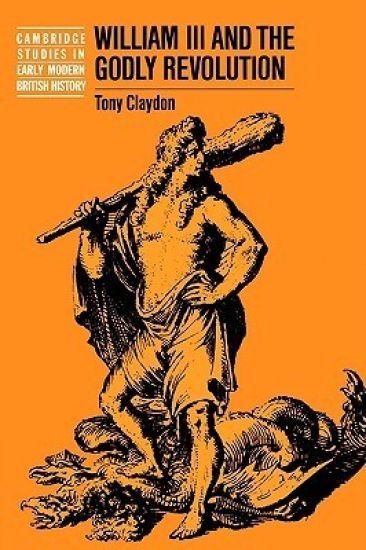
William III and the Godly Revolution

William III and the Godly Revolution

Tony Claydon

Cambridge University Press
1996
sidottu
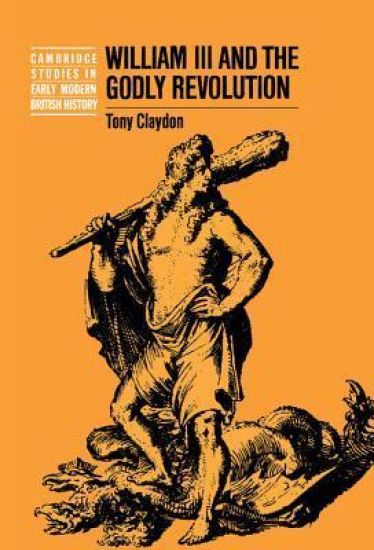
This is the first extensive account of royal propaganda in England between 1689 and 1702. It demonstrates that the regime of William III did not rely upon legal or constitutional rhetoric as it attempted to legitimate itself after the Glorious Revolution, but rather used a protestant, providential and biblically-based language of 'courtly reformation'. This language presented the king as a divinely-protected godly magistrate who could both defend the true church against its popish enemies, and restore the original piety and virtue of the elect English nation. Concentrating upon a range of hitherto understudied sources - especially sermons and public prayers - the book demonstrates the vigour with which these ideas were broadcast by an imaginative group of propagandists enabling the king to cope with central political difficulties - the need to attract support for wars with France and the need to work with Parliament.
William Empson: Essays on Renaissance Literature: Volume 1, Donne and the New Philosophy
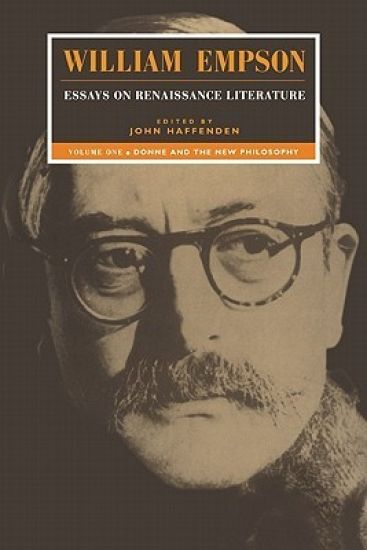
Following the success in paperback of William Empson’s Essays on Shakespeare (1986), this first volume of his Essays on Renaissance Literature (1993) now appears in an accessible format. The volume gathers Empson’s passionate and controversial essays on John Donne in the context of contemporary science, and includes previously unpublished pieces on some of the most influential Renaissance writers and scientists. Edited and introduced by leading Empson scholar John Haffenden, this is a book for anyone interested in the Renaissance, the history of science, and the history of literary criticism. ‘Some of these passages have a sweep as grand as Empson found in Donne.’ Eric Griffiths, The Times Literary Supplement ‘Empson’s achievement here as elsewhere comes from the generosity of spirit which made him consistently a great critic.’ The New York Review of Books
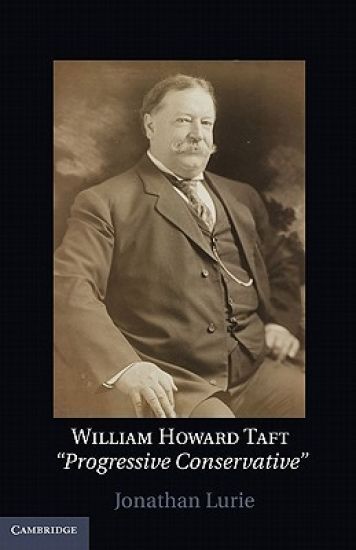
William Howard Taft

William Howard Taft

Jonathan Lurie

Cambridge University Press
2011
sidottu
In this biographical study of the only American ever to have been both President and Chief Justice of the United States, Jonathan Lurie reassesses William Howard Taft's multiple careers, which culminated in Taft's election to the presidency in 1908 as the chosen successor to Theodore Roosevelt. By 1912, however, the relationship between Taft and Roosevelt had ruptured. Lurie re-examines the Taft–Roosevelt friendship and concludes that it rested on flimsy ground. He also places Taft in a progressive context, taking Taft's own self-description as 'a believer in progressive conservatism' as the starting point. At the end of his biography, Lurie concludes that this label is accurate when applied to Taft.
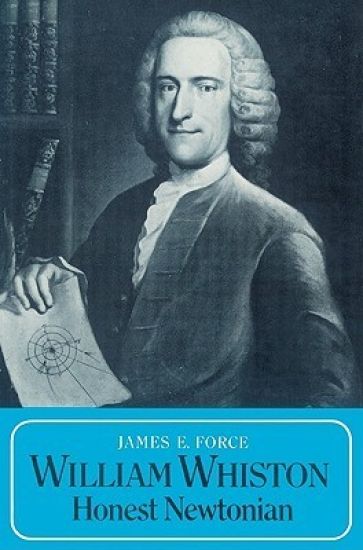
William Whiston

William Whiston

James E. Force

Cambridge University Press
2002
pokkari
William Whiston succeeded Sir Isaac Newton as Lucasian Professor of Mathematics at Cambridge in 1703. Like his predecessor, Whiston presents an interesting combination of the scientific and the theological mind, but whereas Newton carefully concealed the true nature of his religious beliefs, Whiston, a well-known preacher, did not. This is the first modern full-length study of Whiston’s Newtonian rapprochement between science and religion. Professor Force examines the writings in which Whiston applies his Newtonian Biblical interpretation to social, political, and theological issues in the context of the Newtonian movement at the turn of the eighteenth century. The book revises the conventional view of Whiston as a figure peripheral to the Newtonian movement and reveals the nature of Whiston’s ‘Newtonianism’ and his individual eccentricities. It also offers valuable insights into Newton himself and the religious beliefs he so often concealed.
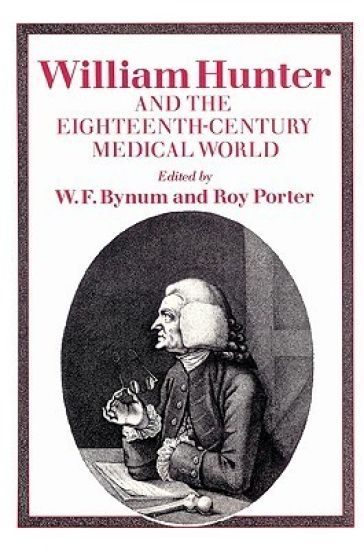
William Hunter and the Eighteenth-Century Medical World
Arising out of a conference commemorating the two hundredth anniversary of the death of William Hunter (1718–1783), this book explores the career of that highly successful physician, obstetrician, medical educator and man of culture against the backgrounds of the medical, intellectual, social and medical-institutional worlds of his time. Medicine in eighteenth-century London has been little explored and much misunderstood. This collection of essays uses Hunter’s broad influence as a vehicle to examine such areas as medical education, hospitals and the incomes and sources of prestige of leading physicians. It offers new interpretations that challenge many longstanding orthodoxies about medicine in the Enlightenment, including the practices and standards of man-midwives and the role of the teaching hospital. Historians have all too readily viewed the eighteenth-century medical world through the expectations of the nineteenth -century hospital and medical professional. This volume shows how the eighteenth-century medical world may be understood in its own terms.
William III and the Godly Revolution

William III and the Godly Revolution

Tony Claydon

Cambridge University Press
2004
pokkari
This is the first extensive account of royal propaganda in England between 1689 and 1702. It demonstrates that the regime of William III did not rely upon legal or constitutional rhetoric as it attempted to legitimate itself after the Glorious Revolution, but rather used a protestant, providential and biblically-based language of ‘courtly reformation’. This language presented the king as a divinely-protected godly magistrate who could both defend the true church against its popish enemies, and restore the original piety and virtue of the elect English nation. Concentrating upon a range of hitherto understudied sources - especially sermons and public prayers - the book demonstrates the vigour with which these ideas were broadcast by an imaginative group of propagandists enabling the king to cope with central political difficulties - the need to attract support for wars with France and the need to work with Parliament.
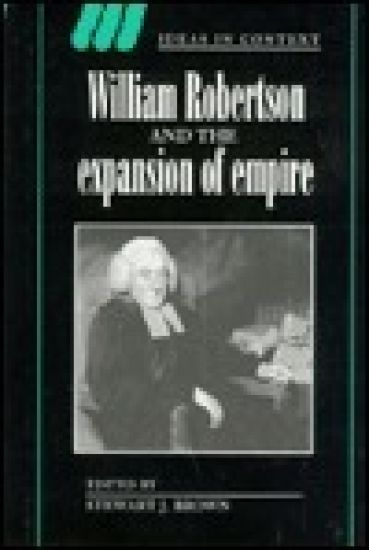
William Robertson and the Expansion of Empire
William Robertson (1721–1793) was a leading historical figure of the eighteenth-century Enlightenment and one of the triumvirate of historians, along with David Hume and Edward Gibbon, who profoundly shaped the European consciousness. His great histories of Scotland, Europe, America and India represented a steadily expanding vision of European and world history. It was a 'grand narrative' comprising the emergence of Britain, the development of the European system of independent nation states, the growth of the European empire in the Americas, and the beginnings of the European empire in India. This book, William Robertson and the Expansion of Empire, contains contributions from a number of distinguished historians and literary scholars who explore aspects of Robertson's intellectual achievements. However, particular attention is paid to Robertson's treatment of the theme of empire and European expansion.
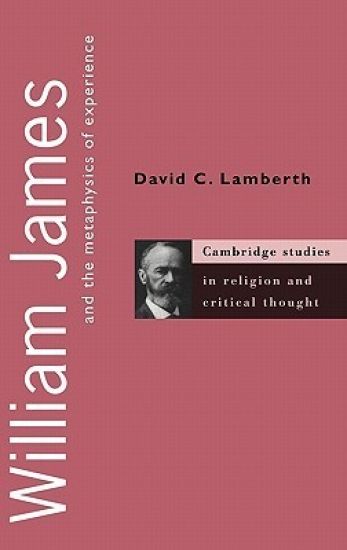
William James and the Metaphysics of Experience

William James and the Metaphysics of Experience

David C. Lamberth

Cambridge University Press
1999
sidottu
William James is frequently considered one of America’s most important philosophers, as well as a foundational thinker for the study of religion. Despite his reputation as the founder of pragmatism, he is rarely considered a serious philosopher or religious thinker. In this new interpretation David Lamberth argues that James’s major contribution was to develop a systematic metaphysics of experience integrally related to his developing pluralistic and social religious ideas. Lamberth systematically interprets James’s radically empiricist world-view and argues for an early dating (1895) for his commitment to the metaphysics of radical empiricism. He offers a close reading of Varieties of Religious Experience; and concludes by connecting James’s ideas about experience, pluralism, and truth to current debates in philosophy, the philosophy of religion, and theology, suggesting James’s functional, experiential metaphysics as a conceptual aide in bridging the social and interpretive with the immediate and concrete while avoiding naive realism.
The Mathematical Papers of Sir William Rowan Hamilton: Volume 4, Geometry, Analysis, Astronomy, Probability and Finite Differences, Miscellaneous
This fourth and final volume of The Collected Papers of Sir William Rowan Hamilton (1805–1865) contains three previously unpublished and important manuscripts, namely Systems of Rays and two lengthy letters to de Morgan (on definite integrals) and Hart (on anharmonic coordinates). In addition the volume contains reprinted papers on geometry, analysis, astronomy, probability and finite differences, as well as a collection of papers on various topics. A cumulative index for all four volumes is provided, as well as a CD containing all four volumes of the Collected Papers.
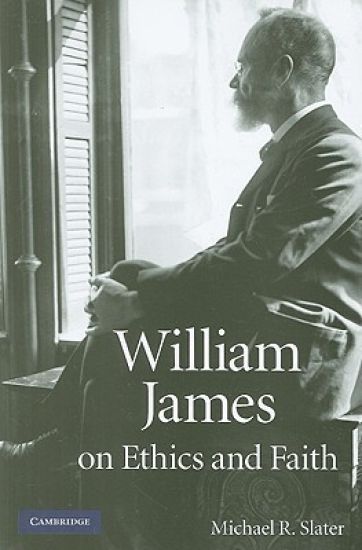
William James on Ethics and Faith

William James on Ethics and Faith

Michael R. Slater

Cambridge University Press
2009
sidottu
This book offers a new interpretation of William James's ethical and religious thought. Michael Slater shows that James's conception of morality, or what it means to lead a moral and flourishing life, is intimately tied to his conception of religious faith, and argues that James's views on these matters are worthy of our consideration. He offers a reassessment of James's 'will to believe' or 'right to believe' doctrine, his moral theory, and his neglected moral arguments for religious faith. And he argues that James's pragmatic account of religion is based on an ethical view of the function of religion and a realist view of the objects of religious belief and experience, and is compatible with his larger conception of pragmatism. The book will appeal to readers interested in the history of modern philosophy, especially pragmatism, as well as those interested in moral philosophy, religion, and the history of ideas.
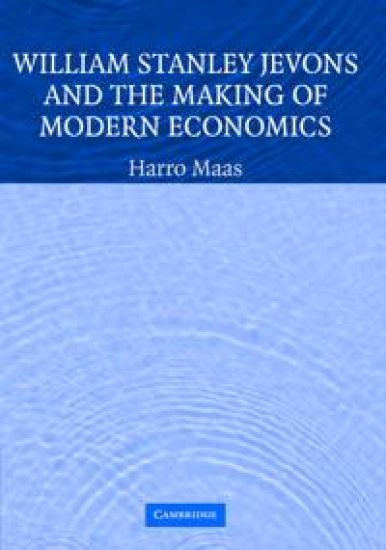
William Stanley Jevons and the Making of Modern Economics
The Victorian polymath William Stanley Jevons (1835–82) is generally and rightly venerated as one of the great innovators of economic theory and method in what came to be known as the 'marginalist revolution'. This book is an investigation into the cultural and intellectual resources that Jevons drew upon to revolutionize research methods in economics. Jevons's uniform approach to the sciences was based on a firm belief in the mechanical constitution of the universe and a firm conviction that all scientific knowledge was limited and therefore hypothetical in character. Jevons's mechanical beliefs found their way into his early meteorological studies, his formal logic, and his economic pursuits. By using mechanical analogies as instruments of discovery, Jevons was able to bridge the divide between theory and statistics that had become more or less institutionalized in mid nineteenth-century Britain.
William Sheppard, Cromwell's Law Reformer

William Sheppard, Cromwell's Law Reformer

Nancy L. Matthews

Cambridge University Press
2004
pokkari
This study presents a full account of Sheppard’s employment under Oliver Cromwell’s Protectorate as well as an examination of his family background and education, his religious commitment to John Owen’s party of Independents and his legal philosophy. An appraisal of all Sheppard’s legal works, including those written during the Civil War and the Restoration period, illustrates the overlapping concerns with law reform, religion and politics in his generation. Sheppard had impressively consistent goals for the reform of English law and his prescient proposals anticipate the reforms ultimately adopted in the nineteenth century, culminating in the Judicature Acts of 1875–8. Dr Matthews examines the relative importance of Sheppard’s books to his generation and to legal literature in general. The study provides a full bibliography of Sheppard’s legal and religious works and an appendix of the sources Sheppard used in the composition of his books on the law.
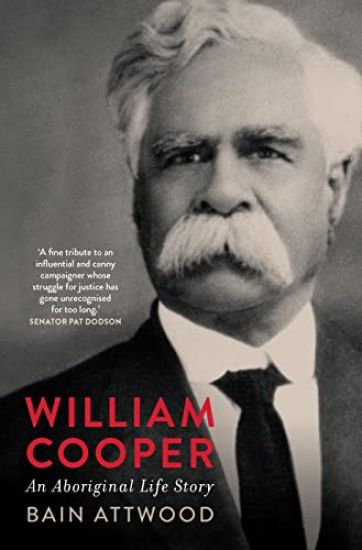
William Cooper

William Cooper

Bain Attwood

MELBOURNE UNIVERSITY PRESS
2021
sidottu
William Cooper's passionate struggle against the dispossession of Aboriginal people and the denial of their rights, and his heroic fight for them to become citizens in their own country, has been widely commemorated and celebrated. By carefully reconstructing the historical losses his people suffered and endured, William Cooper: An Aboriginal Life Story reveals how the first seventy years of Cooper's life inspired the remarkable political work he undertook in the 1930s. Focusing on Cooper's most important campaigns - his famous petition to King George VI for an Aboriginal representative in the Australian parliament, his call for a day of mourning after 150 years of colonisation, the walk-off of the Yorta Yorta people from Cummeragunja reserve in 1939 and his opposition to the establishment of an Aboriginal regiment in the Second World War - this carefully researched study sheds important new light on the long struggle that Indigenous people have fought to tell the truth about Australia's black history and to win representation in Australia's political order.
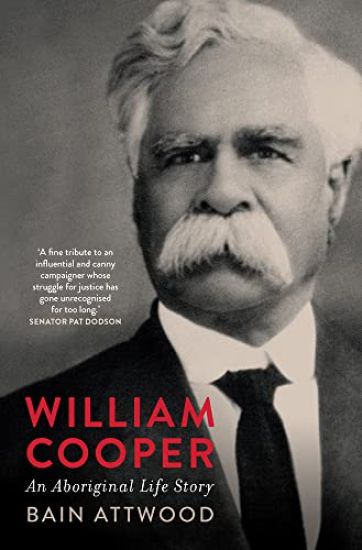
William Cooper

William Cooper

Bain Attwood

MELBOURNE UNIVERSITY PRESS
2023
pokkari
William Cooper's passionate struggle against the dispossession of Aboriginal people and the denial of their rights and his heroic fight for them to become citizens in their own country has been widely commemorated and celebrated. By carefully reconstructing the historical losses his Yorta Yorta people suffered and endured, William Cooper: An Aboriginal Life Story reveals how the first seventy years of Cooper's life inspired the remarkable political work he undertook in the 1930s. Focusing on Cooper's most important campaigns-his famous petition to the British king George for an Aboriginal representative in the Australian parliament, his call for a day of mourning after 150 years of colonisation, the walk-off of the Yorta Yorta people from Cumeroogunga reserve in 1939 and his opposition to the establishment of an Aboriginal regiment in the Second World War-this carefully researched study sheds important new light on the long struggle that Indigenous people have fought to have the truth about Australia's black history heard and win representation in Australia's political order.