Kirjojen hintavertailu. Mukana 11 244 527 kirjaa ja 12 kauppaa.

Kirjahaku

Etsi kirjoja tekijän nimen, kirjan nimen tai ISBN:n perusteella.

1000 tulosta hakusanalla William Fitzstephen

The Collected Letters of William Morris, Volume IV

The Collected Letters of William Morris, Volume IV

William Morris

Princeton University Press
2016
sidottu
These volumes bring to a close the only comprehensive edition of the surviving correspondence of William Morris (1834-1896), a protean figure who exerted a major influence as poet, craftsman, master printer, and designer. Volumes III and IV, taken together, give in detail the comments and observations that articulate his problematic political and artistic stands and equally problematic position within the aesthetic movement as it developed in the 1890s. Most eloquently voiced also are the complexities of his troubled marriage and his devotion to his epileptic daughter, Jenny, and his other daughter, May. But dominating all these themes, organizing and structuring them, are the Kelmscott Press and the building of Morris's important library of medieval manuscripts and early printed books. The letters record the way in which the Press becomes not only the center of Morris's aesthetic ambitions and achievements but also the site for his closest human relations and for much of his connecting with the makers of early modernism. The letters in Volumes III and IV are thoroughly annotated, and through texts and notes provide a new assessment of Morris's career. Included also, as appendices to Volume IV, are two important documents: the first, never before published, is F. S. Ellis's Valuation List of Morris's library, made after Morris's death, and the second, never before reprinted, is the text of what was to be Morris's final essay on socialism, published in April 1896. Originally published in 1996. The Princeton Legacy Library uses the latest print-on-demand technology to again make available previously out-of-print books from the distinguished backlist of Princeton University Press. These editions preserve the original texts of these important books while presenting them in durable paperback and hardcover editions. The goal of the Princeton Legacy Library is to vastly increase access to the rich scholarly heritage found in the thousands of books published by Princeton University Press since its founding in 1905.
The Collected Letters of William Morris, Volume I

The Collected Letters of William Morris, Volume I

William Morris

Princeton University Press
2016
sidottu
The life of William Morris (1834-1896) is revealed in significant new detail by his complete surviving correspondence, brought together here for the first time and including many previously unpublished letters. This collection not only bears witness to Morris's day-to-day activities and friendships, but also reflects his keen response to landscape and architecture, his sense of social responsibility, and his interest in the techniques of the applied arts. Volume I covers Morris's student days at Oxford and marriage to Jane Burden; the first twenty years of Morris and Co.; his success as a poet with the publication of The Earthly Paradise; his two trips to Iceland; the moves to Kelmscott Manor and Kelmscott House; and the start of his socialist career. Originally published in 1984. The Princeton Legacy Library uses the latest print-on-demand technology to again make available previously out-of-print books from the distinguished backlist of Princeton University Press. These editions preserve the original texts of these important books while presenting them in durable paperback and hardcover editions. The goal of the Princeton Legacy Library is to vastly increase access to the rich scholarly heritage found in the thousands of books published by Princeton University Press since its founding in 1905.
William of Auvergne and Robert Grosseteste

William of Auvergne and Robert Grosseteste

Steven P. Marrone

Princeton University Press
2016
sidottu
Focusing on the seminal works of two early thirteenth-century philosophers, Steven P. Marrone shows how the idea of science" and the desire to be "scientific" first penetrated the scholarly discourse of the medieval West. Originally published in 1983. The Princeton Legacy Library uses the latest print-on-demand technology to again make available previously out-of-print books from the distinguished backlist of Princeton University Press. These editions preserve the original texts of these important books while presenting them in durable paperback and hardcover editions. The goal of the Princeton Legacy Library is to vastly increase access to the rich scholarly heritage found in the thousands of books published by Princeton University Press since its founding in 1905.
William Penn and Early Quakerism

William Penn and Early Quakerism

Melvin B. Endy

Princeton University Press
2016
sidottu
William Penn is justly famous for his part in the political development of colonial America. Yet he was also one of the leading Quaker theologians of the seventeenth century and the most important translator of Quaker religious thought into social and political reality, and his life and works cannot be fully understood without a knowledge of his religious hopes and ideals. Melvin Endy goes beyond the political histories, biographies, and histories of Quakerism to provide a comprehensive account of Penn's religious thought, its influence on his political thought and activity, and the significance of his life and thought to the Quaker movement. His assessment of Penn's place in the Quaker movement and his discussion of Penn's thought in relation to Puritan, Spiritualist. Anglican, and pre-Enlightenment developments has led to an understanding of Quakerism that differs from the recent tendency to stress strongly its Puritan origins and affinities. Because of the revisionist nature of this interpretation and the author's conviction that early Quaker thought has never been adequately related to its intellectual milieu, this study of Penn has been developed into a vehicle for a new analysis of aspects of early Quaker thought. Finally, the Pennsylvania venture is examined and assessed as a laboratory in which the vision of a society run according to the principles of a spiritual religion was put to the test. Originally published in 1973. The Princeton Legacy Library uses the latest print-on-demand technology to again make available previously out-of-print books from the distinguished backlist of Princeton University Press. These editions preserve the original texts of these important books while presenting them in durable paperback and hardcover editions. The goal of the Princeton Legacy Library is to vastly increase access to the rich scholarly heritage found in the thousands of books published by Princeton University Press since its founding in 1905.
William Penn

William Penn

Mary Maples Dunn

Princeton University Press
2016
sidottu
This is a concise, fluently presented examination of the relation between William Penn's religious convictions and his political behavior, from his years as an active young convert to the Quaker cause to his later years as governor of Pennsylvania. Although not a full biographical treatment of William Penn, the study presents new insights into Penn's life because it is based on many ignored but important pamphlets that Penn wrote. The young William Penn took a leading role in the Quaker fight for the right of free assembly, the right of free speech, and freedom of conscience. However, when faced with governing a booming colony, these very principles and convictions had to be modified in order to maintain his and the Friends' control of Pennsylvania. Originally published in 1967. The Princeton Legacy Library uses the latest print-on-demand technology to again make available previously out-of-print books from the distinguished backlist of Princeton University Press. These editions preserve the original texts of these important books while presenting them in durable paperback and hardcover editions. The goal of the Princeton Legacy Library is to vastly increase access to the rich scholarly heritage found in the thousands of books published by Princeton University Press since its founding in 1905.
William Billings of Boston

William Billings of Boston

David Phares McKay; Richard Crawford

Princeton University Press
2019
pokkari
The foremost American musician of the eighteenth century, William Billings wrote more than three hundred compositions and six musical collections at a time when Americans were singing almost nothing but British music. In this study, David McKay and Richard Crawford depict the man, his music, and his place in the tradition of American psalmody.The authors examine Billings' methods, innovations, and interaction with the Boston society in which he lived, placing overall emphasis on his influence on American Protestant sacred music.David McKay is Associate Professor of English at Worcester Polytechnic Institute. Richard Crawford is Associate Professor of Music at the University of Michigan. He is the author of Andrew Law, American Psalmodist (Northwestern, 1968). Originally published in 1975.The Princeton Legacy Library uses the latest print-on-demand technology to again make available previously out-of-print books from the distinguished backlist of Princeton University Press. These editions preserve the original texts of these important books while presenting them in durable paperback and hardcover editions. The goal of the Princeton Legacy Library is to vastly increase access to the rich scholarly heritage found in the thousands of books published by Princeton University Press since its founding in 1905.
William Billings of Boston

William Billings of Boston

David Phares McKay; Richard Crawford

PRINCETON UNIVERSITY PRESS
2019
sidottu
The foremost American musician of the eighteenth century, William Billings wrote more than three hundred compositions and six musical collections at a time when Americans were singing almost nothing but British music. In this study, David McKay and Richard Crawford depict the man, his music, and his place in the tradition of American psalmody.The authors examine Billings' methods, innovations, and interaction with the Boston society in which he lived, placing overall emphasis on his influence on American Protestant sacred music.David McKay is Associate Professor of English at Worcester Polytechnic Institute. Richard Crawford is Associate Professor of Music at the University of Michigan. He is the author of Andrew Law, American Psalmodist (Northwestern, 1968). Originally published in 1975.The Princeton Legacy Library uses the latest print-on-demand technology to again make available previously out-of-print books from the distinguished backlist of Princeton University Press. These editions preserve the original texts of these important books while presenting them in durable paperback and hardcover editions. The goal of the Princeton Legacy Library is to vastly increase access to the rich scholarly heritage found in the thousands of books published by Princeton University Press since its founding in 1905.
William, The What-If Wonder On His First Day of School

William, The What-If Wonder On His First Day of School

Carol Wulff

It's a Wonder Publishing, LLC
2018
pokkari
It's the first day of school and William is sure it will be a disaster. What if the bus passes by his street? What if he can't find his desk? What if he gets lost? These pestering what-if thoughts make him feel nervous and scared. But, wait What if the day turns out to be amazing? Discover what William learns that turns his day around A touching story with charming illustrations that will help children recognize the difference between worry and reality through the introduction of cognitive re-framing, or seeing the same situation in a new view. A Note to Parents and Caregivers, written by board certified child psychologist Margaret R. Mauze, PhD, ABPP, gives more information on child-friendly ways to manage anxiety.
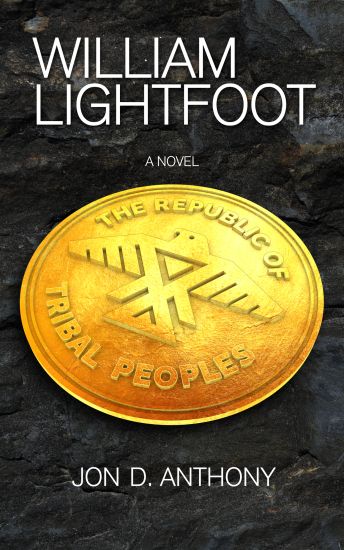
William Lightfoot

William Lightfoot

Jon D. Anthony

Jfi
2017
nidottu
What if the meek really did inherit the earth? "A fantastic story about the rights of a Native American tribe upon finding an extra-terrestrial element on their land, and how they went about defending those rights. A first-class legal story that was a brilliant and interesting read." "I really liked this book. It was thought provoking and a very powerful read. The story included science, technology, adventure and drama and was lyrical in its simplicity but it packed a big punch. The characters were spiritual and very genuine and made you wish that you new them, that they could be members of your own family. The message in this book was an important one and I wish everyone one would read this book I will be recommending it to many." "It's not often that one can find a story that engages the senses and refreshes the mind with originality and attention to detail. Part science -fiction, part historical, and part spiritual, author Jon D. Anthony takes us on a journey of hope intermingled with the sacred beliefs and customs of the Chippewa people. Well-crafted and enjoyable, I highly recommend this book to anyone looking for a change from cookie cutter plots and worn out themes." "All Indigenous Peoples have the right of self-determination. By virtue of that right they freely determine their political status and freely pursue their economic, social, and cultural development. flag"
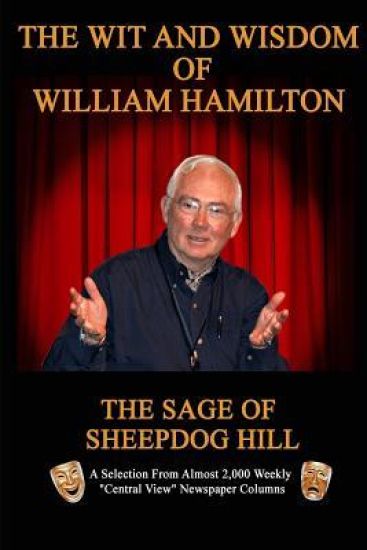
The Wit and Wisdom of William Hamilton: The Sage of Sheepdog Hill
From one of "flyover land's" most-awarded newspaper columnists and laureate of the Oklahoma Journalism Hall of Fame, comes a long-awaited collection of William Hamilton's often humorous, always illuminating, newspaper columns. For 35 years, Dr. Hamilton's "Central View," has informed and entertained readers throughout America's heartland. Striving to be just slightly to the right of center, and relying on successful careers in-the-trenches of military service, political consulting, old-fashioned journalism, and the advertising/public relations business, Dr. Hamilton's penetrating insights into: cultural, geopolitical, economic, history, military, and political affairs provides readers with an unconventional perspective on past and current events -- a perspective not typically found in America's mainstream media (MSM). "Bill Hamilton is a skilled and entertaining writer, a pleasure for an editor to work with, and one of the rarest of literary animals: a conservative with a sense of humor."-- Sid Hurlburt, longtime guest columns editor for USA TODAY Kim Stevens, fellow pilot and publisher of the State Aviation Journal/AVED Magazine comments: "Like the 1980s Lays Potato Chips slogan - I bet you can't eat just one - reading just one of William Hamilton's columns just can't be done. Or shouldn't. To miss even one of his stories is to deprive you of his years of wit, wisdom and smile provoking situations." "Aviator, master parachutist, avid skier, sailor, linguist, highly decorated soldier, Bill Hamilton, lives a life of high adventure about which he writes with wit and wisdom," says Warren Miller, the founder of Warren Miller Entertainment. Readers looking for a refreshing change from the MSM's usual group-think, will find in these columns good-natured humor and new ways of looking at subjects, both old and new.
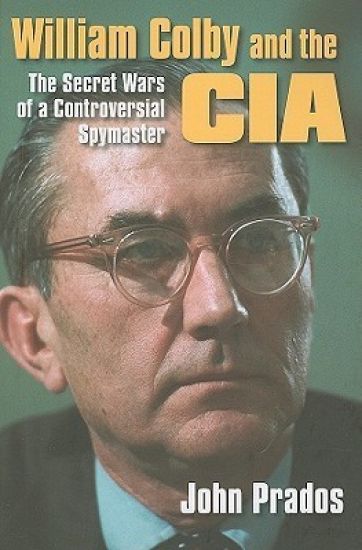
William Colby and the CIA

William Colby and the CIA

John Prados

University Press of Kansas
2009
nidottu
'It is surprising that no one previous to John Prados attempted a biography of quintessential cold warrior William Colby, because his story is in many ways also the story of the CIA. From Italy to Vietnam, to the military coup in Indonesia, to Watergate, the prosecution of Richard Helms, investigations of CIA assassination plots, and the drugging and surveillance of unwitting Americans, Colby was there, on the ground or deeply involved at headquarters' - ""The Guardian"". William E. Colby was one of the most enigmatic figures of the Cold War and a central player in the operations of the Central Intelligence Agency. While publicly appearing as a calm bureaucrat, behind the scenes Colby helped orchestrate some of CIA's most controversial operations. His mysterious death even added to the aura. In the wake of new questions relating to CIA activities since 9/11 - which John Prados discusses in his new preface - Colby's story provides crucial lessons for a nation that still struggles to reconcile intelligence methods with democratic principles. Prados tracks Colby's life and career from early years in the OSS to his tumultuous tenure as Director of Central Intelligence in the 1970s. Reviled by many outside the CIA for his role in Vietnam - and inside it for his cooperation with probes of the agency - Colby was cast as a scapegoat by the Ford White House during the Church and Pike congressional investigations. In addition, Prados offers fresh insights and new perspectives on Colby's involvement in the notorious Phoenix program in Vietnam and in the bloody Indonesian coup of 1965 that overthrew President Sukarno and brought General Suharto to power, as well as on the CIA's role in the 1963 assassination of President Ngo Dinh Diem of South Vietnam and on the actions of high-level CIA officials during the final demise of South Vietnam in 1975. A masterful study of a master spy, ""William Colby and the CIA"" also offers a vital and timely history of the inner workings of 'the Company' for which he worked. Originally published in a cloth edition under the title ""Lost Crusader"" and retitled for this first paperback edition, ""William Colby and the CIA"" explores dilemmas of intelligence that are of renewed importance today.
William Howard Taft's Constitutional Progressivism

William Howard Taft's Constitutional Progressivism

Kevin J. Burns

University Press of Kansas
2021
sidottu
In William Howard Taft's Constitutional Progressivism Kevin J. Burns makes a compelling case that Taft's devotion to the Constitution of 1787 contributed to his progressivism. In contrast to the majority of scholarship, which has viewed Taft as a reactionary conservative because of his constitutionalism, Burns explores the ways Taft's commitment to both the Constitution and progressivism drove his political career and the decisions he made as president and chief justice. Taft saw the Constitution playing a positive role in American political life, recognizing that it created a national government strong enough to enact broad progressive reforms.In reevaluating Taft's career, Burns highlights how Taft rejected the 'laissez faire school,' which taught that 'the Government ought to do nothing but run a police force.' Recognizing that the massive industrial changes following the Civil War had created a plethora of socioeconomic ills, Taft worked to expand the national government's initiatives in the fields of trust-busting, land conservation, tariff reform, railroad regulations, and worker safety laws. Burns offers a fuller understanding of Taft and his political project by emphasizing Taft's belief that the Constitution could play a constructive role in American political life by empowering the government to act and by undergirding and protecting the reform legislation the government implemented. Moreover, Taft recognized that if the Constitution could come to the aid of progressivism, political reform might also redound to the benefit of the Constitution by showing its continued relevance and workability in modern America.Although Taft's efforts to promote significant policy-level reforms attest to his progressivism, his major contribution to American political thought is his understanding of the US Constitution as a fundamental law, not a policy-oriented document. In many ways Taft can be thought of as an originalist, yet his originalism was marked by a belief in robust national powers. Taft's constitutionalism remains relevant because while his principles seem foreign to modern legal discourse, his constitutional vision offers an alternative to contemporary political divisions by combining political progressivism-liberalism with constitutional conservatism.
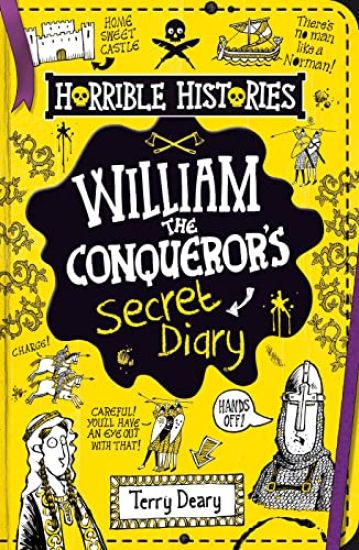
William the Conqueror's Secret Diary
From the bestselling team behind Horrible Histories! It's time to delve into the totally true (sort of) and incredibly intriguing pages of William the Conqueror's Secret Diary. Terry Deary steps into the mind of one of history's most annihilating kings, bringing you William the Conqueror's thoughts on: the Normans! England! Matilda! the French! military! the Church! battles! Hastings! Horrible Histories' Secret Diaries of the most extraordinary (and Horrible) characters of all time will blow your mind. Horrible Histories' Secret Diaries are the perfect introduction to important figures from history. Fully illustrated throughout and told from the character's (sometimes delusional) point of view, each diary reveals the (quite likely) inner workings of their minds during the events that shaped their lives. Covering key moments in William's life and the history of the Middle Ages, the Secret Diary of William the Conqueror reveals his: ascension to the Duke of Normandy relations with the Church battles with the French meeting of Matilda feuding family battle of Hastings … right up to the end of his life in 1087. Each diary is the perfect introduction to a pivotal era in British History, brilliantly immersive and sure to capture the imagination!
William Salesbury

William Salesbury

R. Brinley Jones

University of Wales Press
1994
nidottu
An introduction to the life and work of William Salesbury (c.1520-1584), a scholar and translator of the New Testament into Welsh. William Salesbury is a seminal figure in the literary history of Wales. To his perception of his country's needs and his efforts to meet them, more than to almost anyone else's, are owed the survival and renewal of the language and literature of Wales from the 16th century onwards. The most learned Renaissance scholar in the Wales of his day, he was also steeped in the knowledge of earlier Welsh poetry and prose. He saw the need for a Welsh Bible, did much to bring it about and was the most important pioneer of the printed book in Welsh.