Kirjojen hintavertailu. Mukana 11 627 542 kirjaa ja 12 kauppaa.

Kirjahaku

Etsi kirjoja tekijän nimen, kirjan nimen tai ISBN:n perusteella.

1000 tulosta hakusanalla William Pearson

William's Wonderful World of Gaming
William Bridges needs 10.000 in a week, because his family face losing their house if he fails, the bailiffs will come and evict them, making them homeless. There is a problem, he has been spawned into a video game and must defeat eight levels to reap the end reward. How can he win the money despite being locked in a video game?
William's World

William's World

Caroline Blair

Lulu.com
2018
pokkari
Welcome to William's World. Each book follows the life of William and his family. In this story he is starting school. It's a big moment for William and he is feeling a little nervous as he puts on his new school uniform that morning. He arrives at the local village school and is soon making lots of friends, realising that he didn't need to be afraid. He meets his lovely new class teacher and has a great first day. Whether you are starting school soon, learning to read, or want a new bedtime story collection, then William's World can be enjoyed by all. Join William on his next adventure when he goes on a trip to the farm...
William's Wondrous War

William's Wondrous War

Chris Nicholls

Lulu.com
2018
pokkari
William Doyle, affectionately known as Billy by his friends and family was almost thirteen when World War Two began. He was an innocent lad with a vivid imagination who had to come to terms with growing up in a war torn Britain. His zest for life landed him in some sticky situations as he put the disciplines of home life to the test. Billy experienced self-doubt like any other teenager, and found himself questioning values on many occasions. "William's Wondrous War" shows another side to life during WW2. Through Billy's hilarious adventures and frequent mishaps, we see what real life was like for young people in a country at war. Historically accurate and bulging with nostalgia, this book is not just a great read for adults. It would also make an ideal read for junior schools working on WW2 topics. Get ready to discover William's Wondrous War.
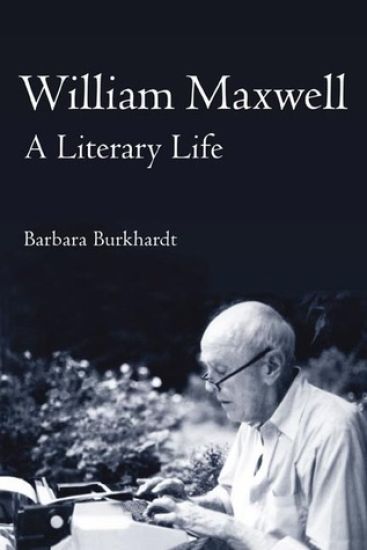
William Maxwell

William Maxwell

Barbara A. Burkhardt

University of Illinois Press
2005
sidottu
Known as a beloved, longtime fiction editor at The New Yorker, William Maxwell worked closely with such legendary writers as Vladimir Nabokov, John Updike, Mary McCarthy, and John Cheever. His own novels include They Came Like Swallows and the American Book Award-winning So Long, See You Tomorrow, and many consider him to be one of the twentieth century's most important writers. Barbara Burkhardt's William Maxwell: A Literary Life represents the first major critical study of this Illinois writer's life and work.Writing with an economy and elegance befitting her subject, Burkhardt addresses Maxwell's highly autobiographical fiction by skillfully interweaving his biography with her own critical interpretations. She contextualizes his fiction in terms of events including his mother's early death from influenza, his marriage, and the role of his psychoanalysis under the guidance of Theodor Reik. Drawing on a wide range of previously unavailable material, Burkhardt includes letters Maxwell received from authors such as Eudora Welty and Louise Bogan, excerpts from his unpublished manuscripts and correspondence, and her own interviews with Maxwell and key figures from his life, including John Updike, Roger Angell, New Yorker fiction editor Robert Henderson, and Maxwell's family and friends.
William L. Dawson

William L. Dawson

Gwynne Kuhner Brown

UNIVERSITY OF ILLINOIS PRESS
2024
sidottu
William L. Dawson is recognized for his genre-defining choral spirituals and for his Negro Folk Symphony, a masterpiece enjoying a twenty-first-century renaissance. Gwynne Kuhner Brown’s engaging and tirelessly researched biography reintroduces a musical leader whose legacy is more important today than ever. Born in 1899, Dawson studied at the Tuskegee Institute in Alabama. He worked as a church, jazz, and orchestral musician in Kansas City and Chicago in the 1920s while continuing his education as a composer. He then joined the Tuskegee faculty, where for 25 years he led the Tuskegee Institute Choir to national prominence through performances of spirituals at the opening of Radio City Music Hall, on radio and television, and at the White House. The Philadelphia Orchestra conducted by Leopold Stokowski premiered Dawson’s Negro Folk Symphony in 1934. Engaging and long overdue, William L. Dawson celebrates a pioneering Black composer whose contributions to African American music, history, and education inspire performers and audiences to this day.
William Z. Foster and the Tragedy of American Radicalism

William Z. Foster and the Tragedy of American Radicalism

James R. Barrett

University of Illinois Press
2001
nidottu
In this trenchant work, James Barrett traces the political journey of a leading worker radical whose life and experiences encapsulate radicalism's rise and fall in the United States. A self-educated wage earner raised in the slums of a large industrial city, William Z. Foster became a brilliant union organizer who helped build the American Federation of Labor and, later, radical Trade Union Educational League. Embracing socialism, syndicalism, and communism in turn, Foster rose through the ranks of the American Communist Party to stand at the forefront of labor politics throughout the 1920s. Yet by the time he died in 1961, in a Moscow hospital far from the meat-packing plants and steel mills where he had built his reputation, Foster's political marginalism stood as a symbol for the isolation of American labor radicalism in the postwar era. Integrating both the indigenous and the international factors that determined the fate of American communism, William Z. Foster and the Tragedy of American Radicalism provides a new understanding of the basis for radicalism among twentieth-century American workers.
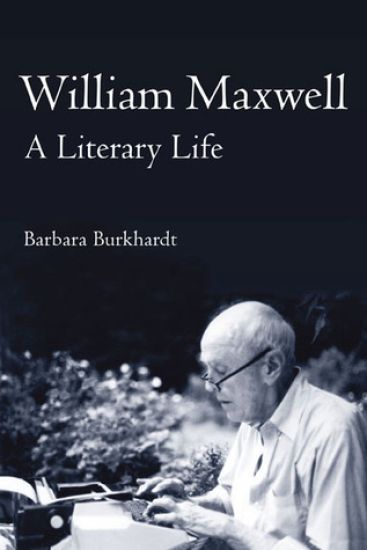
William Maxwell

William Maxwell

Barbara A. Burkhardt

University of Illinois Press
2008
nidottu
Known as a beloved, longtime fiction editor at The New Yorker, William Maxwell worked closely with such legendary writers as Vladimir Nabokov, John Updike, Mary McCarthy, and John Cheever. His own novels include They Came Like Swallows and the American Book Award-winning So Long, See You Tomorrow, and many consider him to be one of the twentieth century's most important writers. Barbara Burkhardt's William Maxwell: A Literary Life represents the first major critical study of this Illinois writer's life and work.Writing with an economy and elegance befitting her subject, Burkhardt addresses Maxwell's highly autobiographical fiction by skillfully interweaving his biography with her own critical interpretations. She contextualizes his fiction in terms of events including his mother's early death from influenza, his marriage, and the role of his psychoanalysis under the guidance of Theodor Reik. Drawing on a wide range of previously unavailable material, Burkhardt includes letters Maxwell received from authors such as Eudora Welty and Louise Bogan, excerpts from his unpublished manuscripts and correspondence, and her own interviews with Maxwell and key figures from his life, including John Updike, Roger Angell, New Yorker fiction editor Robert Henderson, and Maxwell's family and friends.
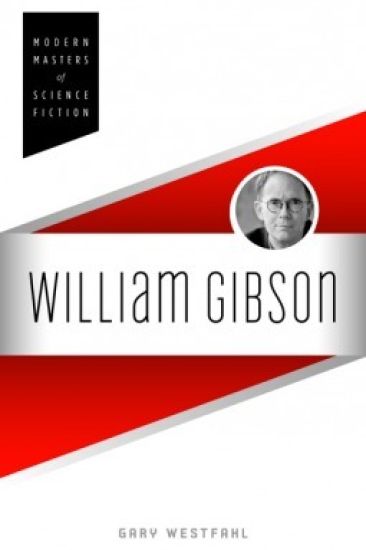
William Gibson

William Gibson

Gary Westfahl

University of Illinois Press
2013
nidottu
The leading figure in the development of cyberpunk, William Gibson (born in 1948) crafted works in which isolated humans explored near-future worlds of ubiquitous and intrusive computer technology and cybernetics. This volume is the first comprehensive examination of the award-winning author of the seminal novel Neuromancer (and the other books in the Sprawl trilogy, Count Zero and Mona Lisa Overdrive), as well as other acclaimed novels including recent bestsellers Pattern Recognition, Spook Country, and Zero History. Renowned scholar Gary Westfahl draws upon extensive research to provide a compelling account of Gibson's writing career and his lasting influence in the science fiction world. Delving into numerous science fiction fanzines that the young Gibson contributed to and edited, Westfahl delivers new information about his childhood and adolescence. He describes for the first time more than eighty virtually unknown Gibson publications from his early years, including articles, reviews, poems, cartoons, letters, and a collaborative story. The book also documents the poems, articles, and introductions that Gibson has written for various books, and its discussions are enriched by illuminating comments from various print and online interviews. The works that made Gibson famous are also featured, as Westfahl performs extended analyses of Gibson's ten novels and nineteen short stories. Lastly, the book presents a new interview with Gibson in which the author discusses his correspondence with author Fritz Leiber, his relationship with the late scholar Susan Wood, his attitudes toward critics, his overall impact on the field of science fiction, and his recently completed screenplay and forthcoming novel.
William L. Dawson

William L. Dawson

Gwynne Kuhner Brown

UNIVERSITY OF ILLINOIS PRESS
2024
nidottu
William L. Dawson is recognized for his genre-defining choral spirituals and for his Negro Folk Symphony, a masterpiece enjoying a twenty-first-century renaissance. Gwynne Kuhner Brown’s engaging and tirelessly researched biography reintroduces a musical leader whose legacy is more important today than ever. Born in 1899, Dawson studied at the Tuskegee Institute in Alabama. He worked as a church, jazz, and orchestral musician in Kansas City and Chicago in the 1920s while continuing his education as a composer. He then joined the Tuskegee faculty, where for 25 years he led the Tuskegee Institute Choir to national prominence through performances of spirituals at the opening of Radio City Music Hall, on radio and television, and at the White House. The Philadelphia Orchestra conducted by Leopold Stokowski premiered Dawson’s Negro Folk Symphony in 1934. Engaging and long overdue, William L. Dawson celebrates a pioneering Black composer whose contributions to African American music, history, and education inspire performers and audiences to this day.
William James in Focus

William James in Focus

Indiana University Press
2013
sidottu
William James (1842-1910) is a canonical figure of American pragmatism. Trained as a medical doctor, James was more engaged by psychology and philosophy and wrote a foundational text, Pragmatism, for this characteristically American way of thinking. Distilling the main currents of James's thought, William J. Gavin focuses on "latent" and "manifest" ideas in James to disclose the notion of "will to believe," which courses through his work. For students who may be approaching James for the first time and for specialists who may not know James as deeply as they wish, Gavin provides a clear path to understanding James's philosophy even as he embraces James's complications and hesitations.
William James in Focus

William James in Focus

Indiana University Press
2013
pokkari
William James (1842-1910) is a canonical figure of American pragmatism. Trained as a medical doctor, James was more engaged by psychology and philosophy and wrote a foundational text, Pragmatism, for this characteristically American way of thinking. Distilling the main currents of James's thought, William J. Gavin focuses on "latent" and "manifest" ideas in James to disclose the notion of "will to believe," which courses through his work. For students who may be approaching James for the first time and for specialists who may not know James as deeply as they wish, Gavin provides a clear path to understanding James's philosophy even as he embraces James's complications and hesitations.
William J. Forsyth

William J. Forsyth

Rachel Berenson Perry

Indiana University Press
2014
sidottu
Closely associated with artists such as T. C. Steele and J. Ottis Adams, William J. Forsyth studied at the Royal Academy in Munich then returned home to paint what he knew best—the Indiana landscape. It proved a rewarding subject. His paintings were exhibited nationally and received major awards. With full-color reproductions of Forsyth's most important paintings and previously unpublished photographs of the artist and his work, this book showcases Forsyth's fearless experiments with artistic styles and subjects. Drawing on his personal letters and other sources, Rachel Berenson Perry discusses Forsyth and his art and offers fascinating insights into his personality, his relationships with his students, and his lifelong devotion to teaching and educating the public about the importance of art.
William James, Pragmatism, and American Culture

William James, Pragmatism, and American Culture

Deborah Whitehead

Indiana University Press
2016
sidottu
William James, Pragmatism, and American Culture focuses on the work of William James and the relationship between the development of pragmatism and its historical, cultural, and political roots in 19th-century America. Deborah Whitehead reads pragmatism through the intersecting themes of narrative, gender, nation, politics, and religion. As she considers how pragmatism helps to explain the United States to itself, Whitehead articulates a contemporary pragmatism and shows how it has become a powerful and influential discourse in American intellectual and popular culture.
William James, Pragmatism, and American Culture

William James, Pragmatism, and American Culture

Deborah Whitehead

Indiana University Press
2016
pokkari
William James, Pragmatism, and American Culture focuses on the work of William James and the relationship between the development of pragmatism and its historical, cultural, and political roots in 19th-century America. Deborah Whitehead reads pragmatism through the intersecting themes of narrative, gender, nation, politics, and religion. As she considers how pragmatism helps to explain the United States to itself, Whitehead articulates a contemporary pragmatism and shows how it has become a powerful and influential discourse in American intellectual and popular culture.
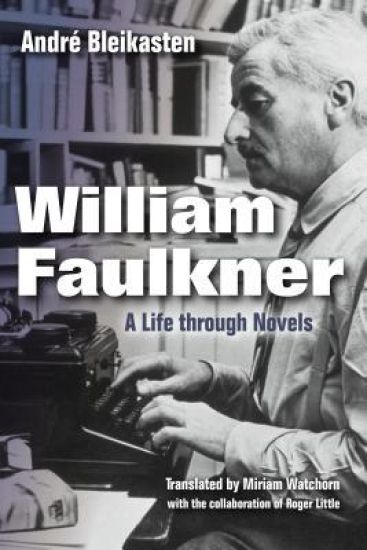
William Faulkner

William Faulkner

André Bleikasten; Philip Weinstein

Indiana University Press
2017
sidottu
Writing to American poet Malcolm Cowley in 1949, William Faulkner expressed his wish to be known only through his books. He would go on to win the Nobel Prize for literature several months later, and when he died famous in 1962, his biographers immediately began to unveil and dissect the unhappy life of "the little man from Mississippi." Despite the many works published about Faulkner, his life and career, it still remains a mystery how a poet of minor symbolist poems rooted in the history of the Deep South became one of the greatest novelists of the twentieth century. Here, renowned critic André Bleikasten revisits Faulkner's biography through the author's literary imagination. Weaving together correspondence and archival research with the graceful literary analysis for which he is known, Bleikasten presents a multi-strand account of Faulkner's life in writing. By carefully keeping both the biographical and imaginative lives in hand, Bleikasten teases out threads that carry the reader through the major events in Faulkner's life, emphasizing those circumstances that mattered most to his writing: the weight of his multi-generational family history in the South; the formation of his oppositional temperament provoked by a resistance to Southern bourgeois propriety; his creative and sexual restlessness and uncertainty; his lifelong struggle with finances and alcohol; his paradoxical escape to the bondages of Hollywood; and his final bent toward self-destruction. This is the story of the man who wrote timeless works and lived in and through his novels.
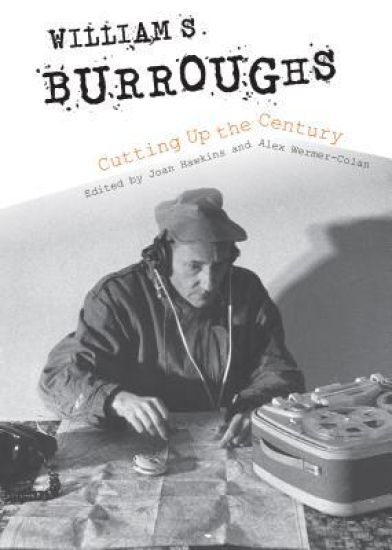
William S. Burroughs Cutting Up the Century
William S. Burroughs Cutting Up the Century is the definitive book on Burroughs' overarching cut-up project and its relevance to the American twentieth century. Burroughs's Nova Trilogy (The Soft Machine, Nova Express, and The Ticket That Exploded) remains the best-known of his textual cut-up creations, but he committed more than a decade of his life to searching out multimedia for use in works of collage. By cutting up, folding in, and splicing together newspapers, magazines, letters, book reviews, classical literature, audio recordings, photographs, and films, Burroughs created an eclectic and wide-ranging countercultural archive. This collection includes previously unpublished work by Burroughs such as cut-ups of work written by his son, cut-ups of critical responses to his own work, collages on the Vietnam War and the Watergate scandal, excerpts from his dream journals, and some of the few diary entries that Burroughs wrote about his wife, Joan. William S. Burroughs Cutting Up the Century also features original essays, interviews, and discussions by established Burroughs scholars, respected artists, and people who encountered Burroughs. The essays consider Burroughs from a range of starting points—literary studies, media studies, popular culture, gender studies, post-colonialism, history, and geography. Ultimately, the collection situates Burroughs as a central artist and thinker of his time and considers his insights on political and social problems that have become even more dire in ours.
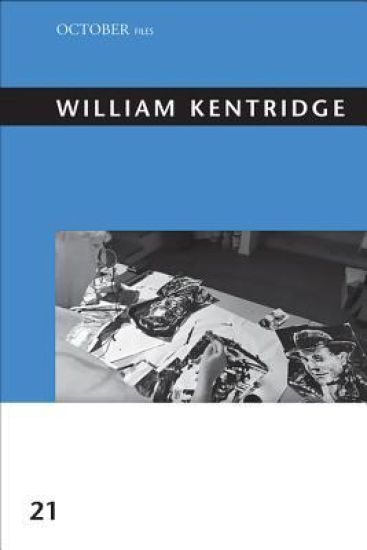
William Kentridge
Critical texts and interviews that explore the drawings, animations, and theatrical work of the South African artist William Kentridge.Since the 1970s, the South African artist William Kentridge has charted the turbulent terrain of his homeland in both personal and political terms. With erudition, absurdist humor, and an underlying hope in humankind, Kentridge's artwork has examined apartheid, humanitarian atrocities, aging, and the ambiguities of growing up white and Jewish in South Africa. This October Files volume brings together critical essays and interviews that explore Kentridge's work and shed light on the unique working processes behind his drawings, prints, stop-animation films, and theater works.The texts include an interview by the artist Carolyn Christov-Bakargiev, curator of the first major retrospective of Kentridge's work; an essay by Andreas Huyssen on the role of shadow-play in Kentridge's film series 9 Drawing for Projection; and investigations of Kentridge's work for opera and theater by Maria Gough, Joseph Leo Koerner, and Margaret Koster Koerner. An analysis by influential art historian Rosalind Krauss, the editor of this volume, argues that Kentridge's films are the result of a particularly reflexive drawing practice in which the marks on the page-particularly the smudges, smears, and erasures that characterize his stop-animations-define the act of drawing as a temporal medium. Krauss's understanding of Kentridge's work as embodying a fundamental tension between formal and sociological poles has been crucial to subsequent analyses of the artist's work, including the new essay by the anthropologist Rosalind Morris, who has collaborated with Kentridge on several projects.Essays and InterviewsCarolyn Christov-Bakargiev, Maria Gough, Andreas Huyssen, William Kentridge, Joseph Leo Koerner, Margaret Koster Koerner, Rosalind Krauss, Rosalind Morris
William Ockham

William Ockham

Marilyn Adams

University of Notre Dame Press
1989
nidottu
William Ockham is probably the most notorious and most widely misunderstood philosopher of the later Middle Ages. Accused by John Lutterell, the former chancellor of Oxford University, of teaching heretical doctrines, Ockham was summoned to Avignon by Pope John XXII and eventually lived under the protection of Louis of Bavaria. Yet, with Aquinas and Scotus, he remains among the three greatest philosophers of the period. This landmark book, split into two volumes, offers a clear and concise account of Ockham's philosophical positions (his ontology, logic, epistemology, and natural philosophy), along with the arguments for them. It then shows how Ockham's theological disagreements with his most eminent predecessors are a logical consequence of underlying philosophical differences. According to Marilyn McCord Adams, Ockham emerges as a Franciscan Aristotelian, much more philosophically and religiously conservative than commonly supposed. Adams challenges the notions that Ockham's nominalism and ontological reductions lead to subjectivism in metaphysics, his epistemology to skepticism, his theory of causality to Humean constant conjunction or to occasionalism. Likewise, Adams rejects the notion that Ockham's philosophical doctrines lead to heretical views in theology, or that his insistence on divine freedom leads to arbitrariness and caprice in ethics. Although her primary focus is on Ockham, McAdams compares and contrasts his positions with those of Aquinas, Scotus, Henry of Ghent, among others. William Ockham constitutes an excellent initiation for philosophers into the problems and theoretical framework of the late thirteenth and early fourteenth centuries.
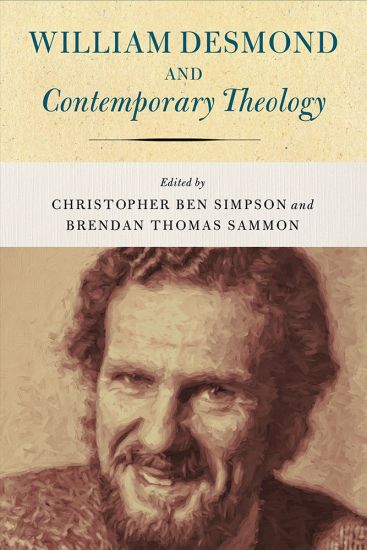
William Desmond and Contemporary Theology

William Desmond and Contemporary Theology

University of Notre Dame Press
2017
sidottu
In William Desmond and Contemporary Theology, Christopher Simpson and Brendan Sammon coordinate, through a collection of scholarly essays, a timely exploration of William Desmond's work on theology and metaphysics, bringing the disciplines of philosophy and theology together in new and vital ways. The book examines the contribution that Desmond's metaphysics makes to contemporary theological discourse and to the renewal of metaphysics. A central issue for the contributors is the renewal of metaphysics within the post-metaphysical, or anti-metaphysical, context of late modernity. This volume not only capably demonstrates the viability of the metaphysical tradition but also illuminates its effectiveness and value in dealing with the many issues in contemporary theological conversation. William Desmond and Contemporary Theology presents Desmond's contemporary, yet historically aware, continental metaphysics as able to provide revealing insights for the discussion of the relation between philosophy and theology. Simpson and Sammon argue, moreover, that Desmond's contribution to linking these two fields makes his an important voice in the academic conversation. Students and scholars of Desmond, contemporary philosophy, theology, and literature will find much to provoke thought in this collection. Contributors: John R. Betz, Christopher R. Brewer, Patrick X. Gardner, Joseph K. Gordon, Renée Köhler-Ryan, D. Stephen Long, John Panteleimon Manoussakis, Cyril O'Regan, Brendan Thomas Sammon, D. C. Schindler, Christopher Ben Simpson, and Corey Benjamin Tutewiler.
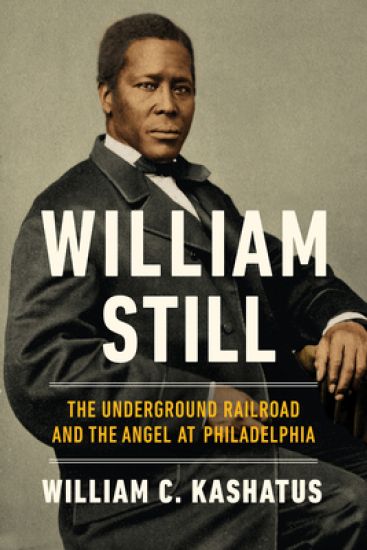
William Still

William Still

William C. Kashatus

University of Notre Dame Press
2021
sidottu
The first full-length biography of William Still, one of the most important leaders of the Underground Railroad. William Still: The Underground Railroad and the Angel at Philadelphia is the first major biography of the free Black abolitionist William Still, who coordinated the Eastern Line of the Underground Railroad and was a pillar of the Railroad as a whole. Based in Philadelphia, Still built a reputation as a courageous leader, writer, philanthropist, and guide for fugitive enslaved people. This monumental work details Still's life story beginning with his parents' escape from bondage in the early nineteenth century and continuing through his youth and adulthood as one of the nation's most important Underground Railroad agents and, later, as an early civil rights pioneer. Still worked personally with Harriet Tubman, assisted the family of John Brown, helped Brown's associates escape from Harper's Ferry after their famous raid, and was a rival to Frederick Douglass among nationally prominent African American abolitionists. Still's life story is told in the broader context of the anti-slavery movement, Philadelphia Quaker and free black history, and the generational conflict that occurred between Still and a younger group of free black activists led by Octavius Catto. Unique to this book is an accessible and detailed database of the 995 fugitives Still helped escape from the South to the North and Canada between 1853 and 1861. The database contains twenty different fields—including name, age, gender, skin color, date of escape, place of origin, mode of transportation, and literacy—and serves as a valuable aid for scholars by offering the opportunity to find new information, and therefore a new perspective, on runaway enslaved people who escaped on the Eastern Line of the Underground Railroad. Based on Still's own writings and a multivariate statistical analysis of the database of the runaways he assisted on their escape to freedom, the book challenges previously accepted interpretations of the Underground Railroad. The audience for William Still is a diverse one, including scholars and general readers interested in the history of the anti-slavery movement and the operation of the Underground Railroad, as well as genealogists tracing African American ancestors.