Kirjojen hintavertailu. Mukana 11 627 463 kirjaa ja 12 kauppaa.

Kirjahaku

Etsi kirjoja tekijän nimen, kirjan nimen tai ISBN:n perusteella.

1000 tulosta hakusanalla Wolfgang Borgmann

The Iraqi Aggression Against Kuwait

The Iraqi Aggression Against Kuwait

Wolfgang F. Danspeckgruber; Charles Tripp

Routledge
2019
sidottu
The war for the liberation of Kuwait following the Iraqi invasion in 1990 rekindled the international community's geopolitical interest in the Gulf and helped define a new regional order. This book analyzes the political, strategic, and economic dimensions of the second Gulf War, with particular focus on military aspects. An international roster of experts treats issues of strategy, weapons technology, arms transfers, and the impact on the Arab state system. Of special interest is the exploration of the implications of the war for Japan, Germany, Russia, and Europe.
Service Economies In Europe

Service Economies In Europe

Wolfgang Ochel; Manfred Wegner

Routledge
2021
nidottu
This book is about the growth and the role of services in the overall growth of the European economy to develop an adequate framework for assessing the service sector and for making policy recommendations. It aims to take stock of the existing knowledge and gaps in producer services.
The Iraqi Aggression Against Kuwait

The Iraqi Aggression Against Kuwait

Wolfgang F. Danspeckgruber; Charles Tripp

Routledge
2021
nidottu
The war for the liberation of Kuwait following the Iraqi invasion in 1990 rekindled the international community's geopolitical interest in the Gulf and helped define a new regional order. This book analyzes the political, strategic, and economic dimensions of the second Gulf War, with particular focus on military aspects. An international roster of experts treats issues of strategy, weapons technology, arms transfers, and the impact on the Arab state system. Of special interest is the exploration of the implications of the war for Japan, Germany, Russia, and Europe.
The Art of Interpretation

The Art of Interpretation

Wolfgang Loch

Routledge
2019
sidottu
This book examines Freud's use and definition of interpretation as a therapeutic tool as well as views it from the philosophical perspective of meaning and its definition. In addition, it examines the later developments made by Klein and Bion.
Pvp

Pvp

Wolfgang Schwarz

CRC Press
2020
nidottu
Polyvinylpyrrolidone is widely used in medicine, pharmaceuticals, cosmetics, foods, printing inks, textiles, and many more diverse applications. This book describes the 50 years of research, published and unpublished, on the absorption, distribution, storage, and excretion of PVP. The toxicology of PVP is critically evaluated. The author's involvement in the recent reevaluation of PVP by the Joint Expert Committee on Food Additives of the World Health Organization (WHO) and the Food and Agriculture Organization (FOA) led them to undertake this comprehensive review of all the information on the subject. This book will be invaluable for anyone who is involved with polyvinylpyrrolidone. Included is a broad review of the toxicological studies performed on PVP, including acute, subchronic, chronic, reproductive, mutagenicity, and carcinogenicity studies. There is also an appendix listing the key studies, with references, on the absorption, renal elimination, distribution, acute toxicity, subchronic toxicity, chronic toxicity, teratogenicity, mutagenicity, and carcinogenicity of PVP.
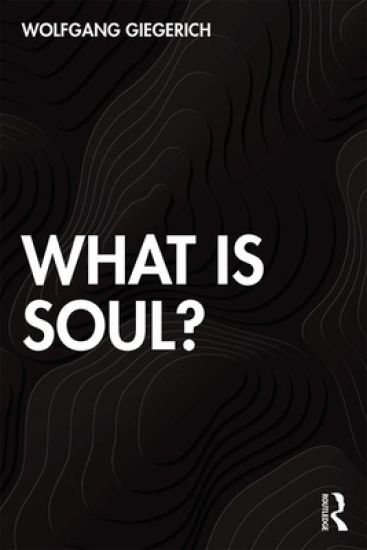
What is Soul?

What is Soul?

Wolfgang Giegerich

Routledge
2020
sidottu
Rooted in the metaphysics of bygone times, the notion of soul in our Western tradition is packed with associations and meanings that are incompatible with the anthropological and naturalistic thinking that prevails in modernity. Whereas treatises of old conceived of the soul as an infinite, immaterial substance which was the ground of man’s hope for eternal salvation, modern psychology has for the most part discarded the concept in favor of more tangible touchstones such as the emotions, desires, and attachments which characterize man as a finite, bodily-existing positive fact. An exception to this trend has been the analytical psychology of C. G. Jung. Against the positivistic spirit of his times, Jung insisted upon a "‘psychology with soul,’ that is, a psychology based upon the hypothesis of an autonomous mind." In this volume, Wolfgang Giegerich once again takes up the Jungian commitment to a psychology with soul. Agreeing with Jung that the soul concept is indispensable for a truly psychological psychology, he supplements and re-orients the Jungian approach to both this concept and the phenomenology of the soul by means of a whole series of nuanced discussions that are as rigorous as they are thoroughgoing. The result is nothing short of a tour de force. Tarrying with the negative, Giegerich’s particular contribution resides in his showing the movement against the soul to be the soul’s own doing. In animus moments of itself, consciousness in the form of philosophy and Enlightenment reason turned upon itself as religion and metaphysics. Far from abolishing the soul, however, these incisive negations were themselves negated. As if dancing upon its own demise, the soul came home to itself, not as an invisible metaphysical substance, but more invisibly still as the logically negative evaporation of that substance into the form of subject, or even better said, into psychology.
What is Soul?

What is Soul?

Wolfgang Giegerich

Routledge
2020
nidottu
Rooted in the metaphysics of bygone times, the notion of soul in our Western tradition is packed with associations and meanings that are incompatible with the anthropological and naturalistic thinking that prevails in modernity. Whereas treatises of old conceived of the soul as an infinite, immaterial substance which was the ground of man’s hope for eternal salvation, modern psychology has for the most part discarded the concept in favor of more tangible touchstones such as the emotions, desires, and attachments which characterize man as a finite, bodily-existing positive fact. An exception to this trend has been the analytical psychology of C. G. Jung. Against the positivistic spirit of his times, Jung insisted upon a "‘psychology with soul,’ that is, a psychology based upon the hypothesis of an autonomous mind." In this volume, Wolfgang Giegerich once again takes up the Jungian commitment to a psychology with soul. Agreeing with Jung that the soul concept is indispensable for a truly psychological psychology, he supplements and re-orients the Jungian approach to both this concept and the phenomenology of the soul by means of a whole series of nuanced discussions that are as rigorous as they are thoroughgoing. The result is nothing short of a tour de force. Tarrying with the negative, Giegerich’s particular contribution resides in his showing the movement against the soul to be the soul’s own doing. In animus moments of itself, consciousness in the form of philosophy and Enlightenment reason turned upon itself as religion and metaphysics. Far from abolishing the soul, however, these incisive negations were themselves negated. As if dancing upon its own demise, the soul came home to itself, not as an invisible metaphysical substance, but more invisibly still as the logically negative evaporation of that substance into the form of subject, or even better said, into psychology.
Neurosis

Neurosis

Wolfgang Giegerich

Routledge
2020
sidottu
Psychoanalysis began over a century ago as a treatment for neurosis. Rooted in the positivistic mindset of the medicine from which it stemmed, it trained its empiricist gaze directly upon the symptoms of the malaise, only to be seduced into attributing it to causes as numerous as there are aspects of human experience. Edifying as this was for our understanding of the life of the psyche, it left the sickness of the soul that was its actual subject matter, the neurosis which it was supposed to be about, out of its purview. The crux of this problem was of a conceptual nature. As psychology increasingly gave up on its constituting concept, its concept of soul, it succumbed to the same extent to treating its patients without an adequate concept of what both it and neurosis were about. Attention was paid to mishaps and traumas, the vicissitudes of development, and the Oedipus complex. But neurosis, according to the thesis of this ground-breaking book, comes from the soul, even is soul; the soul in its untruth. Indeed, both it and the modern field of psychology are successors of the soul-forms that preceded them, religion and metaphysics, with the difference that psychology's reluctance to recognize and take responsibility for its status as such has been matched by the neurotic soul's clinging to obsolete metaphysical categories even as the often quite ordinary life disappointments of its patients are inflated with absolute importance. The folie à deux has been on a massive scale. Owing their provenance to the supplement they each provide the other, psychology and neurosis are entwined in a Gordian knot, the cutting of which requires insight into the logic that pervades both. Taking up this sword, Giegerich exposes and critiques the metaphysics that neurosis indulges in even as he returns psychology to the soul, not, of course, to the soul as some no longer credible metaphysical hypostasis, but as the logically negative life of the mind and power of thought. Using several fairy tales as models for the logic of neurosis, he brilliantly analyses its enchanting background processes, exposing thereby, in a most lively and thoroughgoing manner, the spiteful cunning by which the neurotic soul, against its already existing better judgement, betrays its own truth. Topics include the historicity of neurosis, its soulful purpose as a general cultural phenomenon, its internal logic, functioning, and enabling conditions, as well as the Sacred Festival drama character of symptomatic suffering, the theology of neurosis, and ‘the neurotic’ as the figure of modernity's exemplary man. A collection of vignettes descriptive of various kinds of neurotic presentation routinely met with in the consulting room is also included in an appendix under the heading, ‘Neurotic Traps.’
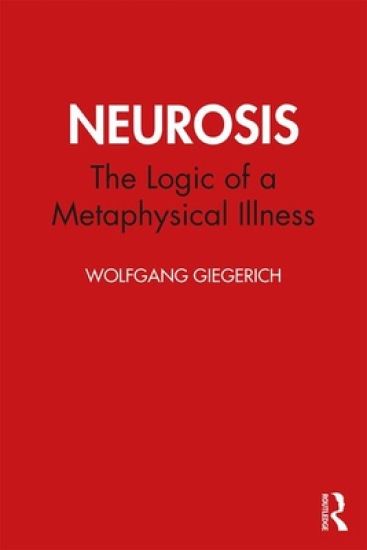
Neurosis

Neurosis

Wolfgang Giegerich

Routledge
2020
nidottu
Psychoanalysis began over a century ago as a treatment for neurosis. Rooted in the positivistic mindset of the medicine from which it stemmed, it trained its empiricist gaze directly upon the symptoms of the malaise, only to be seduced into attributing it to causes as numerous as there are aspects of human experience. Edifying as this was for our understanding of the life of the psyche, it left the sickness of the soul that was its actual subject matter, the neurosis which it was supposed to be about, out of its purview. The crux of this problem was of a conceptual nature. As psychology increasingly gave up on its constituting concept, its concept of soul, it succumbed to the same extent to treating its patients without an adequate concept of what both it and neurosis were about. Attention was paid to mishaps and traumas, the vicissitudes of development, and the Oedipus complex. But neurosis, according to the thesis of this ground-breaking book, comes from the soul, even is soul; the soul in its untruth. Indeed, both it and the modern field of psychology are successors of the soul-forms that preceded them, religion and metaphysics, with the difference that psychology's reluctance to recognize and take responsibility for its status as such has been matched by the neurotic soul's clinging to obsolete metaphysical categories even as the often quite ordinary life disappointments of its patients are inflated with absolute importance. The folie à deux has been on a massive scale. Owing their provenance to the supplement they each provide the other, psychology and neurosis are entwined in a Gordian knot, the cutting of which requires insight into the logic that pervades both. Taking up this sword, Giegerich exposes and critiques the metaphysics that neurosis indulges in even as he returns psychology to the soul, not, of course, to the soul as some no longer credible metaphysical hypostasis, but as the logically negative life of the mind and power of thought. Using several fairy tales as models for the logic of neurosis, he brilliantly analyses its enchanting background processes, exposing thereby, in a most lively and thoroughgoing manner, the spiteful cunning by which the neurotic soul, against its already existing better judgement, betrays its own truth. Topics include the historicity of neurosis, its soulful purpose as a general cultural phenomenon, its internal logic, functioning, and enabling conditions, as well as the Sacred Festival drama character of symptomatic suffering, the theology of neurosis, and ‘the neurotic’ as the figure of modernity's exemplary man. A collection of vignettes descriptive of various kinds of neurotic presentation routinely met with in the consulting room is also included in an appendix under the heading, ‘Neurotic Traps.’

Dialectics & Analytical Psychology

Dialectics & Analytical Psychology

Wolfgang Giegerich; David L. Miller; Greg Mogenson

Routledge
2020
sidottu
What is dialectical thinking and why do we need it in psychology?How are "moments of truth" to be psychologically discerned and differentiated?How does the recognition of the historicity of archetypal and mythological materials relate to their interpretation?In a seminar held in the El Capitan Canyon near Santa Barbara, California, in June of 2004, the renowned Jungian analyst Wolfgang Giegerich, along with conversation partners, David L. Miller and Greg Mogenson, tackled these important questions while at the same time thinking Jungian psychology forward in a radically new way. Conceived to meet "the call for more" that followed the publication of Giegerich’s landmark book, The Soul’s Logical Life, this volume also serves as the most accessible introduction to Giegerich’s approach to psychology for the first-time reader of his work. A valuable resource for students of fairy tale, myth, and depth psychology, this volume includes a complete and up-to-date bibliography of Giegerich’s writings in all languages.
Dialectics & Analytical Psychology

Dialectics & Analytical Psychology

Wolfgang Giegerich; David L. Miller; Greg Mogenson

Routledge
2020
nidottu
What is dialectical thinking and why do we need it in psychology?How are "moments of truth" to be psychologically discerned and differentiated?How does the recognition of the historicity of archetypal and mythological materials relate to their interpretation?In a seminar held in the El Capitan Canyon near Santa Barbara, California, in June of 2004, the renowned Jungian analyst Wolfgang Giegerich, along with conversation partners, David L. Miller and Greg Mogenson, tackled these important questions while at the same time thinking Jungian psychology forward in a radically new way. Conceived to meet "the call for more" that followed the publication of Giegerich’s landmark book, The Soul’s Logical Life, this volume also serves as the most accessible introduction to Giegerich’s approach to psychology for the first-time reader of his work. A valuable resource for students of fairy tale, myth, and depth psychology, this volume includes a complete and up-to-date bibliography of Giegerich’s writings in all languages.
“Dreaming the Myth Onwards”

“Dreaming the Myth Onwards”

Wolfgang Giegerich

Routledge
2020
sidottu
The fundamental importance of Christianity for Jung is well documented in his writings and letters. For the whole of his long career the great psychologist had wrestled with what he called " ... the great snake of the centuries. the burden of the human mind. the problem of Christianity." By comparison, his statements about Hegel are quite scarce. Both topics, nevertheless, have in common that they elicited from Jung radical accusations, accusations not presented in the calm tone of a psychological scholar but fired by a deep-seated personal affect that propelled Jung to wish "to dream the myth onwards," that is, to move to a new, his own improved and corrected version of Christianity. Rather than merely portraying and elucidating Jung’s views, this volume critically examines his theses and arguments by means of a series of close readings and by confronting his claims with the texts on which his interpretations are based. The guiding principle, in the spirit of which the author’s investigation is conducted, is the question of the needs of the soul and the standards of true psychology. While constantly bearing these needs and standards in mind, diverse topics are discussed in depth: Jung’s interpretation of a dream he had had about being unable to completely bow down before "the highest presence," his thesis concerning the patriarchal neglect of the feminine principle, his views about the alleged one-sidedness of Christianity, the "recalcitrant Fourth" and the "reality of Evil," his understanding of the Trinity and the spirit, his rejection of Hegel and of speculative thought, and his reaction to the modern "doubt that has killed" religious faith. A companion to the preceding volume, The Flight into the Unconscious, the essays collected here continue its radical critique of Jung’s psychology project, yielding not only deep insights into Jung’s personal religiosity and into what ultimately drove his psychology project as a whole, but granting as well a more sophisticated understanding of the psychological potential and telos of the Christian idea.
“Dreaming the Myth Onwards”

“Dreaming the Myth Onwards”

Wolfgang Giegerich

Routledge
2020
nidottu
The fundamental importance of Christianity for Jung is well documented in his writings and letters. For the whole of his long career the great psychologist had wrestled with what he called " ... the great snake of the centuries. the burden of the human mind. the problem of Christianity." By comparison, his statements about Hegel are quite scarce. Both topics, nevertheless, have in common that they elicited from Jung radical accusations, accusations not presented in the calm tone of a psychological scholar but fired by a deep-seated personal affect that propelled Jung to wish "to dream the myth onwards," that is, to move to a new, his own improved and corrected version of Christianity. Rather than merely portraying and elucidating Jung’s views, this volume critically examines his theses and arguments by means of a series of close readings and by confronting his claims with the texts on which his interpretations are based. The guiding principle, in the spirit of which the author’s investigation is conducted, is the question of the needs of the soul and the standards of true psychology. While constantly bearing these needs and standards in mind, diverse topics are discussed in depth: Jung’s interpretation of a dream he had had about being unable to completely bow down before "the highest presence," his thesis concerning the patriarchal neglect of the feminine principle, his views about the alleged one-sidedness of Christianity, the "recalcitrant Fourth" and the "reality of Evil," his understanding of the Trinity and the spirit, his rejection of Hegel and of speculative thought, and his reaction to the modern "doubt that has killed" religious faith. A companion to the preceding volume, The Flight into the Unconscious, the essays collected here continue its radical critique of Jung’s psychology project, yielding not only deep insights into Jung’s personal religiosity and into what ultimately drove his psychology project as a whole, but granting as well a more sophisticated understanding of the psychological potential and telos of the Christian idea.
The Flight into The Unconscious

The Flight into The Unconscious

Wolfgang Giegerich

Routledge
2020
sidottu
Psychological analysis usually sets its sights upon the patient or upon cultural phenomena such as myths, literature, or works of art. The essays in this volume, by contrast, have another addressee, another subject matter: psychology itself. Deeply informed by Jung’s insight regarding the discipline’s lack of an objective vantage point outside and beyond the psyche, their Jungian author again and again turns Jung’s contribution to psychology around upon itself in the spirit of an immanent critique. Cutting to the quick, the question is put: in its constitution as psychology is Jungian psychology up to the level of what its insight into psychology’s lack of an Archimedean point would require? Are the interpretations it gives of its various subject matters—alchemy, religion, the unconscious and the rest-matched by its interpretation of itself? Has its meeting itself in them had consequences for itself, consequences in terms of the fathoming of its own truth? Or clinging to the standpoint of empirical observer, did it ultimately demur with regards to the question of their truth and its own - this despite Jung’s having characterized his work as an opus divinum? Topics include Jung’s psychology project as a response to the condition of the world, the "smuggling" inherent in the logic of "the unconscious," the closure and setting free dialectic of alchemy and psychology, the blindness to logical form problematic, the faultiness of the opposition "Individual" and "Collective", Jung’s communion fiasco, his thinking the thought of not-thinking, the veracity of his Red Book, the disenchantment complex, and, as indicated in the title of this volume, Jung’s psychology project as a counter-speculative "flight into the unconscious."
The Flight into The Unconscious

The Flight into The Unconscious

Wolfgang Giegerich

Routledge
2020
nidottu
Psychological analysis usually sets its sights upon the patient or upon cultural phenomena such as myths, literature, or works of art. The essays in this volume, by contrast, have another addressee, another subject matter: psychology itself. Deeply informed by Jung’s insight regarding the discipline’s lack of an objective vantage point outside and beyond the psyche, their Jungian author again and again turns Jung’s contribution to psychology around upon itself in the spirit of an immanent critique. Cutting to the quick, the question is put: in its constitution as psychology is Jungian psychology up to the level of what its insight into psychology’s lack of an Archimedean point would require? Are the interpretations it gives of its various subject matters—alchemy, religion, the unconscious and the rest-matched by its interpretation of itself? Has its meeting itself in them had consequences for itself, consequences in terms of the fathoming of its own truth? Or clinging to the standpoint of empirical observer, did it ultimately demur with regards to the question of their truth and its own - this despite Jung’s having characterized his work as an opus divinum? Topics include Jung’s psychology project as a response to the condition of the world, the "smuggling" inherent in the logic of "the unconscious," the closure and setting free dialectic of alchemy and psychology, the blindness to logical form problematic, the faultiness of the opposition "Individual" and "Collective", Jung’s communion fiasco, his thinking the thought of not-thinking, the veracity of his Red Book, the disenchantment complex, and, as indicated in the title of this volume, Jung’s psychology project as a counter-speculative "flight into the unconscious."
The Soul Always Thinks

The Soul Always Thinks

Wolfgang Giegerich

Routledge
2020
sidottu
C. G. Jung regarded the soul to be a reality in its own right which reflects itself in all manner of images and events. symbols and traditions. In this fourth volume of his Collected English Papers, Giegerich recalls the soul to the inwardness of its own home territory by bringing out the thought-character of the self-creating, self-unfolding logical life that it is. In addition to clarifying what thought means for psychology and analyzing certain misconceptions surrounding the topic of "soul and thought" a challenging thesis concerning the limitation of an imaginal, "anima-only" approach in psychology (given the essential historicity of the soul) is carefully argued, while examining at the same time such topics as "the end of meaning and the birth of man," "anima mundi and time", "the metamorphosis of the gods," and the logical steps involved in the transition from childhood to adulthood and from a psychological oneness with nature to modern alienation from nature. The book also discusses the notion of the soul’s logical life and shows in action the psychological procedure of "absolute-negative interiorization" of phenomena into their soul and truth in a number of in-depth examinations of particular phenomena (e.g. Heraclitus’ dictum about the soul’s depth, the "leap into the solid stone," the negativity of the "stone which is not a stone"). In thorough-going critical engagements with other authors in the field, it demonstrates specific instances where psychology fails to do its job due to faulty presuppositions, above all psychology’s failure to face the modern world. It emphasizes the active role of the mind in soul-making as the making of psychic reality. It addresses the questions of the future of psychology and whether progress in psychology is possible.
The Soul Always Thinks

The Soul Always Thinks

Wolfgang Giegerich

Routledge
2020
nidottu
C. G. Jung regarded the soul to be a reality in its own right which reflects itself in all manner of images and events. symbols and traditions. In this fourth volume of his Collected English Papers, Giegerich recalls the soul to the inwardness of its own home territory by bringing out the thought-character of the self-creating, self-unfolding logical life that it is. In addition to clarifying what thought means for psychology and analyzing certain misconceptions surrounding the topic of "soul and thought" a challenging thesis concerning the limitation of an imaginal, "anima-only" approach in psychology (given the essential historicity of the soul) is carefully argued, while examining at the same time such topics as "the end of meaning and the birth of man," "anima mundi and time", "the metamorphosis of the gods," and the logical steps involved in the transition from childhood to adulthood and from a psychological oneness with nature to modern alienation from nature. The book also discusses the notion of the soul’s logical life and shows in action the psychological procedure of "absolute-negative interiorization" of phenomena into their soul and truth in a number of in-depth examinations of particular phenomena (e.g. Heraclitus’ dictum about the soul’s depth, the "leap into the solid stone," the negativity of the "stone which is not a stone"). In thorough-going critical engagements with other authors in the field, it demonstrates specific instances where psychology fails to do its job due to faulty presuppositions, above all psychology’s failure to face the modern world. It emphasizes the active role of the mind in soul-making as the making of psychic reality. It addresses the questions of the future of psychology and whether progress in psychology is possible.
Soul-Violence

Soul-Violence

Wolfgang Giegerich

Routledge
2020
sidottu
"All steps forward in the improvement of the human psyche have been paid for by blood." Further to this statement from C. G. Jung, Wolfgang Giegerich’s third volume of Collected English Papers shows that the soul is not merely the innocent recipient or victim of violence: it also produces itself through violent deeds and expresses itself through violent acts. Beginning in primordial times with the ritual spilling of blood in animal and human sacrifice, a light was kindled within the darkness of what would otherwise have been mere biological existence, the light of consciousness, mindedness, and "the soul." And following upon this, in the clearance thus created, the soul attained new statuses of itself on the historic battlefields of war and revolution. First-order killings gave way to second-order killings, the killings of metaphysics and philosophy. Turning around upon itself (even as it violently engaged those adversarial others through whom its self-relation was mediated) the soul learned to self-critically cut into itself. It was in this way, as the inwardness of the blood that was paid out for it, that psychology emerged. Topics include ritual slaughter as primordial soul-making, shadow integration and the rise of psychology, blood-brotherhood and blood-revenge, the alchemy of history, Kafka’s "In the Penal Colony," child sacrifice, Islamic terrorism, and the animus as negation with special reference to Bluebeard.
Soul-Violence

Soul-Violence

Wolfgang Giegerich

Routledge
2020
nidottu
"All steps forward in the improvement of the human psyche have been paid for by blood." Further to this statement from C. G. Jung, Wolfgang Giegerich’s third volume of Collected English Papers shows that the soul is not merely the innocent recipient or victim of violence: it also produces itself through violent deeds and expresses itself through violent acts. Beginning in primordial times with the ritual spilling of blood in animal and human sacrifice, a light was kindled within the darkness of what would otherwise have been mere biological existence, the light of consciousness, mindedness, and "the soul." And following upon this, in the clearance thus created, the soul attained new statuses of itself on the historic battlefields of war and revolution. First-order killings gave way to second-order killings, the killings of metaphysics and philosophy. Turning around upon itself (even as it violently engaged those adversarial others through whom its self-relation was mediated) the soul learned to self-critically cut into itself. It was in this way, as the inwardness of the blood that was paid out for it, that psychology emerged. Topics include ritual slaughter as primordial soul-making, shadow integration and the rise of psychology, blood-brotherhood and blood-revenge, the alchemy of history, Kafka’s "In the Penal Colony," child sacrifice, Islamic terrorism, and the animus as negation with special reference to Bluebeard.
Technology and the Soul

Technology and the Soul

Wolfgang Giegerich

Routledge
2020
sidottu
C. G. Jung famously declared that it is not the psyche that is in us, but rather we who are in the psyche. Updating this insight, the second volume of Wolfgang Giegerich’s Collected English Papers examines what must be regarded as the most all-encompassing presence of our lives today: technological civilization. Living within technology, we now find that what we had formerly regarded as psychological phenomena—our feelings and emotions, images and dreams—have been superseded by phenomena bearing the predicates "artificial," "manufactured," and "virtual." Television, the World Wide Web, and the nuclear bomb are cases in point. Far from being mere things among things, each of these has transformed the whole of man’s world-relation. Though deplored by many as soulless on this account, these phenomena, it may be argued, are the real gods, the real archetypes, of the soul today. Psychologically it is not what we think and feel about them that counts, but what they think, what they feel.