Kirjojen hintavertailu. Mukana 12 083 983 kirjaa ja 12 kauppaa.

Kirjahaku

Etsi kirjoja tekijän nimen, kirjan nimen tai ISBN:n perusteella.

1000 tulosta hakusanalla AUGUST STRINDBERG

Letters of Strindberg to Harriet Bosse

Letters of Strindberg to Harriet Bosse

August Strindberg; Arvid Paulson

Literary Licensing, LLC
2011
sidottu
The book ""Letters of Strindberg to Harriet Bosse"" is a collection of letters written by the famous Swedish playwright, August Strindberg, to his third wife, Harriet Bosse. The letters were written between 1900 and 1907, during a tumultuous period in the couple's relationship. The letters provide a fascinating insight into the mind of one of the most influential playwrights of the 19th century. Strindberg's writing is deeply personal and introspective, as he grapples with his own insecurities and the challenges of his marriage. The book is divided into four sections, each covering a different period in the couple's relationship. The first section covers the early years of their marriage, when Strindberg was still deeply in love with Bosse and hopeful for their future together. The second section covers a period of intense conflict and separation, as the couple struggled to reconcile their differences. The third section covers a period of renewed hope, as Strindberg and Bosse attempted to rebuild their relationship. The final section covers the end of their marriage, as Strindberg and Bosse finally parted ways. Throughout the book, Strindberg's writing is marked by his characteristic intensity and emotional depth. The letters are a testament to the power of love and the human spirit, as Strindberg and Bosse struggle to make sense of their relationship and find meaning in their lives. Overall, ""Letters of Strindberg to Harriet Bosse"" is a powerful and moving portrait of a complex and fascinating relationship, as well as a valuable insight into the mind of one of the greatest playwrights of all time.This scarce antiquarian book is a facsimile reprint of the old original and may contain some imperfections such as library marks and notations. Because we believe this work is culturally important, we have made it available as part of our commitment for protecting, preserving, and promoting the world's literature in affordable, high quality, modern editions, that are true to their original work.
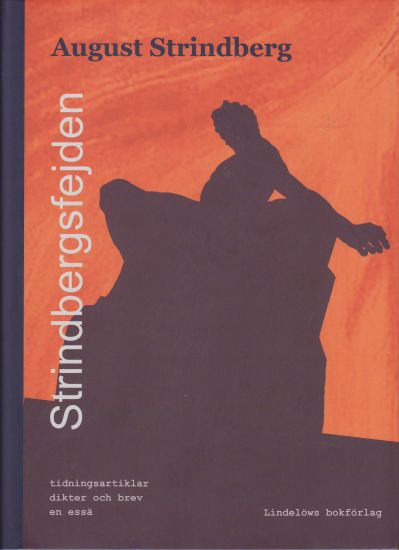
Strindbergsfejden

Strindbergsfejden

August Strindberg; Per Magnus Johansson

Lindelöws bokförlag
2020
sidottu
I Strindbergsfejden deltog närmare 300 debattörer som skrev över tusen tidningsartiklar. Detta är fortfarande Sveriges mest hektiska kulturdebatt. August Strindberg skrev själv drygt 50 i en rad aktuella samhällsfrågor. Men det som gjorde debatten så intensiv var att han hade fyra frontlinjer, och dessa retade upp det etablerade och konservativa Sverige år 1910. Strindbergs fyra frontlinjer var kungahuset, Svenska Akademien, Verner von Heidenstam och Sven Hedin. I artikeln Faraon-dyrkan angreps den sedan länge utbredda kulten av krigarkungen Karl XII. Svenska Akademien tyckte Strindberg var en krets för inbördes beundran. Verner von Heidenstam, som var dess största försvarare, skrev ren smörja tyckte Strindberg i artikeln Två Konungar. Upptäcktsresande Sven Hedin var på mångas läppar, honom gjorde Strindberg narr av i Upptäckar-Humbug. Detta var inte August Strindbergs första fejd. Redan 1884 ställdes han inför domstol för att han hade häcklat Svenska kyrkans heliga sakrament nattvarden. Denna bok ger även en inblick i striden som följde efter novellen "Dygdens lön". Boken innehåller också ett urval utvalda dikter och brev, också av Strindbergs egen hand. Dessutom har idé- och lärdomshistorikern och psykoanalytikern Per Magnus Johansson skrivit en essä som avslutning, om denna omtalade och omskrivna Strindbergsfejd, "Samhällskritiker med satir som vapen". Tomas Lindelöw presenterar urvalet av texter i bokens förord.
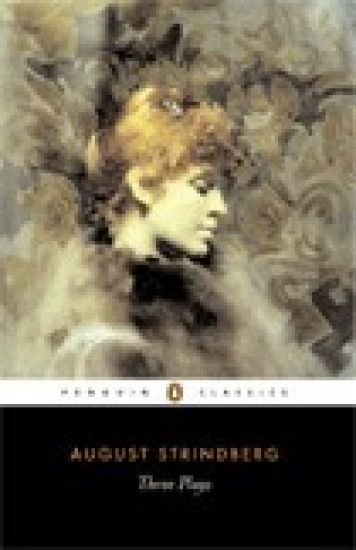
Three Plays

Three Plays

August Strindberg

Penguin Classics
1975
pokkari
The three plays in this volume focus on the tumultuous relationships between men and women, whether they are father and daughter, brother and sister or lovers. Miss Julie is a ruthlessly realistic depiction of an upper class woman's seduction of a servant, emphasizing the differences and the antagonism between them. In The Father a man is brought to madness and driven out of his home by the suspicion that his daughter is not his own child, while Easter centres on a family in need of redemption for its sins and suffering, finding forgiveness at a season of rebirth. Strindberg's acute psychological analysis and his dramatization of naked emotion within a naturalistic domestic setting make him one of the great innovators of the modern theatre.
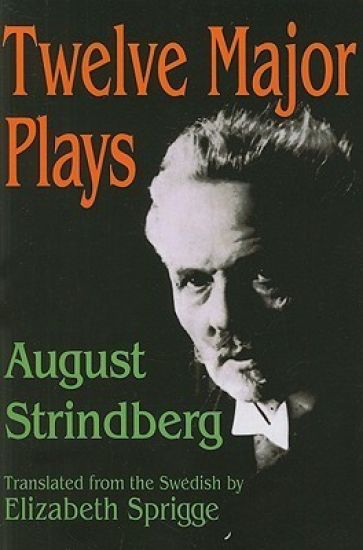
Twelve Major Plays

Twelve Major Plays

August Strindberg

AldineTransaction
2008
nidottu
August Strindberg is one of the founders of the modern theater. George Bernard Shaw considered him "the only genuinely Shakespearian modern dramatist," Sean O'Casey called him "the greatest of them all." And to Eugene O'Neill he was "the greatest interpreter in the theater of the characteristic spiritual conflicts of our lives today." Twelve Major Plays includes the most famous and most characteristic Strindberg plays.This selection is particularly interesting in its depiction of the great range of Strindberg's moods and styles, from naturalism to expressionism, from ironic comedy to bitter tragedy. It displays his great gift for symbolic, mystical verse as well as his command of dramatic prose. In issues of sex and gender, Strindberg anticipated the modern temperament in society and drama alike.These translations gave American readers their first opportunity to know the true genius of Strindberg. Most previous versions in English had been based on existing German translations. Elizabeth Sprigge's unique achievement was to render the original Swedish texts into English that is at once fluent and accurate and that captures the full vigor and impact of the original plays.
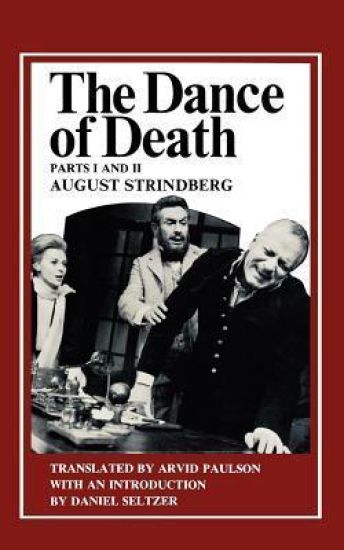
The Dance of Death

The Dance of Death

August Strindberg

WW Norton Co
1976
nidottu
During the past two decades, The Dance of Death, Strindberg’s long and taxing family drama, has come to be considered his masterpiece. Produced by major companies in New York and London, filmed once with Erich von Stroheim and then with Sir Laurence Olivier in the lead, adapted by Friedrich Dürrenmatt as Play Strindberg, and a direct influence on Edward Albee’s Who’s Afraid of Virginia Woolf?, The Dance of Death has established itself as one of the key works of the modern theater.
Miss Julie

Miss Julie

August Strindberg

Methuen Drama
2006
nidottu
Miss Julie (1888), written in a fortnight, was regarded by Strindberg as his masterpiece, 'the first naturalistic tragedy of the Swedish drama'. Shocking in subject-matter, revolutionary in technique, it was fiercely attacked on publication for immorality. On Midsummer Eve, Miss Julie, the daughter of a count, sleeps with her father's valet, Jean. The subsequent conflict between sexual passion and social position, which leads to her suicide, is presented with startling modernity. The play's premiere at Strindberg's experimental theatre in Denmark in 1889 was banned by the censor and its first public production three years later in Berlin aroused such protests that it was withdrawn after one performance. Miss Julie has since become one of Strindberg's most popular and frequently performed plays. Commentary and notes by David Thomas and Jo Taylor.
Miss Julie

Miss Julie

August Strindberg

Dover Publications Inc.
2000
nidottu
One of the greatest classics of modern theater — the fateful drama of a willful young aristocrat's seduction of her father's valet during a Midsummer's Eve celebration. Inspired by the new ideas of naturalism and psychology that swept Europe in the late 19th century, the play is reprinted here complete with Strindberg's critical preface.
Miss Julie and The Stronger

Miss Julie and The Stronger

August Strindberg

Faber Faber
2003
nidottu
'There is a sordid and disgusting atmosphere,which makes the immorality of the play glaring and crude. There is the very questionable theme in these days of the relationship between masters and servants, which this play tends to undermine.' Lord Cromer, who banned performances of Miss Julie from the English stage in October 1925It's Midsummer's Eve in the kitchen of a nobleman's house and his haughty daughter Julie flirts and plays with Jean, her father's manservant. But it's a dangerous game and once she has been seduced by him he holds the upper hand.Miss Julie, Strindberg's mighty play on power, sex and class is presented here in a coruscating version by Frank McGuinness.
The Roofing Ceremony and the Silver Lake

The Roofing Ceremony and the Silver Lake

August Strindberg

University of Nebraska Press
2000
pokkari
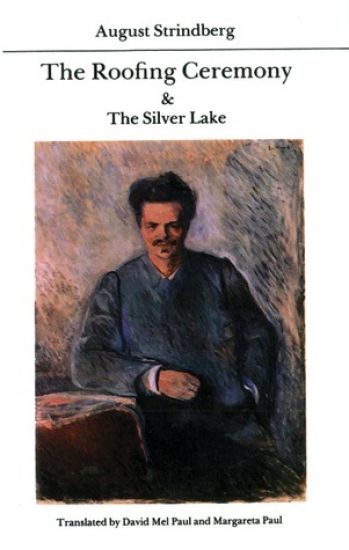
The Roofing Ceremony is a powerful, ultimately hopeful short novel that will revise the narrow view of August Strindberg as merely a misogynist and the gloomiest of Scandinavian writers. This novel has an inwardness, irreducibly and complexly human, that looks back to Tolstoy's The Death of Ivan Ilyich and forward to Samuel Beckett's Krapp's Last Tape. Published in Sweden in 1906 and never before translated into English, The Roofing Ceremony (Taklagsöl) anticipates in its turbulent intensity the chamber plays Strindberg was soon to write. It is about a dying man, once an explorer but now a museum curator, who reviews his tumultuous life aloud as he drifts in and out of a morphine-induced sleep. Sometimes fragmentary, sometimes episodic, this impressionistic monologue builds up a vivid and nuanced portrait of the curator and his estranged wife, chronicling passionately but also humorously the descent of their marriage from island idyll into bitter comedy into tragic estrangement. Strindberg anticipated in this work the modern psychological novel and the technique of stream-of-consciousness.A curious, brief narrative Strindberg meant to incorporate into The Roofing Ceremony but never did is also included in this book, as well as a story called The Silver Lake written in 1898, which also appears in English for the first time. A museum curator, summering on a Baltic island, seeks out a forbidden lake and shares its enchantment with his wife and children. But his marriage is doomed, and when he returns to the lake alone, its mystery turns sinister.
Selected Plays, Volume I

Selected Plays, Volume I

August Strindberg

University of Minnesota Press
2012
nidottu
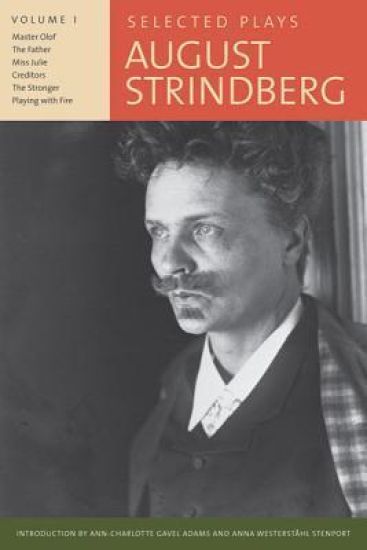
August Strindberg is often considered the father of modern Swedish literature. His vast output of plays was innovative in style and form. Volume 1 of Selected Plays presents selections from the beginning of his career, before Strindberg’s period of psychotic attacks in the 1890s. Master Olof (1872) is a historical drama set in early Reformation Sweden, influenced by Ibsen and Shakespeare. Two of his most produced plays today, The Father (1887) and Miss Julie (1888), are examples of his naturalistic plays. Strindberg described Creditors (1888), a tragicomedy, as his “most mature work.” The Stronger (1889), a playlet, is a favorite in acting classes. Playing with Fire (1893) is one of his few comedies. These plays deal with Strindberg’s preoccupation with power struggles and sexual warfare.
Selected Plays, Volume II

Selected Plays, Volume II

August Strindberg

University of Minnesota Press
2012
nidottu
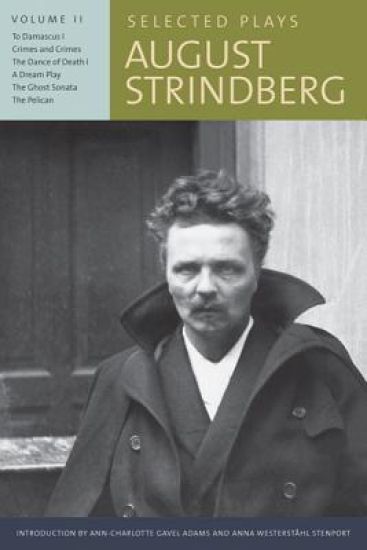
This second volume of the great Swedish writer August Strindberg’s plays begins with To Damascus I (1898), the first of a trilogy. It mirrors his own departure from the naturalism he had explored in several of his earlier works, as he set forth on a spiritual odyssey. Crimes and Crimes (1899), from the beginning of his symbolist mode, is a lighter take on the themes in To Damascus I. The first of a two-part play, Dance of Death I (1900) depicts a dysfunctional marriage. A Dream Play (1901), which is one of Strindberg’s most influential, shows reality converted into a dream; many critics consider it his greatest play. In 1907, Strindberg founded the Intimate Theater in Stockholm; The Ghost Sonata (1907) and The Pelican (1907), which were written for its opening, are two examples of a chamber play, a genre that Strindberg helped to originate.
The Dance of Death

The Dance of Death

August Strindberg

Broadway Play Publishing
2020
pokkari
"The question is to know whether as a result of living together, one person's evil thoughts manage to be perceived by the other person, even before they are fully formed, and whether the other person intuits them as already at the conscious phase, deliberately trying to be realized. There is nothing more hurtful than to see someone read into your very depths and only a married couple is capable of it. They do not manage to conceal what is murky in the depths of their soul and they easily foresee each one's intention towards the other, which makes the clear impression of spying on one another which is what, in fact, they are doing. Fearing nothing so much as one's husband's or wife's watchfulness, they wind up disarmed in relation to one another. A judge is sitting beside them, who condemns in embryo every germinating evil desire, whereas, according to society's law, one cannot be held responsible for one's thoughts."Strindberg, The Quarantine Officer's Second Tale, 1902 "THE DANCE OF DEATH certainly exceeds the surface naturalism stressed by earlier critics. Being the fruit of Strindberg's harrowing personal suffering, the play expresses in many surrealistic ways the state of mind of persons engaged in elemental conflicts."Sister Corona Sharp "THE DANCE OF DEATH is a study of the horror of life's spiritual isolation-the loneliness that unhappy intimacy with another only accentuates."Charles Isherwood "In the case of Strindberg, the tragic strain does not exclude the comic, that the two in fact coalesce, become as it were one, in the manner of the modern as distinguished from the classical drama."Alrik Gustafson
Miss Julie

Miss Julie

August Strindberg

Talonbooks
2006
pokkari
As all the great dramatists since the Greek tragedians have known, class and gender roles continue to remain the two fundamental determinants of the social fabric of any culture--even one, like our own, in which the boundaries of those identities have become fluid, situational and transitory. David French's adaptation of August Strindberg's disturbing and enduring drama of the transgressive affair between the daughter of a count and the count's man-servant has an eerie feel of the contemporary about it. In this adaptation of Miss Julie, French has sharpened the psychodramas of the original--scenes of conflict, desire, anger, jealousy, coercion, manipulation, exploitation, arrogance, dominance, submission and deceit--and backgrounded the historical elements of the play which have made it a favourite "period-piece" of the repertory theatre circuit. His revisioning of Miss Julie foregrounds the ruptures of identity and faith that ambition and desire eternally work in their rending of social norms, strictures and conventions, and he has re-enacted them in a contemporary idiom and vernacular that virtually cries out for the casting-call of a Paris Hilton to play the lead role.As with his adaptation of Chekhov's The Seagull, David French, one of Canada's best-loved playwrights, has here once again paid homage to one of the enduring masters who have brought to the stage the most elemental and universal dramas of the human condition.