Kirjojen hintavertailu. Mukana 12 390 323 kirjaa ja 12 kauppaa.

Kirjahaku

Etsi kirjoja tekijän nimen, kirjan nimen tai ISBN:n perusteella.

1000 tulosta hakusanalla Abraham Geiger

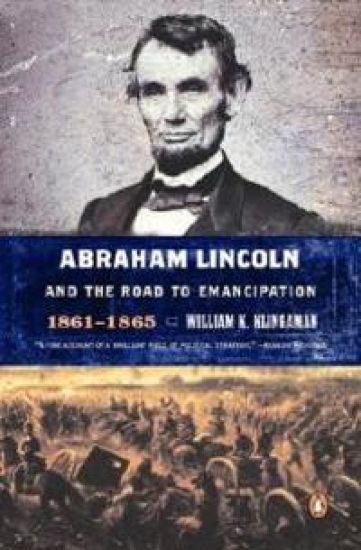
Abraham Lincoln and the Road to Emancipation, 1861-1865
In this comprehensive account of Abraham Lincoln's Emancipation Proclamation, William K. Klingaman takes a fresh look at what is arguably the most controversial reform in American history. Taking the reader from Lincoln's inauguration through the Civil War to his tragic assassination, it uncovers the complex political and psychological pressures facing Lincoln in his consideration of the slavery question, including his decision to issue the proclamation without consulting any member of his cabinet, and his meticulous attention to every word of the document. The book concludes with a discussion of what the Emancipation Proclamation really meant to four million newly freed blacks and its subsequent impact on race relations in America.
The Portable Abraham Lincoln

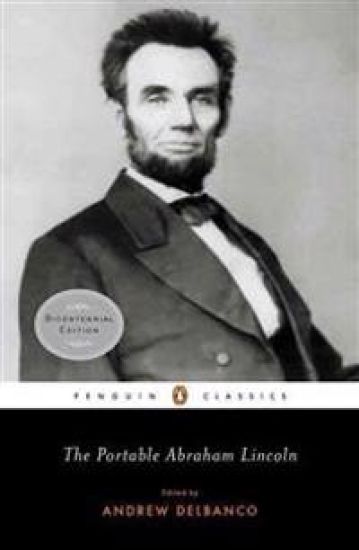
The Portable Abraham Lincoln

Abraham Lincoln

Penguin Classics
2009
pokkari
Abraham Lincoln endowed the American language with a vigor and moral energy that has all but disappeared from today's public rhetoric. Lincoln's writings are testaments of our history, windows into his enigmatic personality, and resonant examples of the writer's art. "The Portable Abraham Lincoln" contains the great public speeches - the first debate with Stephen Douglas, the "House Divided" speech, the Gettysburg Address, the Second Inaugural Address - along with less familiar letters and memoranda that chart Lincoln's political career, his evolving stand against slavery, and his day-to-day conduct of the Civil War. This edition includes a revised introduction, updated notes on the text, a chronology of Lincoln's life, and four new selections of his writing.
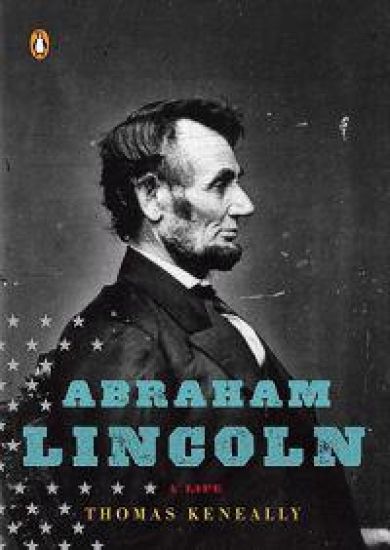
Abraham Lincoln

Abraham Lincoln

Thomas Keneally

PENGUIN BOOKS
2009
nidottu
The ideal concise biography of an American icon- now available in paperback for the bicentennial of his birth The self -mad e man from a log cabin, the great orator, the Emancipator, the Savior of the Union, the martyr-Lincoln's story is at the very heart of American history. But who was he, really? In this outstanding biography, award-winning author Thomas Keneally follows Lincoln from his impoverished birth through his education and presidency. From the development of his political philosophy to his troubled family life and his actions during the Civil War, Abraham Lincoln is an incisive study of a turning point in our history and a revealing portrait of a pivotal figure.
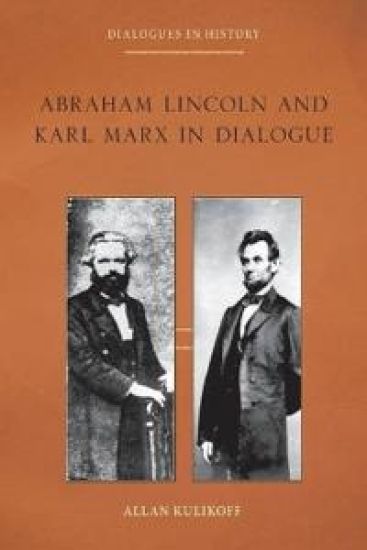
Abraham Lincoln and Karl Marx in Dialogue

Abraham Lincoln and Karl Marx in Dialogue

Allan Kulikoff

Oxford University Press Inc
2018
nidottu
Why put Abraham Lincoln, the sometime corporate lawyer and American President, in dialogue with Karl Marx, the intellectual revolutionary? On the surface, they would appear to share few interests. Yet, though Lincoln and Marx never met one another, both had an abiding interest in the most important issue of the nineteenth-century Atlantic world-the condition of labor in a capitalist world, one that linked slave labor in the American south to England's (and continental Europe's) dark satanic mills. Each sought solutions--Lincoln through a polity that supported free men, free soil, and free labor; Marx by organizing the working class to resist capitalist exploitation. While both men espoused emancipation for American slaves, here their agreements ended. Lincoln thought that the free labor society of the American North provided great opportunities for free men missing from the American South, a kind of "farm ladder" that gave every man the ability to become a landowner. Marx thought such "free land" a chimera and (with information from German-American correspondents), was certain that the American future lay in the proletarianized cities. Abraham Lincoln and Karl Marx in Dialogue intersperses short selections from the two writers from their voluminous works, opening with an introduction that puts the ideas of the two men in the broad context of nineteenth-century thought and politics. The volume excerpts Lincoln's and Marx's views on slavery (they both opposed it for different reasons), the Civil War (Marx claimed the war concerned slavery and should have as its goal abolition; Lincoln insisted that his goal was just the defeat of the Confederacy), and the opportunities American free men had to gain land and economic independence. Through this volume, readers will gain a firmer understanding of nineteenth-century labor relations throughout the Atlantic world: slavery and free labor; the interconnections between slave-made cotton and the exploitation of English proletarians; and the global impact of the American Civil War.
Abraham's Dice

Abraham's Dice

Oxford University Press Inc
2016
sidottu
Most of us believe everything happens for a reason. Whether it is "God's will," "karma", or "fate," we want to believe that an overarching purpose undergirds everything, and that nothing in the world, especially a disaster or tragedy, is a random, meaningless event. Abraham's Dice explores the interplay between chance and randomness, as well as between providence and divine action in the monotheistic religious traditions, looking at how their interaction has been conceptualized as our understanding of the workings of nature has changed. This lively historical conversation has generated intense and engaging theological debates, and provocative responses from science: what of the history of our universe, where chance and law have played out in complex ways? Or the evolution of life, where random mutations have challenged attempts to find purpose within evolution and convinced many that human beings are a "glorious accident." The enduring belief that everything happens for a reason is examined through a conversation with major scholars, among them holders of prestigious chairs at Oxford and Cambridge universities and the University of Basel, as well as several Gifford lecturers, and two Templeton prize winners. Now, as never before, confident scientific assertions that the world embodies a profound contingency are challenging theological claims that God acts providentially in the world. The random and meandering path of evolution is widely used as an argument that God did not create life. Organized historically, Abraham's Dice provides a wide-ranging scientific, theological, and biblical foundation to address the question of divine action in a world shot through with contingency.
Abraham's Dice

Abraham's Dice

Oxford University Press Inc
2016
nidottu
Most of us believe everything happens for a reason. Whether it is "God's will," "karma", or "fate," we want to believe that an overarching purpose undergirds everything, and that nothing in the world, especially a disaster or tragedy, is a random, meaningless event. Abraham's Dice explores the interplay between chance and randomness, as well as between providence and divine action in the monotheistic religious traditions, looking at how their interaction has been conceptualized as our understanding of the workings of nature has changed. This lively historical conversation has generated intense and engaging theological debates, and provocative responses from science: what of the history of our universe, where chance and law have played out in complex ways? Or the evolution of life, where random mutations have challenged attempts to find purpose within evolution and convinced many that human beings are a "glorious accident." The enduring belief that everything happens for a reason is examined through a conversation with major scholars, among them holders of prestigious chairs at Oxford and Cambridge universities and the University of Basel, as well as several Gifford lecturers, and two Templeton prize winners. Now, as never before, confident scientific assertions that the world embodies a profound contingency are challenging theological claims that God acts providentially in the world. The random and meandering path of evolution is widely used as an argument that God did not create life. Organized historically, Abraham's Dice provides a wide-ranging scientific, theological, and biblical foundation to address the question of divine action in a world shot through with contingency.
Abraham Lincoln and Karl Marx in Dialogue

Abraham Lincoln and Karl Marx in Dialogue

Allan Kulikoff

Oxford University Press Inc
2018
sidottu
Why put Abraham Lincoln, the sometime corporate lawyer and American President, in dialogue with Karl Marx, the intellectual revolutionary? On the surface, they would appear to share few interests. Yet, though Lincoln and Marx never met one another, both had an abiding interest in the most important issue of the nineteenth-century Atlantic world-the condition of labor in a capitalist world, one that linked slave labor in the American south to England's (and continental Europe's) dark satanic mills. Each sought solutions--Lincoln through a polity that supported free men, free soil, and free labor; Marx by organizing the working class to resist capitalist exploitation. While both men espoused emancipation for American slaves, here their agreements ended. Lincoln thought that the free labor society of the American North provided great opportunities for free men missing from the American South, a kind of "farm ladder" that gave every man the ability to become a landowner. Marx thought such "free land" a chimera and (with information from German-American correspondents), was certain that the American future lay in the proletarianized cities. Abraham Lincoln and Karl Marx in Dialogue intersperses short selections from the two writers from their voluminous works, opening with an introduction that puts the ideas of the two men in the broad context of nineteenth-century thought and politics. The volume excerpts Lincoln's and Marx's views on slavery (they both opposed it for different reasons), the Civil War (Marx claimed the war concerned slavery and should have as its goal abolition; Lincoln insisted that his goal was just the defeat of the Confederacy), and the opportunities American free men had to gain land and economic independence. Through this volume, readers will gain a firmer understanding of nineteenth-century labor relations throughout the Atlantic world: slavery and free labor; the interconnections between slave-made cotton and the exploitation of English proletarians; and the global impact of the American Civil War.
Abraham Lincoln and the Second American Revolution

Abraham Lincoln and the Second American Revolution

McPherson

Oxford University Press Inc
1993
nidottu
The principal contention of this collection of essays is that the American Civil War was the real American Revolutionary War - as far-reaching in its results as the English Revolution of the seventeenth century and the French Revolution of the eighteenth century - and that Abraham Lincoln was the catalyst for this revolution.
Abraham Lincoln and Civil War America

Abraham Lincoln and Civil War America

William E. Gienapp

Oxford University Press Inc
2003
nidottu
While the heart of the book focuses on the Civil War, Gienapp begins with a finely etched portrait of Lincoln's early life, from pioneer farm boy, to politician and lawyer in Springfield, to his stunning election as sixteenth president of the United States. We see how Lincoln grew during his years in office, how he developed a keen aptitude for military strategy and displayed enormous skill in dealing with his generals, and also how his strategy evolved from a desire to preserve the Union into one of emancipation and total war. A former backwoodsman and country lawyer, Abraham Lincoln rose to become one of America's greatest presidents. The biography offers a vivid account of Lincoln's dramatic ascension to the pinnacle of American history.
Abraham Lincoln

Abraham Lincoln

James M. McPherson

Oxford University Press Inc
2009
sidottu
The first short biography of the sixteenth president by America's preeminent Civil War historian, Abraham Lincoln follows the son of Thomas Lincoln and Nancy Hanks from their Kentucky farm to the Illinois legislature, and finally the nation's capitol. February of 2009 marks the bicentennial of his birth and this book will be a compact, concise history of a man with big ideals and an even larger legacy. James McPherson, our country's foremost historian of the Civil War, authors this attractively packaged book on Lincoln for an audience that would prefer a brief treament rather than David Herbert Donald's 720-page opus, or Michael Burlingame's forthcoming multi-volume work.
Abraham Lincoln in the Post-Heroic Era

Abraham Lincoln in the Post-Heroic Era

Barry Schwartz

University of Chicago Press
2009
sidottu
By the 1920s, Abraham Lincoln had transcended the lingering controversies of the Civil War to become a secular saint, honored in the North and South alike. Throughout the Great Depression and World War II, Lincoln was invoked as a reminder of America's strength and wisdom, a commanding ideal against which weary citizens could see their own hardships in perspective.But as Barry Schwartz reveals in "Abraham Lincoln in the Post-Heroic Era", those years represent the apogee of Lincoln's prestige. The decades following World War II brought radical changes to American culture, changes that led to the diminishing of all heroes - Lincoln not least among them. As Schwartz explains, growing sympathy for the plight of racial minorities, disenchantment with the American state, and an intensifying celebration of diversity all contributed to a culture in which neither Lincoln nor any single person could be a heroic symbol for all Americans. Paradoxically, however, the very culture that made Lincoln an object of indifference, questioning, criticism, and even ridicule was a culture of unprecedented beneficence and inclusion, where racial, ethnic, and religious groups treated one another more fairly and justly than ever before. Thus, as the prestige of the Great Emancipator shrank, his legacy of equality continued to flourish.Schwartz documents the decline of Lincoln's public standing, asking throughout whether there is any path back from this post-heroic era. Can a new generation of Americans embrace again their epic past, including great leaders whom they know to be flawed? As the 2009 Lincoln Bicentennial approaches, readers will discover here a stirring reminder that Lincoln, as a man, still has much to say to us - about our past, our present, and our possible futures.
Abraham Lincoln and the Forge of National Memory

Abraham Lincoln and the Forge of National Memory

Barry Schwartz

University of Chicago Press
2003
nidottu
Abraham Lincoln has long dominated the pantheon of American presidents. From his lavish memorial in Washington and immortalization on Mount Rushmore, one might assume he was a national hero rather than a controversial president who came close to losing his 1864 bid for reelection. Drawing on a wide array of materials - painting and sculpture, popular magazines and school textbooks, newspaper accounts and oratory - Barry Schwartz aims at this sort of contradiction in his study of the role Lincoln's reputation and memory has played in American life. Schwartz explains, for example, how dramatic funeral rites elevated Lincoln's reputation even while funeral eulogists questioned his presidential actions and how his reputation, over the next four decades, diminished and grew. Schwartz links the vagaries of Lincoln's image to broad transformations of the nation, arguing that Lincoln's life symbolized America's development from a rural republic to an industrial democracy and articulated the roles of economic and political reform, military power and nationalism in the country's self-conception. Lincoln's memory assumed a double aspect of "mirror" and "lamp", acting as a reflection of the nation's concerns and an illumination of its ideals, and Schwartz offers a fascinating view of these two functions as they were realized in the commemorative symbols of an ever-widening circle of ethnic, religious, political and regional communities. The first part of the study that will continue through the present, "Abraham Lincoln and the Forge of National Memory" is the story of how America has shaped its past selectivey and imaginatively, but around a real person whose character and achievements symbolized his country's ideals.
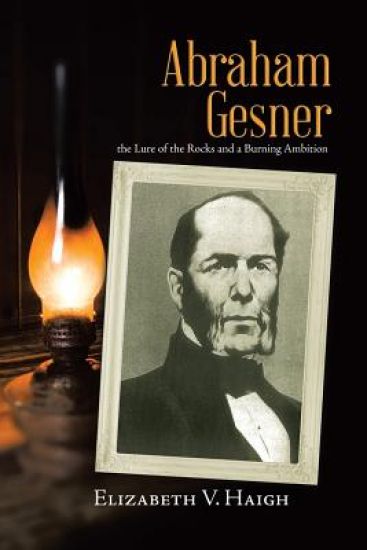
Abraham Gesner

Abraham Gesner

Elizabeth V Haigh

Tellwell Talent
2019
pokkari
Debt and bad management drove Abraham Gesner off his farm in Nova Scotia's bucolic Annapolis Valley in 1825. It turned out to be a stroke of luck. While doing medical courses in London hospitals, he encountered the industrial revolution. Attending sundry lectures and demonstrations, he got his first whiff of the rapidly developing new sciences of chemistry, geology and natural history. He was hooked Back home, traveling about the country visiting patients, he honed his observational skills, finally producing pioneering geological surveys of all three Maritime provinces. Imitating procedures which he had first observed while abroad, he experimented with "cracking" coal to generate the tars, oils and gases which fueled the industrial revolution In the process, he produced "kerosene" - an illuminating gas and an oil - which revolutionized artificial lighting and generated much industry. Because he explored with native guides and advocated on their behalf, he served for a time as Indian Commissioner. An engaging lecturer, he addressed audiences on many scientific subjects and developed the region's first natural history museum; he wrote articles and books describing the region and extolling its potential for development. His final publication was a textbook of hydrocarbon chemistry. Local lawsuits over mining rights and patent infringements caused him to move to New York. Still more lawsuits drove him back to his native land where he died, shortly after being appointed to a coveted lectureship in Dalhousie University.
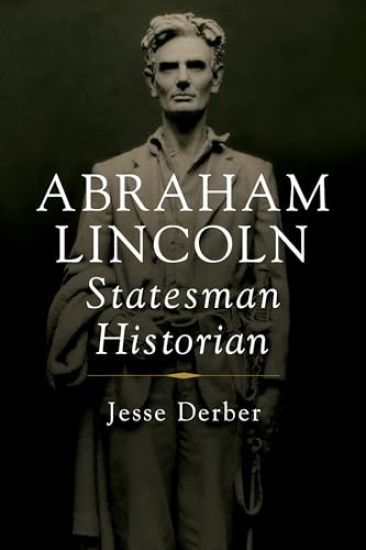
Abraham Lincoln, Statesman Historian

Abraham Lincoln, Statesman Historian

Jesse Derber

UNIVERSITY OF ILLINOIS PRESS
2024
sidottu
Abraham Lincoln drew upon history in his political career and particularly when crafting the rhetorical masterpieces that still resonate in the present day. Jesse Derber explores how Lincoln’s views of the limits of human understanding drove a belief in--and untiring pursuit of--historical truth. Lincoln embraced the traditional ideas that good history made good statesmanship and that an understanding of the past informed decision-making in the present. Seeing history as a source of wisdom, Lincoln strove for accuracy through a combination of research, reasoning ability, emotional maturity, and a willingness to admit his mistakes and challenge his biases. His philosophy flowed from an idea that authentic history could enlighten people about human nature. Though he revered precedents, Lincoln understood the past could be imperfect, and that progress through change was an ineffable part of building a better nation. Perceptive and revealing, Abraham Lincoln, Statesman Historian looks at how the Lincoln practiced history and applied its lessons to politics and leadership.
Abraham Lincoln, Statesman Historian

Abraham Lincoln, Statesman Historian

Jesse Derber

UNIVERSITY OF ILLINOIS PRESS
2024
nidottu
Abraham Lincoln drew upon history in his political career and particularly when crafting the rhetorical masterpieces that still resonate in the present day. Jesse Derber explores how Lincoln’s views of the limits of human understanding drove a belief in--and untiring pursuit of--historical truth. Lincoln embraced the traditional ideas that good history made good statesmanship and that an understanding of the past informed decision-making in the present. Seeing history as a source of wisdom, Lincoln strove for accuracy through a combination of research, reasoning ability, emotional maturity, and a willingness to admit his mistakes and challenge his biases. His philosophy flowed from an idea that authentic history could enlighten people about human nature. Though he revered precedents, Lincoln understood the past could be imperfect, and that progress through change was an ineffable part of building a better nation. Perceptive and revealing, Abraham Lincoln, Statesman Historian looks at how the Lincoln practiced history and applied its lessons to politics and leadership.
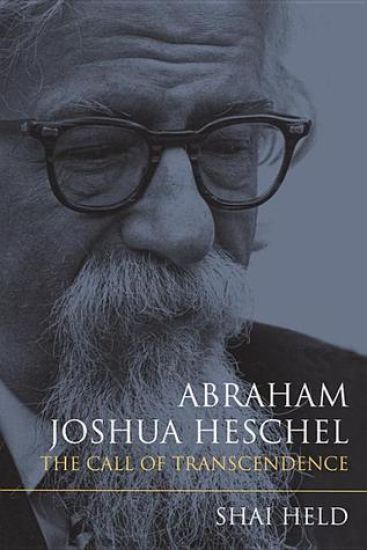
Abraham Joshua Heschel

Abraham Joshua Heschel

Shai Held

Indiana University Press
2013
sidottu
Abraham Joshua Heschel (1907-1972) was a prolific scholar, impassioned theologian, and prominent activist who participated in the black civil rights movement and the campaign against the Vietnam War. He has been hailed as a hero, honored as a visionary, and endlessly quoted as a devotional writer. In this sympathetic, yet critical, examination, Shai Held elicits the overarching themes and unity of Heschel's incisive and insightful thought. Focusing on the idea of transcendence—or the movement from self-centeredness to God-centeredness—Held puts Heschel into dialogue with contemporary Jewish thinkers, Christian theologians, devotional writers, and philosophers of religion.
Abraham Joshua Heschel

Abraham Joshua Heschel

Shai Held

Indiana University Press
2015
pokkari
Abraham Joshua Heschel (1907-1972) was a prolific scholar, impassioned theologian, and prominent activist who participated in the black civil rights movement and the campaign against the Vietnam War. He has been hailed as a hero, honored as a visionary, and endlessly quoted as a devotional writer. In this sympathetic, yet critical, examination, Shai Held elicits the overarching themes and unity of Heschel's incisive and insightful thought. Focusing on the idea of transcendence—or the movement from self-centeredness to God-centeredness—Held puts Heschel into dialogue with contemporary Jewish thinkers, Christian theologians, devotional writers, and philosophers of religion.
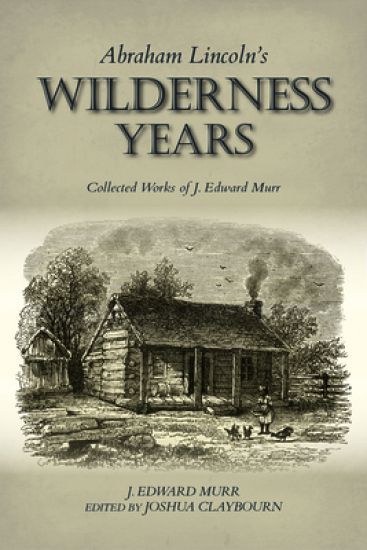
Abraham Lincoln's Wilderness Years

Abraham Lincoln's Wilderness Years

J. Edward Murr

INDIANA UNIVERSITY PRESS
2022
sidottu
Abraham Lincoln spent a quarter of his life—from 1816 to 1830, ages 7 to 21—learning and growing in southwestern Indiana. Despite the importance of these formative years, Lincoln rarely discussed this period, and with his sudden, untimely death in 1865, mysterious gaps appear in recorded history. In Abraham Lincoln's Wilderness Years, Joshua Claybourn collects and annotates the most significant scholarship from J. Edward Murr, one of the only writers to cover this lost period of Lincoln's life. A Hoosier minister who grew up with the 16th president's cousins, Murr interviewed locals who knew Lincoln. Part I features selected portions of Murr's book-length manuscript on Lincoln's youth, published here for the first time. Part II offers a series by Murr on Lincoln's life in Indiana, originally printed in the Indiana Magazine of History. Part III reveals letters between Murr and US Senator Albert J. Beveridge, a prominent historian, about Beveridge's early manuscript of the biography Abraham Lincoln, 1809–1858. Of all Lincoln's biographers, none knew his boyhood associates and Indiana environment as well as Murr, whose complete Lincoln research and scholarship have never been published—until now. Abraham Lincoln's Wilderness Years preserves and celebrates this important source material, unique for studying Lincoln's boyhood years in Indiana.