Kirjahaku
Etsi kirjoja tekijän nimen, kirjan nimen tai ISBN:n perusteella.
1000 tulosta hakusanalla Ainger Alfred
We live in a culture of apology and forgiveness. But while there are a few thinkers who are critical of forgiveness as being too supine, and extol the virtues of retribution and 'getting even,' philosopher and intellectual Martha C. Nussbaum criticizes forgiveness from the other side: that in the realm of personal relations, forgiveness is at its heart inquisitorial and disciplinary. In this volume based on her 2014 Locke Lectures, Nussbaum paints a startling new portrait that strips the notion of forgiveness down to its Judeo-Christian roots, where it was structured by the moral relationship between a score-keeping God and penitent, self-abasing, and erring mortals. The relationship between a wronged human and another is, she says, based on this primary God-human relationship. Nussbaum agrees with Nietzsche in seeing in forgiveness a displaced vindictiveness and a concealed resentment that are ungenerous and unhelpful in human relations. She says forgiveness can give aid and comfort to a certain narcissism of resentment that a loving and generous person should eschew-in favor of a generosity that gets ahead of forgiveness and prevents its procedural thoughts from taking place. With a wide range of literary and classical references as background, Nussbaum pursues her penetrating and wide-ranging exploration of anger and forgiveness from the personal realm into the political, as well as into a so-called middle realm where we interact with people and groups who are not our close friends or family. A great deal of resentment toward others is in this middle realm, and she argues that the Stoics were right-we should try and understand how petty most slights are, and avoid anger to begin with.
Anger, Gratitude, and the Enlightenment Writer examines how writers as diverse as Rousseau, Diderot, Marivaux, and Challe discuss the social appropriateness of anger and gratitude in regulating social life. Emotions are social transactions, with rules identifying when and where it is appropriate to express one's feelings and, especially in the case of anger and gratitude, who is allowed or expected to put them on display. Defining the kinds of slight or favor that demand an angry or a grateful response became problematic in eighteenth-century France under the pressure of two contradictory developments which were both crucial to Enlightenment thinking about sociability. The first drew on the ideal of moral equality as it spread beyond the salons to the social world at large. Writers claimed for themselves an entitlement to anger at personal slight that had been hitherto reserved for aristocrats, and a respectful hearing for their indignation at public injustice despite their lack of official standing. The philosophes also argued their writing made them social benefactors in their own right, more deserving of their readers' gratitude than obliged to any patron. The second gave a new twist to longstanding philosophical notions about transcending emotional disturbance and dependence altogether. A personal ideal became a public goal as Enlightenment thinkers imagined a society where all significant social interaction was governed by the impersonal rule of law. Occasions for personal slight or obligation would disappear, and with them reasons for anger and gratitude. Instead of serving as a model of emotional legitimacy, authors would derive their prestige from their rationality and objectivity. By exploring the interplay between these two attitudes toward anger and gratitude this book provides a fresh perspective on the French Enlightenment.
Anger, Mercy, Revenge
Lucius Annaeus Seneca; Robert A Kaster; Martha C Nussbaum; Robert A. Kaster; Martha C. Nussbaum
University of Chicago Press
2010
sidottu
Lucius Annaeus Seneca (4 BCE to 65 CE) was a Roman Stoic philosopher, dramatist, statesman, and advisor to the emperor Nero, all during the Silver Age of Latin literature. Here, with the publication of "Anger, Mercy, Revenge" and "Natural Questions", the University of Chicago Press proudly inaugurates "The Complete Works of Lucius Annaeus Seneca", a fresh and compelling series of new English-language translations of his works in eight accessible volumes. Edited by world-renowned classicists Elizabeth Asmis, Shadi Bartsch, and Martha C. Nussbaum, this engaging collection restores Seneca - whose works have been highly praised by modern authors from Erasmus to Emerson - to his rightful place among those classical writers most widely studied in the humanities. "Anger, Mercy, Revenge" comprises three key writings: the moral essays 'On Anger' and 'On Clemency' - which were penned as advice for the then young emperor Nero - and the Apocolocyntosis, a brilliant satire lampooning the end of the reign of Claudius. "Natural Questions" is a stand-alone treatise in which Seneca compiles and comments on the physical sciences of his day, offering us a valuable look at the ancient scientific mind at work. Both volumes introduce the Latinless reader to the writings of one of the ancient world's most fascinating - and acclaimed - philosophical figures, making them perfect for the undergraduate student and lay scholar alike.
Anger, Mercy, Revenge
Lucius Annaeus Seneca; Robert A Kaster; Martha C Nussbaum; Robert A. Kaster; Martha C. Nussbaum
University of Chicago Press
2012
nidottu
Lucius Annaeus Seneca (4 BCE - 65 CE) was a Roman Stoic philosopher, dramatist, statesman, and adviser to the emperor Nero, all during the Silver Age of Latin literature. The "Complete Works of Lucius Annaeus Seneca" is a fresh and compelling series of new English-language translations of his works in eight accessible volumes. Edited by world-renowned classicists Elizabeth Asmis, Shadi Bartsch, and Martha C. Nussbaum, this engaging collection restores Seneca - whose works have been highly praised by modern authors from Desiderius Erasmus to Ralph Waldo Emerson - to his rightful place among the classical writers most widely studied in the humanities. "Anger, Mercy, Revenge" comprises three key writings: the moral essays "On Anger" and "On Clemency" - the latter penned as advice for the young emperor Nero - and the "Apocolocyntosis", a brilliant satire lampooning the end of the reign of Claudius. Friend and tutor, as well as philosopher, Seneca welcomed the end of Claudius' sovereignty and the beginning of the age of Nero in tones alternately serious, poetic, and comic - making "Anger, Mercy, Revenge" a collection just as complicated, astute, and ambitious as its author.
In this groundbreaking social history, Carol and Peter Stearns trace the two hundred-year development of anger, beginning with premodern colonial America. Drawing on diaries and popular advice literature of key periods, Anger deals with the everyday experiences of the family and workplace in its examination of our attempts to control our domestic lives and lessen social tensions by harnessing emotion. Offering an entirely new approach to the study of emotion, the authors inaugurate a new field of study termed "emotionology," which distinguishes collective emotional standards from the experience of emotion itself.
Tracing the story of anger from the Buddha to Twitter, Rosenwein provides a much-needed account of our changing and contradictory understandings of this emotion All of us think we know when we are angry, and we are sure we can recognize anger in others as well. But this is only superficially true. We see anger through lenses colored by what we know, experience, and learn. Barbara H. Rosenwein traces our many conflicting ideas about and expressions of anger, taking the story from the Buddha to our own time, from anger’s complete rejection to its warm reception. Rosenwein explores how anger has been characterized by gender and race, why it has been tied to violence and how that is often a false connection, how it has figured among the seven deadly sins and yet is considered a virtue, and how its interpretation, once largely the preserve of philosophers and theologians, has been gradually handed over to scientists—with very mixed results. Rosenwein shows that the history of anger can help us grapple with it today.
A renowned political theorist offers a road map to the dark forces that threaten democracy Liberalism orients itself around the idea of self-interest tempered by reason, with the addition of civically useful emotions such as patriotism, self-sacrifice, and empathy. But the politics dominating much of the world shows that these ideals are not enough. William A. Galston argues that the defense of liberal democracy requires understanding the dark forces whose impact on political life liberal democratic institutions seek to mute: the emotions of fear, humiliation, anger, resentment, and hatred, and the drive to dominate. In hard or threatening times, it is these dark passions that most reliably persuade people and move them to action—whether voting or violence. Throughout the democratic world, these institutional defenses are now being tested by a new generation of demagogues. With a keen awareness of the stakes, Galston explains why countering this dangerous development requires not only more responsive public policies but persuasive rhetoric and a realistic conception of political psychology—one that is free of the illusion that reason or affirmative sentiments such as empathy, solidarity, and love can reliably dominate public affairs.
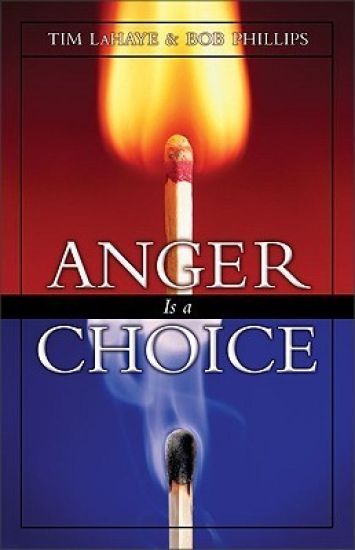
What you need to know to control the emotion of anger and find healing for damaged relationships.Anger is something everyone struggles with--whether it's our own emotion threatening to explode out of control or the anger of others that makes us feel intimidated and afraid. But when we understand where anger comes from, how it shows or doesn't show, then we can do something about it. Either it will control us or we will control it, because Anger Is a Choice.Bestselling authors Tim LaHaye and Bob Phillips tell us what we need to know to control the emotion of anger. They not only examine it from beginning (its origins) to end (its effects), they also help us evaluate our own "Irritability Quotient" through the Anger Inventory and other exercises throughout the book.In learning how to handle conflicts and anger, we are enabled to heal damaged relationships and help others deal with their anger as well. We can make our lives more peaceful, rewarding, and meaningful by putting anger in its proper place and under our own control.Topics include:Meet the angry familyAnger and body languageAnger and your healthAnger and your temperamentIs it ever right to be angry?Anger and forgivenessAnger in the Bible
Presenting a new edition of a self-help classic. Written by two clinical psychologists with decades of experience in treating anger, this long-awaited, fully revised and updated second edition of Anger Management for Everyone offers brand new skills to help readers stay calm in the midst of triggering situations, manage their anger, and experience more happiness.
Emotional and forthright, Anna battles against Ned's crippling reserve. In the clash of these two strong personalities, May Sarton explores the different ways that men and women express both anger and love.
Anger, Alcoholism, and Addiction
Patricia S. Potter-Efron; Ronald T. Potter-Efron
WW Norton Co
1992
nidottu
Describes the relationship between anger and substance abuse, and suggests more productive outlets for anger
Anger Antidotes
WW Norton Co
2011
pokkari
Anger is at the root of most of the personal dilemmas we face. Frank, personal, and pithy, this book engages readers in a no-nonsense exploration of how we can effectively reach beyond ourselves to maintain calm in the face of crisis. The objective is to distill down to fundamental aspects the universal structures that form the basis of most human problems. It is usually our emotions that interfere with making sound choices. Thus, even the most learned individuals, who know better, are capable of making colossally stupid errors in judgment and conduct. Presenting a range of deescalation techniques, each chapter has been concentrated into mini- manuals that in their totality contain a library s worth of material. The left side of each two-page spread describes the anger trigger and the right side of the page spread contains the anger antidote. Topics covered include emotional immaturity, the absence of thought, extremes, inertia, reactor bait, and argument traps."
Anger, Rage and Relationship presents a radically new way to understand and work with anger and rage issues. Taking a relational approach to anger and rage, the book presents a positive view of human nature, supported by recent research findings and illustrated with case studies, with individuals trusted to be essentially pro-social.Rather than promoting strategies and techniques for eradicating anger, Sue Parker Hall, puts forward an approach which seeks to not only work with, but to differentiate between, anger and rage. Anger and rage are constructed as entirely different phenomena, originating at different developmental stages, having different functions and relational needs and requiring different aspects of relationship in the therapeutic process.Further areas of discussion include:the positive aspects of angerpractitioner protectionthe therapeutic implications of working with both anger and rageThis book will provide invaluable reading for practitioners dealing with anger and rage in the therapeutic setting, as well as being of great interest to all counsellors and therapists in the related field.
When it was first published in 1962, Anger and After was the first comprehensive study of the dramatic movement which began in 1956 with the staging of John Osborne’s Look Back in Anger and has since brought forward such dramatists as Brendan Behan, Harold Pinter, N. F. Simpson, John Arden and Arnold Wesker. Thoroughly revised in 1969, this book remains important reading for theatre students in need of a comprehensive and authoritative guide to post-Osborne drama in Britain.
Everyone gets angry. And in a turbulent economy where finances are stretched, property prices waver and unemployment booms, blowing a fuse is par for the course. But you don't have to take it out on others! Anger Management For Dummies, UK Edition shows you how to work through feelings of rage, emerge from the red mist, and lead a healthier, happier and more positive life. This fully adapted UK edition guides you through ways to recognise and deal with the underlying causes of anger at work, in relationships and in your personal life - and teaches you how to stay positive in spite of all the stresses and strains life throws your way. From letting go of resentments, preventing new rage and dealing with the anger of others, to improving self-expression, honing spiritual calm and getting a good night's sleep, this user-friendly guide tackles the latest anger-busting exercises and therapies (including CBT) and demonstrates how to deal with anger constructively.
Anger Treatment for People with Developmental Disabilities
John L. Taylor; Raymond W. Novaco
John Wiley Sons Inc
2005
nidottu
Anger and aggression are prevalent problems among people with developmental disabilities and constitute primary reasons for them to be admitted and re-admitted to institutions. They are also a key reason for the prescribing of behaviour control and anti-psychotic medication to this client group. Stimulated by growing research in this area, mental health and criminal justice professionals have begun to see the benefits of anger assessment and cognitive-behavioural anger treatment for people with developmental disabilities. There is no prior text to guide anger treatment provision to this client group. This text presents a manual-guided cognitive-behavioural anger treatment protocol, grounded in a solid theoretical framework and empirical evidence for its efficacy in clinical practice. The assessment and treatment approach is designed to engage and motivate patients with recurrent and deep-rooted anger problems and their manifestation in serious aggressive behaviour. Accompanying the treatment protocol are a number of worksheets, handouts, and exercise sheets for clinicians and clients that can be accessed online.
The Romantic age was one of anger and its consequences: revolution and reaction, terror and war. Andrew M. Stauffer explores the changing place of anger in the literature and culture of the period, as English men and women rethought their relationship to the aggressive passions in the wake of the French Revolution. Drawing on diverse fields and discourses such as aesthetics, politics, medicine and the law and tracing the classical legacy the Romantics inherited, Stauffer charts the period's struggle to define the relationship of anger to justice and the creative self. In their poetry and prose, Romantic authors including Blake, Coleridge, Godwin, Shelley and Byron negotiate the meanings of indignation and rage amidst a clamourous debate over the place of anger in art and in civil society. This innovative book has much to contribute to the understanding of Romantic literature and the cultural history of the emotions.