Kirjojen hintavertailu. Mukana 12 409 546 kirjaa ja 12 kauppaa.

Kirjahaku

Etsi kirjoja tekijän nimen, kirjan nimen tai ISBN:n perusteella.

1000 tulosta hakusanalla Al Leone

Al-Ghazali, Averroes and the Interpretation of the Qur'an
This book examines the contrasting interpretations of Islam and the Qur’an by Averroes and Al-Ghazali, as a way of helping us untangle current impasses affecting each Abrahamic faith. This has traditionally been portrayed as a battle between philosophy and theology, but the book shows that Averroes was rather more religious and Al-Ghazali more philosophical than they are usually portrayed. The book traces the interaction between two Muslim thinkers, showing how each is convinced of the existence of a Book in which God is revealed to rational beings, to whom He has given commandments, as well as of the excellence of Islamic society. Yet they differ regarding the proper way to interpret the sacred Book. From this point of view, their discussion does not address the contrast between philosophy and religion, or that between reason and revelation that is so characteristic of the Middle Ages, but rather explores differences at the heart of philosophical discussion in our day: is there a level of discourse which will facilitate mutual comprehension among persons, allowing them to engage in debate? This interpretation of sacred texts illustrates the ways religious practice can shape believers’ readings of their sacred texts, and how philosophical interpretations can be modified by religious practice. Moreover, since this sort of inquiry characterizes each Abrahamic tradition, this study can be expected to enhance interfaith conversation and explore religious ways to enhance tolerance between other believers.
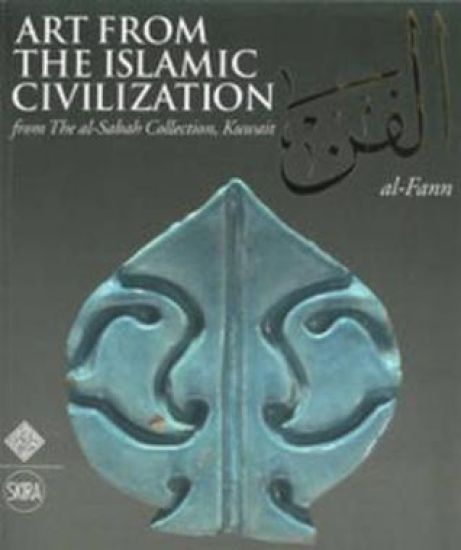
Al-Fann: Art from the Islamic Civilization

Al-Fann: Art from the Islamic Civilization

Giovanni Curatola

Thames Hudson Ltd
2012
nidottu
In July 1975, Sheikh Nasser Sabah Ahmed al-Sabah showed his wife, Sheikha Hussah Sabah al-Salem al-Sabah, a splendid enamelled glass bottle dating from the Mumluk period (Egypt or Syria, 14th century), the first object of Islamic art he had acquired during one of his travels. It marked the start of an extraordinary adventure that mingled intelligence, love, research, curiosity and farsightedness.In eight years of concentrated and passionate work, the couple collected about 20,000 works of art, including masterpieces, many of which are deserving of study for the way they shed new light on techniques and little-known aspects, or intriguing pieces whose provenance has yet to be unravelled.On the occasion of the Kuwait’s National Day in February 1983, Sheikh Nasser and Sheikha Hussah offered their country the inestimable gift of the permanent loan of their collection to the National Museum of Kuwait.This volume illustrates 300 from among the most beautiful objects in the Collection and, for those exploring the Islamic world for the first time, describes its culture and art on a chronological (from the early days to the great 16th-century empires) and thematic basis (calligraphy, geometric decoration, arabesques and figurative art). Lastly, there is a section dedicated to jewels, for which the collection is renowned worldwide.
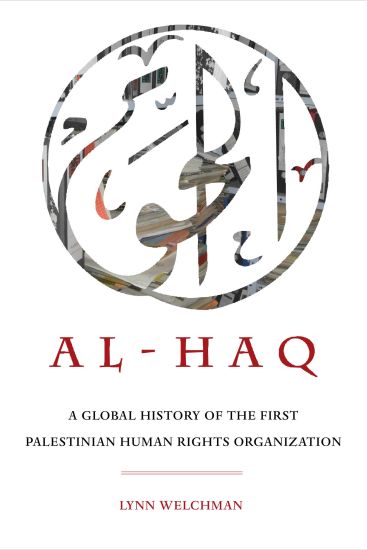
Al-Haq

Al-Haq

Lynn Welchman

University of California Press
2021
pokkari
A free open access ebook is available upon publication. Learn more at www.luminosoa.org.The leadership and legacy of al-Haq, from its origins in Palestine to its international impact Established in Ramallah in 1979, al-Haq was the first Palestinian human rights organization and one of the first such organizations in the Arab world. This inside history explores how al-Haq initiated methodologies in law and practice that were ahead of its time and that proved foundational for many strands of today’s human rights work in Palestine and elsewhere. Lynn Welchman looks at both al-Haq’s history and legacy to explore such questions as: Why would one set up a human rights organization under military occupation? How would one go about promoting the rule of law in a Palestinian society deleteriously served by the law and with every reason to distrust those charged with implementing its protections? How would one work to educate overseas allies and activate international law in defense of Palestinian rights? This revelatory story speaks to the practice of local human rights organizations and their impact on international groups.
Al-Tabari

Al-Tabari

Cambridge University Press
2010
pokkari
The Islamic world in its year 132 (570 AD) was ruled by a new revolutionary regime. The dynasty that it brought to power was revered as the Imams of the Sunni Muslims for the next 767 years. In good part, this stability and longevity were founded by the remarkable grandfather of Harun al-Rashid, Abu Ja'far al-Mansur, who came to power in 754 AD and died in 775. Al-Mansur destroyed every threat to his own supremacy, leaving an opulent autocracy to his son. Here are the reminiscences of those who witnessed these years, woven by the great historiographer al-Tabari (d. 923) into a vivid account, translated for the first time into a western language from its source, hitherto available to a few specialists. This deft translation gives access to the world of eighth-century Baghdad, but also transcends that time in an account of permanent significance.
Al-?Tabari: Volume 2, The Son and Grandsons of al-Man?sur: The Reigns of al-Mahdi, al-Hadi and Harun al-Rashid
This 1989 second volume of Professor Williams' translation of al-Tabari's account of the early 'Abbasi empire focuses on the reigns of the son - al-Mahdi - and grandsons - al-Hadi and Harun al-Rashid - of Caliph al-Mansur, the subject of the first volume. This was the 'Golden Prime' of the empire, before the civil war between the sons of al-Rashid and the movement of the capital away from Baghdad. Also considered is the story of the Persian aristocratic family, the Barmakis, who became the real rulers under the indolent al-Rashid, until he destroyed them in a rage which astonished his contemporaries. The events are narrated through the reminiscences of eyewitnesses, woven together by the great historiographer al-Tabari (d. 923). The translator of the volume is an Islamicist who has lived many years in the Arab world and has a rare knowledge of its culture and literature.
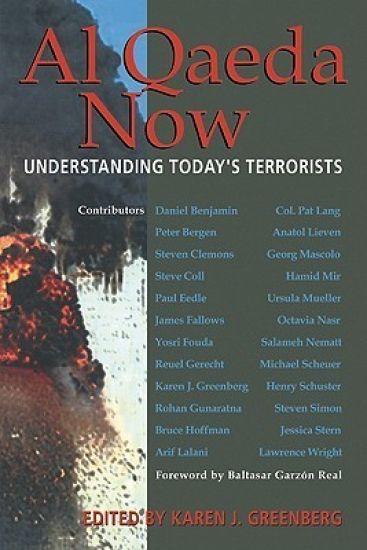
Al Qaeda Now

Al Qaeda Now

Cambridge University Press
2005
pokkari
At the invitation of the New America Foundation and the New York University Center for Law and Security, a group of individuals regarded as authorities on international terrorism and Al Qaeda were brought together at a meeting held in the United States Senate office building. This volume contains the presentations that were made at this meeting. They constitute a valuable synopsis of current knowledge on Al Qaeda and the policies in place to counter threats of future terrorist attacks. The papers in this book will contribute to understanding how Al Qaeda has evolved from a movement to an ideology, what influence it has on Middle East stability and what continued threat it is to the United States, Europe, and other areas of the world. The contributors are from academia, research centers, government agencies and the media. They represent a cross section of recognized experts on Al Qaeda and international terrorism.
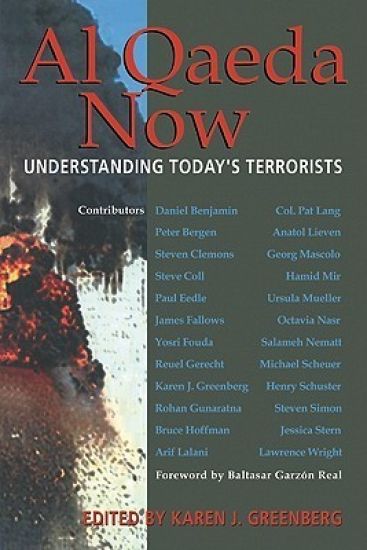
Al Qaeda Now

Al Qaeda Now

Cambridge University Press
2005
sidottu
At the invitation of the New America Foundation and the New York University Center for Law and Security, a group of individuals regarded as authorities on international terrorism and Al Qaeda were brought together at a meeting held in the United States Senate office building. This volume contains the presentations that were made at this meeting. They constitute a valuable synopsis of current knowledge on Al Qaeda and the policies in place to counter threats of future terrorist attacks. The papers in this book will contribute to understanding how Al Qaeda has evolved from a movement to an ideology, what influence it has on Middle East stability and what continued threat it is to the United States, Europe, and other areas of the world. The contributors are from academia, research centers, government agencies and the media. They represent a cross section of recognized experts on Al Qaeda and international terrorism.
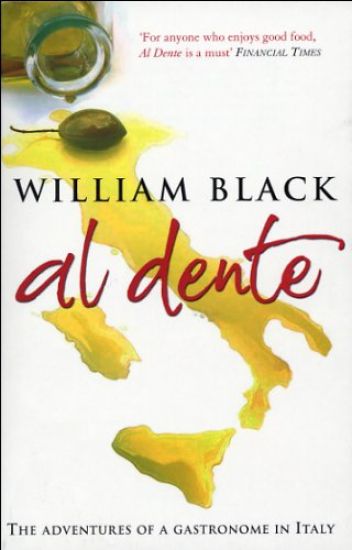
Al Dente

Al Dente

William Black

Corgi Books
2018
pokkari
In Al Dente, William Black travels the length and breadth of Italy in order to get to the roots of Italian food. Our intrepid gastronome eats whatever gets in his way which often isn't quite what it seems. If it's cheese then it may be considered ripe only when it has been predigested by maggots or perhaps made solely from the milk of tired cows. A bowl of pasta might come with donkey sauce. A dish of wind dried tuna apparently includes its testicles. A lovely risotto has been made with seagull broth...William's dedication to his task knows alarmingly few bounds. His quest for the most delicious and authentic cooking and the very finest ingredients takes him to some wonderfully familiar places as well as others far off the beaten track: he drinks great coffee in Turin, chases rabbits in Ischia and views the mattanza, the annual tuna catch, off the coast of Sardinia. One minute he's scoffing eel brodetto, the next waxing lyrical about the joys of frog risotto. And as he eats his way to the country's culinary heart, he unearths the fascinating story of his own family's role in Italian history.A joy from cover to cover and 100 per cent mierda di bufala-free, Al Dente is a must for anyone with an interest in Italy or its food. It will probably make you want to book a holiday and it will certainly make you laugh.
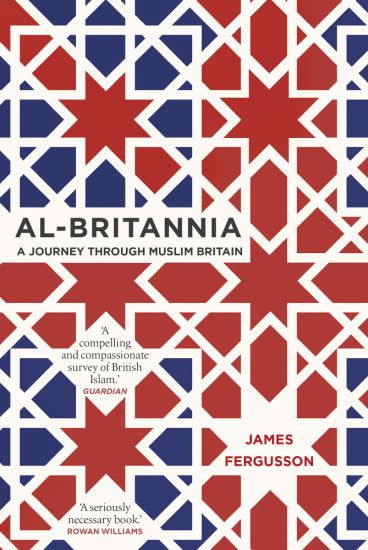
Al-Britannia, My Country

Al-Britannia, My Country

James Fergusson

Corgi Books
2018
pokkari
Shortlisted for the British Academy Nayef Al-Rodhan Prize for Global Cultural Understanding 2018.'A SERIOUSLY NECESSARY BOOK.' ROWAN WILLIAMS, FORMER ARCHBISHOP OF CANTERBURY'A MUST READ.' MIQDAAD VERSI, MUSLIM COUNCIL OF BRITAIN'A COMPELLING AND COMPASSIONATE SURVEY OF BRITISH ISLAM.’ THE GUARDIAN'A TIMELY BOOK.' BARONESS WARSI'HUGELY IMPORTANT.' PETER OBORNE'HEARTENING.' DAVID ANDERSON QCIn this groundbreaking book, James Fergusson travels the length of Britain to explore our often misunderstood Muslim communities, and to experience life on both sides of our increasingly segregated society.The face of Britain is changing. The Muslim population has more than doubled over the last twenty years, and is projected to do so again over the next twenty. A societal shift of this size and speed has inevitably brought growing pains, with the impact on our communities becoming ever more profound – as well as painful, because in the eyes of many, Islam has a problem: the extremist views of a tiny minority, which, when translated into action, can result in catastrophic violence. The danger of this extremist threat - or our response to it - is that we are collectively starting to lose faith in the cultural diversity that has glued our nation together for so long. Our tolerance of others, so often celebrated as a ‘fundamental British value,’ is at risk.In this groundbreaking book, James Fergusson travels the length of Britain to evaluate the impact these seismic shifts have had on our communities. With the rise of nationalist movements, growing racial tensions and an increasingly out of touch political elite, what does it mean to be a Muslim in Britain? What is life like on both sides of this growing religious divide? And what can we do to heal the fractures appearing in our national fabric?Al-Britannia, My Country is a timely and urgent account of life in Britain today, a call to action filled with real-life experience, hard truths and important suggestions for our future.
Al Qaeda and What It Means to be Modern
'The suicide warriors who attacked Washington and New York on September 11th, 2001, did more than kill thousands of civilians and demolish the World Trade Center. They destroyed the West's ruling myth.' So John Gray begins this short, powerful book on the belief that has dominated our minds for a century and a half - the idea that we are all, more or less, becoming modern and that as we become modern we will become more alike, and at the same time more familiar and more reasonable. Nothing could be further from the truth, Gray argues. Al Qaeda is a product of modernity and of globalisation, and it will not be the last group to use the products of the modern world in its own monstrous way. Gray pulls up by the roots the myth that the human condition can be remade by science and progress or political engineering. He describes with mordant irony the rise of Positivists, the strange sect that put science and technology at the centre of the cult and developed a religion of humanity. Through their influence on economists, politicians and biologists, they still powerfully affect the way we think. Gray looks at the various attempts to remake humanity, from the Bolshevik and Nazi disasters to the utopian experiments of modern radical Islam and the dreams of the prophets of globalisation. And he gives a scathing account of the real sources of conflict in the world, of American power and its illusions, and of the ways in which cultures will resist the reshaping we might wish on them.
Al's Business Cards

Al's Business Cards

Josh Koenigsberg

Samuel French Ltd
2010
nidottu
ComedyCharacters: 4 male, 1 female When New Jersey Gaffing Assistant Al Gurvis accidentally gets his new business cards swapped with those of real-estate agent Eileen Lee, he's mildly annoyed. Little does he know that this tiny mix up has sparked a chain reaction which will ultimately ruin his life. A comedy about waking up from the American Dream. A New York Times Critic's Pick! "Plenty of young writers hit on a good opening gimmick for a play but don't know where to go
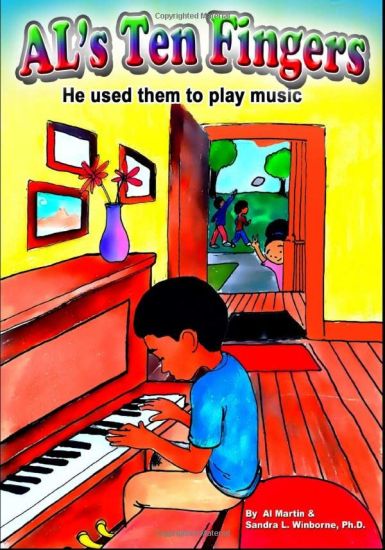
Al's Ten Fingers: He used them to play music

Al's Ten Fingers: He used them to play music

Albert Vinson Martin; Sandra L. Winborne

Sandra L. Winborne, PhD for Winnie Associat
2020
nidottu
Al started loving music early in his life. He enjoyed listening to music; however, he wanted to play. His parents made it happen and allowed him to learn how to play. Soon, while still very young, Al began to play more than one musical instrument. As a child, he played music in places where much older people would perform. Al benefitted from learning to play music. Many feel music enhances how children learn and retain information. However, just listening to music alone may not be enough. Adding a musical instrument may prove more beneficial. Schools, churches, and homes with young children (5 to 11 years of age) may benefit from reading Al's Ten Fingers: He used them to play music. The book introduces to them and their parents to perhaps consider making playing a musical instrument apart of their children's routines. The benefit may assist them throughout their life.