Kirjojen hintavertailu. Mukana 11 699 587 kirjaa ja 12 kauppaa.

Kirjahaku

Etsi kirjoja tekijän nimen, kirjan nimen tai ISBN:n perusteella.

1000 tulosta hakusanalla Albrecht Weber

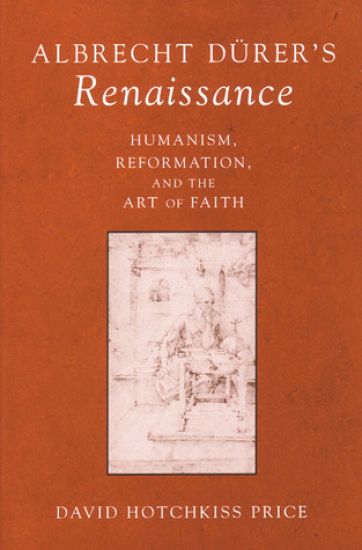
Albrecht Durer's Renaissance

Albrecht Durer's Renaissance

David Hotchkiss Price

The University of Michigan Press
2003
sidottu
David Hotchkiss Price, a specialist in Renaissance cultural and ecclesiastical history, has broken new ground with this comprehensive analysis of Renaissance humanism as the foundation for Dürer's religious art and, in particular, for Dürer's reception of the Reformation movements. Price also offers an innovative study of the relationships between text and image, and a pioneering assessment of the representation of Jews in Dürer's religious art. David Price is Associate Professor of History and of Church History, Southern Methodist University.
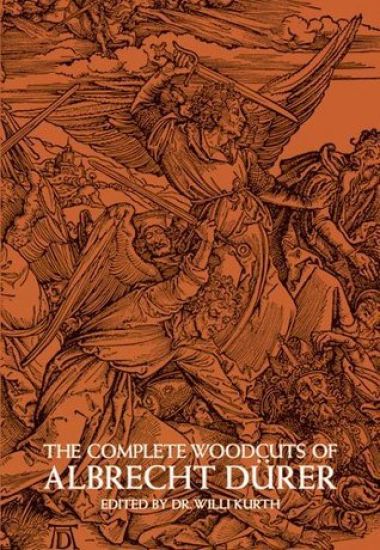
The Complete Woodcuts of Albrecht DüRer

The Complete Woodcuts of Albrecht DüRer

Albrecht Dürer

Dover Publications Inc.
2000
nidottu
Albrecht Durer was a master in various media, but it was in woodcut design that his creative genius reached its highest expression. Here are all of his extant woodcuts, a collection of over 300 great works containing all the familiar cuts long treasured by the world's art lovers: the celebrated series on the Life of the Virgin, The Apocalypse of John (17 cuts), The Great Passion, St. Jerome in his Study, Samson Fighting the Lion, The Fall of Icarus, The Six Knots, The Men's Bath, St. Christopher, The Virgin in Glory, The Rhinoceros, The Last Supper of 1523, illustrations from Durer's "The Art of Measurement" and from his four books on human proportion, and many others, including much little-known material. This book is the only available source for many of these works.Although sacred subjects predominate (the Holy Family, scenes from Christ's life, crucifixion, etc., the lives of the saints, Old Testament episodes), many other motifs are treated. There are portraits of prominent men of the ages, book illustrations (secular and religious), coats of arms, the celestial and terrestrial globes, animals, mythological and historical themes, etc. The plates are arranged generally in chronological order permitting the reader to view the development of Durer's art. From out of the gnarled figures and landscapes one can see the emergence of an individualistic style and skill unrivaled in this sphere.An introduction by Campbell Dodgson and a 34-page textual guide to the plates by Dr. Willi Kurth discuss the evidence and controversies surrounding the authenticity of each work, citing the opinions of all the important Durer scholars; they also furnish the reader with the historical background of the cuts and of Durer's life and times -- from the years of apprenticeship in Nuremberg to the last works of 1520-1528.All of the woodcuts are reproduced in excellent detail. This book is indispensable for the professional art historian and critic. To the layman with any aesthetic interests at all it will be a source of stimulation and satisfaction that only great art can provide.
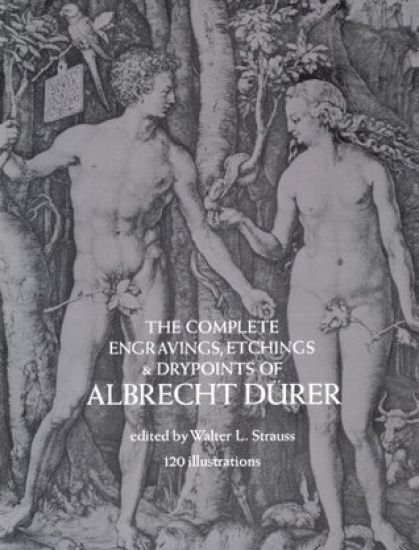
The Complete Engravings, Etchings and Drypoints of Albrecht DüRer
Albrecht Durer's 96 engravings, six etchings, and three dynamic drypoints are counted among his finest and best-known works. By the very nature of the medium, each fine line of an engraving is controlled by the artist and is dependent upon the pressure of the burin in his hand. In the engravings, Durer was therefore able to achieve an unprecedented intricacy of detail, subtlety of line, and three-dimensionality.All 105 of Durer's works in these three mediums are reproduced in this edition. Among them are his most famous works, -Knight, Death and Devil, - -Melencolia I, - and -St. Jerome in His Study-; also portraits of his contemporaries, including Erasmus of Rotterdam and Frederick the Wise, popular and religious subjects sold by Durer's wife at fairs, -Adam and Eve, - the Engraved Passion (15 subjects), and -The Virgin with the Dragonfly.- Many of these show him even more charming and subtle than do the comparative woodcuts. Reproductions of experimental impression offer the opportunity to study Durer's working method. Durer's subjects range from scenes of the New Testament and the life of the Saints to portrayals of peasant personalities and representations of portentous events, such as -The Four Witches- and -Sol Justitae, - done in 1499 in anticipation of the Final Judgment that was widely predicted for the end of the century. The engraving -The Monstrous Sow of Landser, - a pig born with one head, four ears, two bodies, eight feet, on six of which it stood, and with two tongues, - similarly recorded in event that was regarded as an ill omen.In the present edition, by means of shooting in most instances directly to lithographic film from the finest impressions, the engravings, where possible, have been printed so that even under a magnifying glass Durer's exact lines can be seen. Likewise, except in a very few cases, the sizes have been kept exactly to the originals, complete with border-lines where indicated. Walter L. Strauss has prepared the commentary for this edition with references to major catalogs, a summary of the statements of earlier commentators, and background material on the engravings, on Durer, and on the subjects of the works. If you are interested in Durer, a copy of this edition of the engravings is a must.
Albrecht von Hallers Ruhm als Dichter

Albrecht von Hallers Ruhm als Dichter

Franz R. Kempf

Peter Lang Publishing Inc
1986
sidottu
Die vorliegende Studie erforscht das bis heute anhaltende Interesse an Hallers Versuch Schweizerischer Gedichten (1732). Anhand einer Fuelle von Dokumenten (darunter bisher nicht beachteten, wie z.B. dem Lektuerekanon des Deutschunterrichts) wird die Geschichte der Rezeption seiner Lyrik nachgezeichnet. Das Hauptaugenmerk gilt dem 18. Jahrhundert. Saemtliche Dokumente werden ihrem Gehalt nach untersucht und die in ihnen angelegte Motivation herauskristallisiert. Erstmals wird hier zudem die zeitgenoessische Rezeption von Hallers Staatsromanen umfassend dokumentiert und aesthetisch-politisch interpretiert. Die Arbeit schliesst nicht nur eine Luecke in der Haller-Forschung, sondern bietet auch einen Ueberblick ueber die Entwicklung der Poetik, der Lyrik und des literarischen, kulturellen und politischen Lebens im 18. Jahrhundert. Darueber hinaus moechte sie ein praktischer Beitrag zur Theorie der Rezeptionsaesthetik sein.