Kirjojen hintavertailu. Mukana 11 699 587 kirjaa ja 12 kauppaa.

Kirjahaku

Etsi kirjoja tekijän nimen, kirjan nimen tai ISBN:n perusteella.

1000 tulosta hakusanalla Alexander Penner

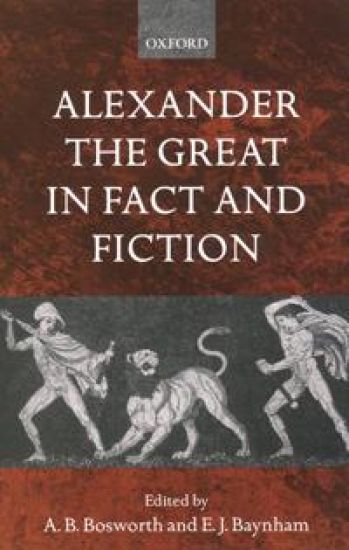
Alexander the Great in Fact and Fiction
This book collects together ten contributions by leading experts in the field of Alexander studies which represent the most advanced scholarship in this area. They span the gamut between historical reconstruction and historiographical research, and viewed as a whole represent a wide spectrum of methodology. This first English collection of essays on Alexander includes a comparison of the Spanish conquest of Mexico with the Macedonians in the east which examines the attitudes towards the subject peoples and the justification of conquest, an analysis of the attested conspiracies at the Macedonian and Persian courts, and studies of panhellenic ideology and the concept of kingship. There is a radical new interpretation of the hunting fresco from Tomb II at Vergina, a new date for the pamphlet on Alexander's last days which ends the Alexander romance, and a re-interpretation of the bizarre portents of his death. Three chapters on historiography address the problem of interpreting Alexander's attested behaviour, the indirect source tradition used by Polybius, and the resonances of contemporary politics in the extant histories.
Alexander the Great

Alexander the Great

Arrian

Oxford University Press
2013
nidottu
'He was a man like no other man has ever been' So Arrian sums up the career of Alexander the Great of Macedon (356-323 BC), who in twelve years that changed the world led his army in conquest of a vast empire extending from the Danube to the rivers of the Punjab, from Egypt to Uzbekistan, and died in Babylon at the age of 32 with further ambitions unfulfilled. Arrian (c. 86-161 AD), a Greek man of letters who had experience of military command and of the highest political office in both Rome and Athens, set out to write the definitive account of Alexander's life and campaigns, published as the Anabasis and its later companion piece the Indica . His work is now our prime and most detailed extant source for the history of Alexander, and it is a dramatic story, fast-moving like its main subject, and told with great narrative skill. Arrian admired Alexander and was fascinated by him, but was also alive to his faults: he presents a compelling account of an exceptional leader, brilliant, ruthless, passionate, and complex. ABOUT THE SERIES: For over 100 years Oxford World's Classics has made available the widest range of literature from around the globe. Each affordable volume reflects Oxford's commitment to scholarship, providing the most accurate text plus a wealth of other valuable features, including expert introductions by leading authorities, helpful notes to clarify the text, up-to-date bibliographies for further study, and much more.
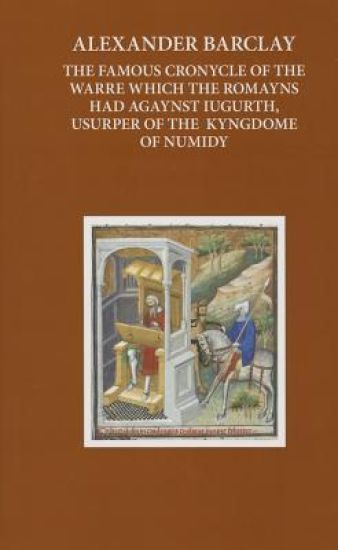
Alexander Barclay's Translation of Sallust's Bellum Iugurthinum
In 1522 Alexander Barclay (ca. 1476-1552), best known as the author of the satirical poem, 'The Ship of Fools', published his own English translation of the Roman historian, Sallust's, account of the war between the Romans and Jurgurtha, King of Numidia. Barclay expanded his source text to incorporate explanations for the benefit of the non-scholarly audience of young English noblemen who were his intended audience, as stated in his Preface. He drew heavily on two printed commentaries on Sallust's text: the first written by the Italian Humanist, Johannes Chrysostomus Soldus (published in 1495), and the second by the Parisian printer and scholar, Josse Badius Ascensius (published in 1504), weaving their explanatory material into his translation. This is the first modern critical edition of this text, which one of the earliest translations from the classics into English. It is accompanied by a full introduction, explanatory notes, and a glossary.
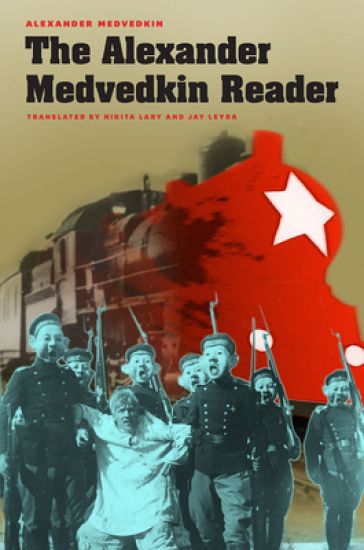
The Alexander Medvedkin Reader

The Alexander Medvedkin Reader

Alexander Medvedkin

University of Chicago Press
2016
sidottu
Filmmaker Alexander Medvedkin (1900 89), a contemporary of Sergei Eisenstein and Alexander Dovzhenko, is celebrated today for his unique form of "total" documentary cinema, which aimed to bridge the distance between film and life, and for his use of satire during a period when the Soviet authorities preferred that laughter be confined to narrowly prescribed channels. This collection of selected writings by Medvedkin is the first of its kind and reveals how his work is a crucial link in the history of documentary film. Although he was a dedicated communist, Medvedkin's satirical approach and social critiques ultimately led to his suppression by the Soviet regime. State institutions held back or marginalized his work, and for many years, his films were assumed to have been lost or destroyed. These texts, many assembled for this volume by Medvedkin himself, document for the first time his considerable achievements, experiments in film and theater, and attempts to develop satire as a major Soviet film genre. Through scripts, letters, autobiographical writings, and more, we see a Medvedkin supported and admired by figures like Eisenstein, Dovzhenko, and Maxim Gorky. This is a rich testimony to the talent and inventiveness of one of the Soviet era's most revolutionary filmmakers.
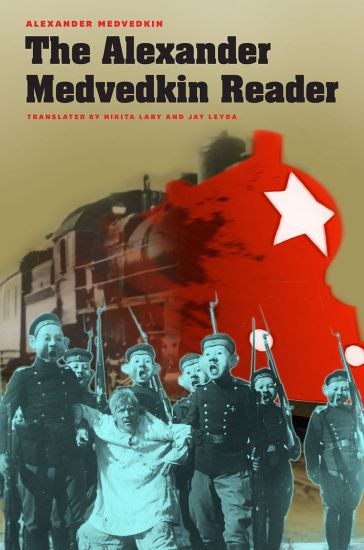
The Alexander Medvedkin Reader

The Alexander Medvedkin Reader

Alexander Medvedkin

University of Chicago Press
2016
nidottu
Filmmaker Alexander Medvedkin (1900 89), a contemporary of Sergei Eisenstein and Alexander Dovzhenko, is celebrated today for his unique form of "total" documentary cinema, which aimed to bridge the distance between film and life, and for his use of satire during a period when the Soviet authorities preferred that laughter be confined to narrowly prescribed channels. This collection of selected writings by Medvedkin is the first of its kind and reveals how his work is a crucial link in the history of documentary film. Although he was a dedicated communist, Medvedkin's satirical approach and social critiques ultimately led to his suppression by the Soviet regime. State institutions held back or marginalized his work, and for many years, his films were assumed to have been lost or destroyed. These texts, many assembled for this volume by Medvedkin himself, document for the first time his considerable achievements, experiments in film and theater, and attempts to develop satire as a major Soviet film genre. Through scripts, letters, autobiographical writings, and more, we see a Medvedkin supported and admired by figures like Eisenstein, Dovzhenko, and Maxim Gorky. This is a rich testimony to the talent and inventiveness of one of the Soviet era's most revolutionary filmmakers.
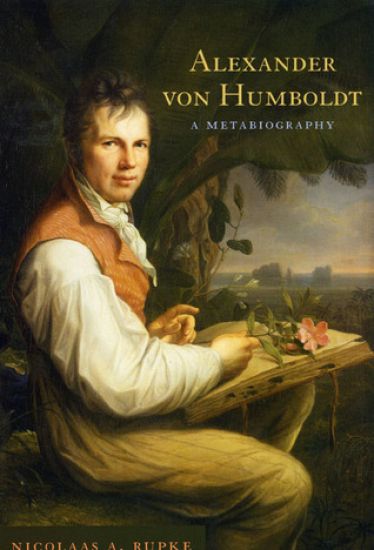
Alexander von Humboldt

Alexander von Humboldt

Nicolaas A. Rupke

University of Chicago Press
2008
nidottu
Alexander von Humboldt (1769-1859) is one of the most celebrated figures of late-modern science, famous for his work in physical geography, botanical geography, and climatology, and his role as one of the first great popularizers of the sciences. His momentous accomplishments have intrigued German biographers from the Prussian era to the fall of the Berlin wall, all of whom configured and reconfigured Humboldt's life according to the sensibilities of the day.This volume, the first metabiography of the great scientist, traces Humboldt's biographical identities through Germany's collective past to shed light on the historical instability of our scientific heroes.
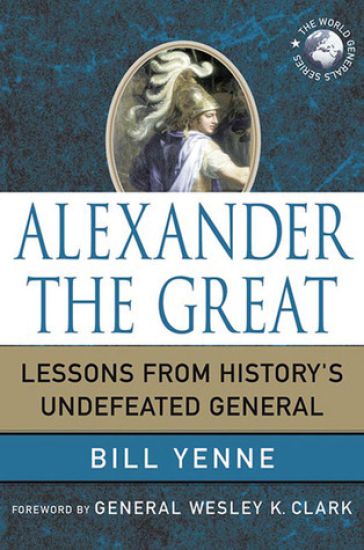
Alexander the Great

Alexander the Great

Bill Yenne

Palgrave Macmillan
2010
sidottu
Alexander the Great is considered one of the most successful commanders of all time and was known to be undefeated in battle. He is mentioned in the Bible as well as the Qur'an, and is on the shortest of short lists whenever the world's best military leaders are cataloged. When asked to name other great military leaders, Caesar reportedly said Alexander was the only great one. Born in 356 BC, the son of Philip II of Macedonia, Alexander was educated by Aristotle, became a consummate horseman, and commanded a wing of his father's army in the victory over the Thebans and Athenians at the Battle of Chaeronea - all when he was still a teenager. By the time of his death at age 32, he had united Greece and had amassed an empire that stretched from the Adriatic Sea to the Indus River and included all of Persia and most of Egypt. He ruled as both the Shah of Persia and as a Pharaoh of Egypt by right of conquest, and he was also crowned King of Asia. As Yenne shows in this masterful biography, Alexander's influence on the course of cultural and political history and the scope of his military prowess remains awe-inspiring to this day.