Kirjojen hintavertailu. Mukana 11 342 296 kirjaa ja 12 kauppaa.

Kirjahaku

Etsi kirjoja tekijän nimen, kirjan nimen tai ISBN:n perusteella.

1000 tulosta hakusanalla Alexandra Potter

A Confederate Cannoneer at Gettysburg: The Life and Career of Edward Porter Alexander

A Confederate Cannoneer at Gettysburg: The Life and Career of Edward Porter Alexander

Charles River

Createspace Independent Publishing Platform
2013
nidottu
*Includes pictures of Porter Alexander and other Civil War generals, as well as maps of important battles. *Includes Alexander's descriptions of important battles, including Gettysburg, and his analysis of them from his memoirs. *Includes a Bibliography for further reading. In the narrative of the Civil War, Edward Porter Alexander has loomed larger in death than in life. Just 25 years old when the war broke out, Porter Alexander had already served as an engineer and officer in the U.S. Army, but the native Georgian resigned his commission in May 1861 and joined the Confederacy after his home state seceded. Porter Alexander spent 1861 as an intelligence officer, and he served as part of a signal guard, but he soon became chief of ordnance for Joseph Johnston's army near Richmond. Half a year later, Johnston would be injured during the Peninsula Campaign at the Battle of Seven Pines, after which he was replaced by Robert E. Lee. Over the course of 1862, Porter Alexander took on more roles in the Army of Northern Virginia's artillery branch, particularly under James Longstreet's 1st Corps. Though he participated in several battles, he played his biggest role at the Battle of Gettysburg. On the third day, Lee decided to make a thrust at the center of the Union's line with about 15,000 men spread out over three divisions. Though it is now known as Pickett's Charge, named after division commander George Pickett, the assignment for the charge was given to Longstreet, whose 1st Corps included Pickett's division. Lee's decision necessitated a heavy artillery bombardment of the Union line in an attempt to knock out the Union's own artillery before beginning the charge that would cover nearly a mile of open space from Seminary Ridge to the Union line on Cemetery Ridge. Lee tasked Porter Alexander, in charge of the 1st Corps' guns, to conduct the artillery bombardment. What resulted was the largest sustained bombardment of the Civil War, with over 150 Confederate cannons across the line firing incessantly at the Union line for nearly 2 hours. Unfortunately for Porter Alexander and the Confederates, the sheer number of cannons belched so much smoke that they had trouble gauging how effective the shells were. As it turned out, most of the artillery was overshooting the target, landing in the rear of the Union line. Reluctant to order the charge, Longstreet commanded Porter Alexander to order the timing for the charge. As Longstreet and Alexander anticipated, the charge was an utter disaster, incurring a nearly 50% casualty rate and failing to break the Union line. Porter Alexander would continue to serve under Longstreet's corps for most of the rest of the war, and he famously suggested to Lee at Appomattox that the Confederate army should disband and melt away instead of surrender. Porter Alexander would later regret the suggestion, and Lee scolded him for it anyway. Though he had served with distinction during the Civil War, it was Porter Alexander's memoirs that have kept his name alive today. While many prominent officers on both sides wrote memoirs, Porter Alexander's were among the most insightful and often considered by historians as the most evenhanded. With a sense of humor and a good narrative, Porter Alexander skillfully narrated the war, his service, and what he considered the successes and faults of others, including Lee, when he thought they had made good decisions or mistakes. As a result, historians continue to rely heavily on his memoirs as a source for Civil War history. A Confederate Cannoneer at Gettysburg profiles the life, career, and legacy of the man in charge of the Confederate guns before Pickett's Charge. Along with pictures of important people, places, and events, you will learn about Porter Alexander like you never have before, in no time at all.
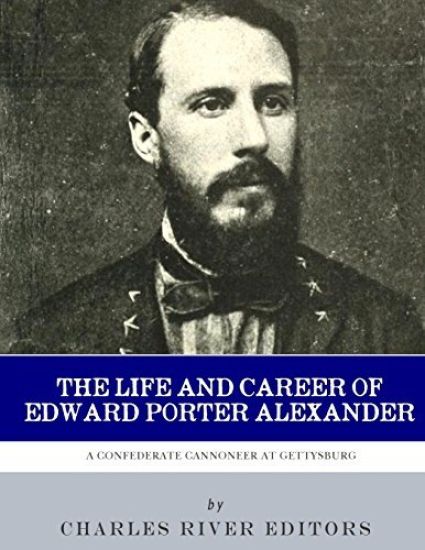
A Confederate Cannoneer at Gettysburg: The Life and Career of Edward Porter Alexander

A Confederate Cannoneer at Gettysburg: The Life and Career of Edward Porter Alexander

Charles River

Createspace Independent Publishing Platform
2018
nidottu
*Includes pictures of Porter Alexander and other Civil War generals, as well as maps of important battles. *Includes Alexander's descriptions of important battles, including Gettysburg, and his analysis of them from his memoirs. *Includes a Bibliography for further reading. In the narrative of the Civil War, Edward Porter Alexander has loomed larger in death than in life. Just 25 years old when the war broke out, Porter Alexander had already served as an engineer and officer in the U.S. Army, but the native Georgian resigned his commission in May 1861 and joined the Confederacy after his home state seceded. Porter Alexander spent 1861 as an intelligence officer, and he served as part of a signal guard, but he soon became chief of ordnance for Joseph Johnston's army near Richmond. Half a year later, Johnston would be injured during the Peninsula Campaign at the Battle of Seven Pines, after which he was replaced by Robert E. Lee. Over the course of 1862, Porter Alexander took on more roles in the Army of Northern Virginia's artillery branch, particularly under James Longstreet's 1st Corps. Though he participated in several battles, he played his biggest role at the Battle of Gettysburg. On the third day, Lee decided to make a thrust at the center of the Union's line with about 15,000 men spread out over three divisions. Though it is now known as Pickett's Charge, named after division commander George Pickett, the assignment for the charge was given to Longstreet, whose 1st Corps included Pickett's division. Lee's decision necessitated a heavy artillery bombardment of the Union line in an attempt to knock out the Union's own artillery before beginning the charge that would cover nearly a mile of open space from Seminary Ridge to the Union line on Cemetery Ridge. Lee tasked Porter Alexander, in charge of the 1st Corps' guns, to conduct the artillery bombardment. What resulted was the largest sustained bombardment of the Civil War, with over 150 Confederate cannons across the line firing incessantly at the Union line for nearly 2 hours. Unfortunately for Porter Alexander and the Confederates, the sheer number of cannons belched so much smoke that they had trouble gauging how effective the shells were. As it turned out, most of the artillery was overshooting the target, landing in the rear of the Union line. Reluctant to order the charge, Longstreet commanded Porter Alexander to order the timing for the charge. As Longstreet and Alexander anticipated, the charge was an utter disaster, incurring a nearly 50% casualty rate and failing to break the Union line. Porter Alexander would continue to serve under Longstreet's corps for most of the rest of the war, and he famously suggested to Lee at Appomattox that the Confederate army should disband and melt away instead of surrender. Porter Alexander would later regret the suggestion, and Lee scolded him for it anyway. Though he had served with distinction during the Civil War, it was Porter Alexander's memoirs that have kept his name alive today. While many prominent officers on both sides wrote memoirs, Porter Alexander's were among the most insightful and often considered by historians as the most evenhanded. With a sense of humor and a good narrative, Porter Alexander skillfully narrated the war, his service, and what he considered the successes and faults of others, including Lee, when he thought they had made good decisions or mistakes. As a result, historians continue to rely heavily on his memoirs as a source for Civil War history. A Confederate Cannoneer at Gettysburg profiles the life, career, and legacy of the man in charge of the Confederate guns before Pickett's Charge. Along with pictures of important people, places, and events, you will learn about Porter Alexander like you never have before, in no time at all.
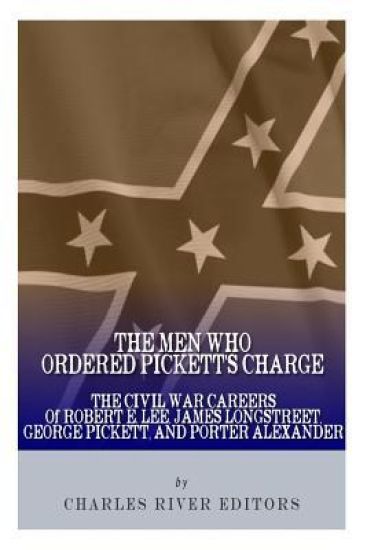
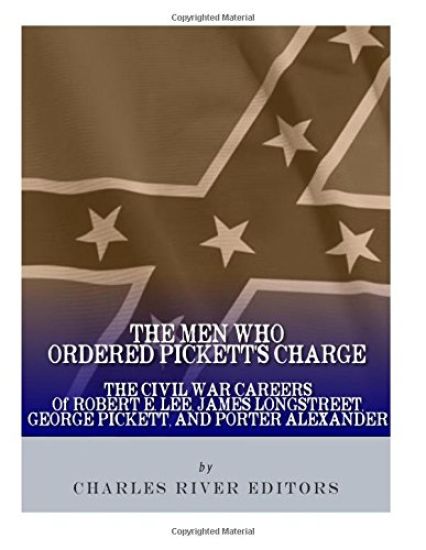
The Men Who Ordered Pickett's Charge: The Civil War Careers of Robert E. Lee, James Longstreet, George Pickett & Edward Porter Alexander
*Weaves the lives and careers of all 4 generals into one entertaining and educational narrative. *Includes maps of important battles like Antietam and Gettysburg. *Includes pictures of the generals and important people, places, and events in their lives. *Includes descriptions of Pickett's Charge written by George Pickett, James Longstreet, and Porter Alexander. *Includes a Bibliography for further reading. Despite the fact that the Civil War began over 150 years ago, it remains one of the most widely discussed topics in America today, with Americans arguing over its causes, reenacting its famous battles, and debating which general was better than others. Americans continue to be fascinated by the Civil War icons who made the difference between victory and defeat in the war's great battles. Of all those battles, the most famous and controversial is Gettysburg, and debate still rages over the climactic attack on the final day, when Army of Northern Virginia commander Robert E. Lee decided over the protests of his principal subordinate James Longstreet to make an assault on the center of the Union line, now known as Pickett's Charge. Lee is remembered today for constantly defeating the Union's Army of the Potomac in the Eastern theater from 1862-1865, considerably frustrating Lincoln and his generals. His leadership of his army led to him being deified after the war by some of his former subordinates, especially Virginians, and he came to personify the Lost Cause's ideal Southern soldier. But of all the battles Lee fought in, he was most criticized for Gettysburg, particularly his order of Pickett's Charge on the third and final day of the war. One of the most important, and controversial, Confederate generals during the Civil War was Lieutenant General James Longstreet, the man Robert E. Lee called his "old war horse." Longstreet was Lee's principal subordinate for most of the war, ably managing a corps in the Army of Northern Virginia and being instrumental in Confederate victories at Second Bull Run, Fredericksburg, and Chickamauga. Longstreet was also effective at Antietam and the Battle of the Wilderness, where he was nearly killed by a shot through the neck. However, it was his performance at Gettysburg and arguments with other Southern generals after the Civil War that tarnished his image. Before July 3, 1863, George Pickett was best known among his comrades for finishing last in his class at West Point, being a jocular but courageous soldier, and his carefully perfumed locks. As part of West Point's most famous Class of 1846, Pickett was classmates with men like Stonewall Jackson and George McClellan, but today he is remembered almost solely for the charge that has taken his name. The same could be said of Porter Alexander, who was in charge of the 1st Corps' guns at Gettysburg until Lee tasked him with conducting the artillery bombardment before Pickett's Charge. What resulted was the largest sustained bombardment of the Civil War, with over 150 Confederate cannons across the line firing incessantly at the Union line for nearly 2 hours. Alexander would later heavily criticize Lee for ordering the charge. The Men Who Ordered Pickett's Charge profiles the lives, careers, and legacies of the four generals who commanded the famous attack, looking at their entire Civil War records, their relationships with each other, and more. Along with maps of battles and pictures of important people, places, and events, you will learn about Lee, Longstreet, Pickett and Porter Alexander like you never have before.
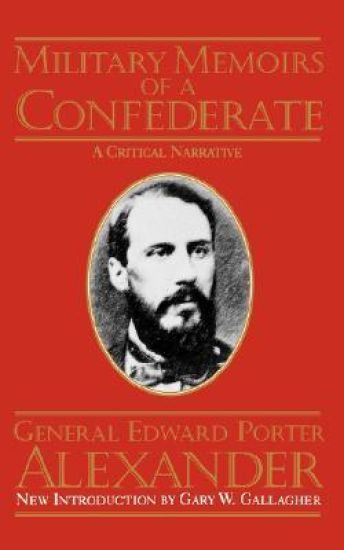
Military Memoirs Of A Confederate

Military Memoirs Of A Confederate

Edward Porter Alexander

Da Capo Press Inc
1993
pokkari
General Edward Porter Alexander was the master gunner of the Confederacy, and undeniably one of the great American artillerists. He was involved in nearly all of the great battles of the East, from First Manassas through Appomattox on the second day at Gettysburg, Alexander's battalion executed one of the greatest artillery charges of the war Longstreet relied upon him for reconnaissance, and Stonewall Jackson wanted him made an infantry general.
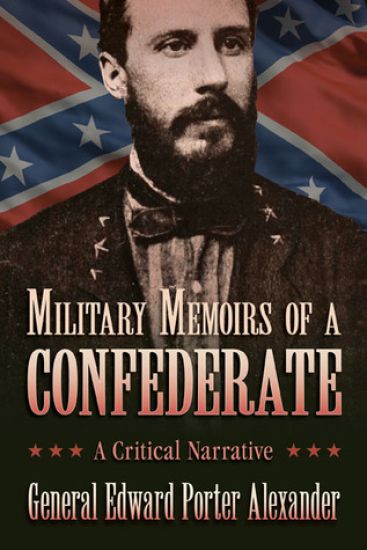
Military Memoirs of a Confederate

Military Memoirs of a Confederate

Edward Porter Alexander

Skyhorse Publishing
2014
pokkari
First published in 1907, Military Memoirs of a Confederate is regarded by many historians as one of the most important and dispassionate first-hand general accounts of the American Civil War. Unlike some other Confederate memoirists, General Edward Porter Alexander had no use for bitter ?Lost Cause” theories to explain the South’s defeat. Alexander was willing to objectively evaluate and criticize prominent Confederate officers, including Robert E. Lee. The result is a clear-eyed assessment of the long, bloody conflict that forged a nation.The memoir opens with Alexander, recently graduated from West Point, heading to Utah to tamp down the hostile actions of Mormons who had refused to receive a territorial governor appointed by President Buchanan. A few years later, Alexander finds himself on the opposite side of a much larger rebellion?this time aligned with Confederates bent on secession from the Union. In the years that follow, he is involved in most of the major battles of the East, including Manassas, Antietam, Chancellorsville, Gettysburg, and Chickamauga. Alexander describes each battle and battlefield in sharp detail.Few wartime narratives offer the insight and objectivity of Alexander’s Military Memoirs of a Confederate . Civil war buffs and students of American history have much to learn from this superb personal narrative.Skyhorse Publishing, along with our Arcade, Good Books, Sports Publishing, and Yucca imprints, is proud to publish a broad range of biographies, autobiographies, and memoirs. Our list includes biographies on well-known historical figures like Benjamin Franklin, Nelson Mandela, and Alexander Graham Bell, as well as villains from history, such as Heinrich Himmler, John Wayne Gacy, and O. J. Simpson. We have also published survivor stories of World War II, memoirs about overcoming adversity, first-hand tales of adventure, and much more. While not every title we publish becomes a New York Times bestseller or a national bestseller, we are committed to books on subjects that are sometimes overlooked and to authors whose work might not otherwise find a home.
Railway Practice

Railway Practice

Edward Porter Alexander

Hansebooks
2017
pokkari
Railway Practice - Its principles and suggested reforms reviewed is an unchanged, high-quality reprint of the original edition of 1887. Hansebooks is editor of the literature on different topic areas such as research and science, travel and expeditions, cooking and nutrition, medicine, and other genres. As a publisher we focus on the preservation of historical literature. Many works of historical writers and scientists are available today as antiques only. Hansebooks newly publishes these books and contributes to the preservation of literature which has become rare and historical knowledge for the future.