Updated with NANDA-I Nursing Diagnoses 2018-20. The all-in-one care planning resource!Here's the step-by-step guidance you need to develop individualized plans of care while also honing your critical-thinking and analytical skills. You'll find about 160 care plans in all, covering acute, community, and home-care settings across the life span. Each plan features: Client assessment database for each medical conditionComplete listings of nursing diagnoses organized by priorityDiagnostic studies with explanations of the reason for the test and what the results meanActions and interventions with comprehensive rationalesNANDA, NIC, and NOC's most recent guidelines and terminologyEvidence-based citationsIndex of nursing diagnoses and their associated disordersInstructor resources:Ebook, medical/surgical, psychiatric, maternal/newborn care plans, nursing diagnosis arranged by Maslow's Heirarchy, previous edition resourcesStudent resources:Disorder look-up, interactive assessment tool, concept map generator, care plan template, bibliography, medical/surgical, psychiatric, maternal/newborn care plans
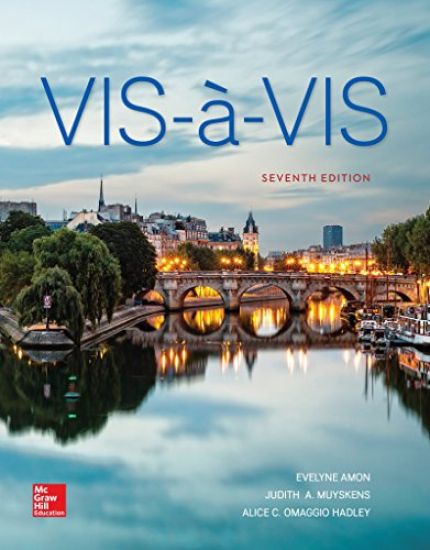
Vis- -vis engages students with its unique integration of contemporary culture and communicative building blocks, providing tools to build a solid foundation in introductory French. Building communicative competence with Vis- -visOne of the major challenges of the introductory language course is to give each student ample exposure to the language and sufficient opportunity to practice speaking, both in and out of the classroom. On our Connect platform, students have full access to the eBook, online Workbook/Laboratory Manual activities, LearnSmart, and all accompanying audio and video resources. In Vis- -vis, the following resources work together to promote communicative competence: Interactive vocabulary presentations (Paroles) include audio recordings, allowing students to listen, record, and practice new vocabulary outside of class.Interactive activities for vocabulary and grammar, many of which are auto-graded, give students the opportunity to complete their assignments and come to class better prepared to participate in paired and group activities.Prononcez bien activities include a recording feature and provide students with opportunities for discrete-word and contextualized practice that help students develop confidence in their speaking abilities.Recordings of lively mini-dialogues featuring the blog characters give students a spirited introduction to the new grammatical structure in context.Seventeen Grammaire interactive tutorials, each with a brief practice quiz, focus on structures that students typically struggle with, such as pass compose vs. imparfait. LearnSmart modules for vocabulary and grammar: This powerful adaptive tool helps students pinpoint their weaknesses and gives them an individualized study program based on their results. Audio prompts for vocabulary and grammar help students strengthen both their listening and writing skills. Building cultural competence with Vis- -visThe program's meaningful and extensive exploration of the rich culture of France and the Francophone world is fully supported throughout the program.Each four-chapter segment of Vis- -vis focuses on a new French or Francophone character and region. The personal online journal entries in Le blog de... the related Reportage, and the Bienvenue readings that precede Chapter 1 and follow Chapters 4, 8, 12, and 16, expose students to contemporary language and the vast diversity of life and culture in France, Canada, Tunisia, and beyond. Le videoblog de...and the stunning Bienvenue video segments feature the bloggers and give students a window into the sights and sounds of eight different French-speaking regions/countries including France, Martinique, and Tahiti. Each video is accompanied by comprehension and cross-cultural comparison activities that encourage students to make connections between their culture and those of the French-speaking world.A brand-new feature has been added below the Reportage, entitled Le Micro-trottoir. Le micro-trottoir provides students a chance to see everyday language in action through recorded "man-on-the-street" interviews featuring a diverse group of people.
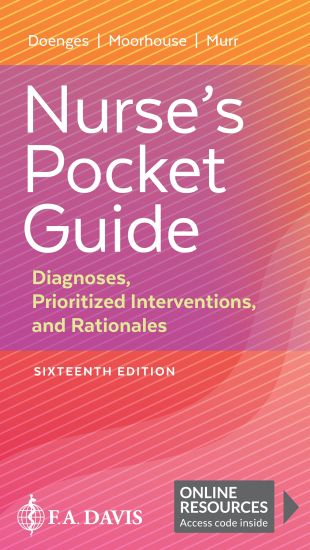
The perfect pocket guide makes care planning easier.This quick-reference tool has exactly what you need to select the appropriate diagnosis to plan your patients’ care effectively. The 16th Edition features all the latest nursing diagnoses and updated interventions from NANDA-I 2021-2023.Alphabetized listing of nursing diagnoses from NANDA-I 2021-2023, covering more than 400 diseases/disorders.Actions/interventions uniquely organized by priority with selected rationales.Icons within the prioritized interventions for acute care, collaboration, community/home care/cultural considerations, diagnostic studies, medications, and lifespan considerations.NIC and NOC labels at the end of each diagnosis.Defining characteristics presented subjectively and objectively.Documentation section that focuses on the other steps of the nursing process, reminding students of the importance and necessity of recording each step.Index with hundreds of diseases/disorders with prioritized associated nursing diagnoses.Detachable, laminated, pocket-minder bookmark on the inside back cover.New & Updated! The latest diagnoses and updated interventions from NANDA International Nursing Diagnoses: Definitions and Classification 2021-2023, 12th Edition, including 46 new diagnoses and 67 revised diagnoses, the most current NANDA-I terminology, and labels from NIC and NOC that link content to nursing diagnosis, and statistic data.Revised! Streamlined preface that focuses on how to use the book.
Identify interventions to plan, individualize, and document care. Updated with the latest diagnoses and interventions from NANDA-I 2021-2023, here’s the resource you’ll turn to again and again to select the appropriate diagnosis and to plan, individualize, and document care for more than 800 diseases and disorders. Only in the Nursing Diagnosis Manual will you find for each diagnosis…defining characteristics presented subjectively and objectively - sample clinical applications to ensure you have selected the appropriate diagnoses - prioritized action/interventions with rationales - a documentation section, and much more!Includes:Assessment tools to help you select the appropriate diagnosis.Alphabetized monographs for hundreds of diseases and disorders reflecting all specialty areas.Associated nursing diagnoses that are presented by priority and written as client problem/need statements.NIC and NOC linkages with each diagnosis.Unique presentation of action/invention by priority with rationales…with icons for cultural • collaborative • diagnostic studies • medications • community/home health • pediatric/geriatric/lifespan.Documentation section that emphasizes the importance of what and why.Taxonomy information that defines the domain in which the nursing diagnosis belongs, along with the date the nursing diagnosis was approved or revised.Pediatric considerations in the monographs, where appropriate.References to support evidenced-based practice.Detachable, laminated, pocket-minder bookmark on the inside back cover.New & Updated! The latest diagnoses and updated interventions from NANDA International Nursing Diagnoses: Definitions and Classification 2021-2023, 12th Edition, including 46 new diagnoses and 67 revised diagnoses, the most current NANDA-I terminology, and labels from NIC and NOC that link content to nursing diagnosis, and statistic data.Updated & Expanded! The most recent evidence-based practice research for interventions and rationales.Revised! Streamlined preface that focuses on how to use the book.Added & Revised! Nursing interventions based on current practice.
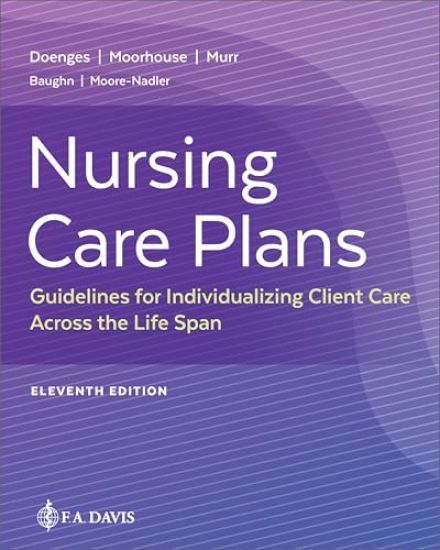
Updated with NANDA-I Nursing Diagnoses 2024-2026 The all-in-one care planning resource! Here’s the step-by-step guidance you need to develop individualized plans of care while also honing your analytical, critical-thinking, and clinical judgment skills. You’ll find over 160 care plans in all, covering acute, community, and home-care settings across the life span. Each plan features… Client assessment database for each medical condition Complete listings of nursing diagnoses organized by priority Diagnostic studies with explanations of the reason for the test and what the results mean Actions and interventions with comprehensive rationales NANDA, NIC, and NOC’s most recent guidelines and terminology Evidence-based citations Index of nursing diagnoses and their associated disorders A must for nursing students!“This book has helped me significantly in nursing school. I definitely recommend this book for nursing students. The book is organized nicely … makes it easy to find nursing diagnoses and rationales.”—Online Reviewer Nursing school life saver.“A great book. It not only helps with writing care plans, but it’s also fantastic to use as reference on clinical days. Scan through it to look up your Pt’s ailments and you will always sound prepared when your instructor is asking you a million of questions.”—Natalia G., Online Reviewer Life saver!“This book makes it so much easier to create care plans!! I wish I would’ve bought this in the beginning of nursing school.”—Online Reviewer New! Section on recognizing patient cues, highlighted by a clinical judgment icon, which guides the nurse in determining the appropriate nursing diagnosis, generating solutions, and taking action New! Online appendix for instructors maps nursing concepts to care plans for concept-based curricula Updated! All care plans updated to ensure they reflect current treatment recommendations Updated! Diagnostic Test tables reflect state-of-the-art diagnostic regimes, the most recent advances in testing and pharmacological therapies Care plans focus on clinical judgment and individualized care for clients across the lifespan and have an emphasis on evidence-based practice. A client assessment database for each medical condition for quick review and retrieval of information.
W. Prevenier; R. van Uytven; J. J. Poelhekke; J. R. Bruijn; J. C. Boogman; J. A. Bornewasser; J. G. Hegeman; Alice C. Carter; W. Blockmans; W. Brulez; R. van Eenoo
The editors of the seventh volume of Acta Historiae Neerlandicae have followed the same lines as those adopted for its predecessor. Studies have again been selected which throw light on the history of the Low Countries, the choice again being directed to subjects likely to be of interest to foreign scholars lacking knowledge of the Dutch language. For this reason articles fairly general in scope have been chosen: studies of local interest or concerned with matters of detail have not been included. In this volume a wide diversity of topics is treated. Included are studies in the economic and social history of the later Middle Ages, and on subjects in the fields of the sixteenth and early half of the eighteenth centuries. There are two articles on the nineteenth century Dutch statesman Thorbecke (1972 was the anniversary of his death). And there are also contributions on the homeland of Erasmus and on Dutch reactions to the publication of Darwin's Origins of Species. Also included are surveys of recent historical publications in the Netherlands and of those from Belgian historians that appeared in Dutch. A group of English historians, working under the guidance of Professor Swart, of University College, London, has surveyed the former, this article being edited by Mrs Alice Carter of the London School of Economics. The task of the late Professor Dhondt, of the University of Ghent, in connection with the survey of the Belgian contributions written in Dutch has been taken over by W.
This book unpacks the complex dynamics of Hong Kong students’ choice in pursuing undergraduate education at the universities of Mainland China. Drawing on an empirical study based on interviews with 51 students, this book investigates how macro political/economic factors, institutional influences, parental influence, and students’ personal motivations have shaped students’ eventual choice of university.Building on Perna’s integrated model of college choice and Lee’s push-pull mobility model, this book conceptualizes that students’ border crossing from Hong Kong to Mainland China for higher education is a trans-contextualized negotiated choice under the "One Country, Two Systems" principle. The findings reveal that during the decision-making process, influencing factors have conditioned four archetypes of student choice: Pragmatists, Achievers, Averages, and Underachievers. The book closes by proposing an enhanced integrated model of college choice that encompasses both rational motives and sociological factors, and examines the theoretical significance and practical implications of the qualitative study.With its focus on student choice and experiences of studying in China, this book’s research and policy findings will interest researchers, university administrators, school principals, and teachers.
This book unpacks the complex dynamics of Hong Kong students’ choice in pursuing undergraduate education at the universities of Mainland China. Drawing on an empirical study based on interviews with 51 students, this book investigates how macro political/economic factors, institutional influences, parental influence, and students’ personal motivations have shaped students’ eventual choice of university.Building on Perna’s integrated model of college choice and Lee’s push-pull mobility model, this book conceptualizes that students’ border crossing from Hong Kong to Mainland China for higher education is a trans-contextualized negotiated choice under the "One Country, Two Systems" principle. The findings reveal that during the decision-making process, influencing factors have conditioned four archetypes of student choice: Pragmatists, Achievers, Averages, and Underachievers. The book closes by proposing an enhanced integrated model of college choice that encompasses both rational motives and sociological factors, and examines the theoretical significance and practical implications of the qualitative study.With its focus on student choice and experiences of studying in China, this book’s research and policy findings will interest researchers, university administrators, school principals, and teachers.
"This textbook is a well-rounded, rigorous, and informative work presenting the mathematics behind modern machine learning techniques. It hits all the right notes: the choice of topics is up-to-date and perfect for a course on data science for mathematics students at the advanced undergraduate or early graduate level. This book fills a sorely-needed gap in the existing literature by not sacrificing depth for breadth, presenting proofs of major theorems and subsequent derivations, as well as providing a copious amount of Python code. I only wish a book like this had been around when I first began my journey!" -Nicholas Hoell, University of Toronto"This is a well-written book that provides a deeper dive into data-scientific methods than many introductory texts. The writing is clear, and the text logically builds up regularization, classification, and decision trees. Compared to its probable competitors, it carves out a unique niche. -Adam Loy, Carleton CollegeThe purpose of Data Science and Machine Learning: Mathematical and Statistical Methods is to provide an accessible, yet comprehensive textbook intended for students interested in gaining a better understanding of the mathematics and statistics that underpin the rich variety of ideas and machine learning algorithms in data science.Key Features:Focuses on mathematical understanding.Presentation is self-contained, accessible, and comprehensive.Extensive list of exercises and worked-out examples.Many concrete algorithms with Python code.Full color throughout.Further Resources can be found on the authors website: https://github.com/DSML-book/Lectures
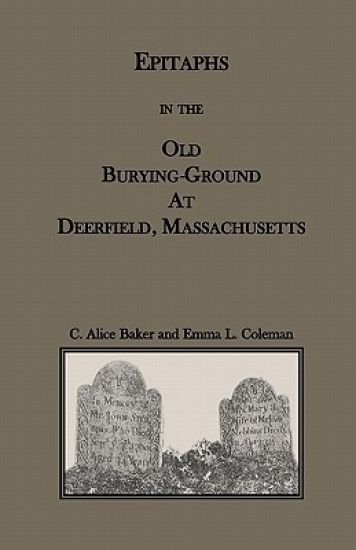
Recounts in detail the Indian attacks at Wells and York, Maine, Dover, New Hampshire, and Hatfield, Haverhill, and Deerfield, Massachusetts. Focuses on a few of the participants with extensive genealogical and biographical data. The families treated are:
Georgia and Sam must save young Alice from the clutches of a man driven solely by corporate greed and a thirst for power. In a world where corporate greed is allowed to run wild, Roslun Global has become the largest pharmaceutical company in the world. As head of this juggernaut of a company, Richard Roslun wields unheard of global power. To obtain and hold onto this power, Roslun is willing to do anything, including killing innocents. When Richard Roslun realizes what he must do to save everything, his sights become set on a young girl named Alice. When Alice's mother returns home from work with an infection, all hell breaks lose in Alice's fragile world. Alice and her sister Georgia are hiding as death is literally banging on the front door when the unthinkable happens. A second outbreak tests the love between Sam Ashe and and his fianc Heather. Sam is a horror geek who has always been obsessed with zombies. When his fantasies become a reality, the man inside him will have to rise to the adventure ahead. Fate brings Sam and Georgia together in the mission to save young Alice. Will love be enough to fight off the undead and stop pure corporate greed?
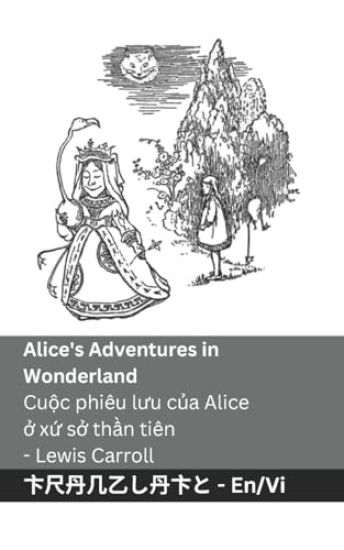
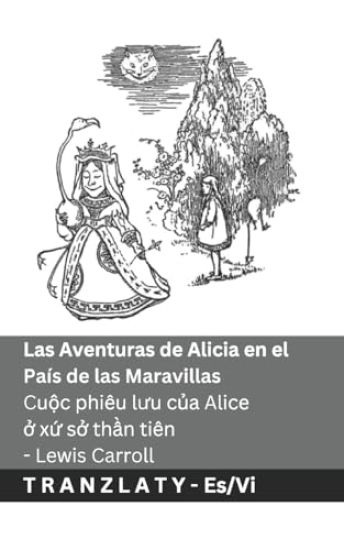
Sau một lần lộn nh o xuống hang thỏ, Alice thấy m nh xa nh trong thế giới thần ti n v l .Sau một lần lộn nh o xuống hang thỏ, Alice thấy m nh xa nh trong thế giới thần ti n v l . Vừa c thể uốn nắn t m tr vừa th vị, cuốn tiểu thuyết năm 1865 của Lewis Carroll l ph p thuật thuần t y d nh cho cả người gi v trẻ.
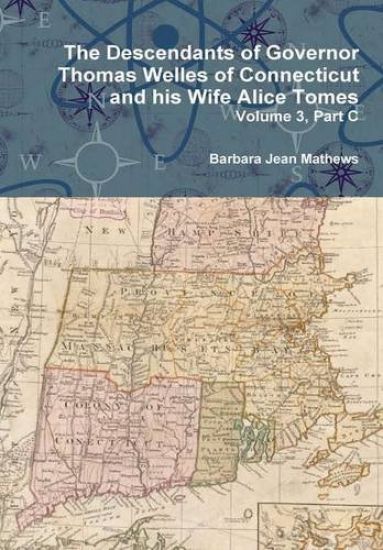
Gov. Thomas Welles came to New England in 1635, settling in Hartford in 1636 and moving to Wethersfield in 1646. Volume 3, Part C, for the first time publishes the sixth-generation descendants of Gov. Welles through his daughter Sarah2 (Welles) Chester. Her descendants populated the towns of Northern Connecticut and Western Massachusetts and provided leadership during the Revolutionary War. The farmers, generals, judges, ministers, sheriff, Loyalists and Patriots, legislators and sea captains had surnames including Burnham, Chester, Eliot, Kellogg, Loomis, Williams and Wolcott.
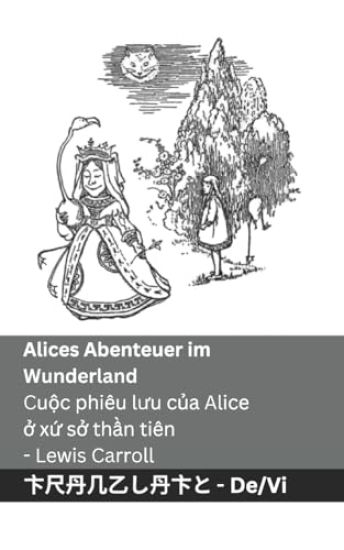
"Hacer una cadena de margaritas ser a un placer" "L m một chuỗi hoa c c sẽ l một niềm vui" " Pero vale la pena el esfuerzo de levantarse y recoger las margaritas?" "Nhưng c đ ng để nỗ lực đứng dậy v h i hoa c c kh ng " No era tan f cil pensar en esto Điều n y kh ng dễ d ng để nghĩ về porque el d a la estaba haciendo sentir somnolienta y est pida Bởi v một ng y đang khiến c cảm thấy buồn ngủ v ngu ngốc Pero de repente sus pensamientos se vieron interrumpidos nhưng đột nhi n suy nghĩ của c bị gi n đoạn un conejo blanco de ojos rosados corri cerca de ella một con Thỏ trắng với đ i mắt hồng chạy gần c ấy No hab a nada demasiado notable en el conejo Kh ng c g qu đ ng ch về con thỏ y Alicia tampoco pens que el conejo fuera notable v Alice cũng kh ng nghĩ con thỏ đ ng ch ni le extra que el Conejo hablara cũng kh ng l m c ngạc nhi n khi Thỏ n i " Oh, Dios m o Llegar demasiado tarde ", se dijo a s mismo " i trời ơi T i sẽ qu muộn " anh tự nhủ pero entonces el Conejo hizo algo que los conejos no hac an nhưng sau đ Thỏ đ l m điều m thỏ kh ng l m el Conejo sac un reloj del bolsillo de su chaleco Con Thỏ lấy một chiếc đồng hồ ra khỏi t i o ghi l Mir la hora y luego se apresur a seguir adelante Anh ta nh n v o thời gian v sau đ vội v tiếp tục