
Kirjahaku
Etsi kirjoja tekijän nimen, kirjan nimen tai ISBN:n perusteella.
1000 tulosta hakusanalla Anand
Veerasingham Anandasangaree
VDM Publishing House
2010
nidottu
Observera att förlaget som ger ut denna produkt baserar innehållet i sina produkter på fria källor som Wikipedia. Boken är med stor sannolikhet endast ett utdrag ur dessa informationskällor, alltså inte en vanlig bok i den bemärkelsen.

In 2002 widespread communal violence tore apart towns and villages in rural parts of Gujarat, India. In the aftermath, many Muslims living in Hindu-majority villages sought safety in the small town of Anand. Following such dramatic displacement, the town emerged as a site of opportunity and hope. For its residents and transnational visitors, Anand's Muslim area is not just a site of marginalization; it has become an important focal point and regional center from which they can participate in the wider community of Gujarat and reimagine society in more inclusive terms.This compelling ethnography shows how in Anand the experience of residential segregation led not to estrangement or closure but to distinctive forms of mobility and exchange that embed Muslim residents in a variety of social networks. New Lives in Anand moves beyond established notions of ghettoization to foreground the places, practices, and narratives that are significant to the people of Anand.New Lives in Anand is available in an open access edition through the Sustainable History Monograph Pilot, thanks to the generous support of the Andrew W. Mellon Foundation.Open access edition: DOI 10.6069/9780295749655

In 2002 widespread communal violence tore apart towns and villages in rural parts of Gujarat, India. In the aftermath, many Muslims living in Hindu-majority villages sought safety in the small town of Anand. Following such dramatic displacement, the town emerged as a site of opportunity and hope. For its residents and transnational visitors, Anand's Muslim area is not just a site of marginalization; it has become an important focal point and regional center from which they can participate in the wider community of Gujarat and reimagine society in more inclusive terms.This compelling ethnography shows how in Anand the experience of residential segregation led not to estrangement or closure but to distinctive forms of mobility and exchange that embed Muslim residents in a variety of social networks. New Lives in Anand moves beyond established notions of ghettoization to foreground the places, practices, and narratives that are significant to the people of Anand.New Lives in Anand is available in an open access edition through the Sustainable History Monograph Pilot, thanks to the generous support of the Andrew W. Mellon Foundation.Open access edition: DOI 10.6069/9780295749655

एडीसन कल्पना के आनंद को दो भागों में विभक्त करते हैं। प्रथम श्रेणी का आनंद ऐसे पदार्थों से उत्पन्न होता है, जो हमारे नेत्रें के सामने है और द्वितीय श्रेणी का आनंद दृश्य पदार्थों के केवल ध्यान मात्र से उत्पन्न होता है। हकीकत में वे पदार्थ हमारी आंख के सामने नहीं रहते, वरन स्मृति में लाए जाते हैं, अथवा कल्पना द्वारा रमणीय रूपों में निर्मित किए जाते हैं। दृष्टि ही कल्पना को सामग्री प्रदान करती है, इसलिए कल्पना का आनंद भी मूलतः दृष्टि से ही उत्पन्न होता है।
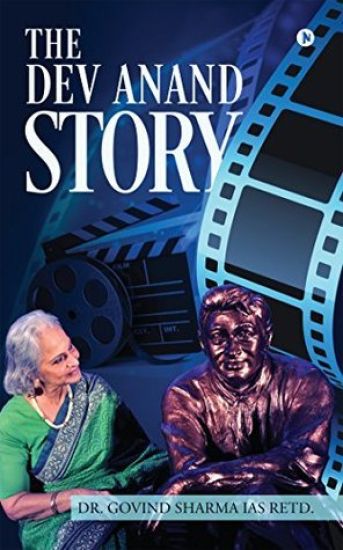
A must-read for Dev Anand fans and students of film history "A broken nose sometimes makes a great boxer," said the evergreen Bollywood star Dev Anand after his movie Ishq Ishq Ishq did not work at the box office. In his sixty-five years of unchallenged dominance as the most-loved Hindi film star, Dev Anand gave us several memorable hits like Guide, Taxi Driver, Hum Dono, Johny Mera Naam, and Hare Rama Hare Krishna. He was not only an exceptionally handsome and stylish hero. His 'man of the future' philosophy is worth emulating by persons of all generations. He neither celebrated his successes nor lamented over his failures. A Karma Yogi, in the true sense of the term, he produced, directed, and acted in a lead role in a movie at the age of eighty-eight, which is without parallel in the history of Bollywood. The book attempts to analyse why his philosophy of life is a source of inspiration for all. It also gives a detailed filmography from Hum Ek Hain to Charge Sheet, with a separate chapter on Guide, and a special write-up on his genius brother Vijay Anand.


Estudio farmacéutico de Anand-Bhairav Rasa
Vaishali Patil
Ediciones Nuestro Conocimiento
2022
nidottu


Pharmaceutical Study of Anand-Bhairav Rasa
Vaishali Patil
Lap Lambert Academic Publishing
2022
nidottu
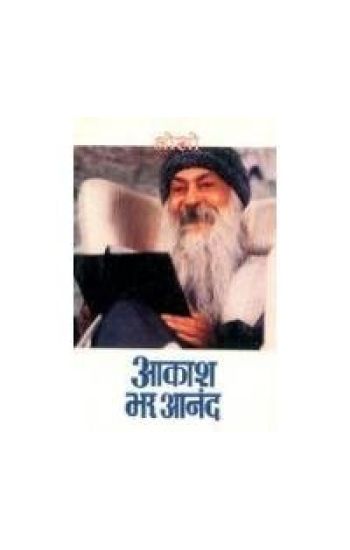
Aakash Bhar Anand
DIAMOND BOOKS
2004
nidottu
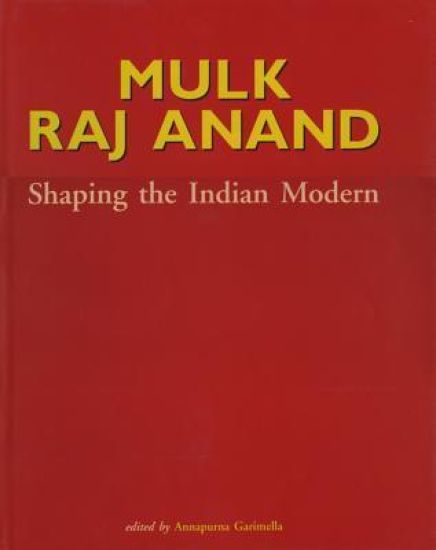
Mulk Raj Anand
The Marg Foundation
2005
sidottu

Arth Ki Talash Me Anand - Ashanti Se Mukti Pakar Shantidata Banne Ki Kahani (Hindi)
Sirshree
Wow Publishing Pvt.Ltd.
2020
pokkari


Aakash Bhar Anand (???? ?? ????)
diamond pocket books pvt ltd
2021
sidottu
'ओशो सरस संत और प्रफुल्ल दार्शनिक हैं। उनकी भाषा कवि की भाषा है। उनकी शैली में हृदय को द्रवित करने वाली भावना की उच्चतम ऊंचाई भी है और विचारों को झकझोरने वाली अकूत गहराई भी लेकिन उनकी गहराई का जल दर्पण की तरह इतना निर्मल है कि तल को देखने में दिक्कत नहीं होती। उनका ज्ञान अंधकूप की तरह अस्पष्ट नहीं है। कोई साहस करे, प्रयोग करे तो उनके ज्ञान सरोवर के तल तक सरलता से जा सकता है।'

The <i>Dhvanyaloka</i> of Anandavardhana with the <i>Locana</i> of Abhinavagupta
Harvard University Press
1990
sidottu
For nearly a thousand years the brilliant analysis of aesthetic experience set forth in the Locana of Abhinavagupta, India's founding literary critic, has dominated traditional Indian theory on poetics and aesthetics. The Locana, presented here in English translation for the first time, is a commentary on the ninth-century Dhvanyaloka of Anandavardhana, which is itself the pivotal work in the history of Indian poetics.The Dhvanyaloka revolutionized Sanskrit literary theory by proposing that the main goal of good poetry is the evocation of a mood or "flavor" (rasa) and that this process can be explained only by recognizing a semantic power beyond denotation and metaphor, namely, the power of suggestion. On the basis of this analysis the Locana develops a theory of the psychology of aesthetic response.This edition is the first to make the two most influential works of traditional Sanskrit literary and aesthetic theory fully accessible to readers who want to know more about Sanskrit literature. The editorial annotations furnish the most complete exposition available of the history and content of these works. In addition, the verses presented as examples by both authors (offered here in verse translation) form an anthology of some of the finest Sanskrit and Prakrit poetry.