Kirjojen hintavertailu. Mukana 11 372 431 kirjaa ja 12 kauppaa.

Kirjahaku

Etsi kirjoja tekijän nimen, kirjan nimen tai ISBN:n perusteella.

1000 tulosta hakusanalla Andreas Oppermann

Andreas Werckmeister’s Musicalische Paradoxal-Discourse
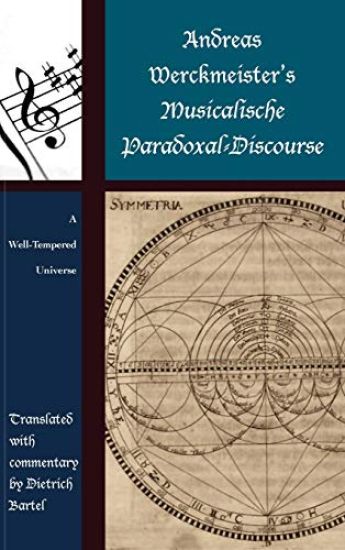
Andreas Werckmeister (1645 – 1706), a late seventeenth-century German Lutheran organist, composer, and music theorist, is the last great advocate and defender of the Great Tradition in music, with its assumptions that music is a divine gift to humanity, spiritually charged yet rationally accessible, the key being a complex of mathematical proportions which govern and are at the root of the entire universe and all which that embraces. Thus understood, music is the audible manifestation of the order of the universe, allowing glimpses, sound-bites of the very Creator of a well-tempered universe, and of our relationship to each other, our environment, and the divine powers which placed us here. This is the subject matter of the conversation which Werckmeister wishes to have with us, his readers, particularly in his last treatise, the Musicalische Paradoxal-Discourse. But he does not make it easy for today’s readers. He assumes certain proficiencies from his readers, including detailed biblical knowledge, a fluency in Latin, and a familiarity with treatises and publications concerning music, theology, and a number of related disciplines. He writes in a rather archaic German, riddled with obscure references which require a thorough explanation. With its extensive commentary and translation of the treatise, this book seeks to bridge Werckmeister’s world with that of the twenty-first century. Werckmeister wrote for novice and professional musicians alike, an author who wanted to consider with his readers the basic and existential questions and issues regarding the wondrous art of music, questions as relevant then as they are now.

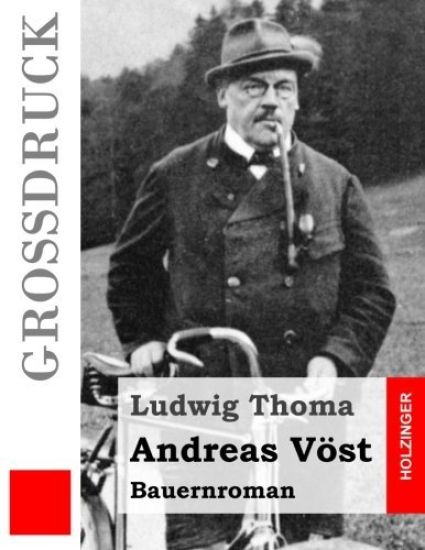
Andreas Vöst (Großdruck): Bauernroman

Andreas Vöst (Großdruck): Bauernroman

Ludwig Thoma

Createspace Independent Publishing Platform
2015
nidottu
Ludwig Thoma: Andreas V st. Bauernroman Lesefreundlicher Gro druck in 16-pt-Schrift Edition Holzinger. Gro format, 216 x 279 mm Berliner Ausgabe, 2015 Vollst ndiger, durchgesehener Neusatz mit einer Biographie des Autors bearbeitet und eingerichtet von Michael Holzinger Erstdruck: M nchen (Langen) 1906. Textgrundlage ist die Ausgabe: Ludwig Thoma: Gesammelte Werke in sechs B nden. Erweiterte Neuausgabe. Textredaktion: Albrecht Knaus, M nchen: Piper, 1968. Herausgeber der Reihe: Michael Holzinger Reihengestaltung: Viktor Harvion Umschlaggestaltung unter Verwendung des Bildes: Ludwig Thoma in Wildbad Kreuth (Fotografie, 1913) Gesetzt aus Minion Pro, 16 pt.
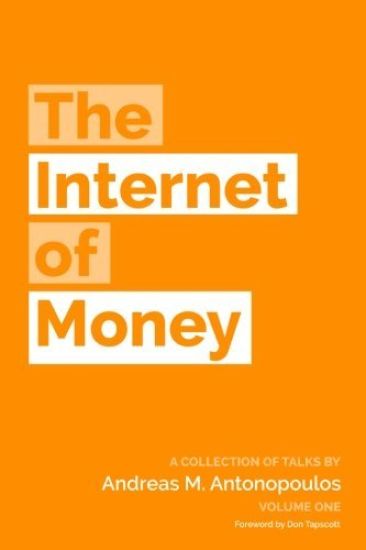
The Internet of Money: A collection of talks by Andreas M. Antonopoulos

The Internet of Money: A collection of talks by Andreas M. Antonopoulos

Andreas M. Antonopoulos

Createspace Independent Publishing Platform
2016
nidottu
While many books explain the how of bitcoin, The Internet of Money delves into the why of bitcoin. Acclaimed information-security expert and author of Mastering Bitcoin, Andreas M. Antonopoulos examines and contextualizes the significance of bitcoin through a series of essays spanning the exhilarating maturation of this technology.Bitcoin, a technological breakthrough quietly introduced to the world in 2008, is transforming much more than finance. Bitcoin is disrupting antiquated industries to bring financial independence to billions worldwide. In this book, Andreas explains why bitcoin is a financial and technological evolution with potential far exceeding the label "digital currency."Andreas goes beyond exploring the technical functioning of the bitcoin network by illuminating bitcoin's philosophical, social, and historical implications. As the internet has essentially transformed how people around the world interact and has permanently impacted our lives in ways we never could have imagined, bitcoin--the internet of money--is fundamentally changing our approach to solving social, political, and economic problems through decentralized technology.
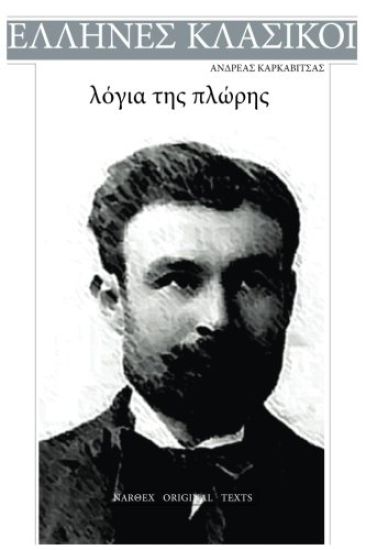
Andreas Karkavitsas, Logia Tis Ploris

Andreas Karkavitsas, Logia Tis Ploris

Andreas Karkavitsas

Createspace Independent Publishing Platform
2017
nidottu
Sta kosi diiy mata afto tou vivl ou, nai san n' ako i kan s to voit tis th lassas kai to r khtho ton kim ton pou sp zoun p no stous vr khous stis kar nes ton pl on. To dio zontan s nai kai i istor es pou diigo ntai i naftik , pou pal voun n khta-m ra me ta stikh a tis ph sis.
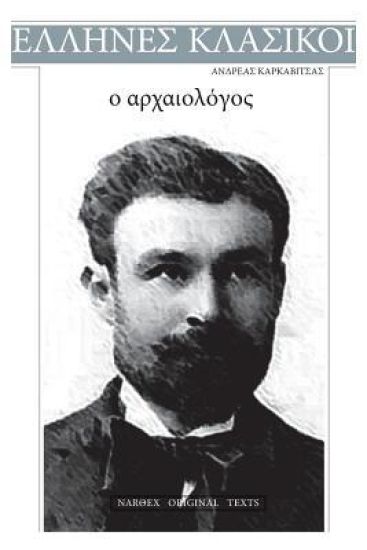
Andreas Karkavitsas, O Arxaiologos

Andreas Karkavitsas, O Arxaiologos

Andreas Karkavitsas

Createspace Independent Publishing Platform
2017
nidottu
To telefta o mithist rima tou Andr a Karkav tsa nai O Arkhaiol gos, to op o gr phtike to 1904 kai ekphr zi tis ap psis tou singraph a yia tin por a pou pr pi na akolouth si i kh ra. I epexergas a tou l gou tou nai vasik kharaktiristik tou rgou tou kai yi' aft kharaktir zetai os o kat' exokh n stil stas tis dimotik s gl ssas. Sta m sa tou 19ou ai na d o t sis kiriarkho san sto near ak ma ellinik vas lio: i pr ti ipost rize ti prepe na stirikhto me sto ndoxo parelth n me tin elp da ti i x ni tha pr spheran ta p nta sti kh ra mas thampom ni ap tin arkha a d xa, en i d fteri p steve ti prepe pr ta na pat soume yer sta p dia mas, na y noume kr tos kai sti sin khia na prov loume ta epit vgmata ton the k n prog non mas, ste na pet khoume tin pang smia anagn risi. Tis ant thetes aft s ap psis ekphr zoun i dio kentrik roes, ta ad lphia Arist dimos kai Dimitr kis, pou vr skontai se sinekh antidik a metax tous.
Andreas Karkavitsas, Palies Agapes

Andreas Karkavitsas, Palies Agapes

Andreas Karkavitsas

Createspace Independent Publishing Platform
2017
nidottu
I silloy diiyim ton "Pali s Ag pes" (1900) an ki stin periokh tou ithographiko diiy matos. Ta diiy mata aft kharaktir zi i akriv s parat risi kai i psikhographik d nami. O t nos pou epistrat vi nai realistik s, pou pht ni en ote ti sklir tita. Sikhn i d nami ton diiyim ton tou nai t tia pou iperva ni ti mikr ktasi kai ton odiy se sinthet tera aphiy mata kai mithistor mata
Andreas Karkavitsas, O Zitianos

Andreas Karkavitsas, O Zitianos

Andreas Karkavitsas

Createspace Independent Publishing Platform
2017
nidottu
O Ziti nos, pou theor tai to kal tero rgo tou singraph a, gr phtike to 1896. I ip thesi tou rgou diadramat zetai s' na khori tis Thessal as, to Nikhter mi, met tin apelefth rosi kai tin pros rtisi tis Thessal as stin Ell da kat to 1881. Ek ni tin epokh i k tiki tou khorio vr skontan se apelpistik kat stasi, kath s exakoloutho san na nai ipotagm ni kai na exart ntai ikonomik ap ton To rko megalotsiphlik b i Dem s ag . Kentrik pr sopo tis nouv las nai nas epangelmat as ziti nos, o Tzirit kostas, pou plout zi kai thriamv vi ekmetallev menos tin athli tita kai tin am thia ton khorik n tou thessaliko afto khorio .
Andreas Papandreou

Andreas Papandreou

Draenos Stan

I.B. Tauris
2012
sidottu
Greece in the 1960s produced one of Europe's arguably most controversial politicians of the post-war era. The contrarian politics of Andreas Papandreou grew out of his conflict laden re-engagement with Greece in the 1960s. Returning to Athens after 20 years in the US where he had been a rising member of the American liberal establishment, Papandreou forged a social reform-oriented, nationalist politics in Greece that ultimately put him at odds with the US foreign policy establishment and made him the primary target of a pro-American military coup in 1967. Venerated by his admirers and despised by his detractors with equal passion, the Harvard-educated Papandreou left in his wake no clear-cut answer to the question of who he was and what he stood for. Andreas Papandreou chronicles the events, struggles and ideas that defined the man's dramatic, intrigue-filled transformation from Kennedy-era modernizer to Cold War maverick. In the process the book examines the explosive interplay of character and circumstance that generated Papandreou's contentious, but powerfully consequential politics.
Andreas: An Edition

Andreas: An Edition

Liverpool University Press
2016
sidottu
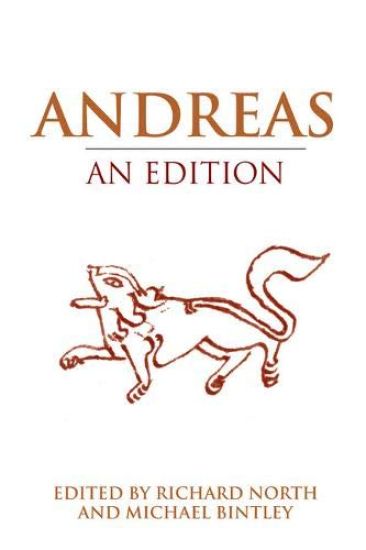
This is the first edition of Andreas for 55 years, also the first to present the Anglo-Saxon, or rather Old English, text with a parallel Modern English poetic translation. The book aims not only to provide both students and scholars with an up-to-date text and introduction and notes, but also to reconfirm the canonical merit of Andreas as one of the longest and most important works in Old English literature. The introduction to our text is substantial, re-positioning this poem in respect of nearly six decades’ progress in the palaeography, sources and analogues, language, metrics, literary criticism and archaeology of Andreas. The book argues that the poet was Mercian, that he was making ironic reference to Beowulf and that his story of St Andrew converting pagan Mermedonian cannibals was coloured by King Alfred’s wars against the Danes (871-9, 885-6, 892-6). Andreas is here dated to Alfred’s later reign with such analysis of contexts in history and ideology that the author’s name is also hypothesized. The Old English text and Modern English translation of Andreas are presented in a split-page format, allowing students at whatever level of familiarity with the Anglo-Saxon vernacular to gain a direct access to the poem in close to its original form. The translation follows the poem’s word order and style, allowing modern readers to feel the imagination, ideology and humour of Andreas as closely as possible. The text of the Old English poem is accompanied by a full set of supporting notes, and a glossary representing the translation.
Andreas Vesalius

Andreas Vesalius

Sachiko Kusukawa

REAKTION BOOKS
2024
sidottu
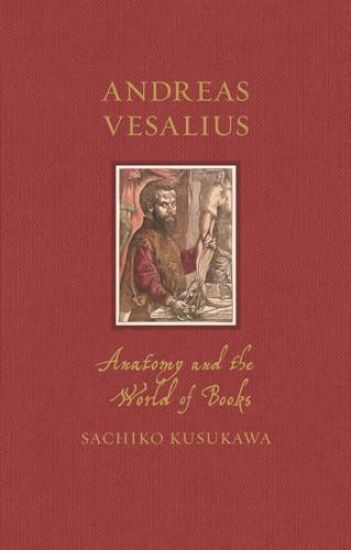
In 1543 the young and ambitious physician Andreas Vesalius published what became the most famous book in the history of medicine, On the Fabric of the Human Body. While we tend to think of dissection as a form of destroying the body, Vesalius believed that it helped establish how the human body was constructed. Sachiko Kusukawa shows how Vesalius’s book presented this view through innovative use of Renaissance art, printing technology and the classical tradition. She replaces the conventional view of Vesalius as a proto-modern, anti-authoritarian father of anatomy with a more nuanced account of how Vesalius exploited cultural and technological developments to create an astounding, beautiful book that propelled him to the post of imperial physician and secured his enduring fame.
Andreas: An Edition

Andreas: An Edition

Liverpool University Press
2019
nidottu
This is the first edition of Andreas for 55 years, also the first to present the Anglo-Saxon, or rather Old English, text with a parallel Modern English poetic translation. The book aims not only to provide both students and scholars with an up-to-date text and introduction and notes, but also to reconfirm the canonical merit of Andreas as one of the longest and most important works in Old English literature. The introduction to our text is substantial, re-positioning this poem in respect of nearly six decades’ progress in the palaeography, sources and analogues, language, metrics, literary criticism and archaeology of Andreas. The book argues that the poet was Mercian, that he was making ironic reference to Beowulf and that his story of St Andrew converting pagan Mermedonian cannibals was coloured by King Alfred’s wars against the Danes (871-9, 885-6, 892-6). Andreas is here dated to Alfred’s later reign with such analysis of contexts in history and ideology that the author’s name is also hypothesized. The Old English text and Modern English translation of Andreas are presented in a split-page format, allowing students at whatever level of familiarity with the Anglo-Saxon vernacular to gain a direct access to the poem in close to its original form. The translation follows the poem’s word order and style, allowing modern readers to feel the imagination, ideology and humour of Andreas as closely as possible. The text of the Old English poem is accompanied by a full set of supporting notes, and a glossary representing the translation.
Andreas, the Boy Who Imagines

Andreas, the Boy Who Imagines

Jeraco Rivers

Independently Published
2019
nidottu
Andreas has a unique gift. His energy was Epicnomenal since the day he was born. Unlike the average year old whose mind has been distracted by the world of technology, Andreas spends a lot of time talking to his best friend the sun. The absence of his father creates a greater sense of love for his mom. Andreas speaks to the universe every day, and even more when he encounters those in need or in pain. His mother is not aware of his gift. Everything he speaks has the power to be born into existence.It's been 7 years since he and the sun first formed their unbelievably unbreakable bond. At 7, he understands the laws of attraction, and the power of the tongue. While most children are playing games, he utilizes his time making a change for those he loves, and even strangers that he has crossed paths with. He understands that every person that is blessed with his presence has already been destined for greatness. Andreas, The Boy Who Imagines brings hope back to a powerful generation.