Kirjojen hintavertailu. Mukana 12 083 983 kirjaa ja 12 kauppaa.

Kirjahaku

Etsi kirjoja tekijän nimen, kirjan nimen tai ISBN:n perusteella.

1000 tulosta hakusanalla Andrew George Cook

True Copies of the Papers Wrote by Arthur Lord Balmerino, Thomas Syddall, David Morgan, George Fletcher, John Berwick, Thomas Deacon, Thomas Chadwick, James Dawson, Andrew Blyde, Donald MacDonell, and James Bradshaw
The 18th century was a wealth of knowledge, exploration and rapidly growing technology and expanding record-keeping made possible by advances in the printing press. In its determination to preserve the century of revolution, Gale initiated a revolution of its own: digitization of epic proportions to preserve these invaluable works in the largest archive of its kind. Now for the first time these high-quality digital copies of original 18th century manuscripts are available in print, making them highly accessible to libraries, undergraduate students, and independent scholars.Delve into what it was like to live during the eighteenth century by reading the first-hand accounts of everyday people, including city dwellers and farmers, businessmen and bankers, artisans and merchants, artists and their patrons, politicians and their constituents. Original texts make the American, French, and Industrial revolutions vividly contemporary.++++The below data was compiled from various identification fields in the bibliographic record of this title. This data is provided as an additional tool in helping to insure edition identification: ++++British LibraryT051841'A copy of the paper read by Mr. James Bradshaw .. ' dated November 28. 1746, is separately paginated 43-46, and was possibly intended to be added to an earlier 42p. edition. Includes: 'Part II.', with separate pagination and register, containing: 'A genLondon: printed in the year, 1746. iv,47, 1],43-46;48p.; 8
A Genuine Account of the Behaviour, Confession, and Dying Words, of Francis Townly, Thomas Deacon, James Dawson, John Barwick, George Fletcher, and Andrew Blood, Thomas Chadwick, Thomas Sydall, and David Morgan
The 18th century was a wealth of knowledge, exploration and rapidly growing technology and expanding record-keeping made possible by advances in the printing press. In its determination to preserve the century of revolution, Gale initiated a revolution of its own: digitization of epic proportions to preserve these invaluable works in the largest archive of its kind. Now for the first time these high-quality digital copies of original 18th century manuscripts are available in print, making them highly accessible to libraries, undergraduate students, and independent scholars.Rich in titles on English life and social history, this collection spans the world as it was known to eighteenth-century historians and explorers. Titles include a wealth of travel accounts and diaries, histories of nations from throughout the world, and maps and charts of a world that was still being discovered. Students of the War of American Independence will find fascinating accounts from the British side of conflict. ++++The below data was compiled from various identification fields in the bibliographic record of this title. This data is provided as an additional tool in helping to insure edition identification: ++++British LibraryT076456Dublin: re-printed by and for George Faulkner, 1746. 32p.; 8
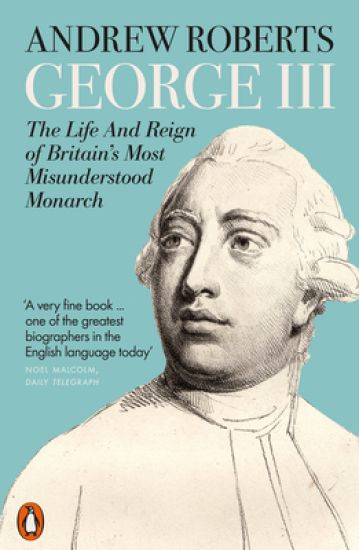
George III

George III

Andrew Roberts

PENGUIN BOOKS LTD
2023
pokkari
The Times Book of the Year*Winner of the Elizabeth Longford Prize for Historical Biography, 2022**Winner of the General Society of Colonial Wars' Distinguished Book Award, 2021**Winner of the History Reclaimed Book of the Year, 2022**Shortlisted for the Duff Cooper Prize, 2021*Andrew Roberts, one of Britain's premier historians, overturns the received wisdom on George IIIGeorge III, Britain's longest-reigning king, has gone down in history as 'the cruellest tyrant of this age' (Thomas Paine, eighteenth century), 'a sovereign who inflicted more profound and enduring injuries upon this country than any other modern English king' (W.E.H. Lecky, nineteenth century), 'one of England's most disastrous kings' (J.H. Plumb, twentieth century) and as the pompous monarch of the musical Hamilton (twenty-first century).Andrew Roberts's magnificent new biography takes entirely the opposite view. It portrays George as intelligent, benevolent, scrupulously devoted to the constitution of his country and (as head of government as well as head of state) navigating the turbulence of eighteenth-century politics with a strong sense of honour and duty. He was a devoted husband and family man, a great patron of the arts and sciences, keen to advance Britain's agricultural capacity ('Farmer George') and determined that her horizons should be global. He could be stubborn and self-righteous, but he was also brave, brushing aside numerous assassination attempts, galvanising his ministers and generals at moments of crisis and stoical in the face of his descent - five times during his life - into a horrifying loss of mind.The book gives a detailed, revisionist account of the American Revolutionary War, persuasively taking apart a significant proportion of the Declaration of Independence, which Roberts shows to be largely Jeffersonian propaganda. In a later war, he describes how George's support for William Pitt was crucial in the battle against Napoleon. And he makes a convincing, modern diagnosis of George's terrible malady, very different to the widely accepted medical view and to popular portrayals.Roberts writes, 'the people who knew George III best loved him the most', and that far from being a tyrant or incompetent, George III was one of our most admirable monarchs. The diarist Fanny Burney, who spent four years at his court and saw him often, wrote 'A noble sovereign this is, and when justice is done to him, he will be as such acknowledged'. In presenting this fresh view of Britain's most misunderstood monarch, George III shows one of Britain's premier historians at his sparkling best.
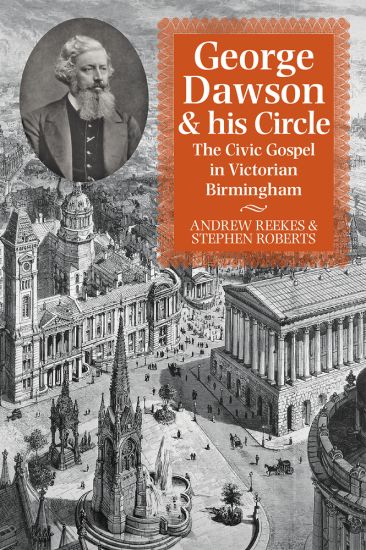
George Dawson and His Circle

George Dawson and His Circle

Andrew Reekes; Stephen Roberts

The Merlin Press Ltd
2021
pokkari
‘By the gains of Industry, we promote Art’ ‘In Birmingham you may generally recognise a board school by it being the best building in the neighbourhood, with its lofty towers, gabled windows, warm red bricks and stained glass.’ So observed the Pall Mall Gazette in 1894. The famous civic gospel shaped Birmingham as ‘the best governed city in the world.’ The inspiration for the transformation of Birmingham in the second half of the 19th century came from the sermons of ‘the greatest talker in England’ George Dawson. The men who oversaw the improvement of the town mostly sat on Sunday mornings in the pews of the Church of the Saviour. These were the men who were responsible for: a unique memorial library dedicated to the works of Warwickshire’s very own William Shakespeare; the foremost provincial institute (the Birmingham and Midland Institute); the first municipal technical school; the most famous art school in the country; and an enviable new art gallery. More improvements were developed by the town council: schools, baths and wash houses; the municipalisation of the gas and water supplies; and an impressive new thoroughfare, suitably christened Corporation Street.
Andrew Warde and His Descendants: 1597-1910 (1910)

Andrew Warde and His Descendants: 1597-1910 (1910)

George Kemp Ward

Literary Licensing, LLC
2014
sidottu
Andrew Warde And His Descendants: 1597-1910 is a genealogical book written by George Kemp Ward in 1910. The book traces the lineage of Andrew Warde, an English immigrant who settled in Connecticut in the 17th century, and his descendants up until the early 20th century. The book begins with a brief history of Andrew Warde's life and his journey to America, including his involvement in the founding of the town of Fairfield, Connecticut. From there, the book delves into the genealogy of Andrew Warde's descendants, providing detailed information on each generation and their respective families.The book is divided into several sections, each focusing on a different branch of the Warde family. These sections include information on the Warde, Ward, and Warden families, as well as related families such as the Burr, Beers, and Sherwood families.Throughout the book, Ward provides extensive genealogical information, including birth and death dates, marriage records, and other historical details. He also includes photographs and illustrations of family members and important locations, such as the Warde homestead in Fairfield.Overall, Andrew Warde And His Descendants: 1597-1910 is a comprehensive genealogical resource for anyone interested in tracing their lineage back to this prominent early American family.This Is A New Release Of The Original 1910 Edition.This scarce antiquarian book is a facsimile reprint of the old original and may contain some imperfections such as library marks and notations. Because we believe this work is culturally important, we have made it available as part of our commitment for protecting, preserving, and promoting the world's literature in affordable, high quality, modern editions, that are true to their original work.
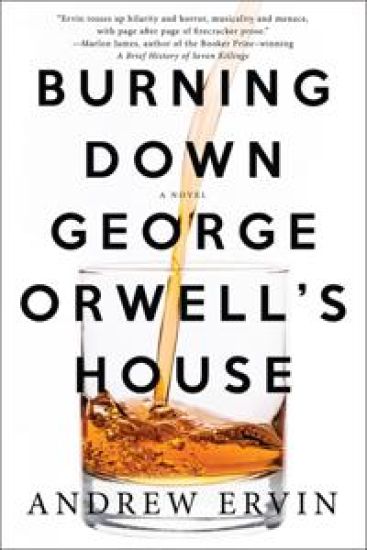
Burning Down George Orwell's House

Burning Down George Orwell's House

Andrew Ervin

SOHO PRESS INC
2016
nidottu
Ray Welter, who was until recently a highflying advertising executive in Chicago, has left the world of newspeak behind. He decamps to the isolated Scottish Isle of Jura in order to spend a few months in the cottage where George Orwell wrote most of his seminal novel, "Nineteen Eighty-Four." Ray is miserable, and quite prepared to make his troubles go away with the help of copious quantities of excellent scotch.But a few of the local islanders take a decidedly shallow view of a foreigner coming to visit in order to sort himself out, and Ray quickly finds himself having to deal with not only his own issues but also a community whose eccentricities are at times amusing and at others downright dangerous. Also, the locals believe or claim to believe that there s a werewolf about, and against his better judgment, Ray s misadventures build to the night of a traditional, boozy werewolf hunt on the Isle of Jura on the summer solstice.
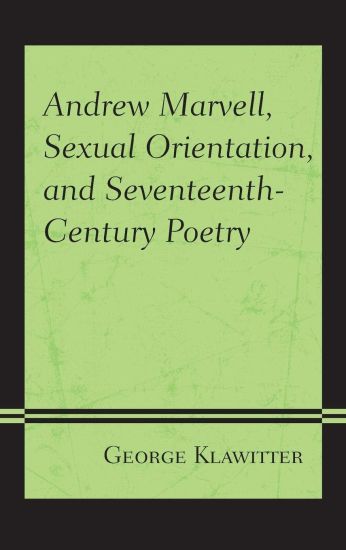
Andrew Marvell, Sexual Orientation, and Seventeenth-Century Poetry

Andrew Marvell, Sexual Orientation, and Seventeenth-Century Poetry

George Klawitter

Fairleigh Dickinson University Press
2017
sidottu
Andrew Marvell, Sexual Orientation, and Seventeenth-Century Poetry examines the important Interregnum/Restoration poet Andrew Marvell against a background of his contemporary lyric poets. His major works from the early elegies to the later political pieces are discussed with a view to unmasking the poet’s own sexuality and his reflection of prevailing sexual attitudes. Popular poems like the Mower poems and “The Nymph Complaining for the Death of her Fawn” are explicated in depth as well as lesser known poems like “The Unfortunate Lover” and “The Gallery.” Marvell, often described as a “chameleon” has teased readers for hundreds of years. This new book will help both new readers as well as established Marvellians to understand cryptic sexual meanings and references in the verses. Poems are explicated against current heteronormative theory as well as recent work on homoeroticism, autoeroticism, and celibacy. George Klawitter has devoted much of his recent scholarly life to a study of Marvell’s lyric pieces and brings to this new book fresh insights into the suggestive intent of the poet’s works.
Andrew Warde And His Descendants, 1597-1910
This book has been considered by academicians and scholars of great significance and value to literature. This forms a part of the knowledge base for future generations. So that the book is never forgotten we have represented this book in a print format as the same form as it was originally first published. Hence any marks or annotations seen are left intentionally to preserve its true nature.
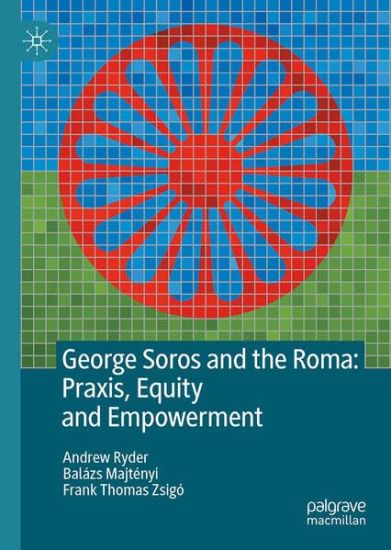
George Soros and the Roma: Praxis, Equity and Empowerment

George Soros and the Roma: Praxis, Equity and Empowerment

Andrew Ryder; Balázs Majtényi; Frank Thomas Zsigo

Springer Nature Switzerland AG
2026
sidottu
For three decades the philanthropist and billionaire investor George Soros has played a prominent role in promoting his vision of 'Open Society' in Central Eastern Europe (CEE), promoting the transition from communist statism to liberal democracy through his philanthropic measures, most notably his support for the Open Society Foundations. Within this body of work an important aspect has been Soros's support and commitment to the development of Roma civil society. Support from Soros endeavours has enabled the development and progression of Roma civil society, especially at the transnational level, preparing and training Roma community leaders in the skills of community development and project management. Thousands of Roma individuals have also benefited from generous scholarship programmes funded by Open Society and Soros, completing school and university studies and other forms of training, thereby engendering role models. Soros-supported initiatives have also been highly influential in transnational diplomacy within for example the Council of Europe and the European Union, playing an important role in policy frameworks like the Decade for Roma Inclusion and the EU Framework for National Roma Integration Strategies.