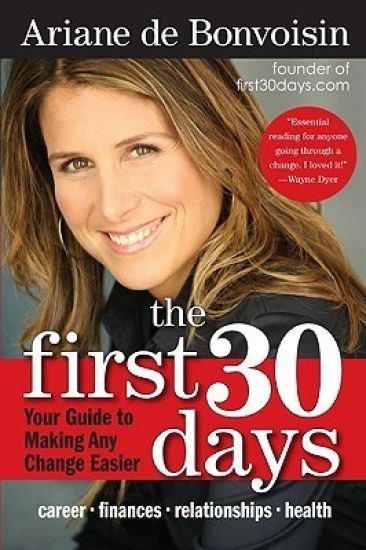
The First 30 Days reveals the nine principles of change that will revolutionize how you face transition times. With real-life stories, practical exercises, and inspiring action points, this book teaches the skills you need to face or make any change in your life, including how to: Use your Change MuscleCombat fear, doubt, and all your change demonsGet in touch with your spiritual sideCreate a plan that will get you results
Estas atravesando un cambio dificil? Hay algun paso que quieras dar pero no te atreves? Los primeros 30 dias te ayudara a hacerlo mas facil. Este ano, muchos nos enamoraremos, recobraremos el estado fisico y comenzaremos nuevos negocios, y otros perderemos empleos, lidiaremos con complicaciones de salud o nos divorciaremos. Aunque en general tratemos de ignorar el cambio, es lo unico constante en nuestras vidas. Ahora, con Los primeros 30 dias podemos aceptar el cambio y aprender a navegar con exito las idas y vueltas de la vida.Ariane de Bonvoisin, fundadora de First30days.com, te presenta nueve principios que te ayudaran a desarrollar una mentalidad optimista hacia el cambio, una actitud que te aliente a comprender que la vida esta de tu lado. Los primeros 30 dias es la primera guia definitiva para aprender a dar cada paso con sabiduria, fortaleza, claridad y esperanza.
Braiding together strands of literary, phenomenological and art historical reflection, Modernism and Phenomenology explores the ways in which modernist writers and artists return us to wonder before the world. Taking such wonder as the motive for phenomenology itself, and challenging extant views of modernism that uphold a mind-world opposition rooted in Cartesian thought, the book considers the work of modernists who, far from presenting perfect, finished models for life and the self, embrace raw and semi-chaotic experience. Close readings of works by Paul Cézanne, Gertrude Stein, Franz Kafka, Gerard Manley Hopkins, Wallace Stevens, Paul Klee, and Virginia Woolf explore how modernist texts and artworks display a deep-rooted openness to the world that turns us into "perpetual beginners." Pushing back against ideas of modernism as fragmentation or groundlessness, Mildenberg argues that this openness is less a sign of powerlessness and deferred meaning than of the very provisionality of experience.
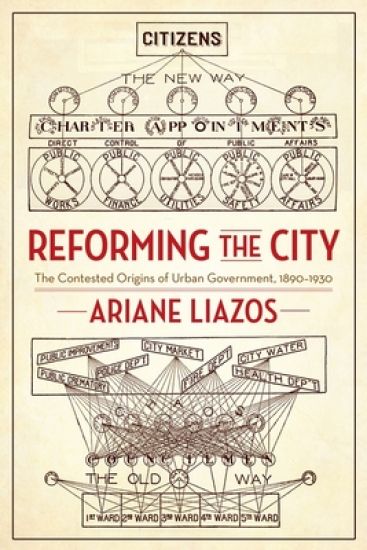
Most American cities are now administered by appointed city managers and governed by councils chosen in nonpartisan, at-large elections. In the early twentieth century, many urban reformers claimed these structures would make city government more responsive to the popular will. But on the whole, the effects of these reforms have been to make citizens less likely to vote in local elections and local governments less representative of their constituents. How and why did this happen?Ariane Liazos examines the urban reform movement that swept through the country in the early twentieth century and its unintended consequences. Reformers hoped to make cities simultaneously more efficient and more democratic, broadening the scope of what local government should do for residents while also reconsidering how citizens should participate in their governance. However, they increasingly focused on efficiency, appealing to business groups and compromising to avoid controversial and divisive topics, including the voting rights of African Americans and women. Liazos weaves together wide-ranging nationwide analysis with in-depth case studies. She offers nuanced accounts of reform in five cities; details the activities of the National Municipal League, made up of prominent national reformers and political scientists; and analyzes quantitative data on changes in the structures of government in over three hundred cities. Reforming the City is an important study for American history and political development, with powerful insights into the relationships between scholarship and reform and between the structures of city government and urban democracy.
Most American cities are now administered by appointed city managers and governed by councils chosen in nonpartisan, at-large elections. In the early twentieth century, many urban reformers claimed these structures would make city government more responsive to the popular will. But on the whole, the effects of these reforms have been to make citizens less likely to vote in local elections and local governments less representative of their constituents. How and why did this happen?Ariane Liazos examines the urban reform movement that swept through the country in the early twentieth century and its unintended consequences. Reformers hoped to make cities simultaneously more efficient and more democratic, broadening the scope of what local government should do for residents while also reconsidering how citizens should participate in their governance. However, they increasingly focused on efficiency, appealing to business groups and compromising to avoid controversial and divisive topics, including the voting rights of African Americans and women. Liazos weaves together wide-ranging nationwide analysis with in-depth case studies. She offers nuanced accounts of reform in five cities; details the activities of the National Municipal League, made up of prominent national reformers and political scientists; and analyzes quantitative data on changes in the structures of government in over three hundred cities. Reforming the City is an important study for American history and political development, with powerful insights into the relationships between scholarship and reform and between the structures of city government and urban democracy.
Covering the full spectrum of CHD from infants through adults, Perloff's Clinical Recognition of Congenital Heart Disease, 7th Edition, provides unparalleled guidance on the diagnosis and treatment of common and uncommon CHD in one definitive resource. The editors of this new edition, Drs. Ariane J. Marelli and Jamil A. Aboulhosn, have maintained Dr. Joseph Perloff's richly nuanced approach while bringing this classic text completely up to date with all the latest evidence and technologic advances in the field. With its comprehensive, step-by-step approach, you'll acquire a structured understanding of CHD across age ranges, allowing you to effectively detect these conditions as early as possible.NEW in the 7th Edition: Updated images throughout, as well as phonocardiograms, electrocardiograms, flow charts, and anatomic drawings Specific, integrated findings for individual patients with Dr Perloff's classic approach to diagnosis and treatment Streamlined review of sequelae and complications Historical Notes at the beginning of each chapter Tips on selecting among the increasing array of currently available procedures, helping foster and develop clinical judgment skills Update on genetic contributions to clinical recognition for a more complete presentation of patient diagnosis. Enhanced eBook version included with purchase. Your enhanced eBook allows you to access all of the text, figures, and references from the book on a variety of devices.
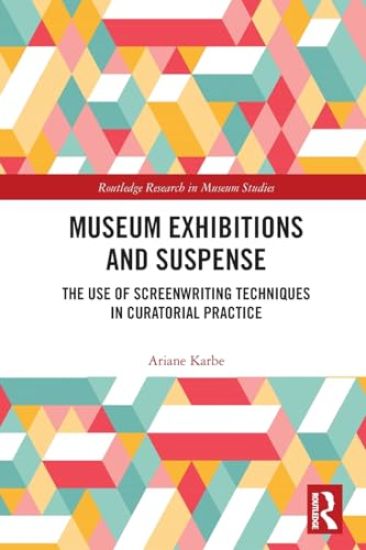
Museum Exhibitions and Suspense takes insights from screenwriting to revolutionise our understanding of exhibition curating. Despite all genuine efforts to reach broader audiences, museums persistently fear riskingtheir credibility by becoming ‘too popular’. Thus, the enormous potential to learn from other storytelling forms more experienced in the field of entertainment remains essentially unexploited. Museum Exhibitions and Suspense unlocks this creative potential. A comparative in-depth analysis of three classical Hollywood films and three cultural historical exhibitions demonstrates how dramatic suspense techniques can be applied to exhibitions. These techniques must be adapted to the typical epic character of the exhibition medium. By differentiating between mild and wild suspense the book provides a new understanding of the nature of suspense itself.Museum Exhibitions and Suspense addresses academics and students in the fields of museum studies, gallery studies and heritage studies interested in how exhibitions function and in how to achieve dramaturgical effects like suspense. It also appeals to scholars and students within film studies who want to gain a deeper understanding of suspense. It provides an important resource for curators and other museum practitioners and scriptwriters who intend to create stories with a wide audience appeal.
Museum Exhibitions and Suspense takes insights from screenwriting to revolutionise our understanding of exhibition curating. Despite all genuine efforts to reach broader audiences, museums persistently fear riskingtheir credibility by becoming ‘too popular’. Thus, the enormous potential to learn from other storytelling forms more experienced in the field of entertainment remains essentially unexploited. Museum Exhibitions and Suspense unlocks this creative potential. A comparative in-depth analysis of three classical Hollywood films and three cultural historical exhibitions demonstrates how dramatic suspense techniques can be applied to exhibitions. These techniques must be adapted to the typical epic character of the exhibition medium. By differentiating between mild and wild suspense the book provides a new understanding of the nature of suspense itself.Museum Exhibitions and Suspense addresses academics and students in the fields of museum studies, gallery studies and heritage studies interested in how exhibitions function and in how to achieve dramaturgical effects like suspense. It also appeals to scholars and students within film studies who want to gain a deeper understanding of suspense. It provides an important resource for curators and other museum practitioners and scriptwriters who intend to create stories with a wide audience appeal.
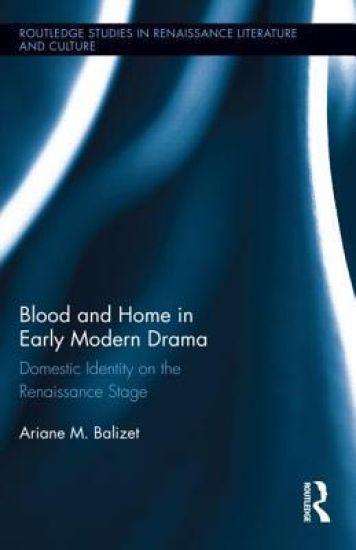
In this volume, the author argues that blood was, crucially, a means by which dramatists negotiated shifting contours of domesticity in 16th and 17th century England. Early modern English drama vividly addressed contemporary debates over an expanding idea of "the domestic," which encompassed the domus as well as sex, parenthood, household order, the relationship between home and state, and the connections between family honor and national identity. The author contends that the domestic ideology expressed by theatrical depictions of marriage and household order is one built on the simultaneous familiarity and violence inherent to blood.The theatrical relation between blood and home is far more intricate than the idealized language of the familial bloodline; the home was itself a bloody place, with domestic bloodstains signifying a range of experiences including religious worship, sex, murder, birth, healing, and holy justice. Focusing on four bleeding figures—the Bleeding Bride, Bleeding Husband, Bleeding Child, and Bleeding Patient—the author argues that the household blood of the early modern stage not only expressed the violence and conflict occasioned by domestic ideology, but also established the home as a site that alternately reified and challenged patriarchal authority.
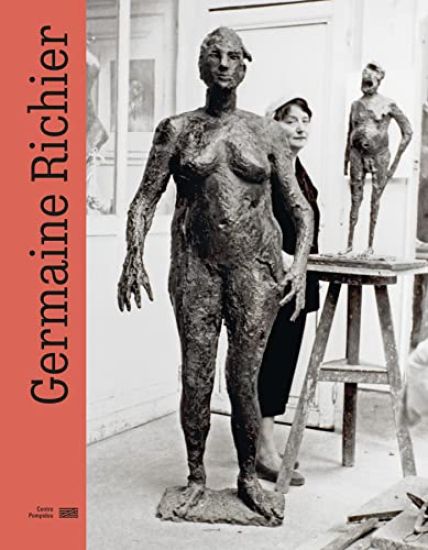
A major reassessment of Germaine Richier's work and impact on 20th-century sculpture. Germaine Richier (1902–59) occupies a central position in the history of modern sculpture. Predominantly working in bronze, her art revitalized the form of the figure, forging radical new images of men and women in the post-war period which blended the human body and natural forms in a hybrid of abstraction and figuration. As the first woman artist to have a solo exhibition in her own lifetime at the Musée National d’Art Moderne, Paris, she held a unique position in the 1940s and 50s as a successful female career artist, exhibiting internationally and developing a style that has been largely overshadowed by the predominant male canon. This major reassessment of Richier’s complete oeuvre establishes her key position within the artistic context of her time and, more broadly, her influential impact on 20th-century sculpture. Writers including Mika Biermann, Marie Darrieussecq, Maryline Desbiolles and Philippe Lançon, the philosopher Geneviève Fraisse, the anthropologist Charles Stépanoff and the artist ORLAN, evaluate the contemporary resonance of Richier’s creations, where her themes of identity, existence and our relationship with nature are increasingly relevant today. An anthology of the artist’s own writings, plus extracts from previously unpublished letters, complete this definitive volume, marking a long overdue appreciation of Germaine Richier’s distinct artistic originality.
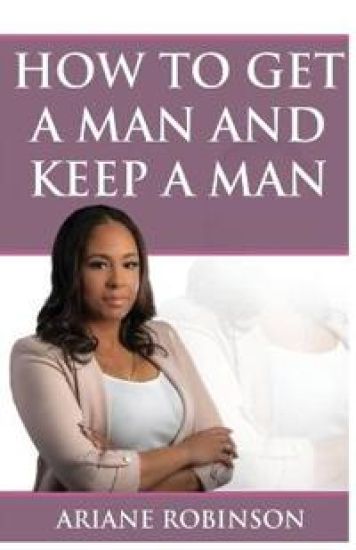
How To Get A Man And Keep A Man is a book for woman who seek relationship advice. This book teaches woman what to do in order to increase there odds of getting a man and keeping a man. This book is recommanded for any single woman looking for love. As well as any woman looking to keep there man for the long term.
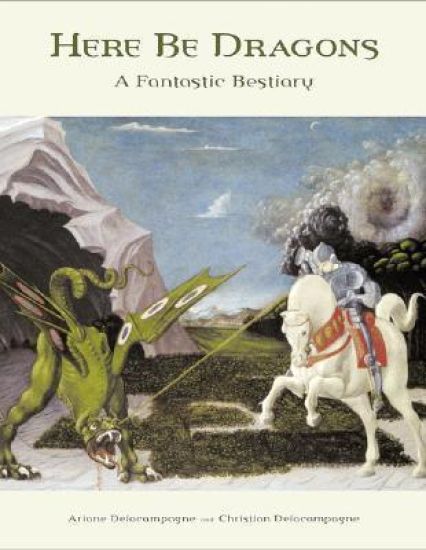
Sphinxes, hydras, chimeras, dragons, unicorns, griffins, sirens, and centaurs--fantastic animals can be found in works from Greek vases to paintings by Bosch, Goya, and Picasso, from folk art to comic strips, advertising, and Hollywood movies. Here Be Dragons is a lavishly illustrated compendium of the marvelous menagerie of imaginary animals that humans have conjured up over the ages. Ariane and Christian Delacampagne take us on a visually and intellectually riveting journey through five thousand years of art, examining the symbolic meanings of such creatures and what they say about the unconscious life of the human mind. In the Middle Ages, "bestiary" referred to an edifying poem, in Latin or French verse, in which the moral characteristics of real or imaginary animals were highlighted. With the passing of time, this once-flourishing genre disappeared. We have ceased to equate animals that can be observed with those we only dream of, but neither science nor mass culture has managed to chase away imaginary beasts. Such creatures continue to haunt us, just as they haunted our ancestors. In the first book to explore this subject with such cross-cultural and chronological range, the Delacampagnes identify five basic structures (unicorn, human-headed animal, animal-headed human, winged quadruped, and dragon) whose stories they relate from prehistory to the present day. They also provide fascinating sociological and psychoanalytical insight into the processes through which artists have created these astonishing animals and how they have been transmitted from culture to culture. Contrary to what people once believed, the fantastic exists only in the mind. And yet, as Here Be Dragons shows us, it is one of the mind's most sophisticated, mysterious, and inspiring creations.
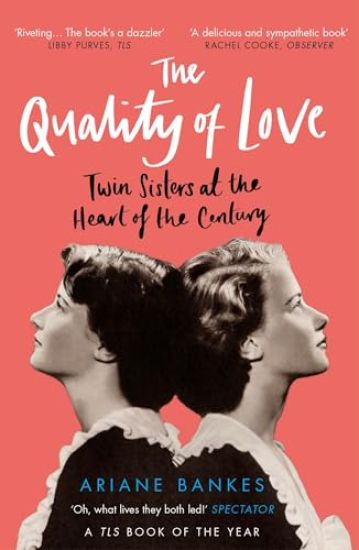
'Oh, what lives they both led!' Spectator 'Enriched by the correspondence between the twins – for, ultimately, the great love story is theirs alone' Telegraph A TLS Book of the Year When her mother Celia Paget died, Ariane Bankes inherited a battered trunk stuffed with letters and diaries belonging to Celia and her twin Mamaine. This correspondence charted the remarkable lives of the Paget sisters and their friends and lovers, including Arthur Koestler, Albert Camus, Sartre and de Beauvoir, and George Orwell. Out of this rich archive, The Quality of Love weaves the story of these captivating and unusually beautiful identical twins who overcame a meagre education to take 1930s London society by storm and move among Europe’s foremost intellectuals during the twentieth century’s most dramatic decades. Above all, it is a sparkling portrait of the deep connection between two spirited sisters.
'Oh, what lives they both led!' Spectator 'Enriched by the correspondence between the twins – for, ultimately, the great love story is theirs alone' Telegraph A TLS Book of the Year When her mother Celia Paget died, Ariane Bankes inherited a battered trunk stuffed with letters and diaries belonging to Celia and her twin Mamaine. This correspondence charted the remarkable lives of the Paget sisters and their friends and lovers, including Arthur Koestler, Albert Camus, Sartre and de Beauvoir, and George Orwell. Out of this rich archive, The Quality of Love weaves the story of these captivating and unusually beautiful identical twins who overcame a meagre education to take 1930s London society by storm and move among Europe’s foremost intellectuals during the twentieth century’s most dramatic decades. Above all, it is a sparkling portrait of the deep connection between two spirited sisters.
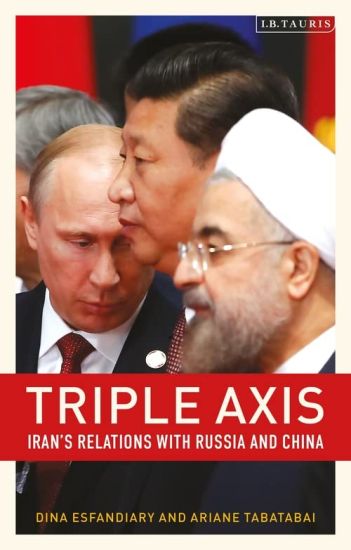
The most significant challenge to the post-Cold War international order is the growing power of ambitious states opposed to the West. Iran, Russia and China each view the global structure through the prism of historical experience. Rejecting the universality of Western liberal values, these states and their governments each consider the relative decline of Western economic hegemony as an opportunity. Yet cooperation between them remains fragmentary. The end of Western sanctions and the Iranian nuclear deal; the Syrian conflict; new institutions in Central and East Asia: in all these areas and beyond, the potential for unity or divergence is striking. In this comprehensive study, Ariane Tabatabai and Dina Esfandiary address the substance of this `triple axis' in the realms of energy, trade, and military security. In particular they scrutinise Iran-Russia and the often overlooked field of Iran-China relations. Their argument - that interactions between the three will shape the world stage for decades to come - will be of interest to anyone looking to understand the contemporary international security puzzle.
Once considered revolutionary, evidence-based medicine (EBM) has failed. The Impossible Clinic explores the conundrum of EBM's attempt to translate evidence from medical research into recommendations for practice. Ironically, when medical institutions combine disciplinary regulations with EBM to produce clinical practice guidelines, the outcomes are antithetical to the aim. Such guidelines fail to increase individual physicians' decision-making capacities – as EBM promises – because they externalize judgment through disciplinary control. Ariane Hanemaayer uses a critical sociology approach to argue that EBM persists because it has congealed within the dominant liberal political strategy of governance, which seeks to improve health care "at a distance," at the least cost, and without investment in infrastructure. As such, The Impossible Clinic is the first book to interrogate the history, practice, and pitfalls of EBM and explain how it persists due to intersecting relationships between professional medical regulation and liberal governance strategies.
Once considered revolutionary, evidence-based medicine (EBM) has failed. The Impossible Clinic explores the conundrum of EBM's attempt to translate evidence from medical research into recommendations for practice. Ironically, when medical institutions combine disciplinary regulations with EBM to produce clinical practice guidelines, the outcomes are antithetical to the aim. Such guidelines fail to increase individual physicians' decision-making capacities – as EBM promises – because they externalize judgment through disciplinary control. Ariane Hanemaayer uses a critical sociology approach to argue that EBM persists because it has congealed within the dominant liberal political strategy of governance, which seeks to improve health care "at a distance," at the least cost, and without investment in infrastructure. As such, The Impossible Clinic is the first book to interrogate the history, practice, and pitfalls of EBM and explain how it persists due to intersecting relationships between professional medical regulation and liberal governance strategies.
On both sides of the Atlantic, restrictive immigration policies have been framed as security imperatives since the 1990s. This trend accelerated in the aftermath of 9/11 and subsequent terrorist attacks in Europe. In Frontiers of Fear, Ariane Chebel d'Appollonia raises two central questions with profound consequences for national security and immigration policy: First, does the securitization of immigration issues actually contribute to the enhancement of internal security? Second, does the use of counterterrorist measures address such immigration issues as the increasing number of illegal immigrants, the resilience of ethnic tensions, and the emergence of homegrown radicalization? Chebel d'Appollonia questions the main assumptions that inform political agendas in the United States and throughout Europe, analyzing implementation and evaluating the effectiveness of policies in terms of their stated objectives. She argues that the new security-based immigration regime has proven ineffective in achieving its prescribed goals and even aggravated the problems it was supposed to solve: A security/insecurity cycle has been created that results in less security and less democracy. The excesses of securitization have harmed both immigration and counterterrorist policies and seriously damaged the delicate balance between security and respect for civil liberties.